Evaluating Your Suburban Housing Options
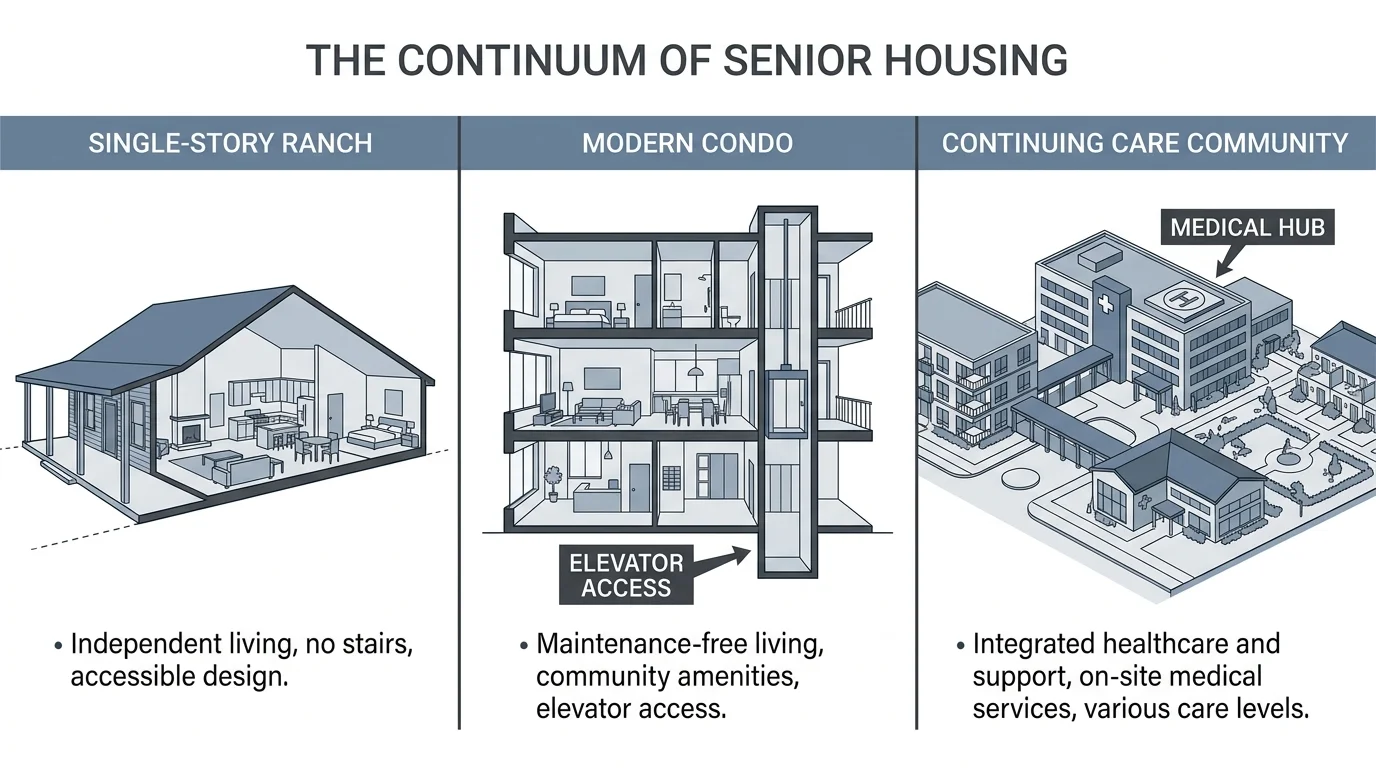
Once you select a suburb, you must decide how you want to live within it. Suburbs generally offer three distinct paths for retirement housing. Review the comparison below to determine which lifestyle matches your goals and budget.
| Housing Type | Primary Benefits | Potential Drawbacks | Cost Considerations |
|---|---|---|---|
| Single-Family Home | Maximum privacy; space for family visits; complete control over property; multi-generational neighborhood feel. | Total responsibility for interior and exterior maintenance; risk of isolation if mobility declines. | High initial purchase price; variable property taxes; unpredictable maintenance and repair costs. |
| 55+ Active Adult Community | Built-in social network; resort-style amenities (pools, gyms); exterior maintenance usually covered; homes designed for aging. | Restrictive HOA rules; lack of generational diversity; amenities can feel overwhelming if unused. | Moderate to high purchase price; mandatory and rising monthly HOA fees. |
| Condo / Townhome | Minimal exterior maintenance; often located in highly walkable downtown areas; lock-and-leave convenience for travelers. | Shared walls reduce privacy; staircases in townhomes can become obstacles later in life. | Lower purchase price generally; monthly association fees; potential for special assessments. |
Costly Mistakes to Avoid When Relocating
Moving across state lines or even just a few counties over introduces a web of financial and administrative complexities. Avoid these common traps that can derail an otherwise joyful transition.
- Ignoring Medicare Advantage Network Boundaries: Medicare Advantage (Part C) plans are highly regional. If you move out of your plan’s service area, you will be disenrolled. While moving triggers a Special Enrollment Period allowing you to choose a new plan, failing to research the networks in your new suburb can leave you separated from preferred doctors. Always use the Medicare Plan Finder to verify coverage in your target zip code before buying a home.
- Misunderstanding the Total Tax Burden: Many retirees flock to states with no income tax, only to be blindsided by exorbitant property taxes or high local sales taxes. You must evaluate the holistic tax burden. Research the specific municipal tax rates of the suburb, not just the state-level headlines.
- Overlooking In-Home Support Services: Even if you are perfectly healthy today, you must plan for the future. Investigate whether your chosen suburb has a robust network of home health aides, senior transportation services, and meal delivery programs. A beautiful home becomes a prison if local support services are nonexistent.