Trading your car keys for comfortable walking shoes is one of the most liberating decisions you can make when planning your retirement relocation. Choosing a walkable town immediately lowers your transportation costs, naturally improves your daily cardiovascular health, and drastically reduces the social isolation that often accompanies aging in car-dependent suburbs. However, finding a community that combines genuine pedestrian infrastructure with excellent healthcare, tax-friendly policies, and vibrant social opportunities requires careful vetting. A true walkable retirement destination means the grocery store, pharmacy, local cafes, and medical clinics all sit within a safe, flat fifteen-minute stroll from your front door. Here are seven exceptional towns across the country where you can comfortably navigate daily life entirely on foot.
Why Pedestrian-Friendly Living is the Ultimate Retirement Asset
Relocating to a community where daily errands require nothing more than a comfortable pair of sneakers completely transforms how you experience your later years. In sprawling suburbs, losing the ability or desire to drive often leads to immediate isolation and a loss of independence. In a walkable town, your world actually expands.
“Don’t simply retire from something; have something to retire to.” — Harry Emerson Fosdick
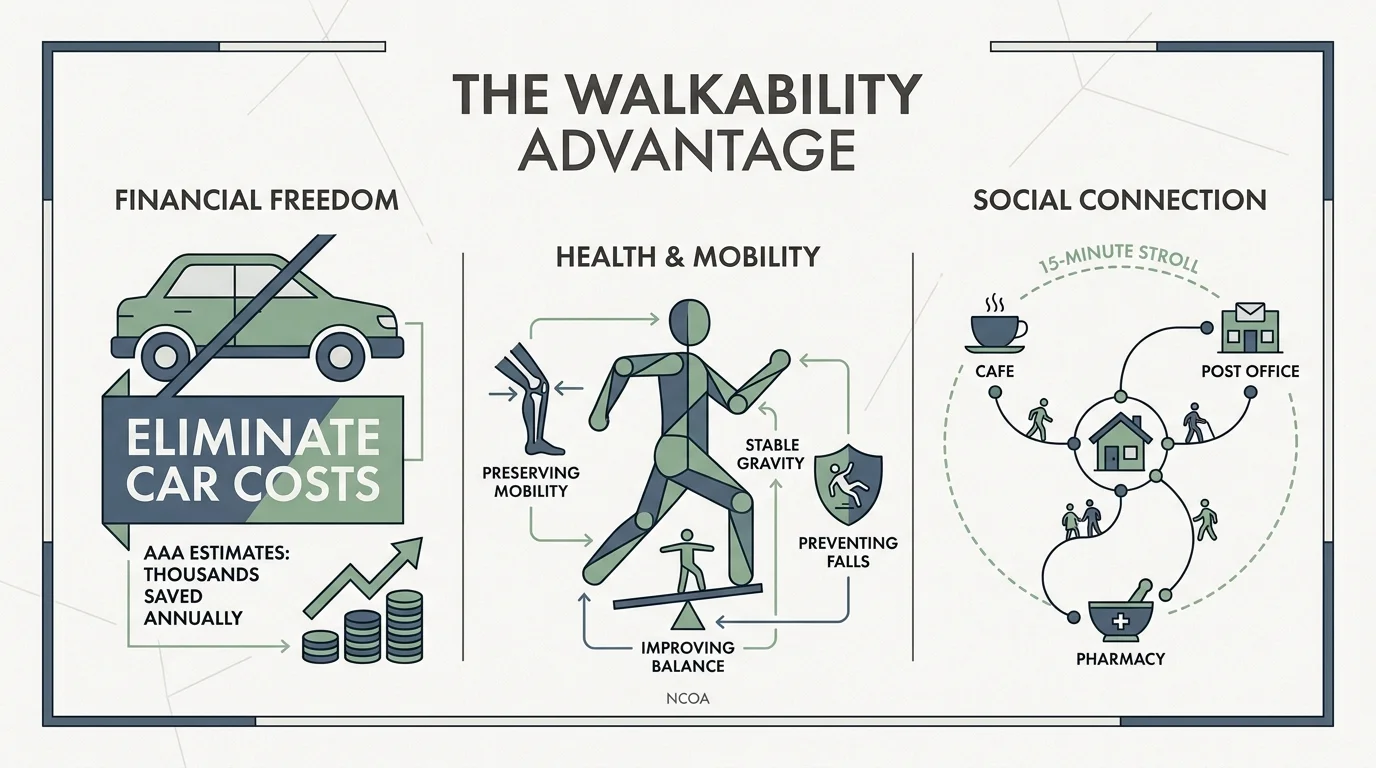
Living in a pedestrian-friendly environment bakes healthy habits directly into your daily routine without requiring a gym membership. A quick walk to the local bakery for morning coffee, followed by an afternoon stroll to the post office and the pharmacy, effortlessly helps you reach daily movement goals. According to resources from the National Council on Aging (NCOA), regular walking is one of the most effective strategies for preserving mobility, improving balance, and preventing falls as we age.
Furthermore, the financial benefits are substantial. The American Automobile Association routinely estimates that owning and maintaining a single vehicle costs thousands of dollars annually when you factor in insurance, fuel, maintenance, and depreciation. Downsizing from two cars to one—or eliminating car ownership entirely—frees up significant cash flow that you can redirect toward travel, hobbies, or your long-term healthcare fund.

1. Lancaster, Pennsylvania: Historic Charm Meets Top-Tier Healthcare
Lancaster consistently ranks at the top of national retirement destination lists, and its incredible walkability is a primary reason why. The downtown area operates on a highly navigable grid system featuring wide, well-maintained sidewalks and mature shade trees. At the heart of the city sits the historic Lancaster Central Market, the country’s oldest continuously operated public farmers market, where you can easily source fresh, local produce on foot.
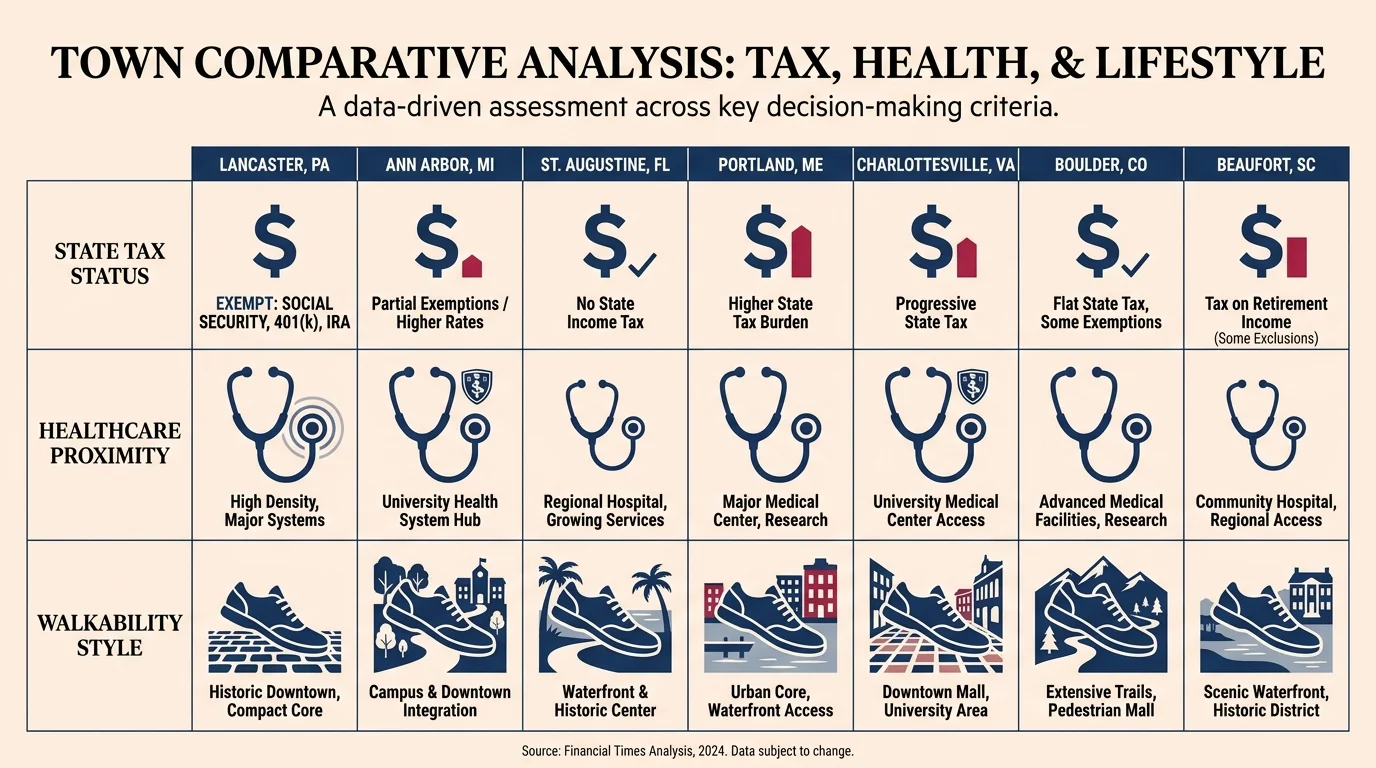
Beyond the charm of historic brick buildings and a thriving arts district, Lancaster delivers on practical retirement necessities. Penn Medicine Lancaster General Hospital sits right in the city center, meaning world-class healthcare is easily accessible without navigating highway traffic. The cost of living remains notably lower than major East Coast hubs, and Pennsylvania currently exempts Social Security, 401(k), and IRA income from state taxes, making it a highly strategic financial choice.

2. Ann Arbor, Michigan: The Intellectual Walker’s Paradise
If you crave the vibrant energy of a college town combined with impeccable pedestrian infrastructure, Ann Arbor deserves your attention. Home to the University of Michigan, the city offers an intellectually stimulating environment characterized by independent bookstores, cafes, museums, and continuous public lectures—most of which are concentrated in a highly walkable downtown core.
The Kerrytown district provides a particularly ideal setting for retirees, featuring a historic brick-paved neighborhood centered around a year-round farmers market and artisan shops. Crucially, Ann Arbor is home to the University of Michigan Health System, ensuring you have immediate access to cutting-edge geriatric care and specialized medical treatments. While Michigan winters require sturdy boots and warm coats, the city is notoriously diligent about snow removal, keeping pedestrian pathways clear and safe year-round.

3. St. Augustine, Florida: Year-Round Strolls in the Nation’s Oldest City
For those determined to leave snow shovels behind forever, St. Augustine offers a unique alternative to Florida’s massive, car-dependent master-planned communities. As the oldest continuously occupied European-established settlement within the borders of the continental United States, the city was literally built for pedestrians long before the invention of the automobile.
The historic downtown features several pedestrian-only zones, most notably St. George Street, where you can wander among restaurants, boutiques, and historic sites without worrying about vehicular traffic. The terrain is entirely flat, making it exceptionally easy on aging knees and hips. Flagler Hospital provides comprehensive medical services locally, and the warm coastal climate ensures you can maintain your walking routine 365 days a year.

4. Portland, Maine: Coastal Beauty With Exceptional Pedestrian Access
Portland proves that you do not need to move south to find a breathtaking, walkable retirement destination. The city occupies a compact peninsula, meaning the waterfront, the acclaimed culinary scene, and essential daily services are all packed into a remarkably small geographic footprint. The Old Port district offers stunning ocean views intertwined with highly walkable commercial streets.
Maine Medical Center, the state’s largest hospital, is located right in the city, providing comprehensive care including a highly regarded cardiovascular program. Portland caters brilliantly to active retirees who appreciate four distinct seasons. The city maintains an extensive network of paved walking trails, including the Eastern Promenade, which offers miles of flat, accessible paths overlooking Casco Bay.
5. Charlottesville, Virginia: A Pedestrian Mall Anchoring a Dynamic Community
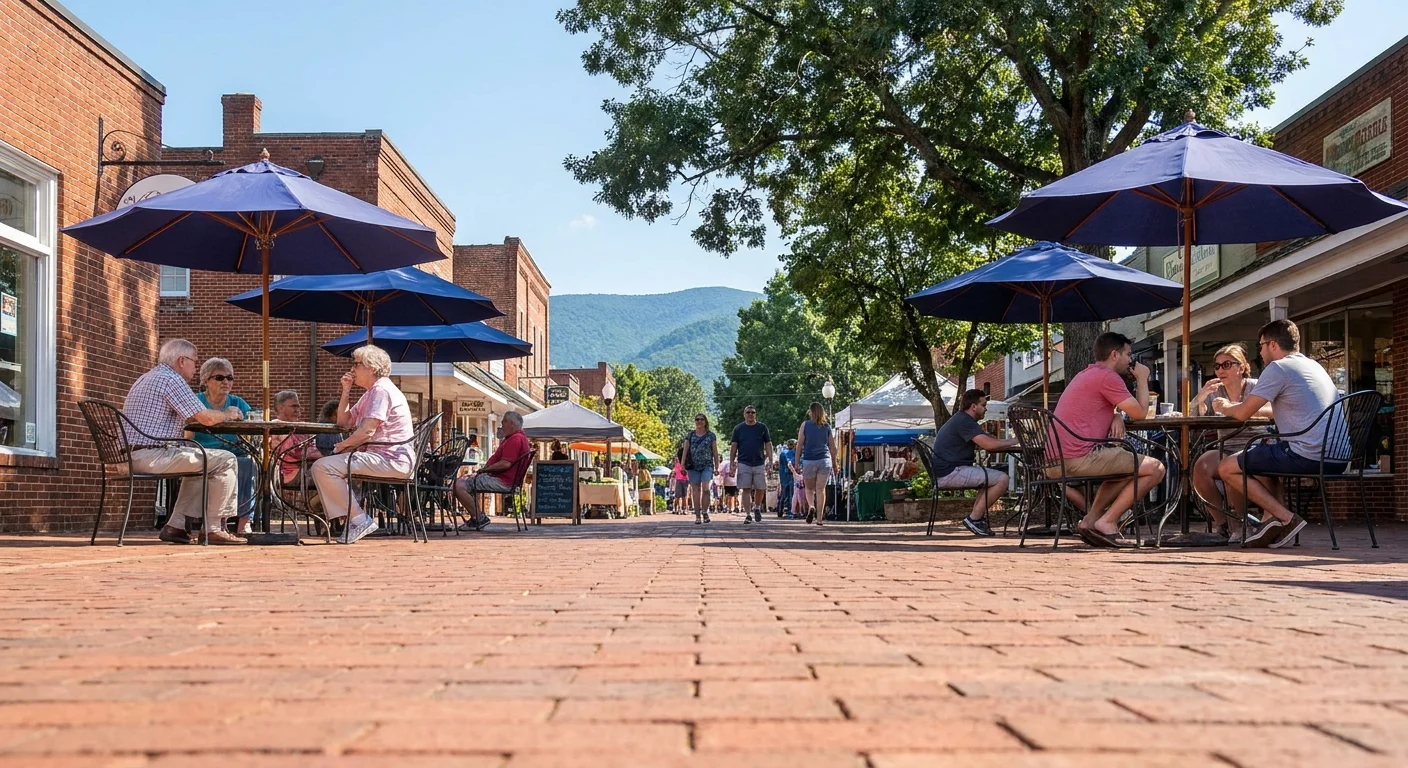
Charlottesville features one of the most successful pedestrian environments in the country: the Historic Downtown Mall. This eight-block, brick-paved corridor completely prohibits vehicle traffic, creating a massive outdoor living room for the community. Shaded by mature oak trees, the mall is lined with restaurants, pharmacies, bookstores, and theaters, allowing you to run errands and socialize in a completely safe, relaxed environment.
Because the University of Virginia calls Charlottesville home, the town benefits from the UVA Health System, providing access to specialists and advanced treatments rarely found in towns of this size. The climate offers four moderate seasons, allowing you to enjoy the surrounding Blue Ridge Mountains without enduring extreme, prolonged winters.

6. Boulder, Colorado: For the Highly Active Retiree
If your vision of retirement involves aggressive daily fitness, Boulder stands in a class of its own. While the cost of living is notably higher than other towns on this list, you pay for unparalleled access to both urban walkability and rugged nature. The city’s crown jewel is the Pearl Street Mall, a four-block pedestrian precinct that serves as the cultural and commercial heart of the community.
Beyond the downtown core, Boulder maintains over 300 miles of dedicated bikeways and multi-use paths. You can safely navigate from residential neighborhoods to grocery stores entirely off the main roadways using the city’s network of underpasses. Boulder Community Health offers excellent local medical care, though it is worth noting that adjusting to the city’s 5,430-foot elevation requires a brief transition period for your cardiovascular system.

7. Beaufort, South Carolina: Southern Hospitality at a Slower Pace
Nestled in the South Carolina Lowcountry, Beaufort offers a slower, highly scenic retirement experience. The historic downtown area is incredibly compact, framed by antebellum architecture and massive live oak trees draped in Spanish moss. The Henry C. Chambers Waterfront Park provides a beautiful, flat expanse for daily walking along the Beaufort River.
The town’s grid layout makes navigating from residential streets to the commercial center intuitive and straightforward. Beaufort Memorial Hospital serves the local community effectively, and the cost of living remains much more manageable than nearby premium coastal destinations like Charleston or Hilton Head. South Carolina also offers highly favorable tax conditions for retirees, including generous deductions on retirement income and low property taxes.
Comparing Your Walkable Relocation Options
When weighing these destinations, consider how the climate, cost of living, and healthcare infrastructure align with your specific retirement goals.
| Retirement Town | Walkability Highlight | Climate / Terrain | Primary Healthcare System |
|---|---|---|---|
| Lancaster, PA | Central Market & Grid Layout | Four Seasons / Flat | Penn Medicine Lancaster Gen. |
| Ann Arbor, MI | Kerrytown & Campus Proximity | Cold Winters / Mostly Flat | Univ. of Michigan Health |
| St. Augustine, FL | St. George Pedestrian Street | Hot, Humid / Extremely Flat | Flagler Hospital |
| Portland, ME | Compact Peninsula Living | Cold Winters / Moderate Hills | Maine Medical Center |
| Charlottesville, VA | 8-Block Downtown Mall | Moderate Seasons / Hilly | UVA Health System |
| Boulder, CO | Extensive Multi-Use Paths | Sunny, Snowy / High Altitude | Boulder Community Health |
| Beaufort, SC | Waterfront Park & Bay Street | Warm, Humid / Flat Coastal | Beaufort Memorial Hospital |
Don’t Make These Mistakes When Relocating
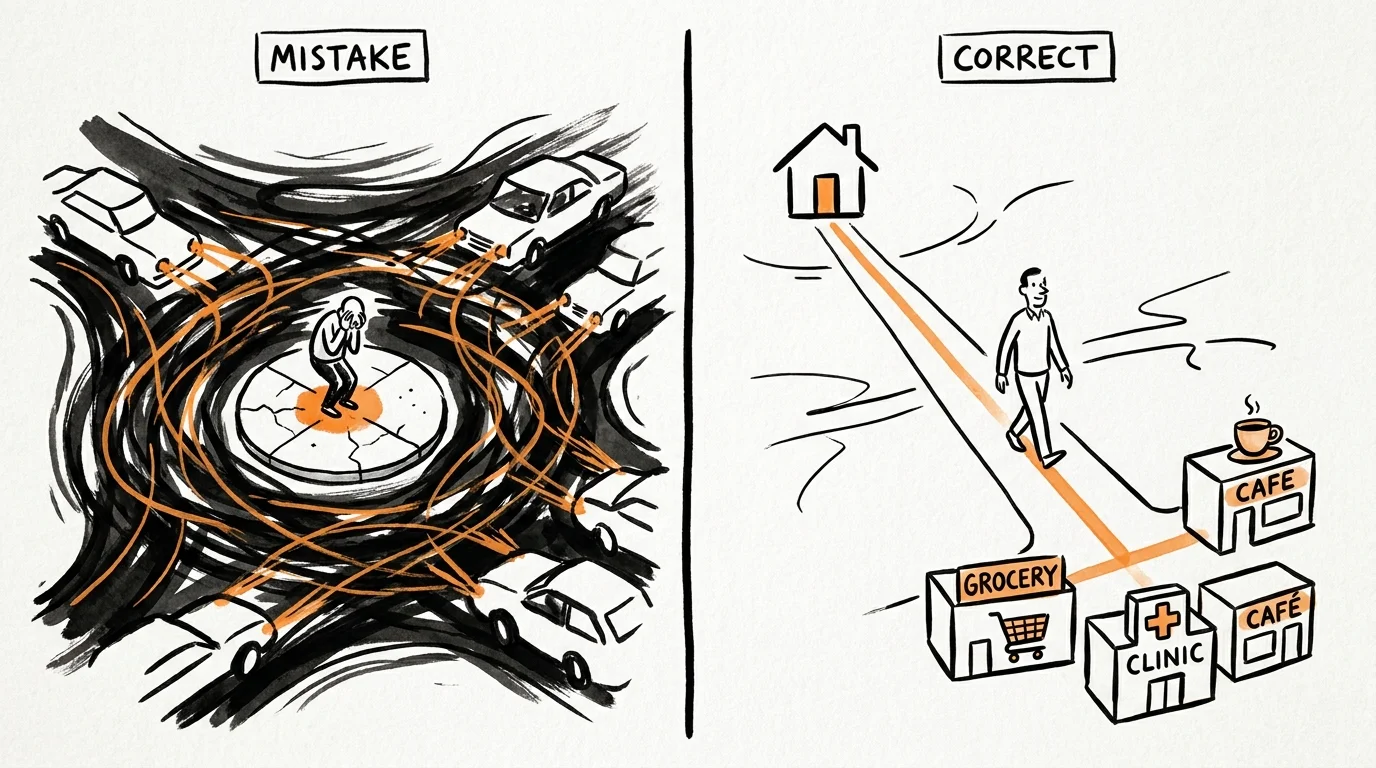
Moving to a new city in retirement is a massive logistical and financial undertaking. To ensure your walkable dream does not turn into a frustrating reality, avoid these common missteps.
- Confusing “Charming” with “Accessible”: Historic cobblestone streets look beautiful in photographs, but they present significant trip hazards and make using a walker or wheelchair incredibly difficult. Look for smooth, well-paved sidewalks with proper curb cuts at intersections.
- Ignoring the Winter Reality: A town with a high Walk Score in July might become unnavigable in February. If you are looking at northern towns like Portland or Ann Arbor, research the municipality’s snow removal ordinances. Do they clear public paths quickly, or are homeowners responsible for their own sidewalks?
- Buying Before Renting: Never purchase a home in a new town based solely on a weekend vacation. Rent a property for three to six months—ideally during the region’s worst weather season—to test the true walkability. Attempt to live your daily life, carry groceries home, and navigate to the pharmacy on foot before committing your capital.
- Overlooking the “Aging in Place” Trajectory: Walking two miles to the grocery store might feel invigorating at age 65, but it could become a daunting barrier at 82. Ensure that essential services—pharmacy, basic groceries, and primary care—are within a flat, manageable half-mile radius of your chosen home.

Navigating Healthcare and Benefits in a New State
Relocating across state lines requires more than just forwarding your mail; it demands a thorough review of your healthcare coverage. Original Medicare (Parts A and B) travels with you seamlessly anywhere in the United States. However, if you utilize a Medicare Advantage plan (Part C) or a standalone prescription drug plan (Part D), your coverage is strictly tied to your specific county or zip code.
When you move to a new town, you trigger a Special Enrollment Period. You must use this window to switch to a plan that operates in your new service area. Waiting too long can result in coverage gaps or steep out-of-network medical bills. You can easily compare plans available in your new walkable town using the official Medicare.gov plan finder tool before you officially change your address.
Additionally, investigate the local aging support infrastructure. Every region in the United States is served by an Area Agency on Aging, which coordinates local services like transportation, meal delivery, and in-home support. Before making a final decision on a town, use the Eldercare Locator, provided by the Administration for Community Living, to identify the local agency and evaluate the community resources available to older adults.
Frequently Asked Questions
What is a good Walk Score for a retirement destination?
Walk Score is a popular metric ranging from 0 to 100. For true pedestrian independence in retirement, look for neighborhoods with a score of 70 or higher (indicating most errands can be accomplished on foot). Scores above 90 represent a “Walker’s Paradise” where daily errands do not require a car at all.
Are highly walkable towns more expensive for retirees?
Generally, yes. Real estate data consistently shows a “walkability premium,” meaning homes in highly walkable neighborhoods cost more per square foot than car-dependent suburban counterparts. However, you must offset this higher housing cost against the massive financial savings of eliminating car payments, auto insurance, gas, and vehicle maintenance.
How do I evaluate a town’s pedestrian safety?
When you visit, pay attention to the infrastructure. Are the sidewalks wide and set back from the road? Do crosswalks provide audio signals and adequate countdown timers for slower walkers? Are there streetlights for evening visibility, and mature trees to provide shade during the summer? Lastly, look for public benches—having places to rest is crucial for long-term mobility.
Choosing to embrace a pedestrian-oriented lifestyle is an investment in your physical health, your social life, and your independence. Take the time to visit these communities, walk their streets, and visualize your daily routine. By selecting a town that supports your mobility naturally, you ensure your retirement years remain active, engaged, and deeply fulfilling.
Retirement rules and benefit amounts vary based on individual work history, income, and circumstances. This article provides general guidance only. Consult a SHIP counselor, financial advisor, or elder law attorney for advice specific to your situation.
Last updated: February 2026. Medicare and Social Security rules change annually—always verify current details at official government sources.