Transitioning to a fixed income requires a deliberate shift in how you manage everyday expenses, especially as inflation relentlessly pushes up the cost of groceries, healthcare, and household staples. While warehouse clubs often conjure images of massive families buying cereal by the pallet, a strategic approach to bulk shopping benefits retirees immensely. A standard Costco membership costs just a fraction of the hundreds of dollars you can save annually on everything from prescription medications to travel. By focusing on specific high-yield categories rather than wandering the aisles for impulse buys, you can protect your retirement budget without sacrificing your standard of living. Here are the seven purchases that make a membership practically pay for itself.

1. Premium Hearing Aids and Audiology Services
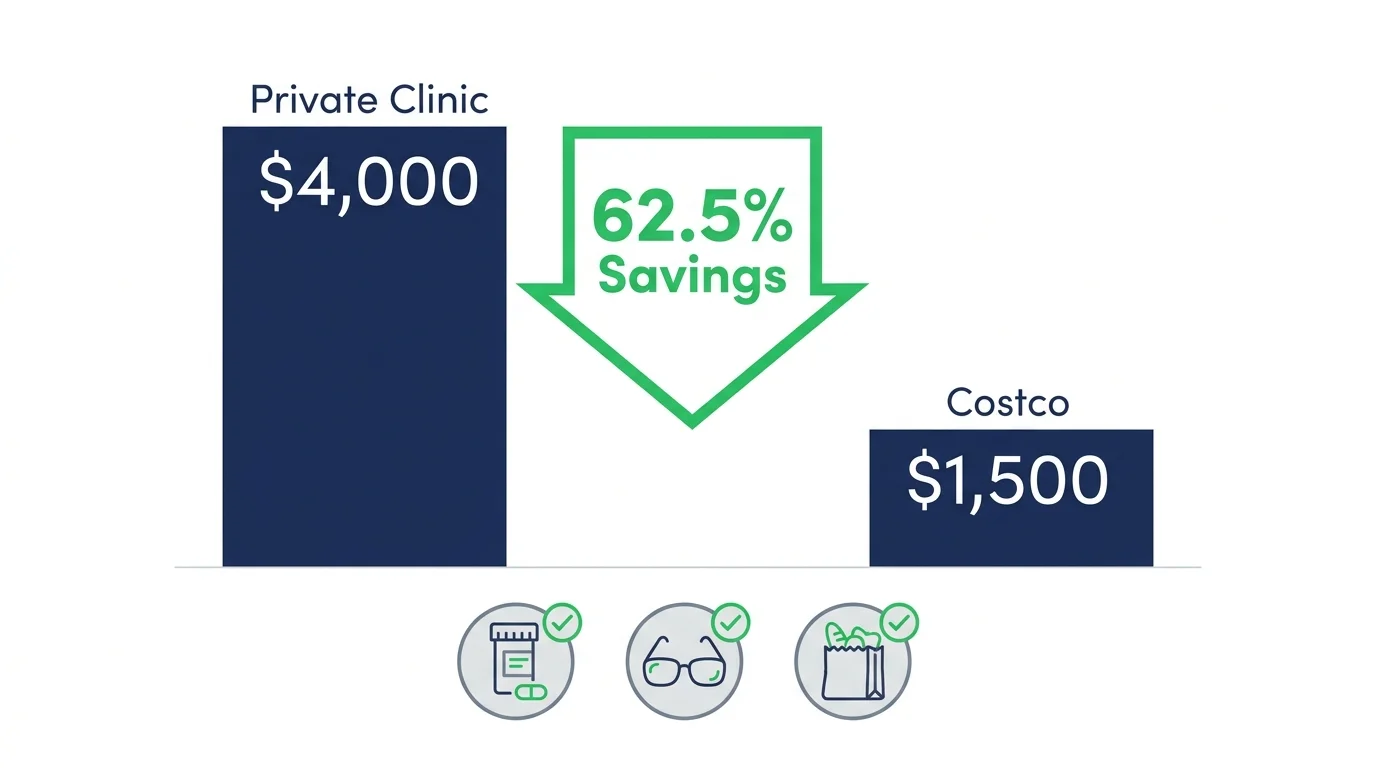
Age-related hearing loss affects millions of seniors, yet the staggering cost of hearing aids forces many to delay getting the help they need. Traditional audiology clinics often charge between $4,000 and $6,000 for a pair of premium digital hearing aids. Costco completely disrupts this pricing model, offering top-tier devices—often manufactured by the exact same parent companies that supply private clinics—for roughly $1,500 to $1,600 a pair.
Beyond the hardware, the warehouse club provides free hearing tests to members; free follow-up appointments; free cleanings; and free dome replacements. They also offer a generous trial period, allowing you to return the devices if they do not suit your lifestyle. If you or your spouse need hearing assistance, this single purchase pays for decades of membership fees in one fell swoop. The technology includes Bluetooth connectivity, rechargeable batteries, and sophisticated background noise reduction, ensuring you stay fully engaged in conversations with your grandchildren and friends.

2. Prescription Medications and Pharmacy Savings
Managing healthcare costs remains a top priority for older adults. Even with a solid Medicare Part D plan, co-pays and coverage gaps can slowly drain your monthly budget. The Costco pharmacy operates with incredibly thin profit margins, meaning they pass wholesale savings directly to the consumer. You do not even need a membership to use the pharmacy, though members gain access to the Costco Member Prescription Program (CMPP).
The CMPP acts as a discount card for medications, often drastically reducing the cash price of drugs that fall outside your insurance coverage. For example, many older Americans take specific vitamin formulations, dermatological creams, or lifestyle medications that Part D excludes. Checking the cash price at the warehouse club against your insurance co-pay is a savvy financial habit. Always use the Medicare Plan Finder during Open Enrollment to evaluate your coverage, but keep your local warehouse pharmacy in mind as a reliable secondary option to lower your out-of-pocket costs.

3. Over-the-Counter Supplements and Vitamins
Staying healthy as you age often requires a daily regimen of vitamins, joint supplements, calcium, and fiber. Buying small bottles of these items at a standard grocery store or neighborhood pharmacy guarantees you pay a massive markup. By switching your supplement purchases to bulk warehouse sizes, you reduce your per-pill cost significantly.
Costco’s Kirkland Signature brand is particularly valuable here. Most Kirkland supplements carry the USP (United States Pharmacopeia) Verified Mark, confirming that the product contains the ingredients listed on the label in the declared potency and amounts, without harmful levels of specified contaminants. Stocking up on a 400-count bottle of daily multivitamins or a massive container of glucosamine chondroitin ensures you only need to shop for these essentials once or twice a year, locking in lower prices and protecting your budget from month-to-month inflation.

4. Optical Services and Prescription Eyewear
Vision care is another major expense rarely covered by Original Medicare. Unless you have a specific Medicare Advantage plan with vision benefits, paying for annual eye exams, progressive lenses, and frames falls entirely on your shoulders. Private optical boutiques routinely charge upwards of $500 for a single pair of progressive glasses.
The warehouse optical department offers comprehensive exams by independent doctors of optometry. More importantly, they sell high-quality frames and premium lens treatments—such as anti-reflective coating, blue-light filtering, and transition lenses—for a fraction of traditional retail prices. You can frequently purchase two complete pairs of prescription glasses at Costco for less than the cost of one pair at a mall retailer. This allows you to comfortably afford dedicated reading glasses, driving glasses, or prescription sunglasses.

5. Discounted Restaurant and Entertainment Gift Cards
Living on a fixed income does not mean you have to abandon dining out, going to the movies, or treating your family to experiences. One of the best-kept secrets of the warehouse club is the gift card aisle. Costco regularly sells gift card bundles for national restaurant chains, local eateries, movie theaters, and even airlines at a 15% to 25% discount.
For example, you might pay $75 for four $25 gift cards to a popular steakhouse, instantly netting you $25 in free dining. Retirees leverage these discounted cards to stretch their entertainment budgets. If you know you plan to take your family out for a holiday dinner or fly to visit relatives, purchasing the currency for those events ahead of time at a discount is a brilliant cash management strategy.
“The goal of retirement is to live off your assets—not live off your regrets.”

6. Travel Packages and Rental Cars
Retirement finally provides the time to travel, but finding affordable ways to see the world requires diligence. Costco Travel functions as a high-volume travel agency exclusively for members, utilizing the company’s immense buying power to negotiate favorable rates on cruises, resorts, and guided tours. The real standout for domestic travel, however, is their rental car portal.
When you book a rental car through their platform, you can easily compare rates across major companies like Alamo, Enterprise, and Avis. Furthermore, bookings typically include one additional driver for free—a perk that standard rental agencies usually charge an extra $10 to $15 per day to accommodate. Whether you need a vehicle for a week-long road trip or just a weekend visit to see family, the savings on the base rate and the extra driver fee quickly add up.

7. Household Essentials and Non-Perishables
While an empty nester might not need a gallon of mayonnaise, you still consume toilet paper, paper towels, laundry detergent, dish soap, and trash bags at a steady rate. Buying these non-perishable household goods in bulk is one of the easiest ways to fight inflation. When you purchase a massive tub of laundry pods or a giant pack of bath tissue, you secure today’s price for products you will use over the next six to eight months.
Focusing your grocery budget on these specific items prevents the “death by a thousand cuts” that happens when you run out of dish soap and grab a heavily marked-up bottle at the local convenience store. Store the excess in a garage, basement, or spare closet. This strategy reduces your weekly supermarket bill and limits your trips to the store, saving both time and gasoline.
Comparing the Savings: Retail vs. Warehouse Prices
Understanding the exact financial impact of warehouse shopping helps clarify why the membership fee is an investment rather than an expense. Below is a realistic look at how bulk buying and warehouse services outpace traditional retail options for older adults.
| Product / Service | Typical Retail Cost | Typical Costco Cost | Estimated Savings |
|---|---|---|---|
| Premium Digital Hearing Aids (Pair) | $4,500 – $6,000 | $1,500 – $1,600 | $3,000+ |
| Progressive Eyeglasses (Frame + Lenses) | $400 – $600 | $150 – $250 | $250 – $350 |
| Restaurant Gift Cards ($100 Value) | $100 | $75 – $80 | $20 – $25 |
| Rental Car (7 Days with Extra Driver) | $450 + $70 (Driver Fee) = $520 | $380 (Fee Included) | $140 |
| Daily Multivitamin (400 Count) | $35 (via multiple small bottles) | $15 – $18 | $17 – $20 |
Errors That Cost Retirees Thousands
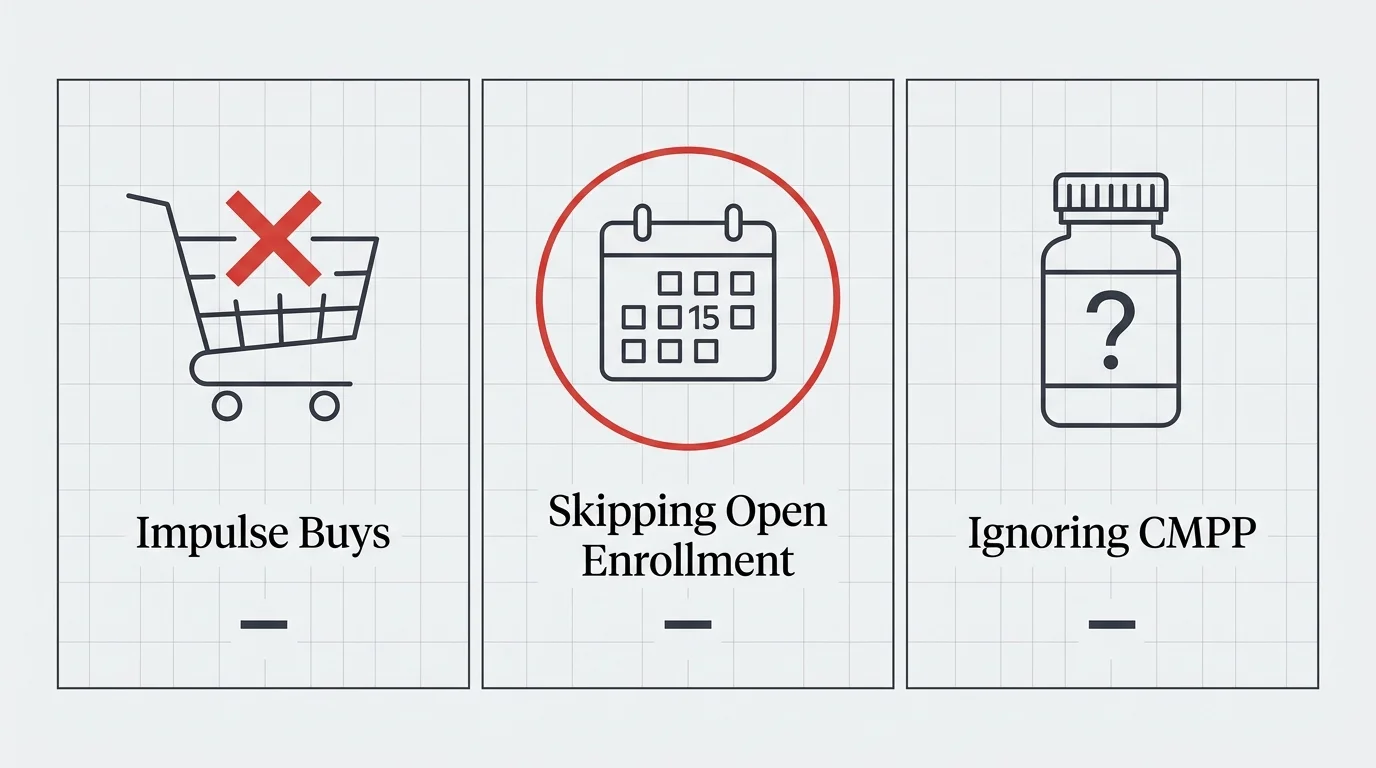
While the warehouse club offers immense value, it also presents distinct hazards for the undisciplined shopper. Recognizing these traps prevents your budget-saving strategy from morphing into a financial drain.
- Buying Bulk Perishables for Two: Purchasing a five-pound bag of fresh spinach or three dozen eggs might look like a great deal per ounce, but it transforms into a total loss if half the food spoils before you can eat it. Empty nesters should strictly limit bulk purchases to non-perishables, frozen foods, and items that can be easily portioned and frozen.
- Falling for the “Treasure Hunt”: Costco specifically designs its store layout to route you past electronics, seasonal decor, and clothing before you reach the pharmacy or grocery sections. Dropping a $60 sweater or a $200 air fryer into your cart negates the savings you earned on your household goods. Stick rigidly to a shopping list.
- Ignoring the Executive Membership Math: Many retirees stick to the standard “Gold Star” membership to save money up front. However, the Executive membership offers 2% cash back on most purchases. If you plan to buy hearing aids, book a vacation, or consistently buy your household goods there, the 2% reward will often exceed the cost of the upgraded membership. Refusing to upgrade when you are already spending the necessary amount leaves free money on the table.
“It’s not how much money you make, but how much money you keep, how hard it works for you, and how many generations you keep it for.” — Robert Kiyosaki

Aligning Your Shopping Habits With a Fixed Income
Transitioning into retirement requires taking a holistic look at your cash flow. If you have recently stopped working, utilizing resources from the Consumer Financial Protection Bureau (CFPB) can help you draft a reliable fixed-income budget. Within that framework, warehouse shopping becomes a predictable, controllable line item.
Consider coordinating your trips with another retired couple or your adult children. Sharing bulk purchases—like splitting a massive pack of paper towels or dividing bulk meats to freeze—allows you to enjoy the low per-unit pricing without the burden of storing excess inventory. Managing your out-of-pocket expenses smartly leaves more of your Social Security and pension income available for the experiences and people you love most.
Frequently Asked Questions About Warehouse Shopping in Retirement
Do I need a membership to use the Costco pharmacy?
No. In most states, laws require pharmacies to be open to the general public. You simply inform the door greeter that you are heading to the pharmacy. However, only paying members have access to the Costco Member Prescription Program, which provides additional discounts on drugs paid for without insurance.
Can Medicare be used for Costco hearing aids?
Original Medicare (Part A and Part B) does not cover routine hearing exams or hearing aids. However, if you are enrolled in a Medicare Advantage (Part C) plan, you may have a hearing aid allowance. Check directly with your insurance provider to see if they reimburse out-of-network purchases, as Costco generally does not bill insurance directly.
Does AARP offer discounts on Costco memberships?
No, there is currently no direct partnership or discount for AARP members joining Costco. However, the savings generated inside the store frequently parallel the discounts older adults seek out through organizations like AARP.
Is the Executive membership worth it for a retired couple?
It depends on your annual spend. The Executive membership costs more upfront, but gives you a 2% annual reward on eligible purchases. If your household spends around $3,000 to $3,500 a year at the warehouse (roughly $250 to $300 a month), the cash-back reward pays for the cost of the upgrade. If you plan a large one-time purchase like hearing aids or a travel package, the upgrade almost always pays for itself immediately.
Maximizing Every Dollar in Your Golden Years
Retaining control of your monthly cash flow is one of the most empowering steps you can take in retirement. By shifting your spending on healthcare, household essentials, and travel to a warehouse model, you effectively insulate your budget against creeping inflation. Take an inventory of your current spending on prescriptions, optical care, and travel, and calculate exactly how much you could save by streamlining those purchases under one roof. Small adjustments in where you buy your staples rapidly compound into thousands of dollars in retained wealth.
Retirement rules and benefit amounts vary based on individual work history, income, and circumstances. This article provides general guidance only. Consult a SHIP counselor, financial advisor, or elder law attorney for advice specific to your situation.
Last updated: May 2026. Medicare and Social Security rules change annually—always verify current details at official government sources.