For many Americans, the math of retirement feels like a puzzle with missing pieces. You have a fixed income, perhaps a mix of Social Security and a 401(k), but property taxes, utilities, and grocery bills continue to climb. Relocating represents one of the most effective levers you can pull to stretch your nest egg. By trading a high-cost metropolis for a smaller, tax-friendly community, you immediately lower your daily expenses while often upgrading your quality of life.
The American South remains a premier destination for relocation. Mild winters, a slower pace of life, and famously favorable tax policies draw thousands of older adults across the Mason-Dixon line every year. However, finding the right location means looking past the expensive, overcrowded coastal hotspots. The true gems for budget retirees lie slightly inland, nestled in foothills, beside tranquil lakes, or wrapped in historic charm.
“The goal of retirement is to live off your assets—not live off your regrets.” — Anonymous
When searching for affordable towns to retire in the South, you need more than just cheap housing. You need robust local healthcare, a welcoming community, and accessible amenities. Here is a curated look at ten exceptional Southern towns where your dollar stretches further without sacrificing the vibrant lifestyle you deserve.

1. Hickory, North Carolina
Nestled in the foothills of the Blue Ridge Mountains, Hickory consistently ranks as a top cheap retirement USA destination. Historically known for furniture manufacturing, the town has reinvented itself as a haven for retirees who want natural beauty without mountain-resort price tags.
Housing costs here sit significantly below the national average, allowing you to downsize comfortably or buy a home outright. Healthcare is another major draw. Hickory serves as a regional medical hub for western North Carolina, meaning you have access to specialists and comprehensive hospital care without driving to Charlotte. The mild four-season climate gives you colorful autumns and gentle winters, perfect for walking the city’s expanding network of greenways.
2. Crossville, Tennessee
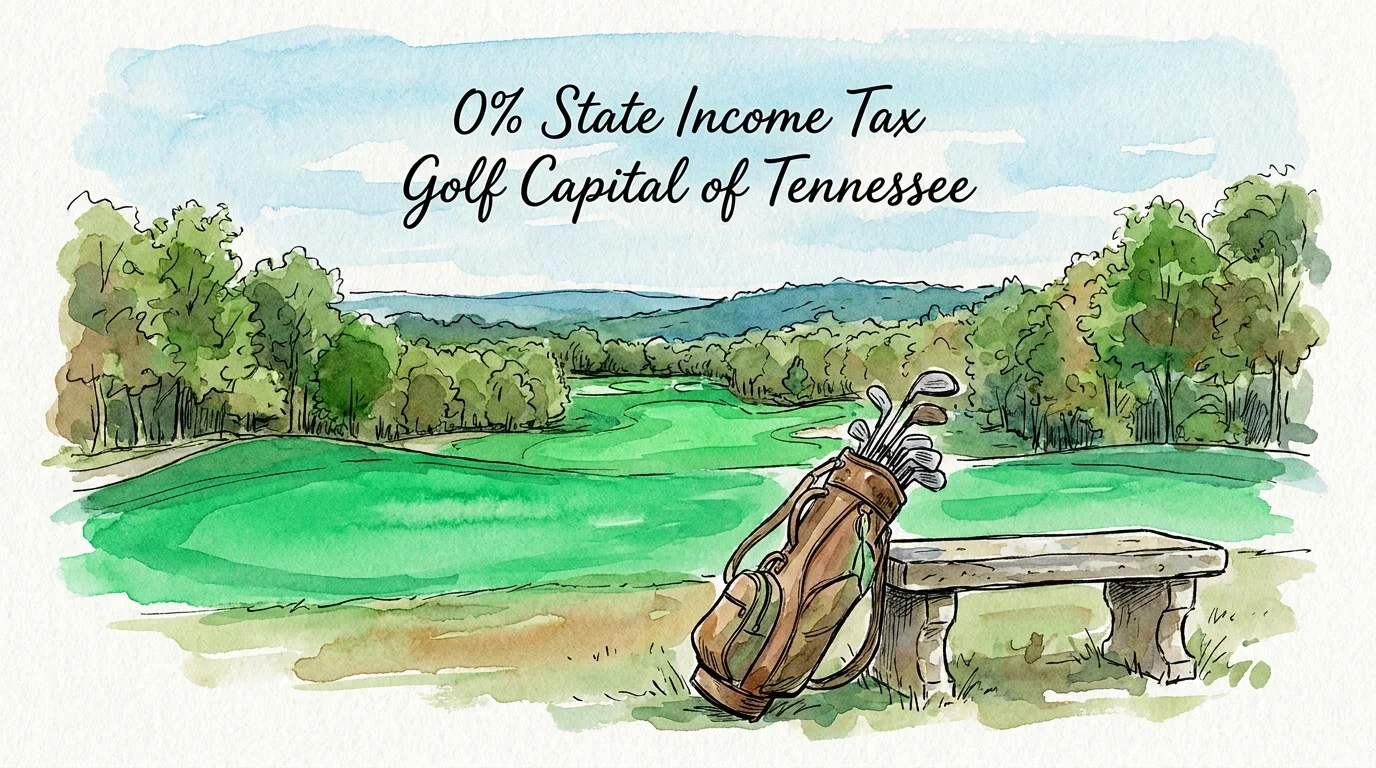
If you love hitting the links but hate paying exorbitant country club dues, Crossville deserves your attention. Known as the “Golf Capital of Tennessee,” this town sits on the scenic Cumberland Plateau. Because Tennessee levies no state income tax—and does not tax your Social Security benefits or pension—your retirement income stays in your bank account.
Crossville offers numerous master-planned communities tailored for older adults. The cost of living remains low, and the area is surrounded by state parks offering hiking, fishing, and boating. While it has a distinct small-town feel, it sits conveniently along Interstate 40, making trips to Nashville or Knoxville easy when you want big-city entertainment or a major airport.

3. Mountain Home, Arkansas
Tucked into the Ozark Mountains near the Missouri border, Mountain Home is an outdoor enthusiast’s paradise. Bounded by two massive lakes—Norfork and Bull Shoals—and intersected by the White River, the area offers world-class trout fishing and boating.
Arkansas is notoriously friendly to budget retirees. The state does not tax Social Security, and property taxes are among the lowest in the nation. Mountain Home features a remarkably low cost of living, allowing you to secure lake-adjacent property for a fraction of what it would cost in other states. The town also supports a surprisingly robust medical system, Baxter Health, which caters heavily to the local older demographic.

4. Athens, Georgia
Retiring in a college town offers distinct advantages: walkable neighborhoods, lifelong learning opportunities, diverse dining, and excellent cultural events. Athens, home to the University of Georgia, provides all these benefits with a reasonable price tag.
Georgia treats retirees exceptionally well financially. The state provides a generous retirement income exemption—up to $65,000 per person for those 65 and older—meaning a married couple could potentially see $130,000 of retirement income escape state taxes entirely. In Athens, you can audit university classes, enjoy SEC football, and access a vibrant arts scene while keeping your expenses well within a fixed budget.

5. Tupelo, Mississippi
Famous as the birthplace of Elvis Presley, Tupelo combines rich musical history with incredible economic value. Mississippi is one of the most tax-friendly states for retirees in the country. It exempts all qualified retirement income from state taxes, including 401(k) withdrawals, pensions, and Social Security.
Tupelo serves as a cultural and medical center for northeast Mississippi. The North Mississippi Medical Center is the largest non-metropolitan hospital in the United States, providing peace of mind as your healthcare needs evolve. The town features a lively downtown, the scenic Natchez Trace Parkway for leisurely drives, and housing prices that make early retirement feasible.

6. Abingdon, Virginia
For those who desire a vibrant arts scene mixed with Appalachian heritage, Abingdon is a spectacular choice. Located in the Blue Ridge Highlands of southwest Virginia, this historic town features brick sidewalks, centuries-old architecture, and the famous Barter Theatre.
Abingdon gives small town seniors a deeply connected community feel. Virginia does not tax Social Security benefits, and the overall cost of living in the southwestern part of the state drops significantly compared to the Washington D.C. suburbs. You can spend your days cycling the 34-mile Virginia Creeper Trail or exploring local artisan markets without straining your wallet.

7. Thomasville, Georgia
Known as the “City of Roses,” Thomasville offers classic Southern charm just north of the Florida state line. If you want the warm winters of Florida without the sky-high insurance premiums and crowded beaches, Thomasville is an ideal compromise.
The town boasts an award-winning historic downtown filled with independent boutiques, bakeries, and restaurants. Housing remains highly affordable, and you benefit from Georgia’s favorable retiree tax structure. Tallahassee, Florida, is only a 45-minute drive away, providing easy access to a regional airport and extensive medical facilities.

8. Bentonville, Arkansas
Bentonville defies the typical small-town stereotype. As the birthplace of Walmart, the town benefits from massive corporate philanthropy, most notably the Crystal Bridges Museum of American Art, which rivals museums in New York or Chicago—and offers free admission.
Despite these high-end cultural amenities and a booming culinary scene, Bentonville remains anchored in the affordable Ozark region. While housing costs have risen faster here than in other parts of Arkansas, it still represents a bargain compared to the national average. It is one of the best south retire locations if you want a town that is actively growing and attracting diverse populations.

9. Fairhope, Alabama
Sitting on the cliffs overlooking Mobile Bay, Fairhope is arguably the most picturesque town on this list. Known for its Spanish moss-draped live oaks, sweeping waterfront parks, and vibrant arts community, Fairhope looks like a high-priced resort town but offers surprising affordability.
Alabama boasts some of the lowest property tax rates in the entire United States, and the state completely exempts Social Security and defined benefit pensions from income tax. While real estate in Fairhope is slightly more expensive than inland Alabama towns, it remains highly accessible compared to coastal communities in Florida or the Carolinas.

10. Winchester, Virginia
Located at the northern edge of the Shenandoah Valley, Winchester blends Civil War history, apple orchards, and a bustling pedestrian mall. It provides a distinct change of seasons without the harsh winters of the Northeast.
Winchester appeals to retirees who want to be within a reasonable driving distance of family in the Mid-Atlantic while escaping the crushing cost of living in metropolitan areas. The Valley Health system provides excellent local care, and the housing market offers everything from historic downtown condos to newer 55-plus developments on the outskirts of town.
Comparing the Financial Realities
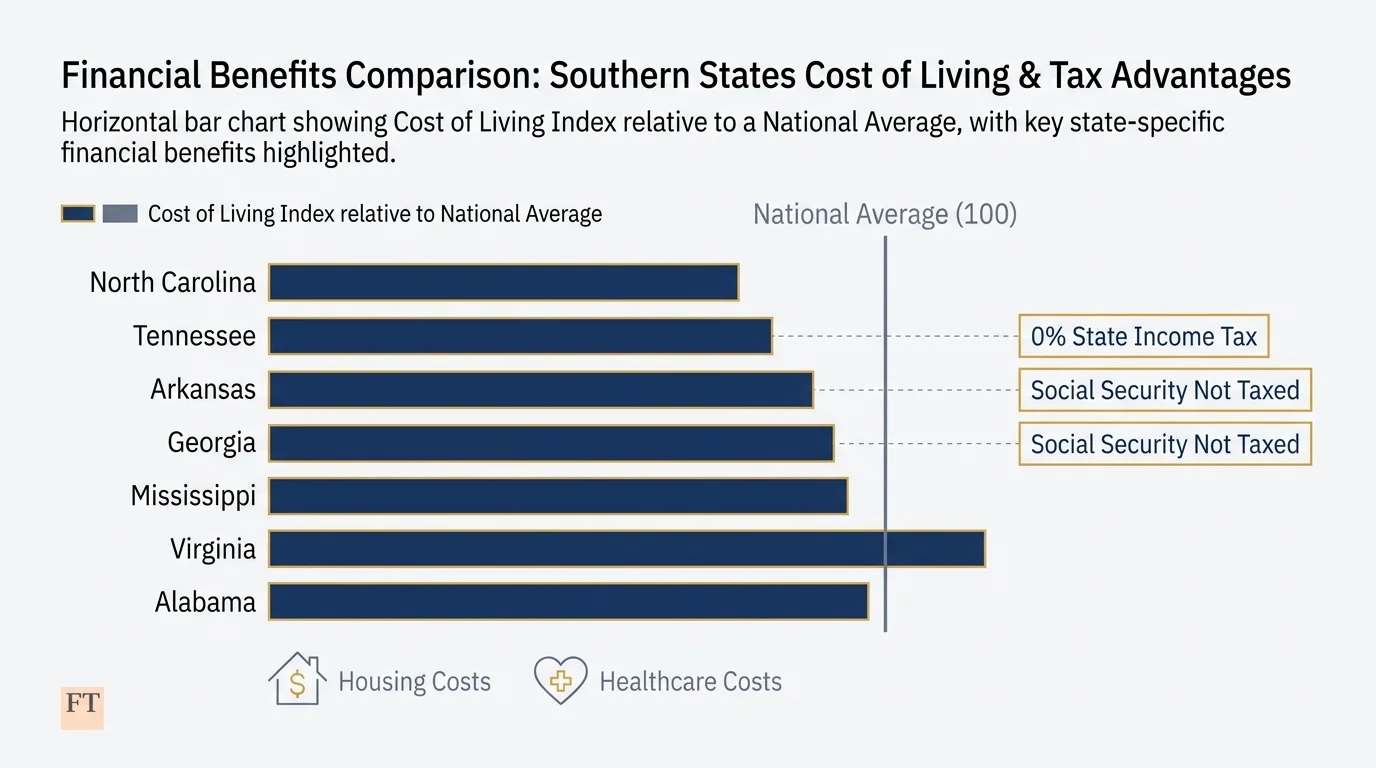
To help you weigh your options, review this side-by-side comparison of how these states treat your money. Remember, a low cost of living can easily be offset by high taxes, so you must look at the complete financial picture.
| Town & State | Social Security Taxed? | State Tax Friendliness for Retirees | Primary Appeal |
|---|---|---|---|
| Hickory, NC | No | Moderately Friendly (Flat income tax rate) | Foothills climate, excellent healthcare |
| Crossville, TN | No | Very Friendly (No state income tax) | Golf courses, outdoor recreation |
| Mountain Home, AR | No | Friendly (Low property taxes) | Lake fishing, nature, deep affordability |
| Athens, GA | No | Very Friendly ($65k income exemption 65+) | College town energy, arts, lifelong learning |
| Tupelo, MS | No | Extremely Friendly (No tax on retirement income) | Large medical center, deep musical history |
| Abingdon, VA | No | Moderately Friendly (Age deductions available) | Historic charm, vibrant local theater |
| Thomasville, GA | No | Very Friendly ($65k income exemption 65+) | Warm winters, historic downtown |
| Bentonville, AR | No | Friendly (Low property taxes) | World-class art, booming economy |
| Fairhope, AL | No | Friendly (Very low property taxes) | Coastal beauty, walkable community |
| Winchester, VA | No | Moderately Friendly (Age deductions available) | Shenandoah Valley location, historic sites |
“Don’t simply retire from something; have something to retire to.” — Harry Emerson Fosdick
Costly Mistakes to Avoid
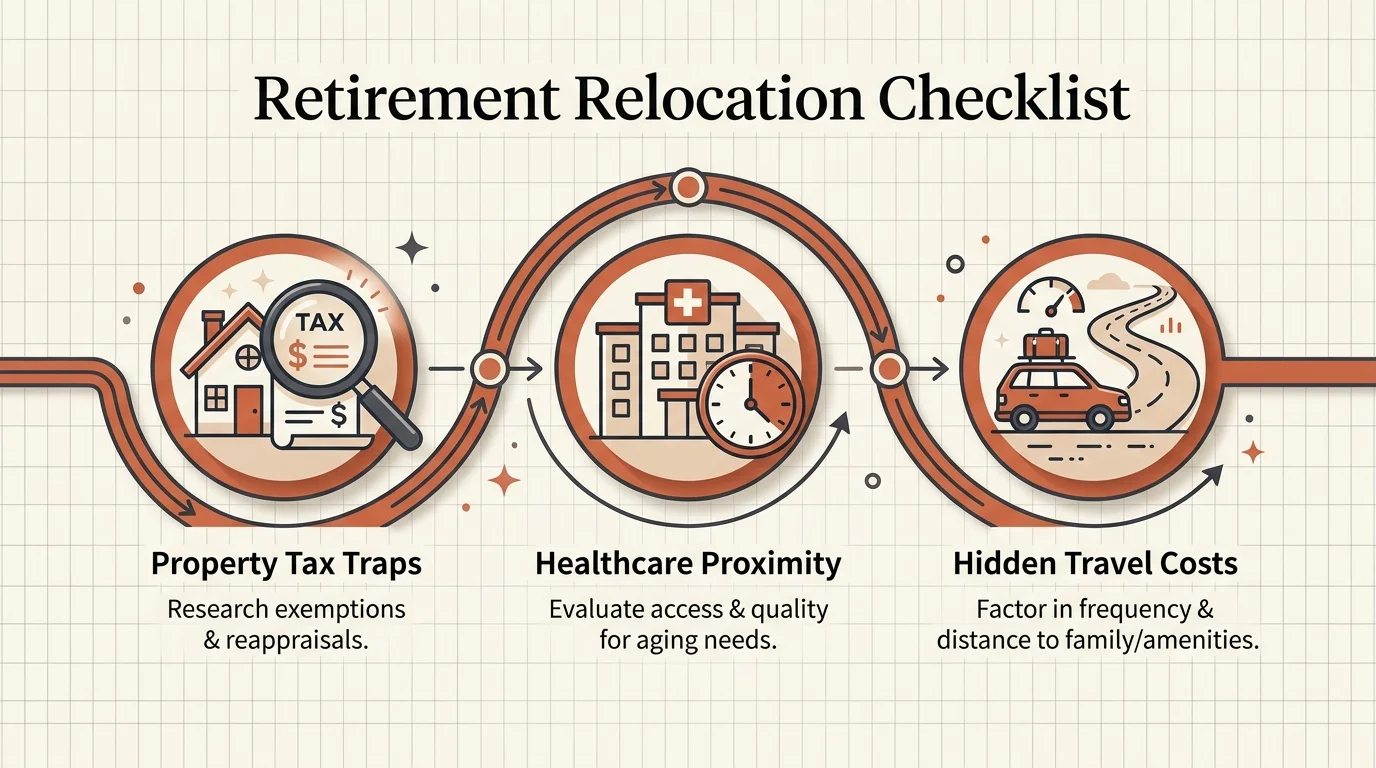
Relocating for retirement requires more than packing boxes and forwarding your mail. Avoid these common pitfalls that can turn a dream move into a financial headache.
- Buying Sight Unseen: Never purchase a home based solely on internet photos. Rent an Airbnb in your chosen town for at least a month. Visit the local grocery store, drive to the nearest hospital, and experience the traffic patterns. You need to know how the town feels on a rainy Tuesday, not just during a weekend festival.
- Ignoring Extreme Weather Risks: The South offers beautiful climates, but it also brings unique weather challenges. Towns near the Gulf Coast (like Fairhope) or in tornado alleys face steep homeowners insurance premiums. Always get insurance quotes before making an offer on a house, as these monthly premiums can obliterate your careful budgeting.
- Forgetting About Healthcare Networks: Moving across state lines almost certainly requires changing your healthcare plans. If you utilize a Medicare Advantage plan, your current network likely will not cover routine care in your new state. You must verify that your new town has doctors accepting new Medicare patients before you commit.

Don’t DIY These Decisions
While researching towns online is an excellent first step, executing an interstate move during retirement requires professional guidance. Do not try to manage the intricate details of tax law, healthcare enrollment, and real estate transactions alone.
First, consult a fee-only financial planner or tax professional. State tax laws contain complex nuances. A state might not tax your pension, but they could heavily tax your IRA withdrawals or impose steep sales taxes that erode your daily purchasing power. Second, speak with an elder law attorney in your new state to update your estate planning documents; a power of attorney drafted in New York might face hurdles when presented at a bank in Mississippi.
Finally, navigate your healthcare transition with expert help. Use the Medicare Plan Finder to research available Part D and Medicare Advantage options in your new zip code. You can also connect with a State Health Insurance Assistance Program (SHIP) counselor for free, unbiased advice on switching your coverage seamlessly. If you need help finding local aging services in your new destination, the Eldercare Locator is an invaluable federal resource.
Frequently Asked Questions
Does my Medicare coverage move with me to a new state?
If you have Original Medicare (Part A and Part B), your coverage is valid anywhere in the United States that accepts Medicare. However, if you have a Medicare Advantage (Part C) plan or a standalone Part D prescription drug plan, these are tied to specific geographic service areas. Moving out of your plan’s service area triggers a Special Enrollment Period, allowing you to switch to a new plan in your new town without penalty.
Are there tools to help me compare the livability of different towns?
Yes. Organizations like AARP offer Livability Indexes that score neighborhoods and towns based on housing, transportation, neighborhood access, and healthcare. These tools provide objective data to help you determine if a town truly supports an aging population.
Do I have to pay taxes in two states in the year that I move?
Usually, yes. You will likely need to file part-year resident tax returns in both your former state and your new state for the year you relocate. This ensures you only pay taxes to each state for the exact months you lived there. Because state domicile rules can be strict, keep thorough records of your moving date, utility setups, and voter registration to prove exactly when you became a resident of your new affordable Southern town.
What makes a small town a good fit for older adults?
Beyond affordability, look for robust infrastructure. A great retirement town offers accessible sidewalks, public transit options (like dial-a-ride services), an active senior center, and proximity to a regional hospital. It should also have opportunities for civic engagement, volunteering, and social connection, which are vital for aging well.
Choosing where to spend your retirement years is one of the most exciting decisions you will make. The South offers dozens of charming, budget-friendly communities where your savings can provide a comfortable, engaging lifestyle. Take your time, plan extended visits to your top choices, and assemble a team of professionals to help you manage the financial and medical transitions.
Information in this article reflects current rules as of the publication date and may change. Always confirm benefit details directly with Social Security Administration, Medicare.gov, or relevant government agencies before making decisions.
Last updated: April 2026. Medicare and Social Security rules change annually—always verify current details at official government sources.