Soaring metropolitan living costs and congested highways are pushing thousands of older Americans away from major urban centers. Relocating to a smaller community gives you immediate financial breathing room while preserving your independence.
Rather than staying locked into high-overhead housing, retirees across the country are choosing smaller cities for lower expenses and simpler lifestyles. This geographic transition helps your savings stretch much further without sacrificing essential services.
Understanding how this relocation migration unfolds enables you to make deliberate choices about your next chapter. Discover why choosing smaller cities for retirees can secure your financial freedom and enhance your everyday lifestyle.
The Bottom Line Up Front
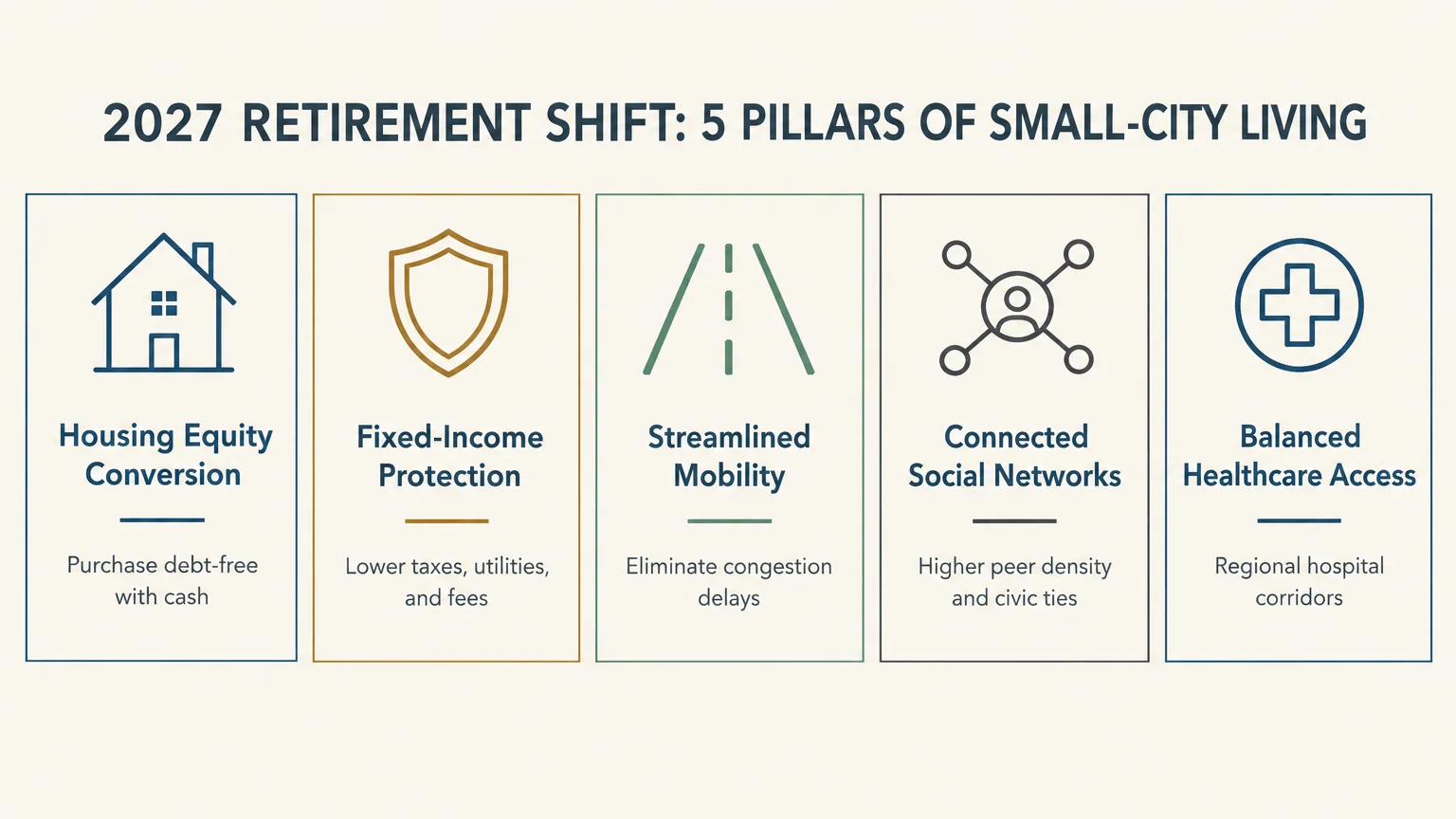
Retirement trends in 2027 highlight a decisive shift toward smaller municipalities and metro-adjacent counties. You can capitalize on these demographic patterns to optimize your lifestyle and long-term budget.
- Housing Equity Conversion: Downsizing in smaller markets allows you to purchase a home with cash and eliminate monthly mortgage payments entirely.
- Fixed-Income Protection: Reduced local taxes, utility rates, and service fees shield your monthly Social Security benefits from inflationary pressures.
- Streamlined Daily Mobility: Less traffic congestion preserves your daily autonomy and makes routine errands quick and stress-free.
- Connected Social Environments: Higher concentrations of older adults foster natural peer networks and active civic engagement.
- Balanced Healthcare Access: Settling in communities adjacent to major metros preserves your access to advanced regional hospital networks.

1. Unlocking Home Equity to Eliminate Housing Debt
Baby Boomers dominate today’s real estate marketplace as both buyers and sellers. Recent data reveals that older adults hold an unprecedented volume of accumulated residential wealth.
According to the National Association of Realtors (NAR) 2026 Home Buyers and Sellers Generational Trends Report, Baby Boomers make up 42% of all home buyers. Even more impressive, they represent 55% of all home sellers nationwide.
Older Boomers typically lived in their homes for 15 years before selling. Over the prior six years alone, the average homeowner accumulated $128,100 in housing wealth.
With the national median existing-home sale price reaching $408,800 in March 2026, selling a longtime primary residence generates substantial liquid capital. You can convert that equity directly into lasting retirement stability.
More than half of Boomer sellers use the proceeds from their home sales to purchase their next property with cash. Moving to affordable small cities eliminates the burden of high-interest mortgages completely.
Carrying a mortgage on a fixed income creates continuous budgetary strain. When you retire in a small city, lower home acquisition prices let you become entirely debt-free.
Freeing up your cash flow by removing monthly principal and interest payments transforms your financial landscape. You redirect those funds toward travel, healthcare, hobbies, and family legacy goals.
The 2026 NAR report confirmed that 28% of Older Boomers bought their homes in small towns. Meanwhile, Younger Boomers represented the demographic group most likely to purchase in rural areas.
Downsizing square footage also slashes your ongoing property insurance premiums and utility bills. A smaller home in an accessible community demands far less upkeep as you age.
Smart movers target established neighborhoods where single-story layouts and universal design features are standard. This approach prevents expensive remodeling projects later in retirement.
2. Defending Fixed Incomes Against Ongoing Cost Pressures
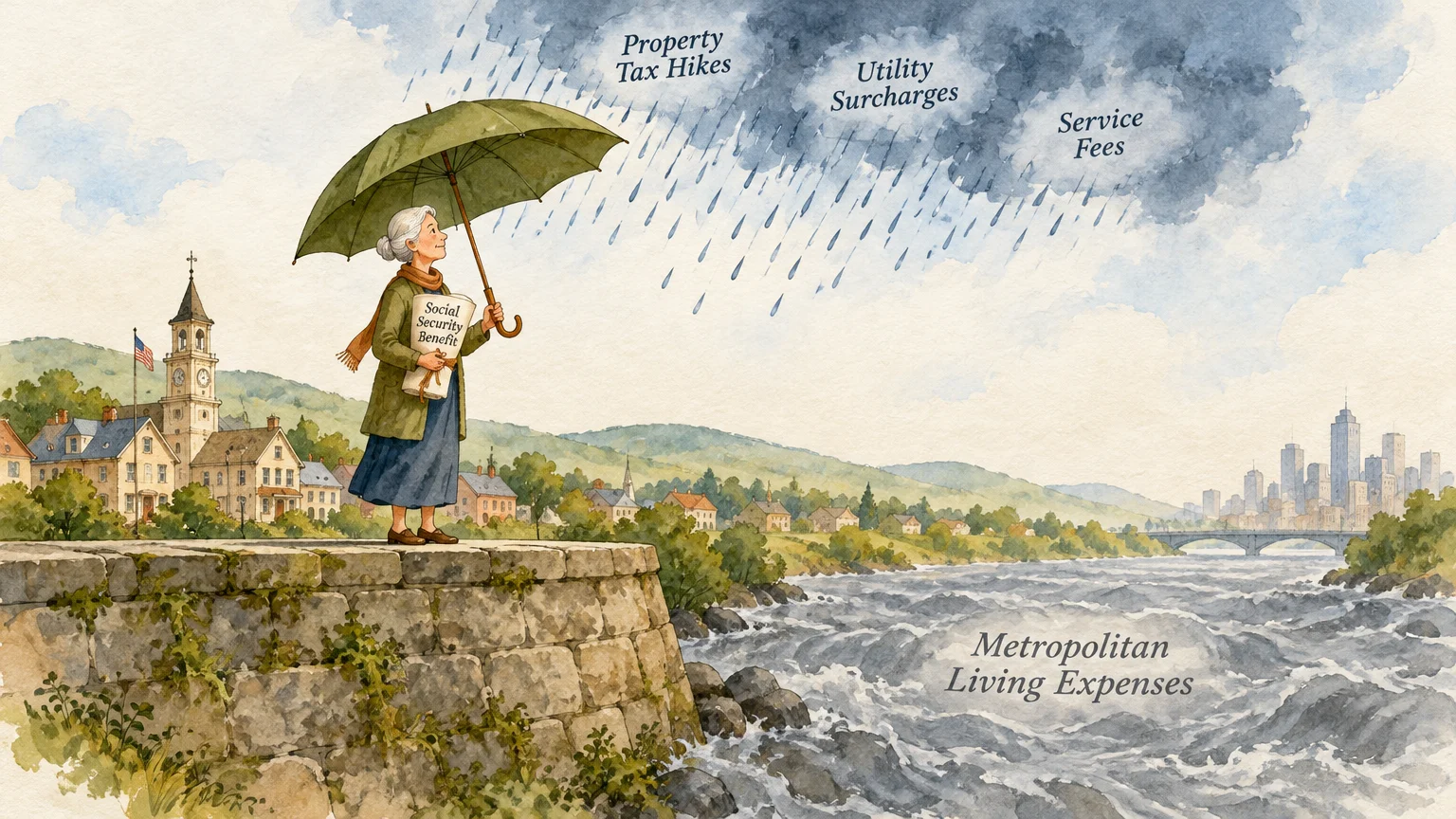
Inflation continues to challenge households that rely on fixed distributions and monthly benefit checks. Relocating to a smaller market provides immediate relief against compounding day-to-day expenses.
On October 14, 2026, the Social Security Administration announced a 3.6% cost-of-living adjustment (COLA) for 2027. This increase represents the largest annual adjustment since 2023.
The adjustment raises the average monthly Social Security retirement benefit by $75 starting in January 2027. This boost directly affects nearly 72 million beneficiaries across the country.
Additionally, 7.3 million Supplemental Security Income recipients see adjusted payments arrive on December 31, 2026. While higher checks help, living costs in large cities quickly swallow modest gains.
An extra $75 per month provides noticeable breathing room in a smaller regional economy. In contrast, escalating transit fees and municipal taxes in major cities easily absorb that entire amount.
Daily consumer costs differ drastically between primary metropolitan areas and smaller regional towns. Groceries, routine home maintenance, vehicle registrations, and dining out all cost considerably less.
The Consumer Financial Protection Bureau provides helpful planning tools to calculate your real spending needs before relocating. Analyzing actual living costs ensures your income matches local market prices.
“It’s not how much money you make, but how much money you keep, how hard it works for you, and how many generations you keep it for.” — Robert Kiyosaki
Property tax burdens often accelerate aggressively in urban centers undergoing rapid gentrification or infrastructure rebuilding. Smaller municipalities frequently offer stable tax rates and targeted homestead exemptions for seniors.
Reducing your recurring baseline expenses protects your investment portfolios during volatile financial market cycles. You withdraw smaller sums from retirement accounts, allowing principal balances to compound longer.
Budget predictability brings immense peace of mind during retirement. Living in an affordable small city insulates your monthly income against volatile municipal rate hikes.

3. Escaping Traffic Congestion to Maintain Independence
Gridlock and aggressive driving conditions in dense urban cores present significant daily hazards for older motorists. Highway construction, endless delays, and complex intersections make simple trips exhausting.
Relocating to a smaller community transforms your driving experience from a nerve-wracking chore into an effortless routine. You complete essential errands in minutes rather than spending half your day behind the wheel.
Smaller towns feature intuitive road layouts and manageable traffic volumes. You easily travel to grocery stores, fitness centers, community libraries, and medical clinics.
Preserving your driving confidence directly supports your overall independence as you grow older. Driving on calmer roadways lets you stay active and self-sufficient for years longer.
Many of the best small cities 2027 offers feature vibrant, walkable downtown corridors. You can park your vehicle once and stroll safely to pharmacies, local eateries, and community centers.
Dense urban living often forces retirees to rely on crowded public transit systems or expensive parking garages. Smaller cities provide convenient storefront parking and accessible curbside accommodations.
Shorter commutes also generate substantial secondary savings on fuel and routine vehicle maintenance. Lower driving mileage reduces your auto insurance premiums through annual low-mileage discount programs.
Less time idling in gridlock leaves you with more energy for enriching daily pursuits. You spend your afternoons enjoying parks and local recreation rather than sitting in traffic jams.

4. Establishing Tighter Social Networks and Community Support
Social isolation poses severe physical and mental health risks for aging adults living in sprawling urban environments. Vast metropolitan populations ironically make it harder to build deep, authentic neighborhood friendships.
Smaller cities foster cohesive social structures where neighbors naturally recognize and assist one another. Civic groups, hobby clubs, and volunteer organizations welcome new participants with open arms.
According to U.S. Department of Agriculture Economic Research Service data, 21% of the U.S. nonmetro population is over age 65. In major metropolitan areas, older adults comprise only 17% of residents.
This demographic reality means smaller towns already possess robust infrastructure tailored toward older residents. Senior centers, local recreation leagues, and municipal programs cater directly to your generation.
The 2026 NAR report noted that 41% of home sellers and 31% of buyers moved primarily to be closer to friends and family. Relocating to regional communities often reunites retirees with extended family networks.
“Don’t simply retire from something; have something to retire to.” — Harry Emerson Fosdick
A smaller community makes it easy to step into leadership roles within local non-profit groups, historical boards, or garden clubs. Your accumulated career skills provide immense value to regional civic organizations.
Meaningful social engagement actively prevents loneliness and preserves cognitive health throughout retirement. In a smaller city, you quickly become an integral part of the local community fabric.
5. Securing Healthcare Access in Metro-Adjacent Markets
Healthcare expenses represent one of the single largest expenditures you will face during your retirement years. Managing these costs requires careful planning and strategic location choices.
According to Fidelity’s 2026 retiree health care cost estimate, an average 65-year-old retiring in 2026 will spend $185,500 on healthcare. This figure represents a 7% increase over the prior year’s estimate.
Concurrently, the 2026 Medicare Trustees Report projects that standard monthly Part B premiums will rise by $6.60. Costs will increase from $202.90 in 2026 to $209.50 in 2027.
Prescription plan choices are also contracting rapidly across the country. Stand-alone Medicare Part D prescription drug plans dropped 22% in a single year to an average of just 11 plans per beneficiary.
That plan count is down 63% from five years ago when beneficiaries chose from roughly 30 different options. This shrinking selection makes reviewing local pharmacy and provider networks vital before moving.
You can review available regional coverage using the official Medicare Plan Finder before finalizing any relocation decisions. Checking local hospital networks ensures your preferred doctors accept your specific policy.
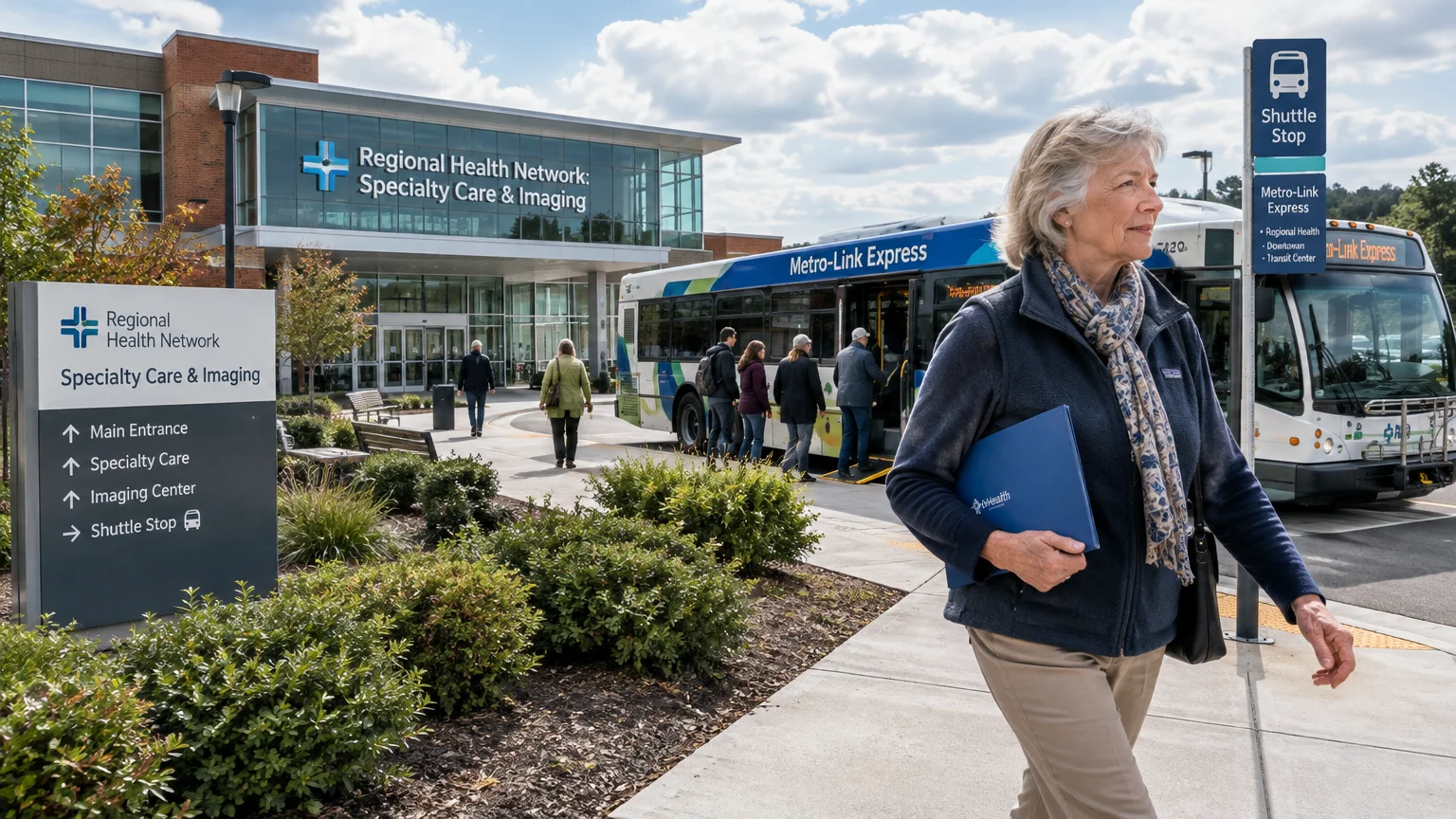
To balance quality care and affordability, retirees are strategically moving into nonmetro counties directly adjacent to major metropolitan areas. This geographic positioning gives you lower residential overhead while keeping you within a short drive of world-class medical centers.
USDA data confirms that migration into smaller counties is heavily concentrated in areas bordering larger metros. You gain peaceful living without sacrificing proximity to specialized medical experts.
Regional hospitals in these adjacent cities handle routine tests, preventative care, and minor procedures. If you ever require specialized tertiary care, top university hospitals remain readily accessible.
Comparing Large Metros and Adjacent Smaller Cities
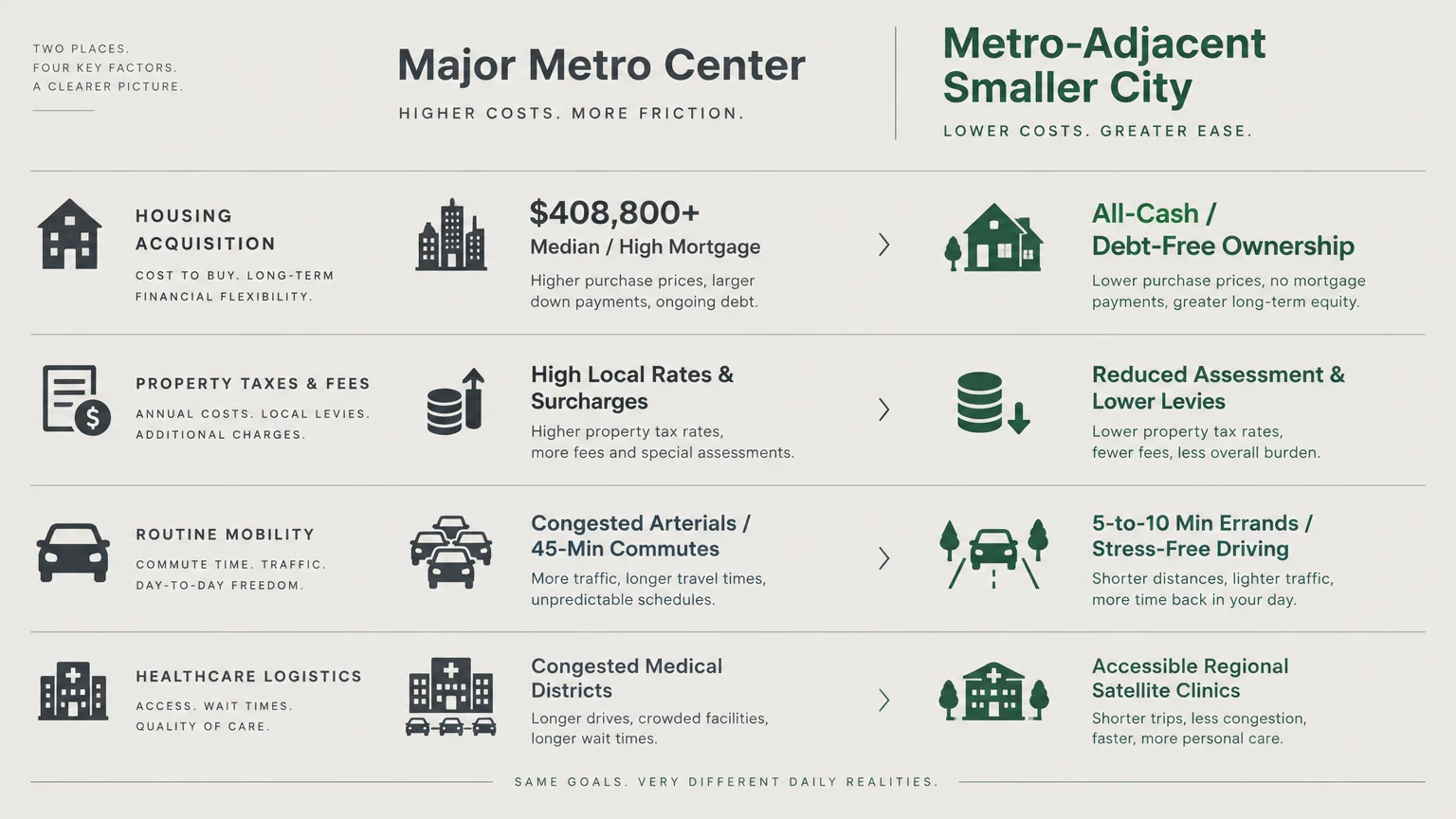
Choosing the right retirement environment requires balancing financial parameters, daily conveniences, and lifestyle preferences. Evaluating these factors side by side helps clarify which setting matches your personal retirement strategy.
| Evaluation Factor | Major Metropolitan Core | Adjacent Smaller City |
|---|---|---|
| Median Home Value | High; frequently exceeds national median benchmarks. | Affordable; aligns with or falls below national medians. |
| Debt Elimination Potential | Difficult; high living costs eat away accumulated home equity. | High; proceeds from sales often allow full-cash purchases. |
| Daily Transportation | Congested; frequent traffic delays and expensive parking. | Efficient; light traffic and simple storefront parking. |
| Demographic Alignment | Only 17% of residents are age 65 or older. | Roughly 21% of residents are age 65 or older. |
| Access to Specialized Care | Immediate physical access, but severe network congestion. | Direct access to local clinics; regional metro care within 45 minutes. |
| Everyday Living Expenses | Elevated rates for services, groceries, and dining out. | Substantially lower recurring costs for household overhead. |
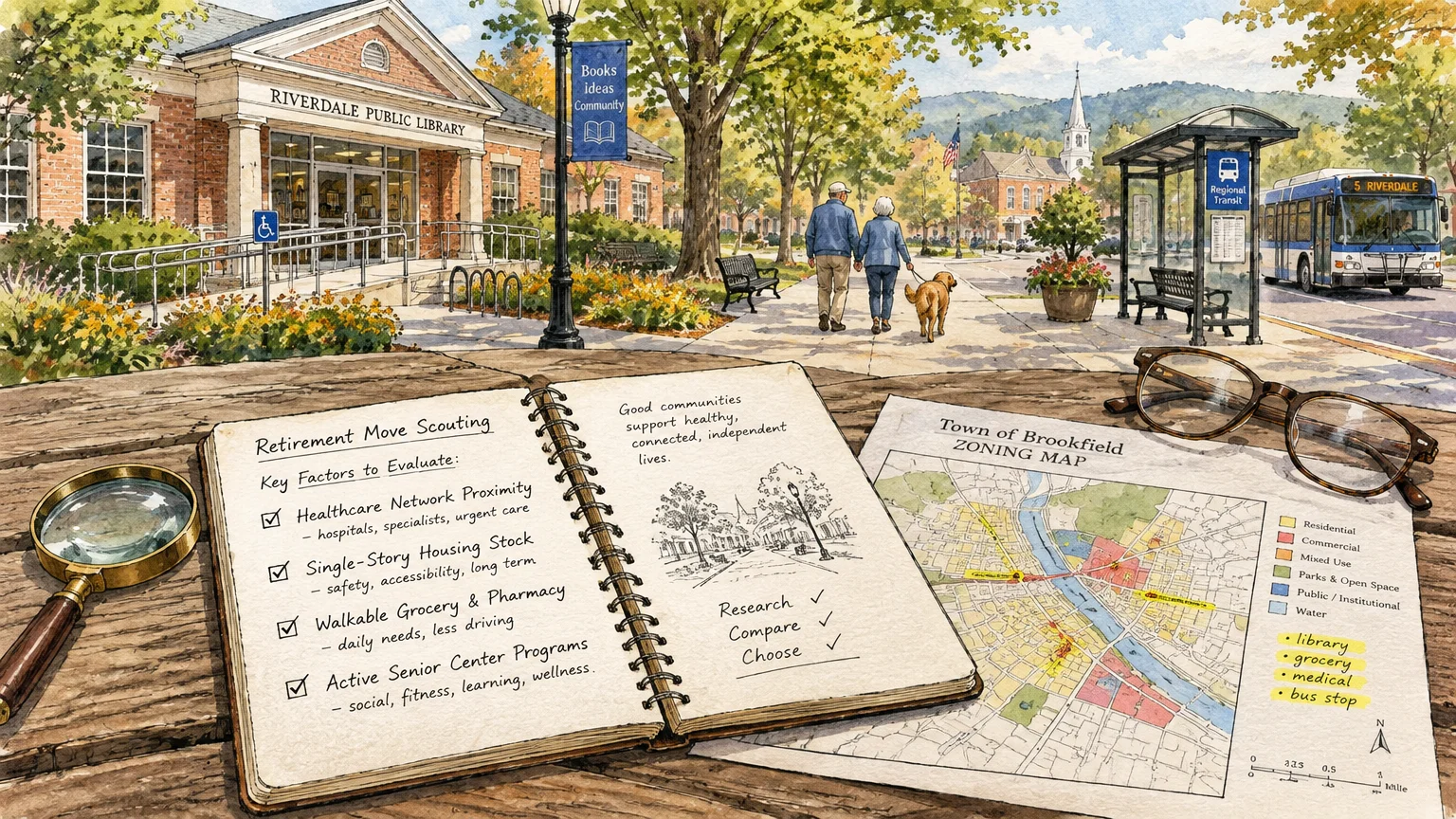
How to Evaluate a Smaller City Before Moving
Relocating during retirement involves much more than finding an attractive house on a real estate website. You must thoroughly vet the community to ensure it supports your long-term independence.
Follow these actionable evaluation steps before committing your resources to a new location:
- Audit Local Healthcare Networks: Confirm that primary care doctors in the area accept new Medicare patients. Verify that regional hospitals provide comprehensive cardiology and orthopedic services.
- Test the Real-World Commute: Drive between your prospective neighborhood and major regional medical centers during peak morning hours. Make sure travel times feel safe and manageable.
- Investigate Senior Support Services: Contact the local Area Agency on Aging using the Eldercare Locator. Inquire about community meal programs, adult classes, and transit options.
- Examine Local Property Tax Trends: Research municipal tax assessments over the past five years. Check whether the municipality grants senior tax freezes or homestead exemptions.
- Spend Time Across Multiple Seasons: Rent an extended-stay property for several weeks during mid-winter or mid-summer. Experiencing local weather extremes reveals whether you will truly enjoy year-round residency.
- Evaluate Walkability and Services: Measure the distance from prospective homes to daily necessities. Ensure grocery stores, pharmacies, and hardware shops are conveniently nearby.

Don’t Make These Mistakes
Relocating to a new municipality is exciting, but hasty decisions can undermine your retirement security. Avoiding common pitfalls ensures your geographic transition proceeds smoothly.
Do not confuse a charming vacation retreat with a functional year-round home. Popular tourist towns often see essential services shut down during off-seasons, leaving residents with limited amenities.
Do not assume that all rural or small-city housing is inexpensive. Historic resort communities or popular mountain enclaves often carry property taxes that rival major metropolitan areas.
Never buy a home without verifying digital connectivity and broadband speeds. Reliable high-speed internet is essential for modern telehealth appointments and keeping in touch with distant family.
Avoid moving into completely isolated rural pockets that lack municipal services. As your physical mobility changes, living on unpaved roads far from emergency responders creates serious safety risks.
Do not overlook the specific tax structure of your destination state. Some states exempt Social Security income and military pensions, while others tax private retirement plan distributions aggressively.
Finally, avoid severing your existing social circles without building a plan for new connections. Cultivating local relationships takes deliberate effort, so choose communities with thriving clubs and social centers.

When Professional Advice Is Worth It
Relocating to a new city impacts your tax profile, investment strategy, and healthcare coverage. Engaging qualified specialists guarantees that your transition remains compliant and financially sound.
Consider consulting these specific retirement professionals as you plan your move:
- State Health Insurance Assistance Program (SHIP) Counselors: SHIP counselors provide free, unbiased guidance on Medicare options in your new county. They help you compare the shrinking pool of Part D plans and identify network gaps.
- Fee-Only Financial Advisors: A fiduciary advisor helps you reinvest equity proceeds from your home sale. They design tax-efficient withdrawal strategies tailored to your new local cost of living.
- Elder Law Attorneys: Estate planning rules differ significantly between states. An attorney licensed in your destination state can update your wills, trusts, and advance healthcare directives.
- Social Security Claiming Specialists: Claiming specialists help you synchronize spousal benefits and timing strategies. They ensure you maximize your monthly household entitlement under current COLA rules.
Frequently Asked Questions
How do I verify Medicare coverage when moving to a smaller city?
Use the official Medicare Plan Finder tool to search available policies by your prospective ZIP code. Contact local clinics directly to confirm which Medicare Advantage and Medicare Supplement networks they currently accept.
Consulting a local SHIP counselor will provide clear insight into regional network stability and plan availability.
Why are metro-adjacent counties so popular for retirees?
Adjacent counties deliver lower property acquisition costs and reduced property tax rates while preserving regional accessibility. You enjoy peaceful small-town living while staying within an hour of major specialized medical centers.
This geographic compromise allows you to lower overhead without sacrificing critical infrastructure.
Will moving to a small city reduce my state income taxes?
Tax liabilities depend entirely on the specific state and municipal jurisdiction you select. Many retirement-friendly states completely exempt Social Security benefits and public pensions from state income taxes.
Always verify local income, sales, and municipal property tax laws with a qualified CPA before purchasing property.
Is it better to rent or buy when relocating to a new town?
Renting for six to twelve months provides an excellent opportunity to test out neighborhoods before purchasing. You learn traffic flow, seasonal weather patterns, and social dynamics without making an irreversible real estate commitment.
Once you confirm the community matches your lifestyle, you can deploy your home equity into a permanent residence.
Moving Forward With Confidence
Relocating to a smaller community in 2027 provides a proven pathway to reduce expenses and eliminate debt. By leveraging your home equity, you secure financial peace of mind while enjoying an engaging, community-centered lifestyle.
Begin your relocation journey by drafting a realistic comparison budget and scheduling visits to target towns. Taking proactive steps today ensures that your retirement years are comfortable, affordable, and deeply rewarding.
Retirement rules and benefit amounts vary based on individual work history, income, and circumstances. This article provides general guidance only. Consult a SHIP counselor, financial advisor, or elder law attorney for advice specific to your situation.
Last updated: October 2026. Medicare and Social Security rules change annually—always verify current details at official government sources.