Every year, more than nine million older Americans leave roughly $58 billion in financial assistance on the table. You could easily reclaim thousands of dollars annually through underutilized programs designed specifically for retirees.
These support streams help pay for everyday necessities like prescription drugs, Medicare premiums, groceries, and home heating costs. You paid taxes into these safety nets for decades, yet complex rules often keep eligible seniors from applying.
Claiming this assistance will not reduce your regular Social Security checks or burden other taxpayers. Reviewing your eligibility today could instantly put substantial cash back into your household budget.
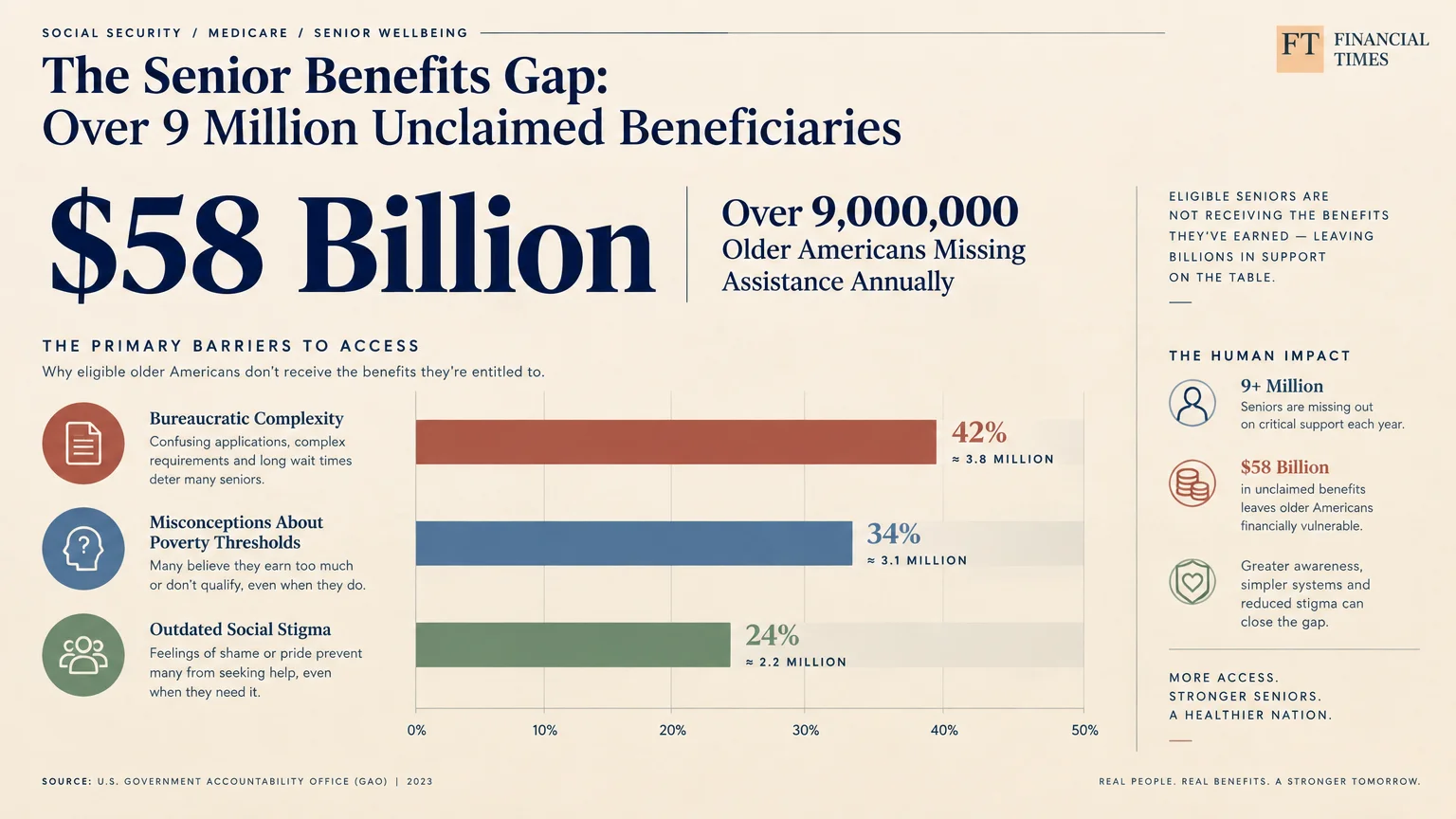
The $58 Billion Benefits Gap Hiding in Plain Sight
A nationwide study by the National Council on Aging and the Urban Institute uncovered a staggering reality. Over nine million seniors miss out on roughly $58 billion in public benefits every single year.
Many retirees assume these government assistance programs exist only for individuals facing severe poverty. In reality, millions of middle-income retirees meet the statutory qualification criteria right now.
Other seniors walk away because complex application forms and bureaucratic jargon feel utterly overwhelming. Many proud workers also harbor an outdated stigma, mistakenly viewing earned public benefits as welfare.
You spent decades paying taxes into local, state, and federal treasuries to build these systems. Accessing unclaimed benefits seniors qualify for simply means claiming the financial support you spent a lifetime funding.
Modern screening platforms make identifying these opportunities much faster than in past years. You can readily discover programs tailored to your state, household income, and specific healthcare needs.
1. Medicare Extra Help: Thousands in Prescription Relief
Prescription medications represent one of the fastest-growing expenses for households on fixed incomes. The federal Medicare Extra Help program lowers these out-of-pocket drug costs substantially.
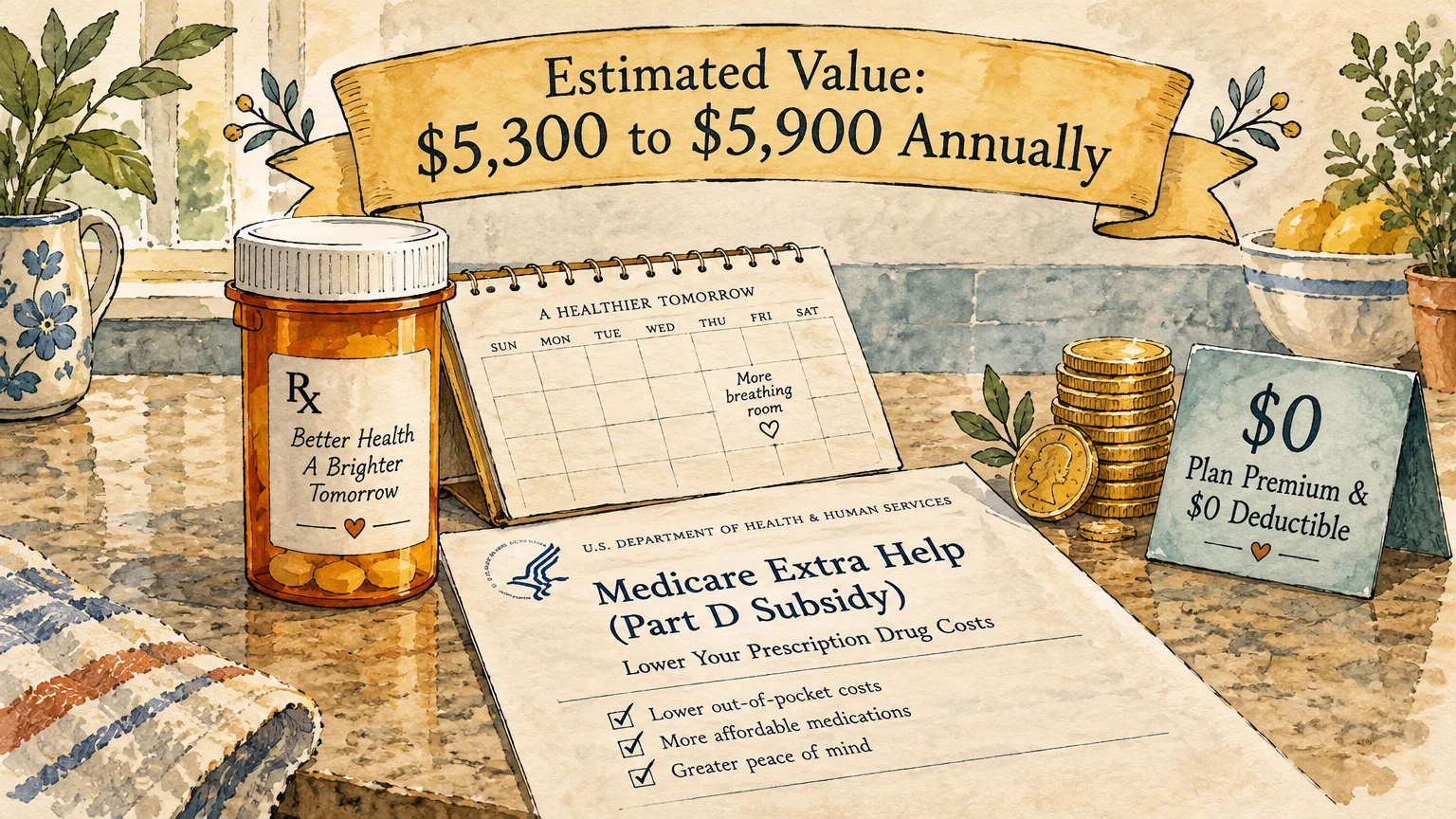
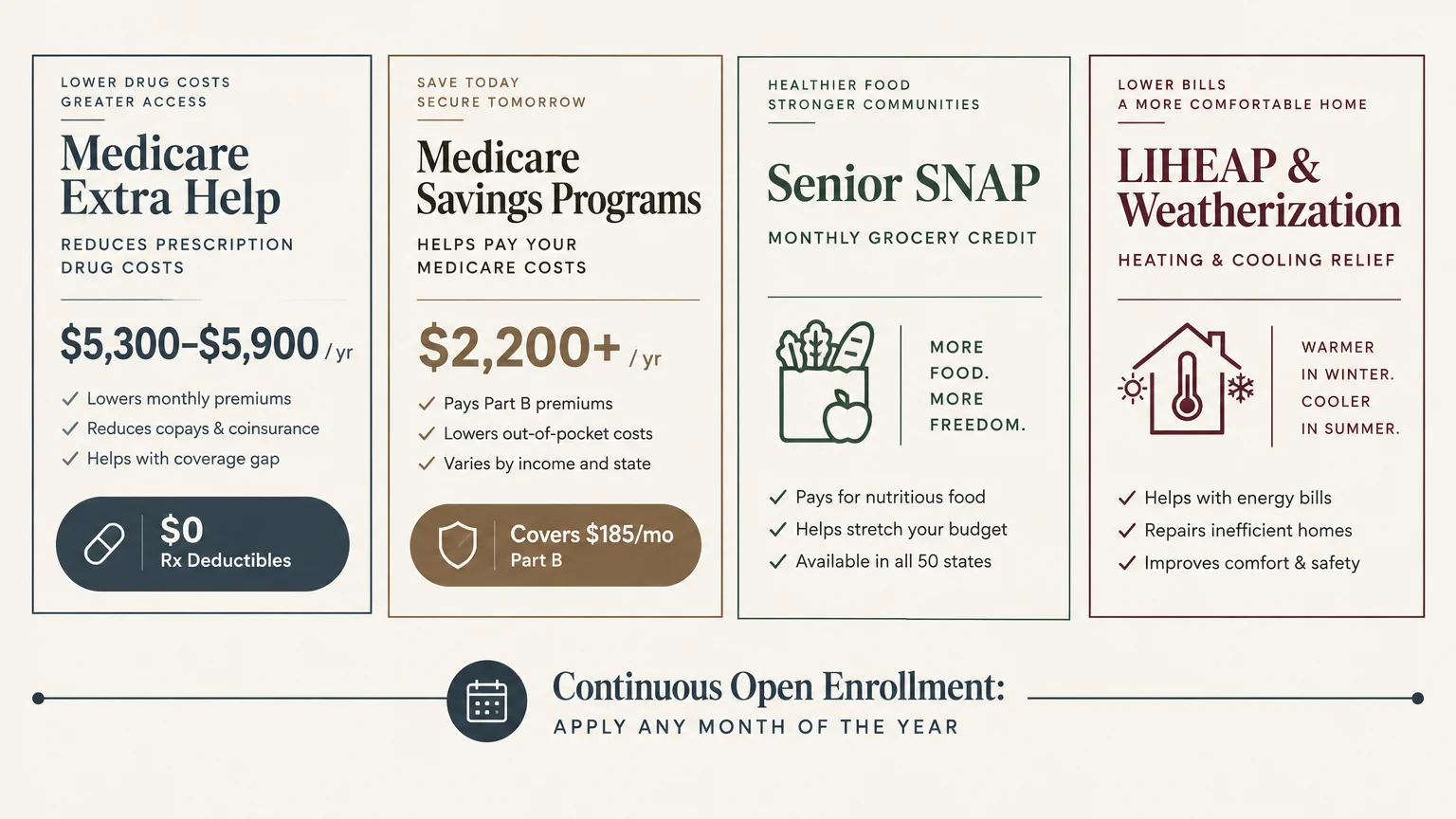
Also known as the Part D Low-Income Subsidy, the Social Security Administration estimates this benefit is worth approximately $5,300 to $5,900 annually.
Recent federal reforms under the Inflation Reduction Act permanently expanded this relief. Beneficiaries earning up to 150 percent of the federal poverty level now receive full subsidies rather than partial assistance.
Qualifying enrollees pay a $0 monthly plan premium and face no annual Part D prescription deductibles. Copayments for both generic and brand-name medications drop to modest, federally capped amounts.
For 2025, individual retirees can qualify with annual incomes up to $23,475 and countable resources up to $17,600. Married couples can have combined incomes reaching $31,725 and resources up to $35,130.
Your primary residence, personal vehicles, home furnishings, and standard life insurance policies do not count against resource caps. You can own a home and still easily qualify for this major financial assistance.
You can apply directly through the Social Security Administration online or over the phone. Extra Help accepts applications continuously throughout the year, meaning you never need to wait for Medicare Open Enrollment.
“The goal of retirement is to live off your assets—not live off your regrets.”
2. Medicare Savings Programs: Put $2,200 Back in Your Social Security Check
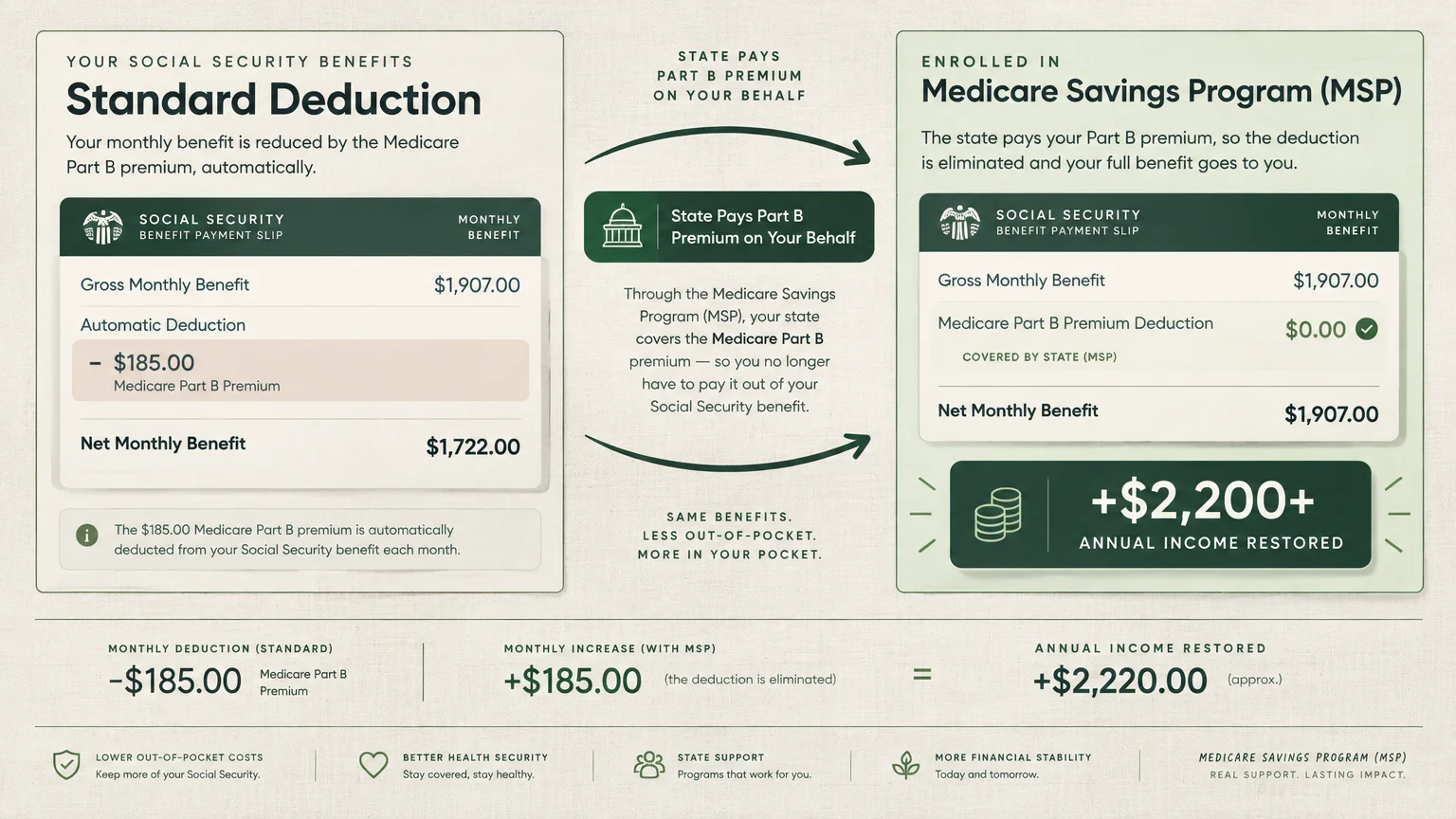
If you enroll in standard Medicare, the government deducts your monthly Part B premium directly from your Social Security benefit. In 2025, that standard Part B deduction totals $185.00 every single month.
Medicare Savings Programs, or MSPs, pay this monthly Part B premium on your behalf. Enrolling in an MSP puts over $2,200 back into your annual Social Security income automatically.
These state-administered programs operate across three primary tiers: Qualified Medicare Beneficiary, Specified Low-Income Medicare Beneficiary, and Qualifying Individual. Each tier provides distinct financial protections based on income thresholds.
The premier tier, known as QMB, offers the most extensive out-of-pocket financial relief. Beyond covering your monthly premium, QMB pays your Medicare Part A and Part B deductibles, copayments, and coinsurance.
Data from the National Council on Aging reveals that only 49 percent of eligible seniors participate in MSPs. Approximately 6.6 million older adults qualify for premium relief right now but remain unenrolled.
Many retirees never apply because they assume modest personal savings will automatically disqualify them. However, several states have eliminated asset tests for Medicare Savings Programs entirely.
If you reside in California, New York, Connecticut, Oregon, Maine, or Vermont, state agencies ignore your savings balances. Your monthly income alone determines whether you qualify for complete Part B premium reimbursement.
Check the current income baselines for your area on Medicare.gov. Securing an MSP also grants you automatic enrollment into full Medicare Extra Help.

3. Senior SNAP Benefits: Subsidizing Monthly Groceries
Food inflation places immense pressure on senior households trying to stretch fixed monthly incomes. The Supplemental Nutrition Assistance Program provides dedicated grocery funds deposited monthly onto an electronic debit card.
Older Americans access food assistance at far lower rates than younger demographics. While over 85 percent of eligible younger households participate, only 38 to 42 percent of eligible seniors enroll.
This massive gap leaves roughly 9.1 million older adults missing out on essential nutritional support. A senior household enrolled in SNAP receives an average benefit of $188 each month, exceeding $2,250 annually.
Many older adults assume the program offers only a trivial $20 monthly benefit. That misconception stems from skipping a unique calculation rule designed exclusively for seniors.
Households with an adult age 60 or older can deduct unreimbursed, out-of-pocket medical expenses exceeding $35 monthly. This deduction includes dental bills, prescription costs, hearing aid batteries, vision care, and medical transit.
Documenting these regular healthcare receipts lowers your net countable income on your application. A lower net income significantly elevates your monthly grocery benefit above minimum thresholds.
More than 20 states now feature the Elderly Simplified Application Project to streamline enrollment. This program provides shortened application paperwork, extends recertification windows to 36 months, and waives mandatory recertification interviews.
“It’s not how much money you make, but how much money you keep, how hard it works for you, and how many generations you keep it for.” — Robert Kiyosaki
4. LIHEAP and Weatherization: Slashing Utility Bills
Heating and cooling costs represent unpredictable seasonal expenses that can strain any retiree’s cash reserves. The federal government finances two complementary programs to protect seniors from extreme weather disruptions.
The Low-Income Home Energy Assistance Program provides direct financial grants to utility companies on your behalf. Depending on your home state and heating source, LIHEAP grants deliver between $250 and $1,000 or more annually.
These grants operate as direct energy bill credits rather than loans, meaning you never repay them. The program also issues emergency crisis grants to stop immediate power or natural gas shutoffs.
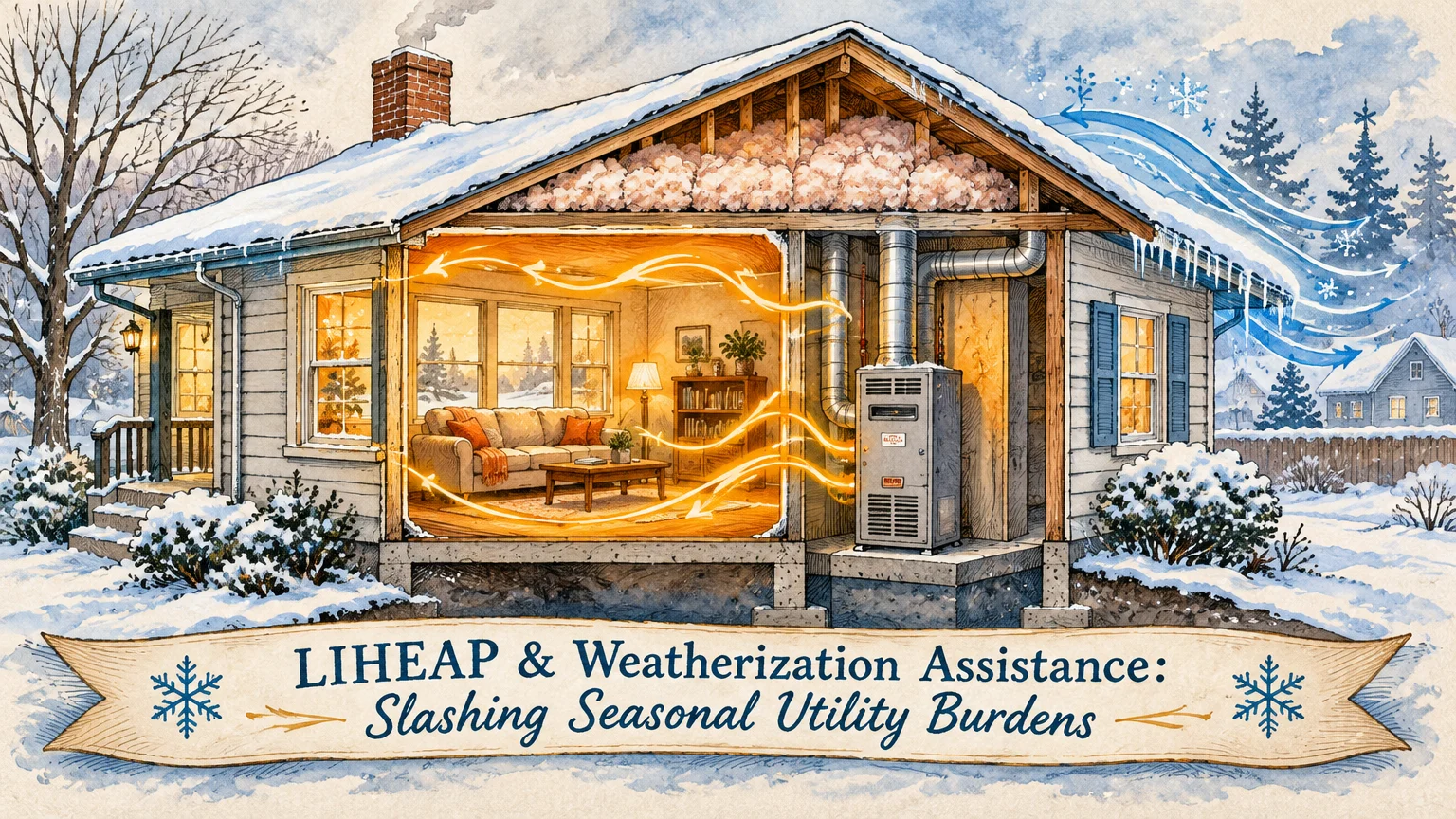
Alongside direct bill relief, the Department of Energy runs the Weatherization Assistance Program. This initiative finances permanent home energy efficiency improvements completed by certified local contractors at zero charge to you.
Crews install heavy attic insulation, seal drafty ductwork, replace worn weatherstripping, and upgrade inefficient heating units. Participating households save an average of $372 or more each year on recurring utility costs.
Both homeowners and renters qualify for free residential weatherization services through regional community action agencies. Renters simply need written permission from their landlord before weatherization technicians begin property upgrades.
5. Property Tax Relief and Lost Retirement Assets
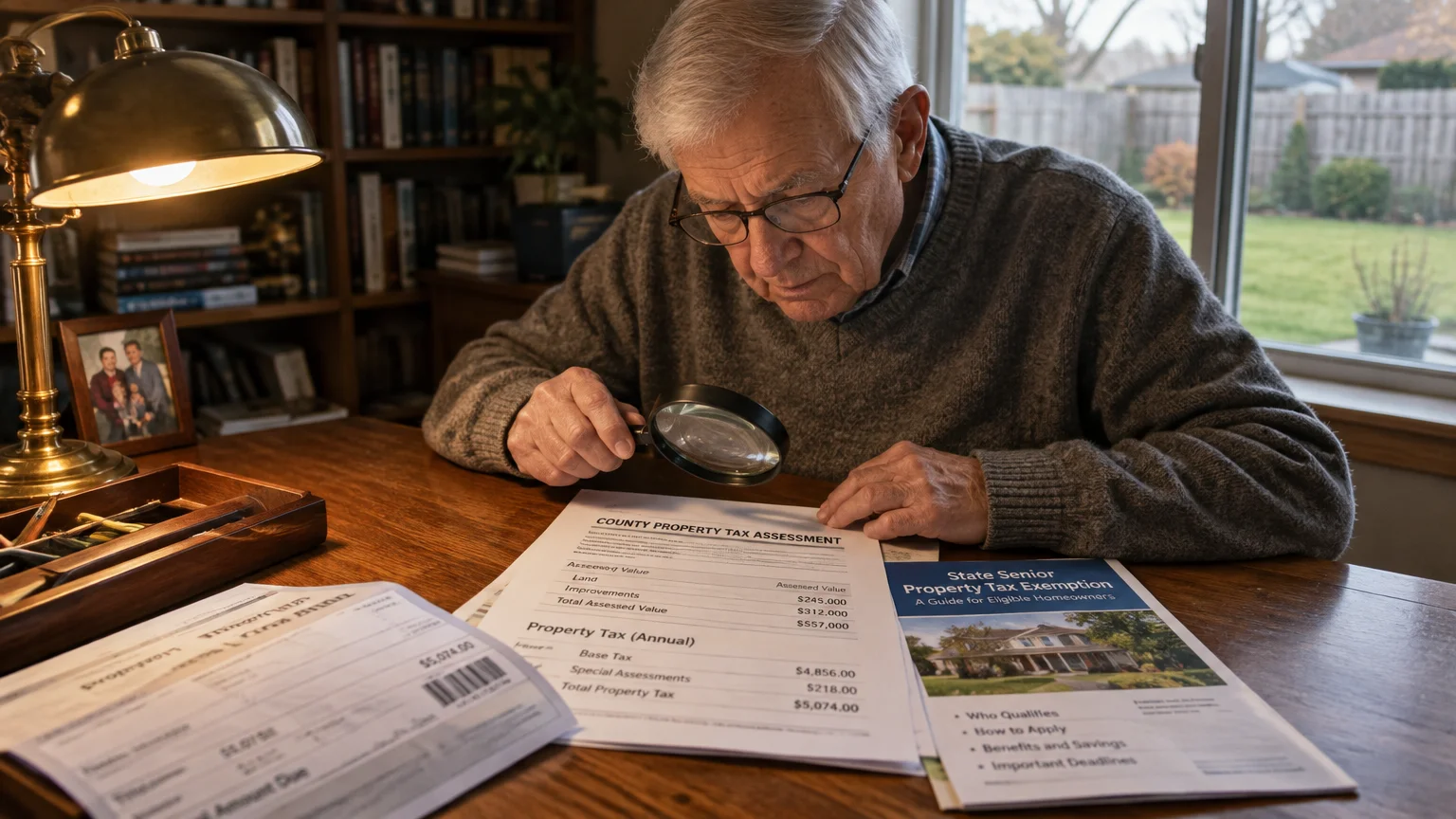
Skyrocketing home valuations have pushed residential property taxes to record highs in communities nationwide. Rising taxes present a major hazard for retirees living on stable, unchanging pensions.
Virtually every state and thousands of local municipalities offer senior homestead exemptions or property tax freezes. These statutory relief mechanisms typically become available when a homeowner turns 61 or 65.
A tax freeze locks your home’s assessed valuation in place, insulating you from future community millage increases. Standard senior homestead exemptions trim your taxable property value, routinely saving retirees $300 to $2,500 every year.
County tax assessors never apply these discounts to your tax bill automatically. You must actively file an exemption form with your local appraisal district to secure your tax reduction.
Beyond municipal tax breaks, millions of retirees leave behind forgotten retirement assets from past jobs. Corporate mergers, business closures, and forgotten defined-benefit plans often leave accounts disconnected from their rightful owners.
The Pension Benefit Guaranty Corporation currently holds hundreds of millions of dollars in unclaimed pensions. You can perform an immediate, free search for abandoned corporate pension benefits on the PBGC website.
The federal SECURE 2.0 Act also established the Retirement Savings Lost and Found online database. This national clearinghouse helps retirees locate misplaced 401(k) plans and deferred compensation balances from former employers.
Comparing the Top Free Money Programs for Retirees
Understanding which senior benefits programs deliver the fastest household budget relief helps you prioritize your applications. Each initiative targets specific expense categories to maximize your monthly cash flow.
Review the primary qualification baselines and average values in the comparison table below.
| Program Name | Primary Financial Benefit | Estimated Annual Value | Key Qualification Factors |
|---|---|---|---|
| Medicare Extra Help (LIS) | $0 Part D premiums, $0 deductibles, and low drug copays | $5,300 to $5,900 | Income under 150% FPL; home and personal car excluded from assets |
| Medicare Savings Programs (MSPs) | Reimburses Part B premiums ($185/mo) and deductibles | $2,220 to $4,500+ | Income criteria set by state; asset tests waived in multiple states |
| Senior SNAP (Food Assistance) | Monthly grocery funds loaded onto an electronic EBT card | $2,250+ ($188/month avg) | Income limits apply; out-of-pocket medical bills over $35 lower net income |
| LIHEAP & Weatherization | Direct utility bill subsidies and free home insulation | $600 to $1,400+ | Household income typically under 60% of state median; open to renters |
| Senior Property Tax Relief | Assessment freezes and valuation exemptions on primary homes | $300 to $2,500+ | Age 61+ or 65+; primary residence ownership; local county filing required |
| PBGC & Lost 401(k) Registries | Recovery of forgotten corporate pensions and employer accounts | Varies ($1,000s possible) | Past employment with companies that maintained defined benefit plans |
Combining several of these benefits creates significant cumulative savings over a full calendar year. An eligible retiree enrolled across three programs can easily recover $8,000 or more in yearly purchasing power.
Costly Mistakes to Avoid When Seeking Senior Benefits
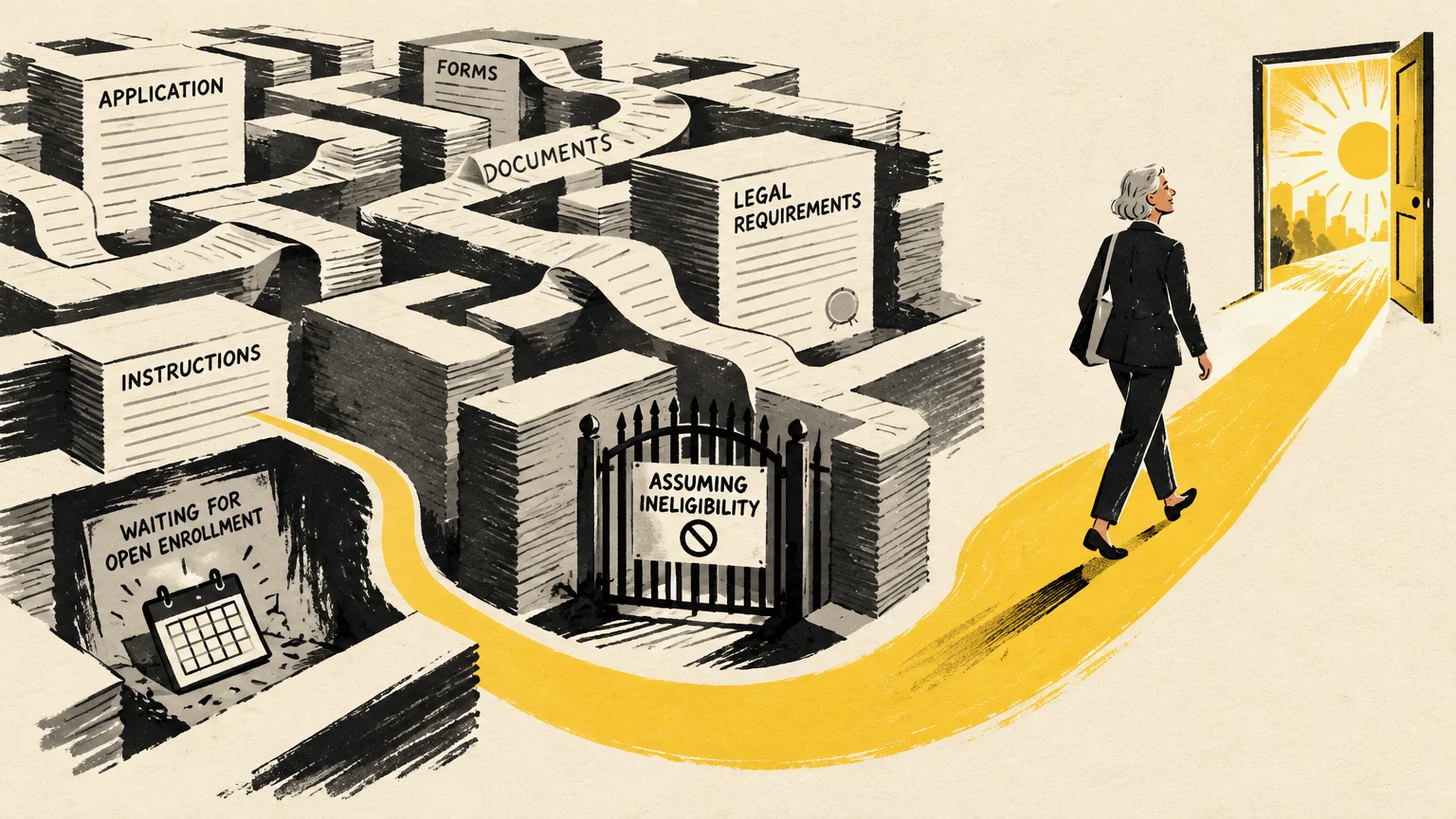
Navigating public assistance programs requires avoiding common pitfalls that lead to missed payments or improper denials. Steer clear of these missteps to protect your benefits.
- Assuming your real estate equity disqualifies you: Programs like Extra Help, MSPs, and SNAP exclude your primary residence and personal vehicles from your countable resource pool.
- Failing to track your out-of-pocket medical receipts: Overlooking prescription copays, dental receipts, and transit costs prevents you from utilizing the SNAP medical deduction to increase your food benefits.
- Letting personal pride stop you from applying: Government assistance programs for seniors are earned entitlements funded by your working career, not charitable handouts.
- Overlooking your state’s specific asset rule waivers: Assuming federal asset caps apply everywhere causes seniors in states like California, New York, and Connecticut to forgo MSP benefits they qualify for.
- Missing local property tax application deadlines: County appraisal offices enforce strict filing windows, usually in early spring, meaning a late application forfeits an entire year of tax discounts.
Review your state guidelines carefully every autumn. Income thresholds adjust annually for cost-of-living increases, transforming past denials into fresh approvals.

Don’t DIY These Decisions
Sorting through statutory benefit manuals, medical deductions, and income ceilings can feel overwhelming. You do not have to untangle these complex administrative systems alone.
Every state provides a State Health Insurance Assistance Program, commonly called SHIP. SHIP counselors provide free, unbiased, one-on-one guidance to help you apply for Medicare Extra Help and Medicare Savings Programs.
You can also connect directly with your regional Area Agency on Aging through the Eldercare Locator. These caseworkers specialize in enrolling local seniors into nutrition programs, energy grants, and property tax freezes.
To run an immediate, confidential self-screen across more than 2,500 programs, visit BenefitsCheckUp by the National Council on Aging. This free resource highlights local and federal programs matching your specific financial profile.
If you manage a complex estate or have substantial non-exempt assets, consult a qualified elder law attorney. An experienced attorney can legally structure resources to protect your long-term benefit eligibility.
Frequently Asked Questions About Senior Assistance Programs
Retirees exploring these relief measures frequently ask practical questions about application rules and tax impacts. Here are answers to the most common inquiries.
Will receiving government benefits reduce my monthly Social Security payments?
No, enrolling in programs like Extra Help, SNAP, LIHEAP, or MSPs will never decrease your Social Security payments. In fact, an MSP increases your monthly deposit by paying your Part B Medicare deduction for you.
Can I qualify for senior assistance if I own my home and vehicle?
Yes, your primary home and one personal vehicle are fully exempt from asset calculations across these major programs. You do not need to liquidate your home equity or sell personal belongings to qualify.
Are Medicare Extra Help and Medicare Savings Programs the exact same thing?
No, they are separate programs that target different healthcare expenses. Extra Help covers Part D prescription drug costs, while Medicare Savings Programs pay Part B premiums and clinical medical deductibles.
Are public assistance benefits considered taxable income on my federal tax return?
No, benefits from SNAP, LIHEAP energy subsidies, and Medicare assistance programs are not classified as taxable income. They provide non-taxable relief that will not trigger unexpected tax liabilities.
Start Reclaiming Your Financial Benefits
Begin by running a quick eligibility check on BenefitsCheckUp.org or contacting your local Area Agency on Aging. You spent decades funding these safety nets; now is the time to let them support your retirement security.
Information in this article reflects current rules as of the publication date and may change. Always confirm benefit details directly with Social Security Administration, Medicare.gov, or relevant government agencies before making decisions.
Last updated: February 2026. Medicare and Social Security rules change annually—always verify current details at official government sources.