Helping adult children or grandchildren feels natural, but signing your name on their debt jeopardizes your fixed retirement income. A single missed payment can instantly derail decades of disciplined financial planning.
When you co-sign a loan, lenders do not view you as a casual character reference. Instead, they view your nest egg as an immediate target for full debt collection.
Protecting retirement savings requires establishing firm financial boundaries with family before you sign any contracts. Here are seven dangerous financial obligations retirees should never co-sign, along with safer ways to help.
The Hidden Financial Realities of Co-Signing
Many retirees believe co-signing simply provides a character endorsement for a loved one. In reality, commercial lenders demand a co-signer precisely because the primary borrower represents an elevated default risk.
When you co-sign, you accept full legal responsibility for every dollar borrowed. If your relative suffers an unexpected financial setback, the creditor immediately pursues you for full restitution.
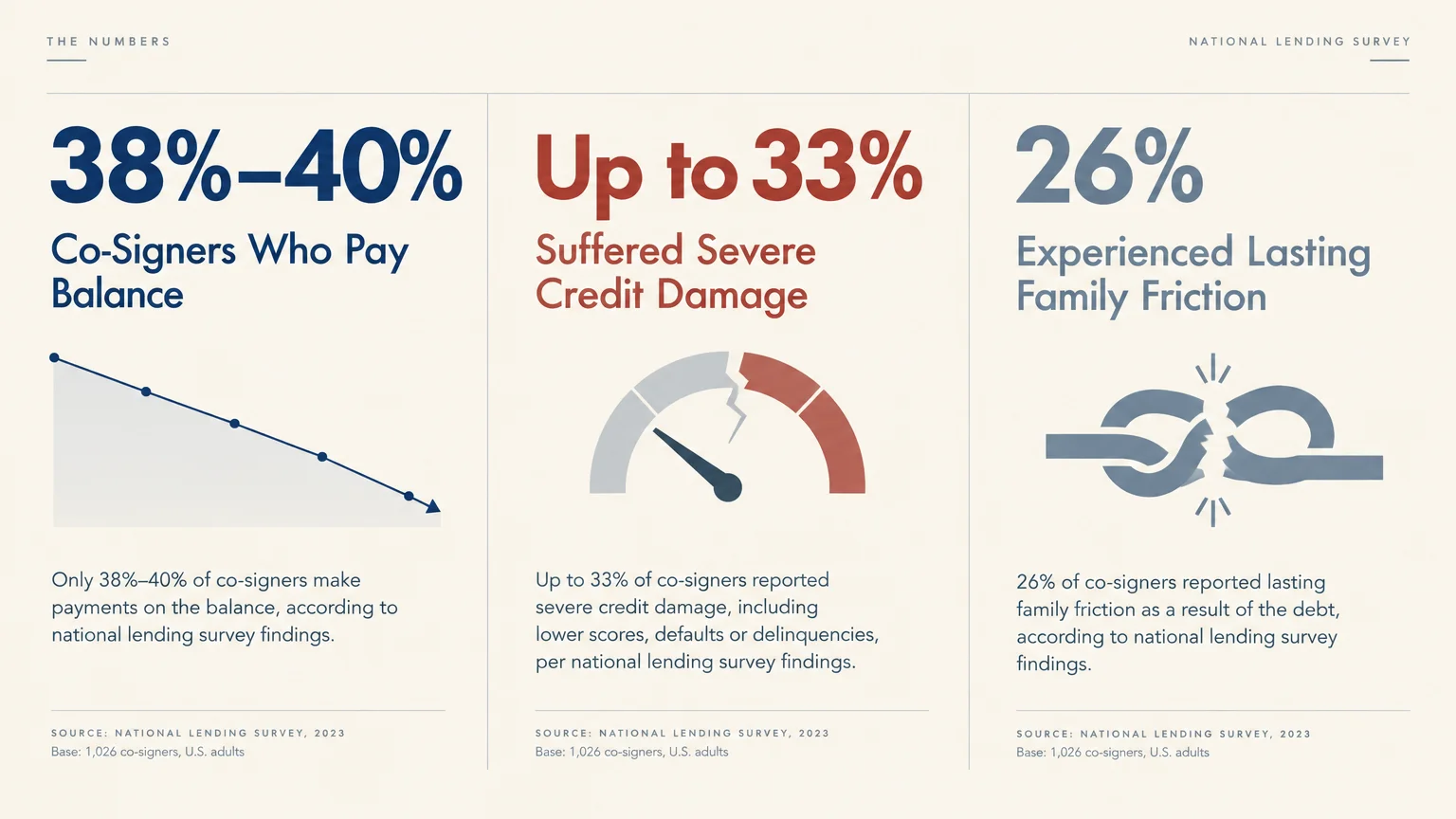
A national CreditCards.com survey revealed that roughly 38% to 40% of co-signers ended up paying some or all of the loan balance. Additionally, up to 33% suffered severe damage to their credit scores.
Financial strain also ruins personal relationships. Roughly 26% of surveyed co-signers experienced lasting friction or complete estrangement with family members after repayment problems emerged.
1. Federal and Private Student Loans
Student loan debt poses an immediate threat to your monthly retirement cash flow. Educational debt rarely qualifies for bankruptcy discharge, leaving co-signers legally bound to payments indefinitely.
According to data from the Consumer Financial Protection Bureau, 73% of student loan borrowers age 60 and older borrowed or co-signed debt for children or grandchildren.
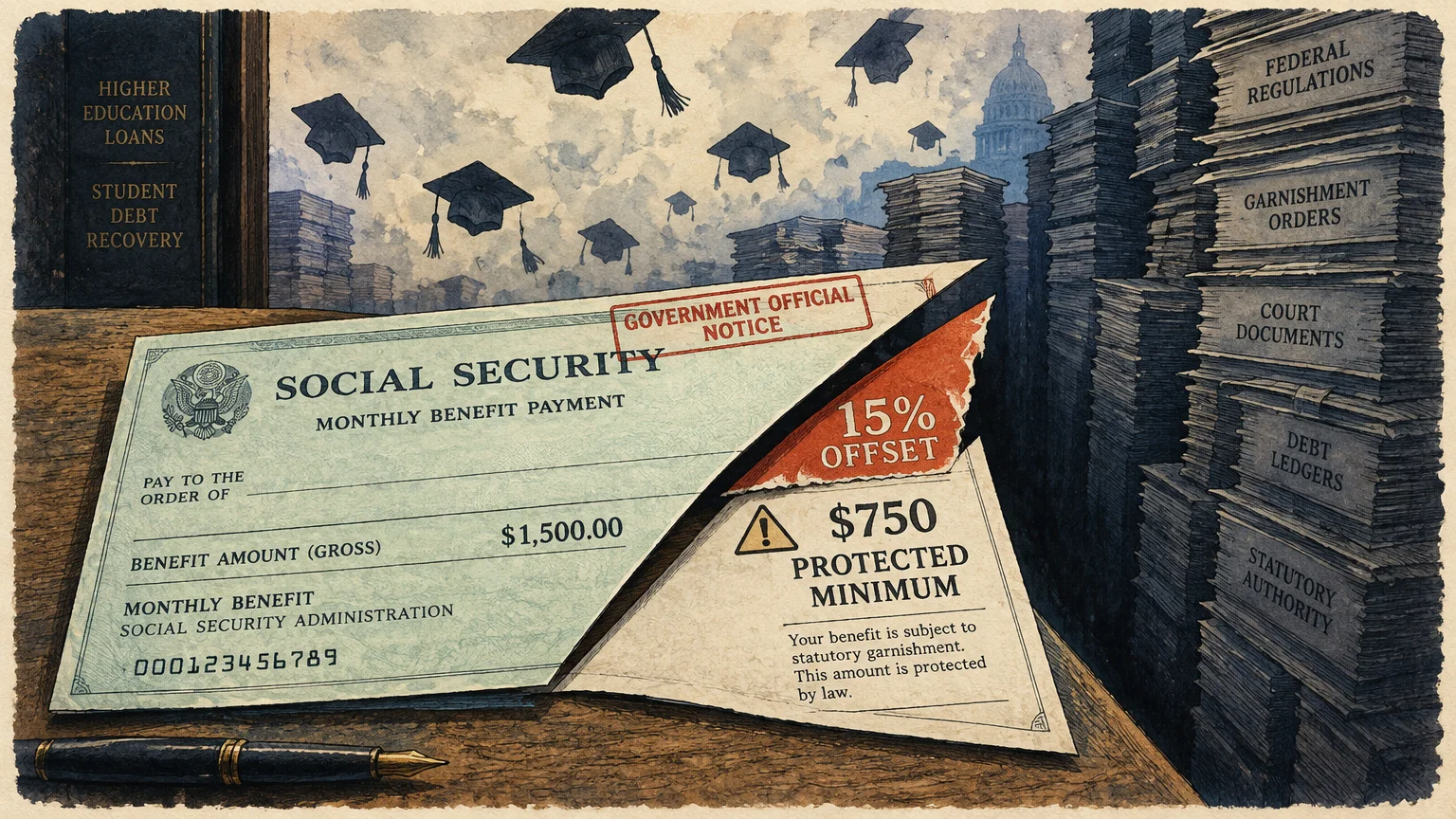
Defaulted federal student loans trigger harsh statutory enforcement through the Treasury Offset Program. Under this federal mechanism, the government can withhold up to 15% of your monthly Social Security benefits.
Federal statute specifies that Social Security garnishments cannot leave recipients with less than $750 per month. Because lawmakers never indexed this threshold to inflation, it offers zero meaningful protection against poverty.
CFPB findings reveal that roughly 452,000 Americans aged 62 and older risk benefit offsets due to defaulted student debt. Never expose your primary retirement income to educational borrowing.
2. New Car Loans and Extended Auto Financing
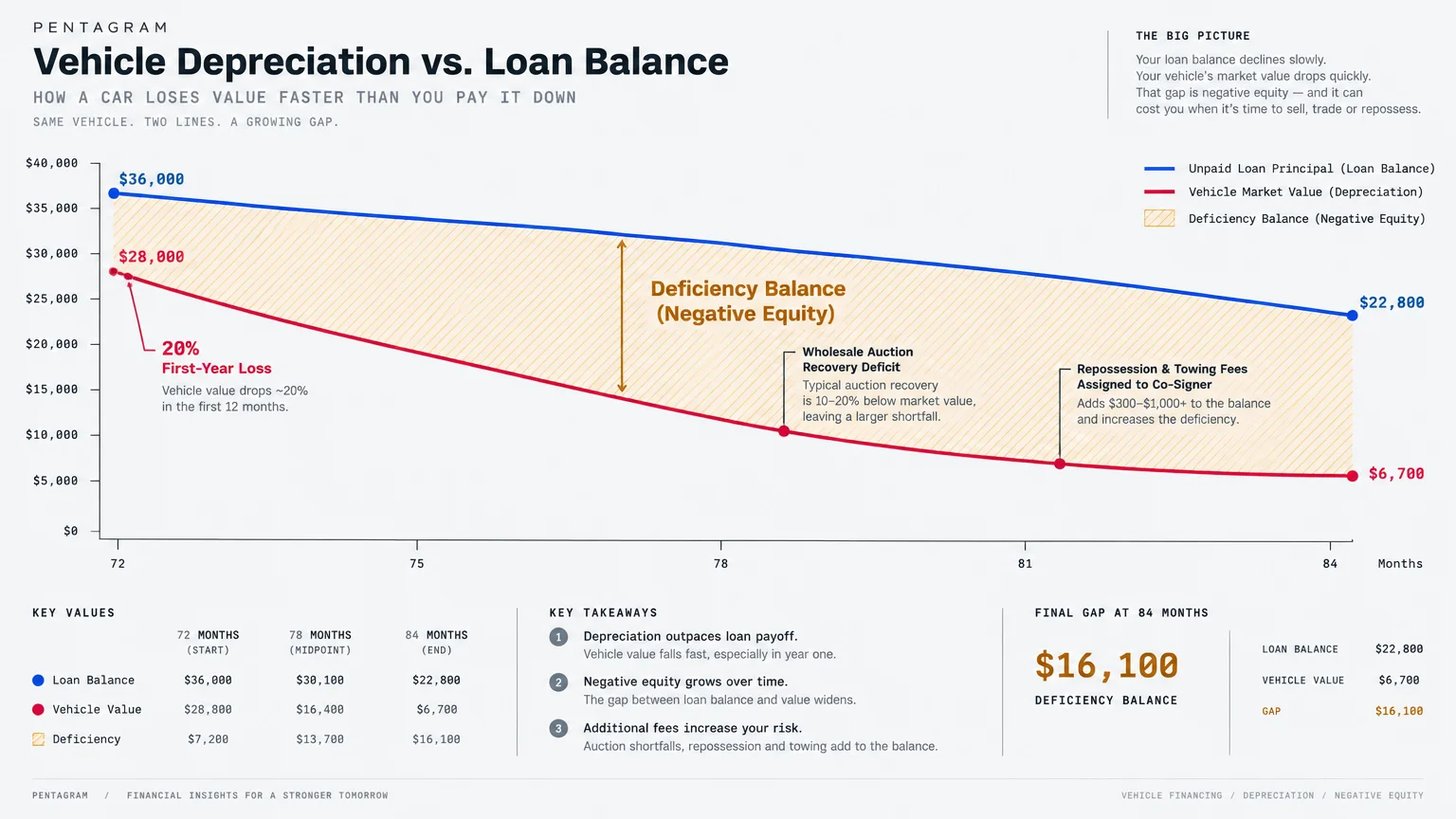
Automobile financing has evolved into extended commitments, with loan durations commonly stretching between 72 and 84 months. These lengthy loan terms keep borrowers in negative equity for years.
New vehicles lose roughly 20% of their market value during the first year alone. When young relatives purchase costly vehicles, the loan balance quickly exceeds the automobile’s real market value.
If the primary borrower defaults on monthly payments, the lender repossesses the vehicle and sells it at a wholesale auction. Auction proceeds rarely cover the outstanding loan balance.
Lenders hold the co-signer fully liable for this deficiency balance, including repossession, towing, and storage fees. You could owe thousands of dollars for a vehicle you never operated.

3. Joint Credit Cards and Revolving Lines
Opening a joint credit card creates joint and several liability with no individual spending constraints. If your relative spends recklessly, creditors legally demand immediate payment from your accounts.
Credit card interest rates regularly exceed 20% to 21% APR. Carrying an unpaid balance at these punitive rates can quickly double the debt in less than four years.
Rather than opening a joint credit card, add your relative as an authorized user on an existing account. This step builds their credit score while keeping total financial authority in your hands.
Primary cardholders can set firm spending limits or cancel authorized cards at any time. You support their financial development without assuming any legal liability for their purchases.

4. Primary Mortgages and Home Loans
Assisting family with homeownership sounds like a worthwhile legacy, but mortgage co-signing carries severe underwriting consequences. Lenders count 100% of that monthly payment against your personal debt-to-income ratio.
This inflated debt calculation can prevent you from downsizing into a smaller home or refinancing your existing property. Lenders evaluate your legal commitments rather than family intentions.
Fannie Mae and Freddie Mac underwriting guidelines only remove co-signed mortgages under strict conditions. You must document twelve consecutive months of canceled checks showing the primary borrower paid every installment independently.
Mortgage co-signing can also jeopardize your healthcare safety net if lenders place you on the deed. Transferring home ownership off the deed triggers a 60-month Medicaid look-back penalty in most states.

5. Small Business Loans and Commercial Leases
New businesses face extraordinarily high failure rates during their early stages of operation. Commercial lenders almost always demand personal guarantees to ensure business debts get paid regardless of company performance.
When you co-sign a commercial loan or storefront lease, you pledge your personal assets as collateral. Business creditors can place liens on your personal accounts to satisfy unpaid contracts.
Working-age adults have years to earn back lost capital after a business venture fails. Retirees cannot easily replace savings drained by a commercial bankruptcy.
6. High-Interest Debt Consolidation Loans
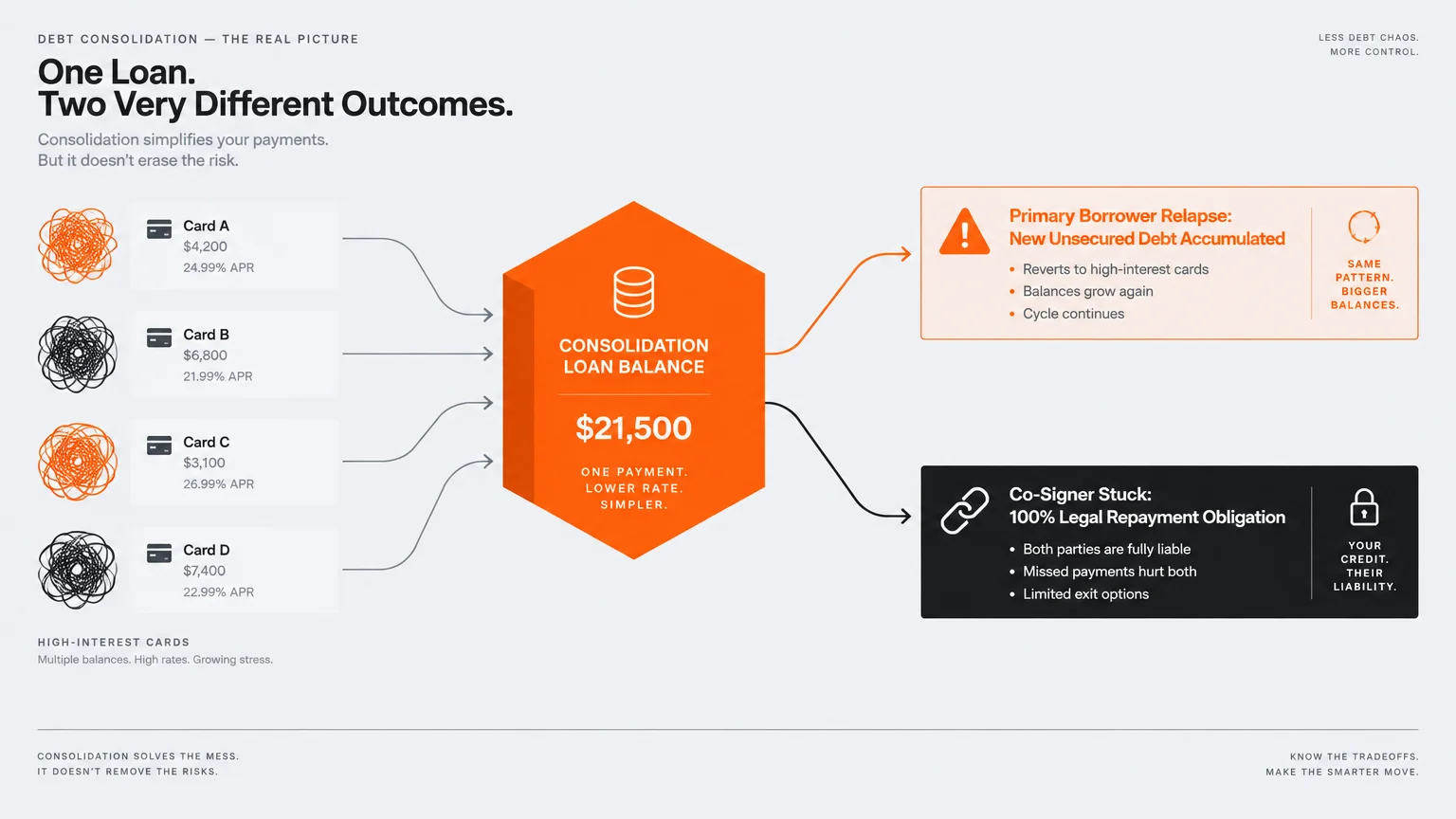
Family members who struggle with chronic credit card balances often seek personal consolidation loans. If poor credit scores block their approval, they frequently turn to retired parents for assistance.
Consolidation loans restructure existing balances, but they do not correct underlying overspending habits. If the borrower continues to overspend, they generate new revolving debt alongside the co-signed loan.
If payments falter, the co-signer remains on the hook for the entire restructured balance. You end up converting an adult child’s credit card habits into your personal financial liability.

7. Apartment Leases and Rental Agreements
Landlords in tight rental markets frequently demand co-signers for young adults who lack substantial savings or credit history. Many retirees sign rental applications assuming their exposure ends with the security deposit.
In reality, co-signing an apartment lease obligates you for the entire lease agreement. If your relative breaks their lease early, the landlord can legally bill you for all remaining months.
You also bear financial liability for property damage and unpaid utility bills left behind. Furthermore, co-signing for an apartment with roommates makes you responsible if the roommates fail to pay their share.
A formal eviction filing names all co-signers as co-defendants in local housing court. An eviction judgment severely damages your credit history and personal public records.
Protecting Your Retirement Baseline
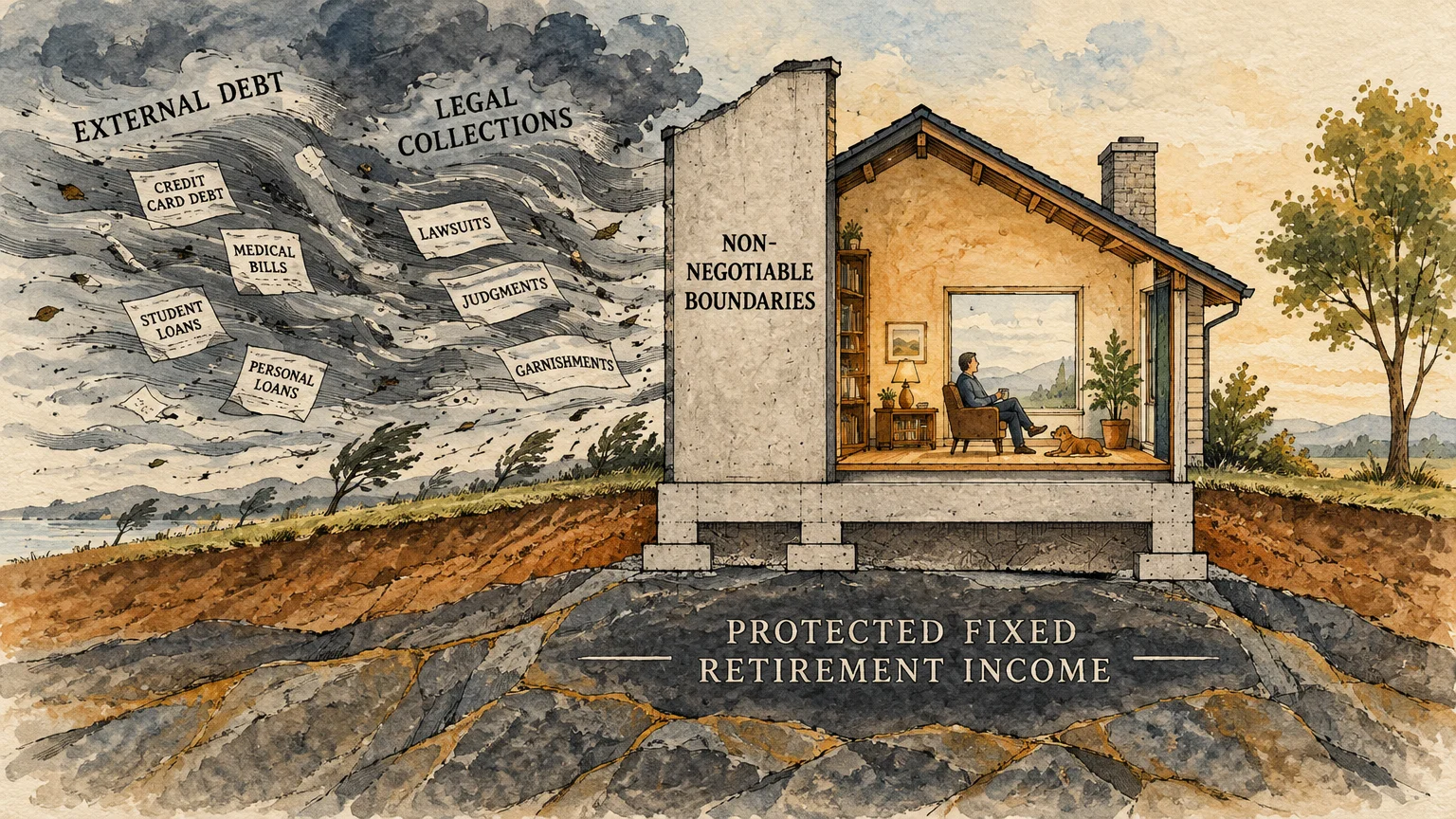
Co-signing family debt threatens your financial stability at the exact life stage when capital preservation matters most. Adding external debt obligations restricts your personal choices and strains your budget.
“The goal of retirement is to live off your assets—not live off your regrets.”
Carrying co-signed debt can even prevent you from qualifying for a Home Equity Conversion Mortgage (HECM) to fund unexpected healthcare. Lenders review all liabilities before approving reverse mortgages.
Review your benefit entitlements and claiming rules with the Social Security Administration before accepting secondary liabilities. Securing your own income ensures you remain self-sufficient throughout your retirement years.
Safer Alternatives to Co-Signing for Family
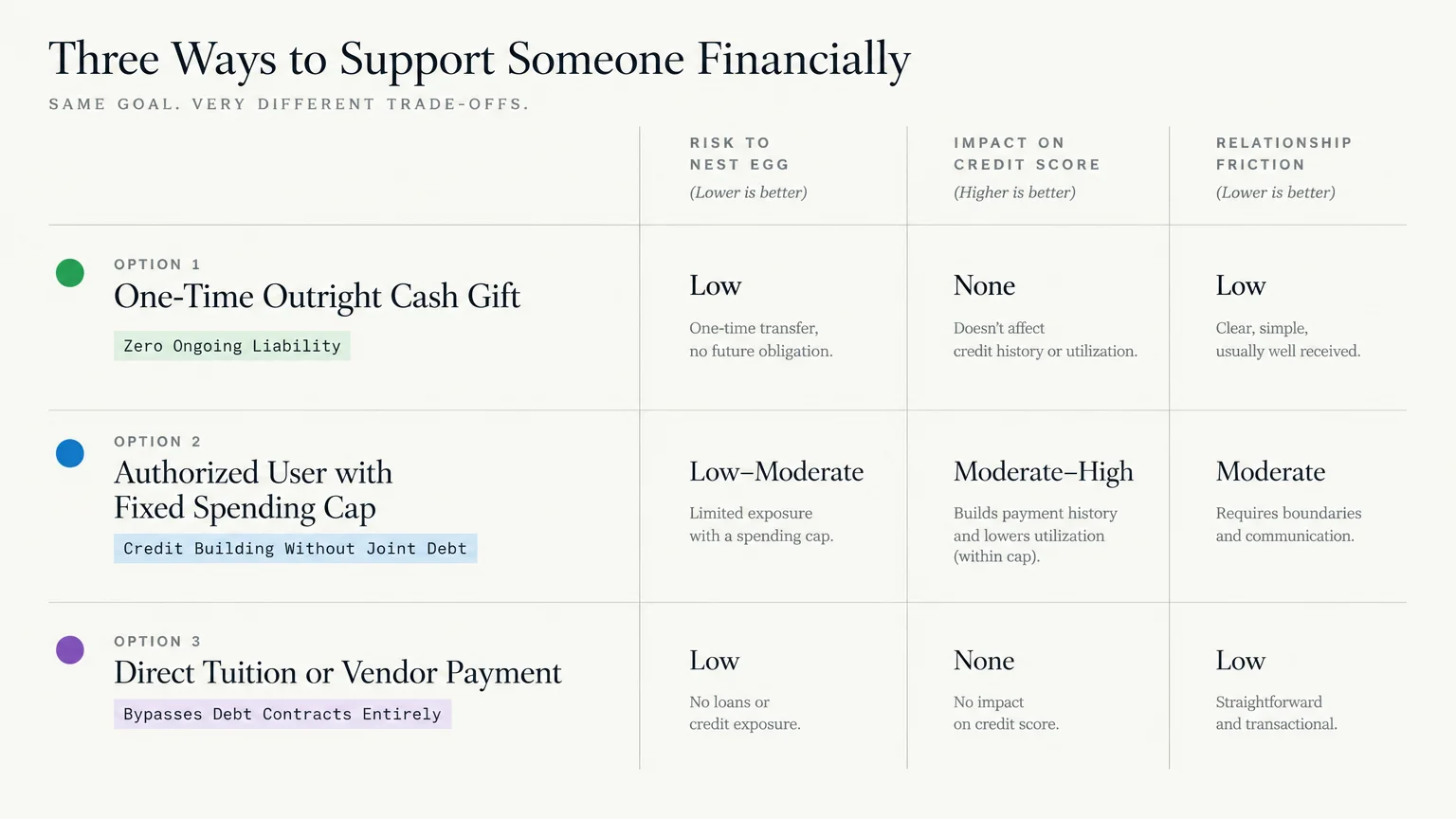
You can support your family without placing your financial independence in jeopardy. Exploring practical alternatives allows you to offer assistance while defining clear boundaries around your savings.
| Strategy | Legal Liability | Credit Impact | Risk to Retirement |
|---|---|---|---|
| Co-Signing Loan | 100% Joint Legal Liability | Severe (Counts against DTI) | High (Garnishment, loss of assets) |
| Authorized Card User | Zero Liability for Relative | None (Retiree sets limits) | Low (Card can be revoked) |
| One-Time Cash Gift | Zero Debt Exposure | None | Controlled (Limited to gift amount) |
| Formal Family Loan | Lender Rather Than Debtor | None | Moderate (Risk limited to lent cash) |

Costly Mistakes to Avoid
Retirees co-sign loans with loving intentions, but innocent assumptions can trigger devastating financial losses. Avoid these frequent missteps when navigating requests for financial support.
- Assuming you are merely a character reference: Lenders require co-signers solely to gain legal access to another pool of collectible assets.
- Relying on the borrower for payment updates: Lenders rarely notify co-signers when payments are 30 or 60 days late until serious credit damage occurs.
- Ignoring Medicaid look-back consequences: Adding your name to home deeds or joint accounts triggers transfer penalties during long-term care evaluations.
- Failing to demand direct account access: Never sign a loan without personal login credentials to verify timely monthly payments yourself.

Don’t DIY These Decisions
Untangling complex family debt requests requires objective professional analysis. Consult an experienced elder law attorney before adding your name to property deeds, commercial contracts, or personal loan documents.
A fee-only financial planner can examine how secondary liabilities could impact your monthly portfolio distributions. Involving a financial professional also gives you a graceful, neutral way to decline requests.
Explore helpful consumer protection resources through AARP to identify alternative financial support programs for struggling relatives. External resources help family members solve problems without draining your retirement nest egg.
Frequently Asked Questions
Can creditors garnish my Social Security for co-signed debt?
Yes, the federal government can garnish up to 15% of your Social Security for defaulted federal student loans. Private creditors cannot garnish Social Security directly, but they can seize commingled bank balances.
How can I remove my name from a co-signed loan?
Lenders rarely release co-signers unless the primary borrower refinances the debt independently. Some student loans offer co-signer releases, but only after dozens of consecutive on-time payments and credit checks.
Does co-signing for a relative hurt my credit score immediately?
Yes, co-signing immediately increases your total debt load and debt-to-income ratio. The new inquiry and added balance often cause an immediate dip in your credit score.
How should I decline a co-signing request from a family member?
Explain that your retirement assets operate on a fixed income that cannot absorb unexpected liabilities. Offer non-financial assistance, such as budgeting coaching, or provide a modest one-time cash gift instead.
Establish clear financial boundaries today by separating family affection from legal debt commitments. Offer advice, encouragement, and budgeted gifts, but protect your signature to secure your retirement peace of mind.
This article is for informational purposes only and does not constitute financial, legal, or medical advice. Medicare rules, Social Security benefits, and tax laws change regularly—verify current details at Medicare.gov, SSA.gov, or with a licensed professional.
Last updated: February 2026. Medicare and Social Security rules change annually—always verify current details at official government sources.