More than 711,000 retired Americans now collect Social Security benefits while living abroad. They trade soaring domestic housing expenses for a substantially higher quality of life.
Escalating healthcare premiums and daily living costs convince thousands of older adults to establish foreign residency each year. Recent retiree migration trends highlight dynamic shifts toward both Europe and Latin America.
Understanding popular countries for US retirees helps you evaluate visa rules, safety, and tax implications before packing your bags. Your nest egg can easily buy a far richer lifestyle with proper planning.
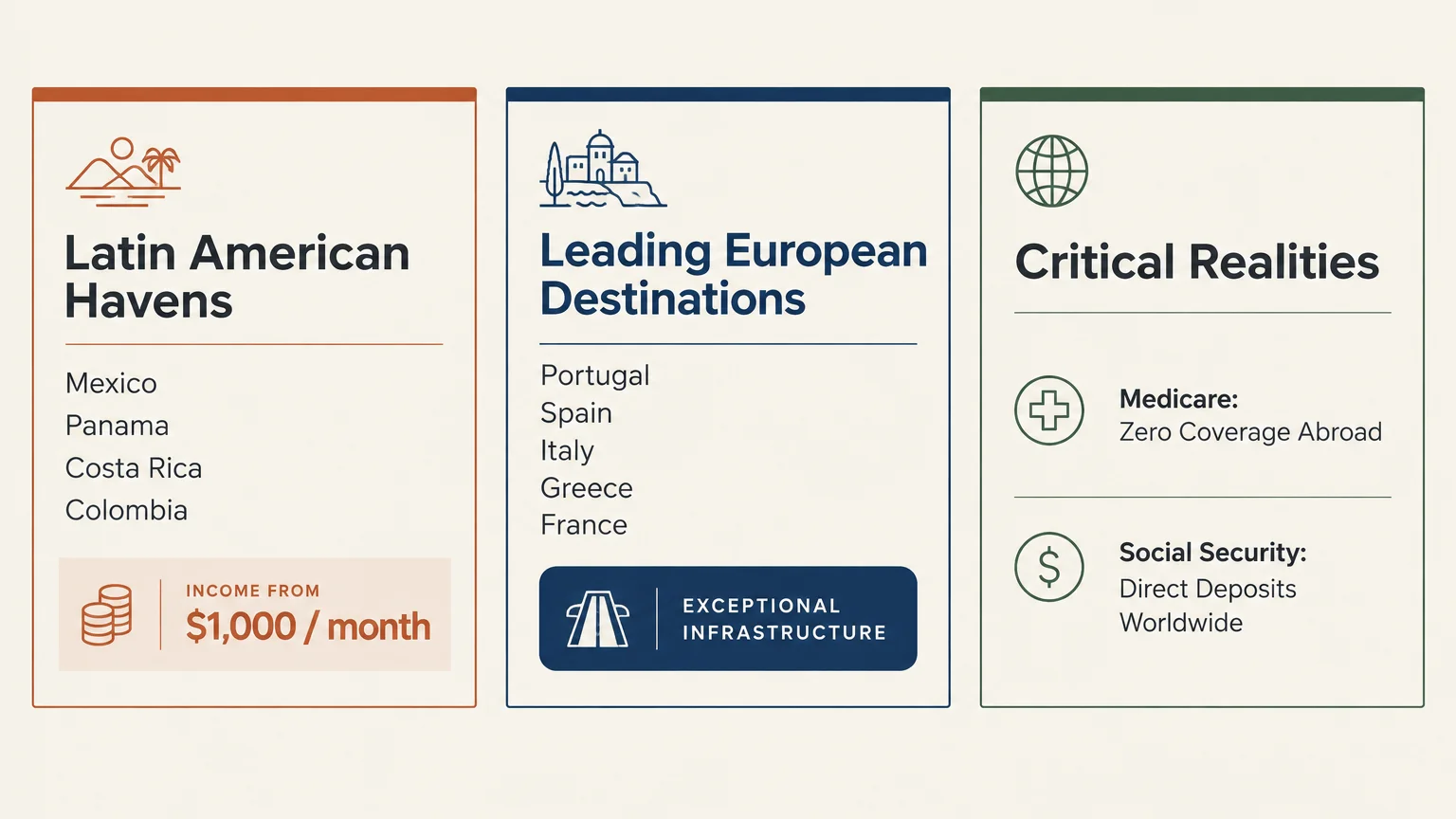
The Bottom Line Up Front
Relocating overseas allows you to stretch fixed retirement income significantly. Many nations grant long-term residency based entirely on Social Security checks or modest private pensions.
- Top Latin American Havens: Mexico, Panama, Costa Rica, and Colombia offer proximity to the U.S. and monthly income requirements starting around $1,000.
- Leading European Destinations: Portugal, Spain, Italy, Greece, France, Germany, and the United Kingdom host rapidly growing retiree communities with exceptional infrastructure.
- Affordable Asian Hub: The Philippines provides widespread English fluency, warm weather, and exceptionally low living costs.
- Critical Healthcare Reality: Medicare does not cover medical treatment outside the United States and its territories.
- Financial Protection: The Social Security Administration deposits monthly benefits directly into foreign bank accounts across most stable nations.

Why Retiree Migration Trends Are Accelerating
Data from the Social Security Administration (SSA) shows overseas payments now exceed $8 billion annually. More than 463,000 retired workers receive their monthly checks abroad.
Domestic living costs continue to strain household budgets across the United States. Many retirees find that an average monthly Social Security benefit barely covers property taxes and basic utilities at home.
Moving abroad flips this economic equation in your favor. In many top expat retirement destinations, two people live comfortably on $2,000 to $3,000 per month, including comprehensive private health insurance.
“The goal of retirement is to live off your assets—not live off your regrets.”
Beyond finances, older adults crave walkable communities, fresh food markets, and temperate weather. Living overseas also provides an exciting second act centered on personal discovery and cultural immersion.

12 Countries With Growing American Retiree Populations
The following nations attract the highest numbers of newly arriving American retirees. Each country provides distinct legal pathways for long-term residency, stable banking, and welcoming local communities.
1. Portugal
Portugal remains one of the most popular countries for US retirees due to its exceptional safety and mild climate. The nation consistently ranks among the top five most peaceful countries in the world.
The D7 Passive Income Visa offers a direct path to legal residency for retirees. In 2026, applicants must show verifiable passive income of at least €920 per month (€11,040 annually), plus additional funds for spouses.
English is widely spoken in major coastal cities like Lisbon, Porto, and throughout the southern Algarve region. Excellent public and private healthcare facilities provide high-level care at fractions of U.S. rates.
2. Spain
Spain attracts thousands of older Americans with its vibrant culture, Mediterranean diet, and world-class healthcare system. Its high-speed rail network makes exploring Europe effortless without owning an automobile.
Retirees typically apply for the Non-Lucrative Visa (NLV). This permit requires guaranteed annual passive income equal to 400% of Spain’s IPREM index, which translates to €2,400 monthly (€28,800 annually).
Each accompanying family member requires an additional €600 per month in documented income. Popular hubs include coastal Valencia, Alicante, and the sun-soaked towns along the Costa del Sol.
3. Mexico
Mexico hosts the largest total population of American expats in the world. Its direct land border and brief flight times make visiting children and grandchildren back home simple and inexpensive.
The Temporary Resident Visa (*Residencia Temporal*) serves as the primary gateway for foreign retirees. Consulates generally require around $4,000 to $4,300 in monthly net income or roughly $70,000 in liquid savings.
Vibrant retiree enclaves thrive around Lake Chapala, San Miguel de Allende, and Puerto Vallarta. Most established expat communities feature English-speaking physicians, modern hospitals, and robust social clubs.
4. Costa Rica
Costa Rica pioneered international retirement programs decades ago and continues to expand its foreign population. The country offers political stability, lush biodiversity, and an outdoor-oriented lifestyle.
The *Residencia Pensionado* program requires proof of a certified, lifetime pension or Social Security payout of at least $1,000 monthly. This single income threshold covers both the primary applicant and their spouse.
Residents gain access to the national healthcare system (*Caja*), which provides comprehensive medical coverage for a low monthly contribution. The Central Valley and coastal Guanacaste remain perennial favorites.
5. Panama
Panama combines modern metropolitan infrastructure with attractive tropical beach towns. The country uses the U.S. dollar as its legal currency, eliminating currency exchange risks for your monthly budget.
The legendary *Visa de Pensionado* requires a lifetime monthly pension of at least $1,000, plus $250 for each dependent. If you invest $100,000 in Panamanian real estate, that minimum drops to $750 monthly.
Panama also grants legal retirees significant statutory discounts under national law. You receive 50% off entertainment tickets, 30% off public transit, and 25% off utility bills and airline flights.
6. Colombia
Colombia has emerged as a premier destination where Americans are retiring abroad on modest budgets. Modern cities like Medellín offer spring-like weather year-round, eliminating heating and air-conditioning bills.
The Colombian Pensioner Visa (TP-7) requires proof of monthly pension income equal to three times the national minimum wage. This benchmark typically translates to less than $1,100 per month.
Major metropolitan hospitals hold international accreditations and provide modern procedures at minimal cost. The Coffee Cultural Landscape (*Eje Cafetero*) offers serene mountain living at deeply discounted prices.
7. The Philippines
The Philippines offers an unbeatable combination of affordability, tropical beauty, and widespread English fluency. Because English serves as an official language, navigating daily banking, dining, and healthcare presents few hurdles.
The Special Resident Retiree’s Visa (SRRV) provides indefinite residency privileges with flexible financial thresholds. Retirees aged 50 and older can qualify by depositing as little as $10,000 into an authorized bank.
Popular destinations include Dumaguete, Cebu, and Tagaytay, where routine monthly living expenses rarely exceed $1,500 for a couple. Compassionate, highly trained nursing care is widely available at nominal rates.
8. Italy
Italy appeals to older adults seeking artistic masterworks, culinary traditions, and scenic landscapes from Tuscany to Sicily. The country features a universally accessible public healthcare framework consistently ranked among the world’s best.
The Elective Residency Visa requires applicants to document approximately €31,000 to €38,000 in annual passive income from pensions or investments. Active employment is strictly prohibited under this residency class.
Certain southern municipalities offer an attractive 7% flat tax rate on foreign pensions to encourage migration. Coastal Puglia, Abruzzo, and Umbria provide authentic European living at sensible price points.
9. Greece
Greece provides sunny Mediterranean weather, centuries of history, and some of the lowest property costs in Southern Europe. The country boasts clean air, fresh produce, and a relaxed, community-focused pace of life.
Retirees typically seek the Financially Independent Person (FIP) visa by demonstrating recurring passive income of at least €2,000 monthly. Spouses require an additional 20%, while dependent children add 15% each.
Islands like Crete, Corfu, and Rhodes offer established expat networks alongside modern private clinics. Greece also offers a flat 7% tax rate on foreign retirement income for eligible newcomers.
10. France
France attracts discerning retirees looking for rich culture, historic villages, and the world’s gold standard in healthcare delivery. The French countryside offers remarkably affordable housing compared to major U.S. markets.
The Long-Stay Visitor Visa allows Americans to reside in France without working. Consulates expect you to demonstrate passive income roughly equal to the French minimum wage (*SMIC*), around €1,400 monthly after taxes.
After three months of legal residency, expats can apply to join France’s universal health insurance system (*PUMA*). The Dordogne valley, Occitanie, and Provence feature thriving communities of international seniors.
11. Germany
Germany appeals to retirees who value public order, pristine public transit, and unmatched access to Central Europe. Its clean cities and efficient infrastructure make aging in place comfortable and convenient.
German immigration authorities issue general residence permits to retirees who prove sufficient independent financial resources and comprehensive health insurance. Payouts from Social Security and company pensions qualify toward this benchmark.
Regions such as Bavaria and the Black Forest offer high living standards and world-class medical facilities. Most German healthcare professionals speak fluent English, easing communications during medical appointments.
12. United Kingdom
The United Kingdom remains a primary recipient of overseas Social Security benefits due to shared language and cultural ties. Many Americans settle in Scotland, Wales, and Northern England to enjoy dramatic landscapes and historic architecture.
While the UK lacks a dedicated retirement visa, older Americans secure residency through ancestry visas, family connections, or independent investment routes. Expats often spend several months per year exploring without permanent residency.
The National Health Service (NHS) provides comprehensive care, though private medical coverage guarantees faster specialist access. Vibrant communities throughout Yorkshire and coastal Sussex welcome international newcomers warmly.
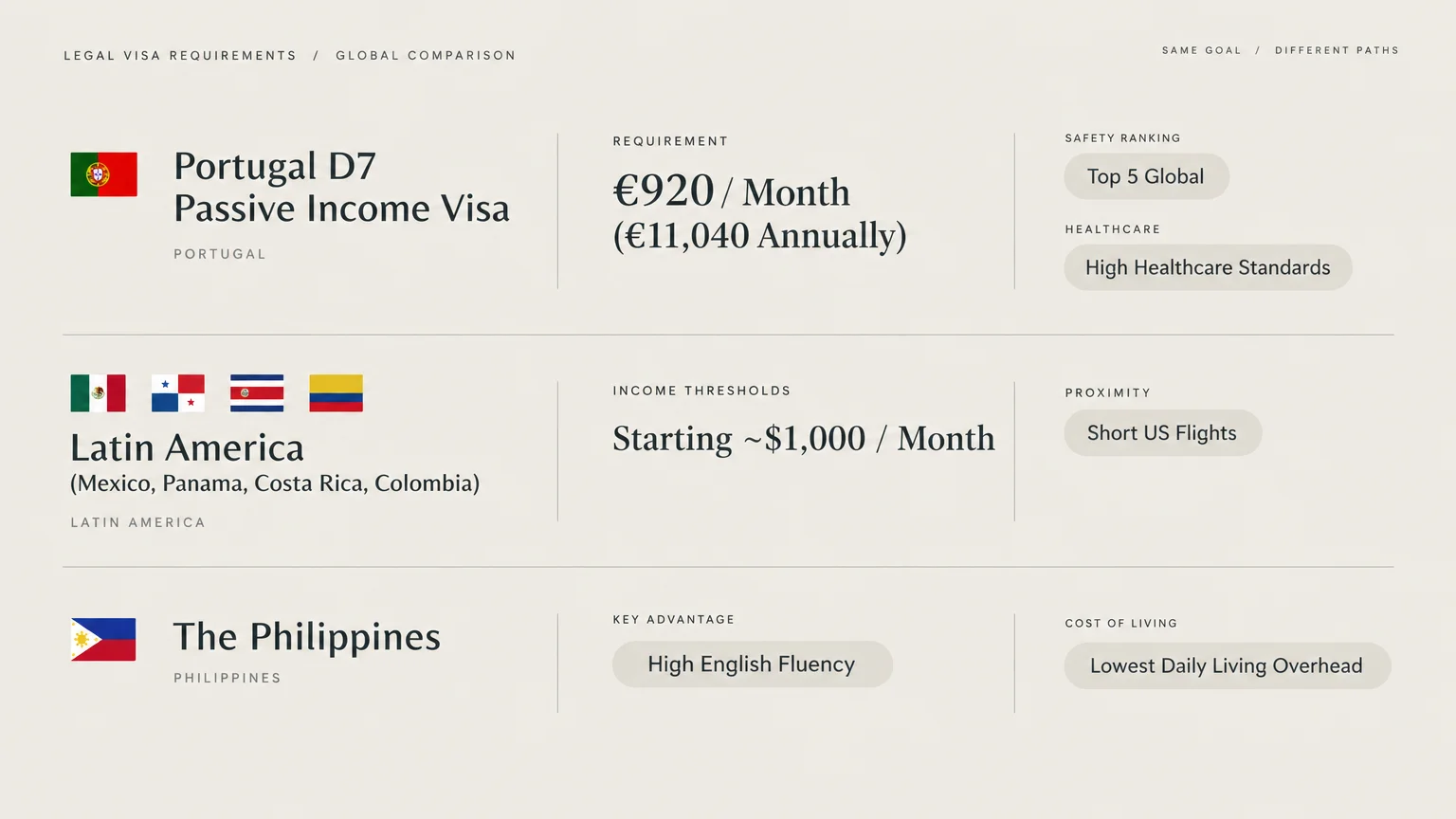
Retirement Visa & Financial Requirements Compared
Visa financial thresholds change periodically based on statutory wage adjustments and currency rates. The table below outlines key benchmarks across several countries with growing American retiree populations.
| Country | Primary Visa Pathway | Minimum Monthly Requirement | Standout Advantage |
|---|---|---|---|
| Panama | Pensionado Visa | $1,000 USD (Lifetime) | Uses U.S. dollar; generous senior discounts |
| Costa Rica | Residencia Pensionado | $1,000 USD (Lifetime) | Covers applicant and spouse together |
| Colombia | Pensioner Visa (TP-7) | ~$1,100 USD (Pegged to minimum wage) | Exceptionally low daily living costs |
| Portugal | D7 Passive Income Visa | €920 EUR (2026 baseline) | High safety index; mild winter climate |
| Greece | Financially Independent Person | €2,000 EUR | 7% flat tax incentive on foreign income |
| Spain | Non-Lucrative Visa (NLV) | €2,400 EUR (400% of IPREM) | Top-tier healthcare; extensive rail transit |
| Mexico | Temporary Resident Visa | ~$4,000 to $4,300 USD | Direct driving proximity to the United States |
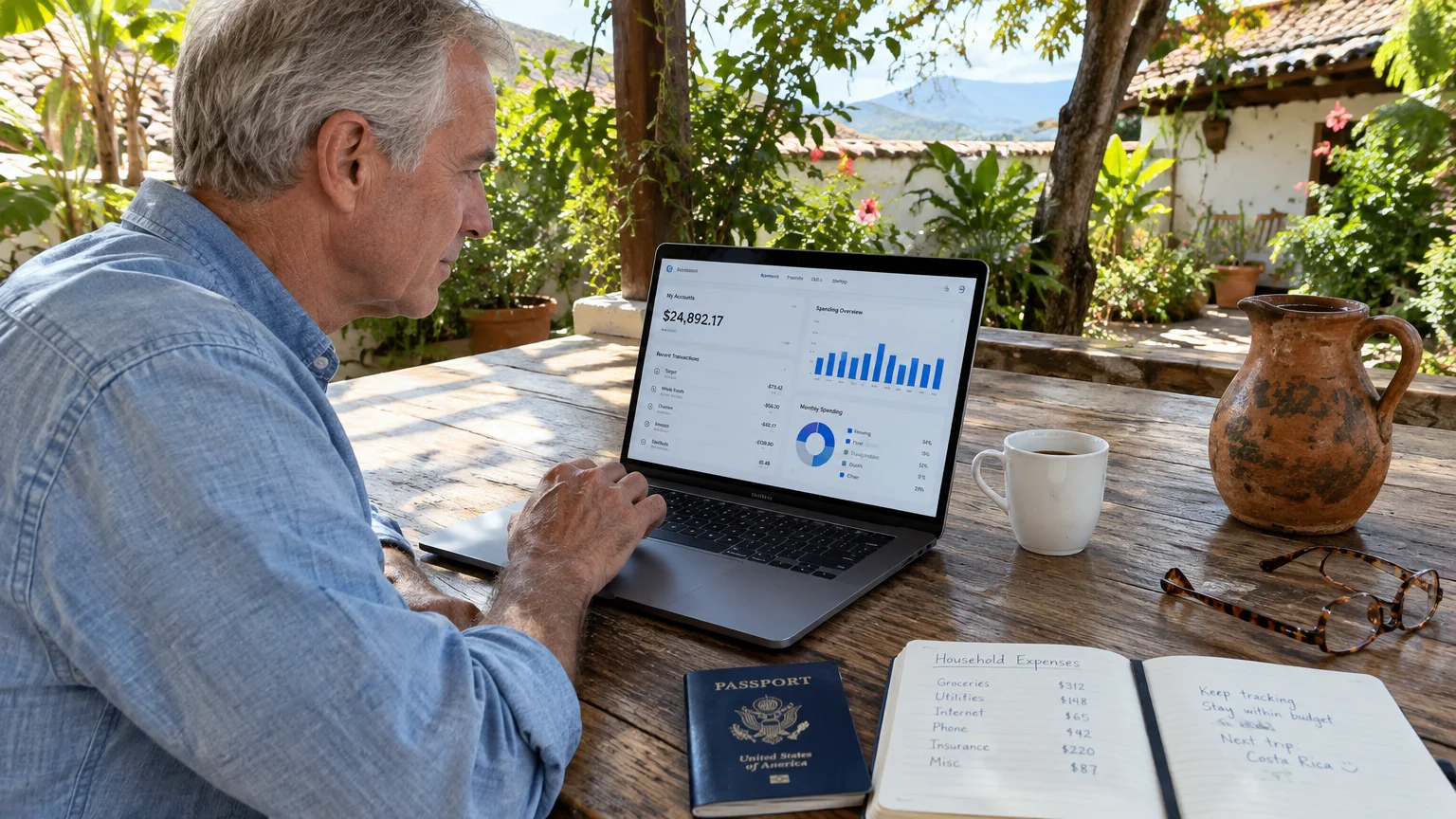
Managing Social Security and Banking Abroad
Receiving your monthly Social Security benefit while living overseas is remarkably straightforward. The Social Security Administration operates an International Direct Deposit program that sends payments straight to foreign banks.
Funds convert automatically into local currency without charging excessive retail exchange fees. Alternatively, you can maintain a U.S. bank account and withdraw funds locally using international ATM cards.
The Consumer Financial Protection Bureau (CFPB) offers tools to help you manage banking transitions safely. Always notify domestic banks before using cards abroad to prevent automatic fraud freezes.
Under federal regulations, the SSA cannot deliver benefit payments to residents living in Cuba or North Korea. Routine restrictions also apply in several Eurasian nations, including Belarus, Kazakhstan, and Uzbekistan.
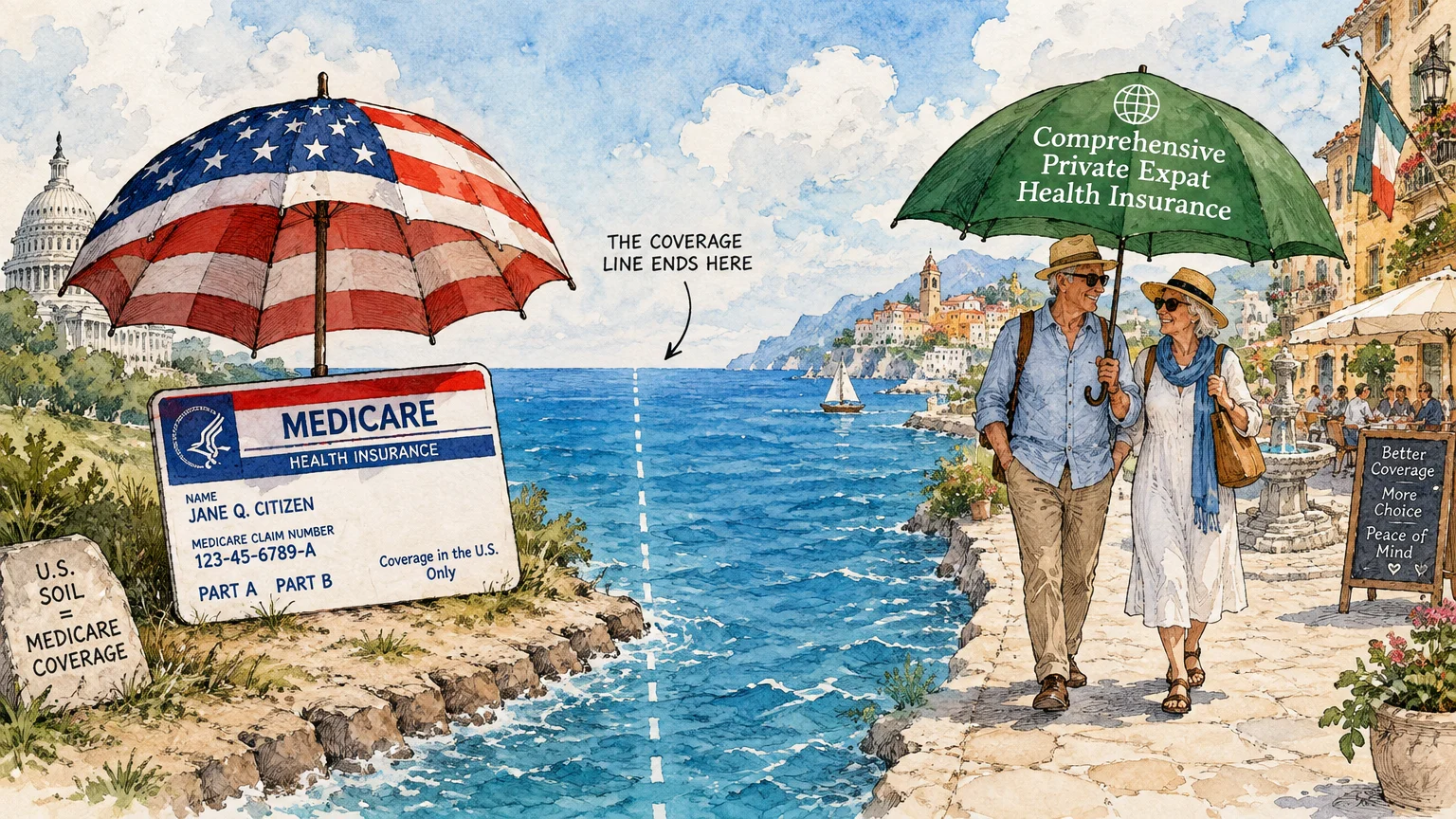
The Medicare Reality: Coverage and Penalties Outside the U.S.
Many older adults assume their domestic healthcare benefits travel with them across borders. However, Medicare generally does not provide coverage for medical services or prescriptions received outside the United States.
Original Medicare Parts A and B only cover treatments within the 50 states and recognized U.S. territories. Consequently, you must secure international private health insurance or enroll in your destination country’s healthcare system.
Dropping Medicare Part B while living abroad carries substantial financial risks if you later return home. You will face a permanent 10% monthly premium penalty for each 12-month period you were eligible but unenrolled.
Furthermore, expats cannot maintain Medicare Part D prescription drug plans while living abroad permanently. You will be disenrolled automatically and must wait for a Special Enrollment Period upon repatriating.
“Don’t simply retire from something; have something to retire to.” — Harry Emerson Fosdick
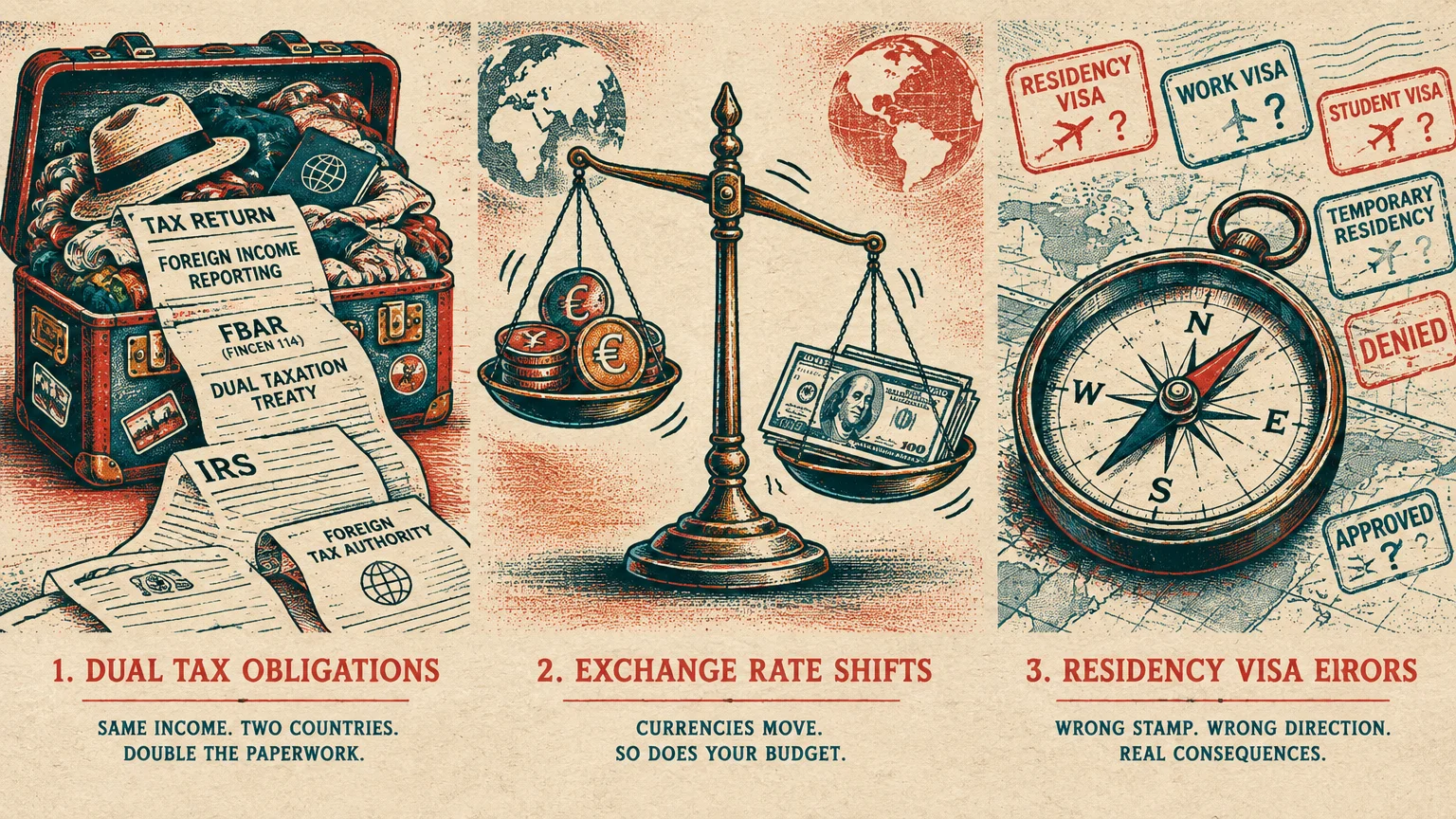
Don’t Make These Mistakes When Moving Abroad
Retiring to another country offers tremendous personal rewards, but poor planning can derail your finances. Avoid these common missteps to ensure a smooth transition overseas.
- Purchasing Property Immediately: Never buy real estate during your first year in a new country. Rent in several neighborhoods first to discover where you feel most comfortable day to day.
- Ignoring IRS Tax Obligations: The U.S. taxes citizens on worldwide income regardless of where they live. Review reporting rules on IRS Retirement Plans and submit annual FBAR declarations for foreign bank balances over $10,000.
- Canceling Medicare Part B Carelessly: Dropping Part B saves money monthly but creates lifetime late-enrollment penalties if health issues force you back to America later.
- Overlooking Currency Swings: Build a 15% currency fluctuation cushion into your monthly spending plan to protect yourself when the U.S. dollar weakens.

When Professional Advice Is Worth It
Cross-border retirement involves overlapping legal systems, property codes, and complex international tax treaties. Working with qualified experts prevents expensive filing errors and ensures legal compliance.
Retain an immigration attorney licensed in your target country to process your visa application. Foreign consulates change paperwork standards frequently, and professional guidance prevents administrative rejections.
Consult a certified public accountant (CPA) specializing in U.S. expat taxation before moving your primary residence. They will structure retirement account withdrawals to minimize liabilities under bilateral double-tax treaties.
Frequently Asked Questions
Can I still receive my Social Security checks if I live in another country?
Yes, U.S. citizens can receive Social Security payments in almost every country worldwide. Payments can deposit directly into an American account or an authorized local foreign bank.
Does Medicare pay for medical treatments when I live overseas?
No, Medicare does not cover regular medical care, emergencies, or prescription medications outside the U.S. and its territories. You must purchase private expat health insurance or join a local healthcare plan.
Do I still have to file a U.S. tax return if I retire abroad?
Yes, the United States taxes all citizens on their worldwide income no matter where they reside. You must file an annual federal tax return and report qualifying foreign financial accounts to the U.S. Treasury.
Can I keep my U.S. bank and brokerage accounts after moving?
Most major U.S. financial institutions allow you to keep existing accounts, provided you maintain an active domestic mailing address. However, verify overseas address policies directly with your brokerage firm before moving.
Take Your Next Step Toward Retiring Abroad
Start your journey by selecting two or three top expat retirement destinations that align with your monthly budget. Schedule an extended 60-to-90-day exploratory stay during the off-season to experience authentic daily life.
Rent an apartment, shop at neighborhood grocery markets, and consult local expat organizations before selling assets at home. Thoughtful preparation transforms international retirement from an intimidating concept into a rewarding reality.
Retirement rules and benefit amounts vary based on individual work history, income, and circumstances. This article provides general guidance only. Consult a SHIP counselor, financial advisor, or elder law attorney for advice specific to your situation.
Last updated: February 2026. Medicare and Social Security rules change annually—always verify current details at official government sources.