Skyrocketing property taxes and spiking insurance rates are transforming how older Americans choose their next hometown. Understanding where retirees are moving can help you protect your nest egg before you pack a single box.
Traditional retirement destinations no longer hold a monopoly on sun-seeking seniors. Instead, fresh migration data reveals surprising new migration hubs that combine medical access, tax relief, and everyday affordability.
Whether you want coastal breezes or quiet desert mountain views, discovering the fastest growing retirement states will clarify your relocation strategy. Here is what you need to know about the nation’s shifting relocation map.
The Great Relocation Shift: Why Traditional Sunbelts Are Losing Ground
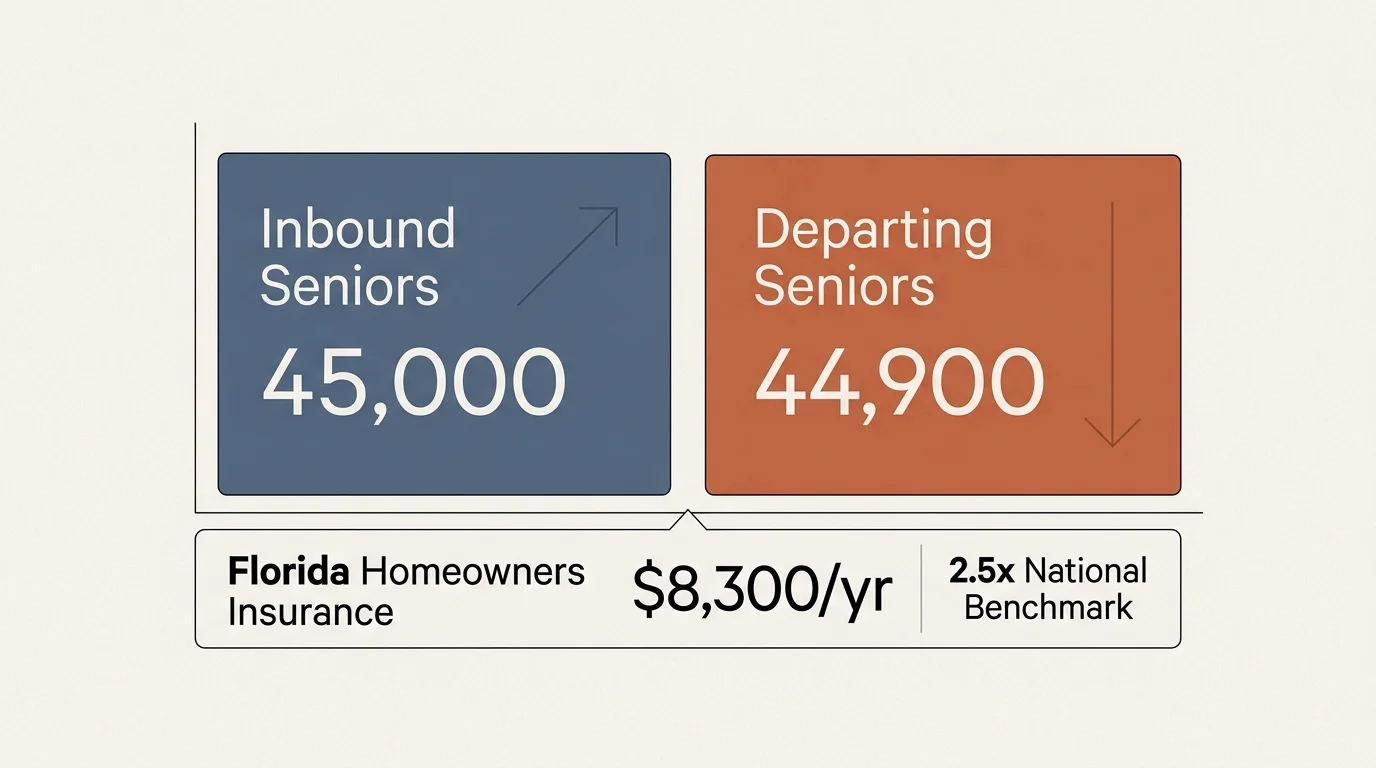
Florida long dominated the national imagination as the default haven for aging workers. However, recent migration patterns show a dramatic narrowing in Florida’s net population gains.
The Sunshine State still welcomed over 45,000 incoming seniors last year. Yet nearly 44,900 older residents packed their bags and departed during that same window.
Escalating living expenses explain much of this sudden turnaround. Florida homeowners insurance premiums now average approximately $8,300 per year, which is more than 2.5 times the national benchmark.
When you add rising HOA fees and soaring property assessments, the financial equation shifts rapidly. Many seniors on fixed incomes find themselves priced out of their coastal condominiums.
Meanwhile, high-tax regions in the Northeast and West Coast continue to shed aging households at staggering volumes. California experienced a net loss of more than 56,000 residents aged 60 and older.
New York, New Jersey, and Illinois saw similar departures as retirees fled steep property taxes and unforgiving winter heating costs. These departing seniors are seeking sustainable, predictable monthly living costs elsewhere.

The Carolinas Lead the Nation in Net Inflows
The Carolinas have officially taken the crown as the fastest growing retirement states in America. Lower overhead, milder summers than the deep South, and balanced weather make both states primary relocation magnets.
South Carolina now leads the entire country in net migration gains for adults aged 65 and older. Tens of thousands of seniors move there each year to enjoy high quality of life at manageable prices.
Upstate communities like Greenville offer thriving cultural downtowns and pedestrian-friendly river parks. Coastal destinations like Myrtle Beach and Hilton Head continue to attract active adults who love golf, boating, and beachcombing.
South Carolina also protects your wallet with low property taxes and a generous homestead exemption for residents aged 65 and older. That tax structure leaves more money in your monthly budget for travel and hobbies.
North Carolina gained over 20,000 net retirement-age residents over the past year. Retirees gravitate heavily toward the Research Triangle and Winston-Salem for their nationally ranked university hospital systems.
You can settle in charming foothill towns or vibrant suburban neighborhoods with easy highway access to specialized clinics. This combination of top-tier medicine and four distinct seasons keeps North Carolina near the top of relocation rankings.

The Mountain West and Southwest: Nevada and Arizona Remain Powerhouses
Retiree migration trends highlight strong westward momentum across the Sunbelt and interior West. Year-round sunshine, low humidity, and purpose-built 55-plus master-planned communities attract tens of thousands of older homebuyers.
Arizona welcomed over 20,000 net retirement-age movers during the past twelve months. Desert hubs like Scottsdale and Mesa provide established community infrastructure, extensive pickleball networks, and renowned healthcare facilities like the Mayo Clinic.
Dry desert air provides therapeutic relief for seniors managing chronic arthritis and respiratory challenges. You can stay physically active throughout the winter months without worrying about icy sidewalks or snow shoveling.
Nevada offers an equally potent combination of fiscal benefits and recreational amenities. The Las Vegas Valley—anchored by Henderson, Summerlin, and North Las Vegas—ranks as the nation’s single top metropolitan destination for 65-plus relocations.
Nevada levies zero state personal income tax on wages, pensions, or investment portfolios. For individuals relying on withdrawals from tax-deferred accounts, this policy saves thousands of dollars every year.
Master-planned neighborhoods across Nevada emphasize single-level living, energy-efficient construction, and clubhouse amenities. You can enjoy an active social calendar just minutes from world-class dining and cultural shows.

Delaware: The Mid-Atlantic Tax Shelter for Eastern Retirees
Delaware has quietly transformed into one of the top states for retirees seeking an East Coast home. More than 28% of Delaware’s current population is now at or near retirement age.
Transplants from Pennsylvania, New Jersey, and New York choose Delaware to remain within easy driving distance of family. You preserve close bonds with children and grandchildren while dramatically lowering your cost of living.
The First State charges zero percent sales tax on retail purchases, groceries, and dining out. Furthermore, Delaware maintains some of the lowest effective real estate property tax rates on the Atlantic seaboard.
Social Security benefits remain completely exempt from state income tax in Delaware. The state also offers qualifying seniors an exclusion on private pensions and retirement account distributions.
Sussex County towns like Lewes, Milton, and Rehoboth Beach provide picturesque coastal charm alongside expanding healthcare campuses. You gain seaside living without paying the exorbitant taxes typical of northeastern beach enclaves.
“It’s not how much money you make, but how much money you keep, how hard it works for you, and how many generations you keep it for.” — Robert Kiyosaki
State-by-State Comparison: Taxes, Insurance, and Growth Trends
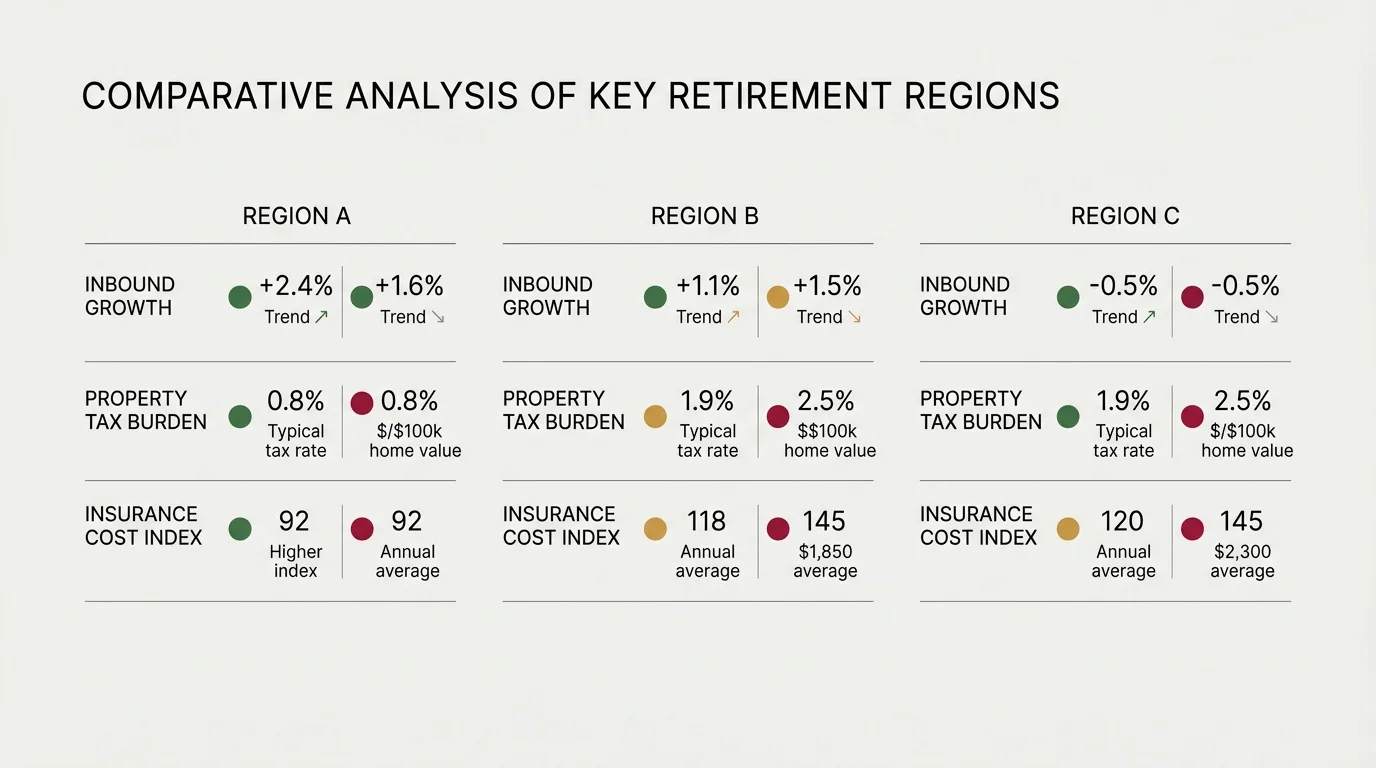
Evaluating where retirees are moving requires balancing headline tax rates against insurance costs and local living expenses. The following comparison highlights key financial variables across the fastest-growing relocation destinations.
| State | Net Migration Inflow Rank | State Income Tax on Retirement | Social Security Taxed? | Typical Homeowners Insurance |
|---|---|---|---|---|
| South Carolina | #1 Net Inflow Nationally | Graduated (Top rate 6.2%) | No | Moderate ($1,800–$2,400/yr) |
| North Carolina | Top 3 (20,000+ net gain) | Flat rate (4.5%) | No | Moderate ($1,900–$2,500/yr) |
| Arizona | Top 3 (20,000+ net gain) | Flat rate (2.5%) | No | Low to Moderate ($1,600–$2,100/yr) |
| Nevada | #1 Metro Destination (Las Vegas) | None (0%) | No | Low to Moderate ($1,400–$1,900/yr) |
| Delaware | Fastest Mid-Atlantic Growth | Graduated (Top rate 6.6%) | No | Very Low ($1,100–$1,500/yr) |
| Florida | Narrowing Net Growth | None (0%) | No | Extremely High ($8,300/yr avg) |
Comparing these figures proves that headline tax rates only tell part of the story. You must weigh property tax millage rates and insurance premiums against state income taxes to determine your true cost.

Tax Policies Shaping 55-Plus Relocation Decisions
State tax policies directly influence how long your retirement nest egg lasts. Strategic movers prioritize states that protect investment distributions, pension checks, and government safety-net payments.
Only eight states still tax a portion of your Social Security benefits: Colorado, Connecticut, Minnesota, Montana, New Mexico, Rhode Island, Utah, and Vermont. West Virginia recently phased out this tax, joining Kansas, Missouri, and Nebraska.
Check your specific benefit estimates directly through the Social Security Administration before establishing residency in a new jurisdiction. Accurate numbers will keep your retirement projections on track.
Eight states impose zero personal state income tax on any income, including pensions, 401(k) withdrawals, and regular wages. These tax-free states include Alaska, Florida, Nevada, South Dakota, Tennessee, Texas, Washington, and Wyoming.
Federal tax provisions also offer meaningful financial relief for older taxpayers. Eligible filers aged 65 and older can claim an additional deduction of up to $6,000 per person, lowering taxable income significantly.
Research from advocacy organizations like AARP emphasizes that local property tax relief programs often provide bigger annual savings than state income tax breaks. Always research local homestead exemptions before purchasing.

Housing and Healthcare: The Decisive Drivers of Relocation
Budget considerations are crucial, but housing functionality and access to medical care ultimately determine long-term quality of life. Modern retirees want accessible homes near specialized clinical networks.
Over 60% of relocating adults aged 65 and older choose single-story, two- to three-bedroom single-family homes or townhomes. These layouts eliminate stair hazards, simplify routine cleaning, and keep utility bills manageable.
Downsizing into a modern single-story floor plan frees up home equity for your investment portfolio. You can redirect funds previously spent on home repairs into travel, wellness, and leisure activities.
Healthcare access motivates roughly 15% of all cross-state moves among older Americans. Relocating near major medical centers ensures seamless treatment for chronic illnesses and complex health conditions.
You can locate nearby aging programs and community assistance through the federal Eldercare Locator before making your move. Establishing these community relationships early makes your relocation transition much smoother.

Costly Mistakes to Avoid When Moving Across State Lines
Relocating during retirement provides a fresh start, but rushed decisions can damage your long-term security. Steer clear of these frequent mistakes as you explore new regions:
- Underestimating property insurance premiums: Buying a home in high-risk coastal or wildfire corridors can cause annual insurance premiums to exceed your property taxes.
- Disrupting your Medicare provider network: Relocating across state lines can invalidate regional Medicare Advantage plans and force you to switch trusted doctors.
- Ignoring local property tax reassessments: Some county assessors reset home values immediately after a sale, resulting in unexpected tax increases for new buyers.
- Overlooking extreme seasonal weather: Visiting a destination during peak spring months often masks sweltering summer heat or damp winter chills.
- Failing to establish formal legal domicile: Keeping ties in your former state can cause aggressive tax agencies to audit and tax your retirement income.
Use tools like the Medicare.gov Plan Finder to check provider networks and prescription drug tiers before moving. Protecting your healthcare coverage should always remain a top relocation priority.

Don’t DIY These Decisions
Moving across state lines impacts your taxes, legal documents, and healthcare coverage simultaneously. Working with licensed specialists ensures you avoid costly missteps and safeguard your wealth.
Consult a State Health Insurance Assistance Program (SHIP) counselor to review your Medicare choices. These certified professionals offer free, unbiased guidance on navigating regional coverage shifts and special enrollment periods.
Partner with a fee-only financial planner to analyze how moving affects your withdrawal strategy and tax bracket. They will help you establish proper legal residency and structure asset withdrawals efficiently.
Engage an elder law attorney in your new home state to review your estate planning documents. State statutes governing wills, healthcare powers of attorney, and revocable living trusts vary substantially across state lines.
“Retirement is not the end of the road. It is the beginning of the open highway.”
Frequently Asked Questions About Retiree Relocation
Here are straightforward answers to the most common questions older adults ask when planning an out-of-state relocation.
Which state offers the lowest overall tax burden for retirees?
States like Delaware, Nevada, and Wyoming frequently rank lowest in total tax burden for seniors. The ideal state depends on whether your income stems from pensions, investments, or Social Security.
What is the biggest unexpected expense when relocating in retirement?
Surging property insurance premiums and sudden property tax reassessments are the most common surprises. Always request recent utility bills and written insurance quotes before closing on a home.
Does moving to a new state affect my Medicare coverage?
Original Medicare Part A and Part B work nationwide with any participating provider. However, Medicare Advantage and Part D plans are regional, meaning you must enroll in new local plans after moving.
Can my former state tax my pension after I move away?
Federal law prohibits states from taxing pension payments, 401(k) withdrawals, or IRA distributions earned by former residents who have permanently established domicile in another state.
Planning Your Next Chapter
Finding the best states for retiree relocation begins with identifying your personal values, from healthcare quality to family proximity. Take time to visit potential communities during different seasons before committing your savings.
Retirement rules and benefit amounts vary based on individual work history, income, and circumstances; this article provides general guidance only. Consult a SHIP counselor, financial advisor, or elder law attorney for advice specific to your situation.
Last updated: February 2026. Medicare and Social Security rules change annually—always verify current details at official government sources.