Housing costs now consume over 30% of monthly income for one-third of older Americans. Meanwhile, the median existing home price sits at $429,100, and repair bills on older properties add up fast.
You do not need to remain tethered to an oversized home or pay $6,200 monthly for assisted living. Innovative housing models allow you to slash overhead while building a vibrant lifestyle on your own terms.
Exploring alternative housing retirement strategies gives you financial autonomy and fresh social connections. These nine unconventional living retirees models provide practical alternatives to traditional retirement living.

1. Senior Cohousing Communities
Senior cohousing creates an intentional neighborhood where residents balance private ownership with shared community resources. You own an individual private home but share extensive communal amenities with your neighbors.
Neighborhoods cluster around a central common house equipped with a commercial kitchen, dining hall, and workshop. Residents routinely share evening meals, coordinate garden maintenance, and plan group outings.
According to the Cohousing Association of the United States, more than 170 established cohousing communities operate nationwide. Approximately 45 of these developments serve cohousing seniors exclusively.
This setup combats senior isolation without compromising personal privacy. Neighbors check on one another daily, which often postpones or eliminates the need for expensive assisted living facilities.
Homes generally sell at standard regional real estate prices, and homeowners pay monthly association fees. Residents govern the community collectively through consensus-based decision-making rather than top-down property managers.
Before buying into a cohousing neighborhood, arrange to rent an on-site guest suite for several weeks. Attending community dinners and business meetings helps you determine if the culture fits your social preferences.
2. Backyard Accessory Dwelling Units (ADUs)
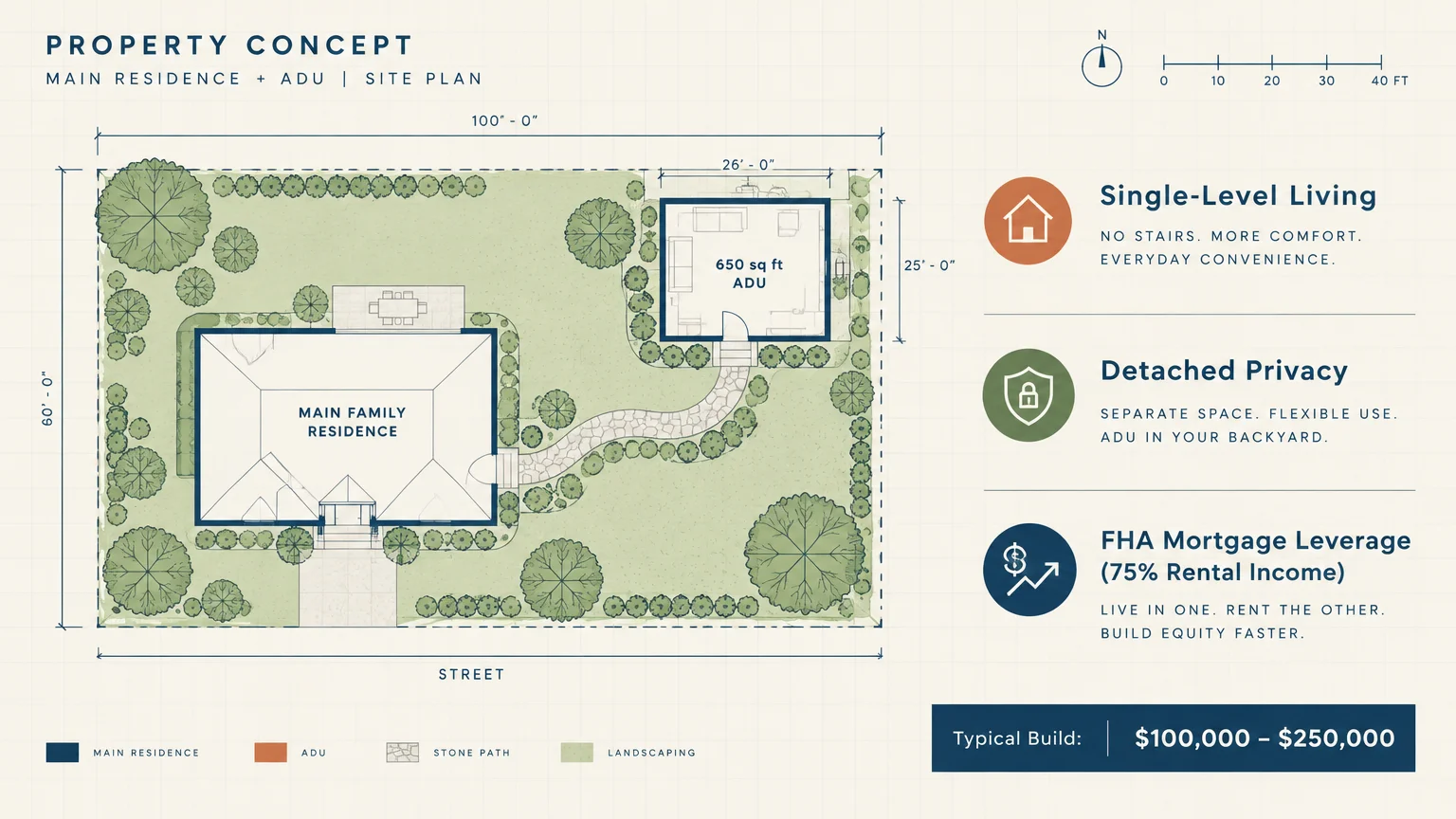
An Accessory Dwelling Unit, often called a granny flat, is an independent residential structure built on a single-family lot. Many retirees build ADUs on the residential property of their adult children.
This living arrangement keeps family generations close while preserving distinct physical autonomy for everyone. You enjoy privacy in your own detached cottage without shouldering separate real estate taxes or soaring utility accounts.
Financing rules from the Federal Housing Administration make funding these secondary homes much easier. Borrowers can use 75% of estimated rental income from an existing ADU to qualify for an FHA mortgage.
If you convert a garage or basement using an FHA 203(k) loan, you can count 50% of projected rent. These updated mortgage rules provide valuable leverage when financing construction costs as a family.
Building a quality backyard cottage generally costs between $100,000 and $250,000. That investment adds substantial market value to the property while providing you with a custom, single-level living space.
Investigate municipal setback requirements and sewer hookup fees before hiring an architect. You can consult federal guidance through HUD Housing for Seniors to explore local age-friendly housing standards.
Sign a clear family agreement covering shared property maintenance, utility allocation, and privacy expectations. Putting boundaries in writing prevents misunderstandings and safeguards healthy family relationships.
3. Purpose-Built Tiny Homes for Seniors
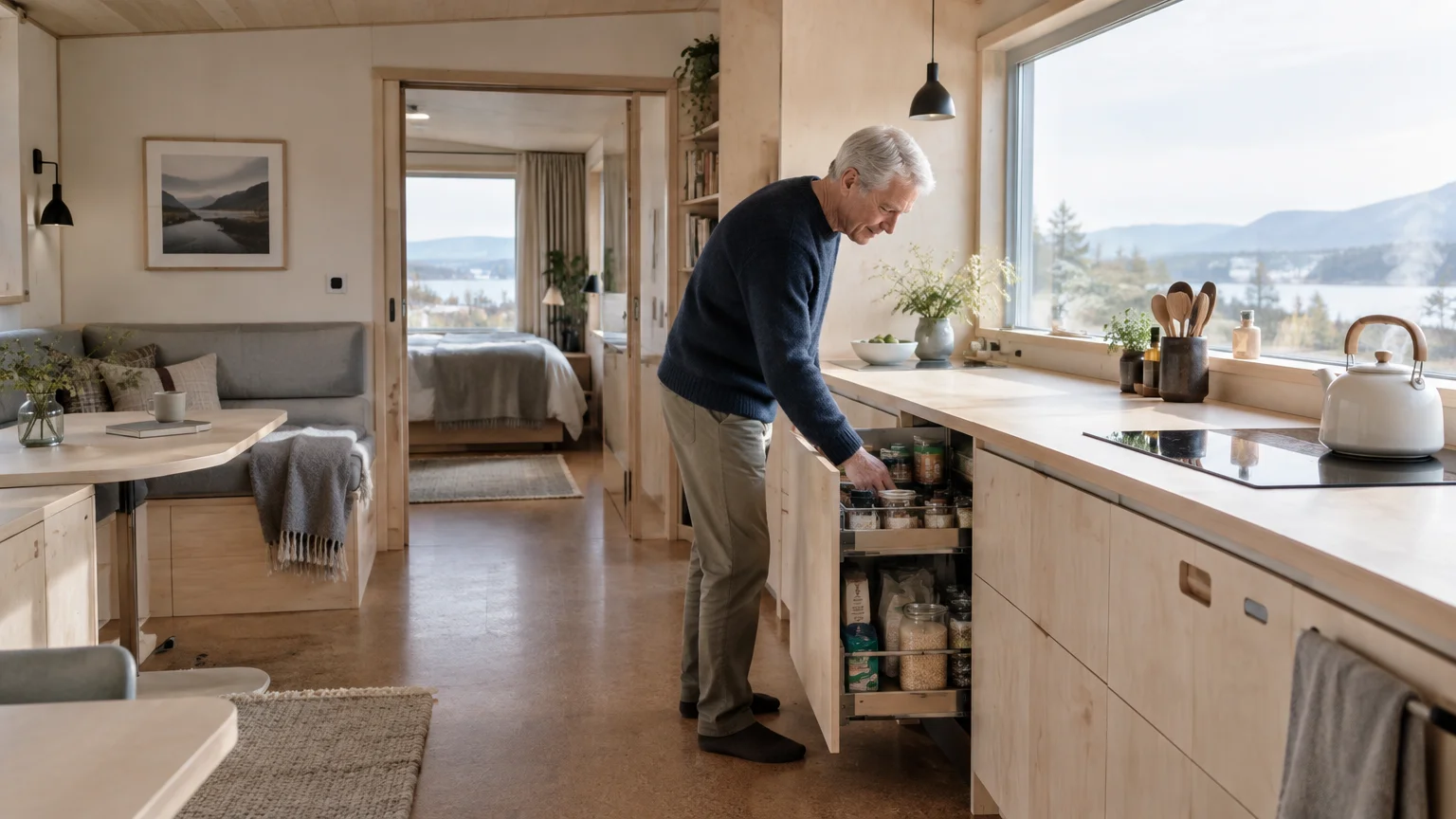
Downsizing into a tiny home eliminates the burden of cleaning and maintaining unused rooms. Purpose-built tiny homes for seniors typically provide between 100 and 500 square feet of compact, highly efficient space.
Purchasing or building a tiny home in 2026 generally costs between $30,000 and $85,000. Custom turnkey homes built on permanent foundations average between $50,000 and $150,000.
Tiny homes average $150 to $400 per square foot to construct. Despite that higher rate per foot, total upfront costs remain dramatically lower than a traditional single-family house.
Standard tiny home lofts require climbing steep ladders, which poses a severe fall hazard. Purpose-built senior tiny homes eliminate lofts in favor of main-floor master bedrooms and curbless walk-in showers.
Wider doorways and reinforced walls for grab bars ensure your tiny home accommodates future mobility aids. Minimal interior upkeep leaves you with extra energy for hobbies and social outings.
Finding legal land placement remains the primary hurdle for tiny home owners. Look for established tiny home pocket neighborhoods, RV resorts with long-term leases, or rural counties with flexible zoning rules.

4. Full-Time RV Retirement
Trading a stationary home for an RV lets you turn your retirement into a mobile adventure. Embracing RV retirement allows you to explore state parks and escape harsh winter weather on your schedule.
“Retirement is not the end of the road. It is the beginning of the open highway.”
Many retirees purchase motorhomes, fifth-wheels, or converted camper vans to manage overhead costs. You pay nightly or monthly campsite fees rather than property taxes and costly municipal sewer bills.
Living on the road requires careful health insurance selection. Original Medicare paired with a Medigap policy gives you nationwide coverage at any healthcare provider that accepts Medicare.
In contrast, Medicare Advantage HMO plans limit non-emergency medical coverage to local geographic networks. You can compare network limits directly through Medicare.gov before hitting the road.
You must also declare legal domicile in an RV-friendly state such as Florida, Texas, or South Dakota. These states impose no state income tax and feature well-established mail forwarding services for nomads.
Budget for ongoing vehicle maintenance, tire replacements, and seasonal campground fee increases. Joining camping discount clubs helps lower nightly site expenses during heavy travel seasons.

5. Home Sharing and the “Golden Girls” Model
Home sharing brings two or more unrelated adults together under one roof. Inspired by the popular sitcom, many retirees open their spare bedrooms to peers to share expenses and companionship.
Harvard housing data reveals that 75% of households aged 75 and older cannot afford daily visits from a caregiver. Sharing a home cuts living costs in half while providing mutual support.
Roommates split high electricity bills, share streaming subscriptions, and divide grocery costs. Having another person in the house also provides immediate security if a slip or health issue occurs.
Mortgage guidelines now support this arrangement directly. Updated FHA lending rules allow homeowners to count boarder rental income toward mortgage qualification with just 12 months of documented history.
You can identify vetted roommates through national non-profit home-sharing programs or specialized matching services. Organizations like AARP frequently offer toolkits to help older adults establish safe co-living arrangements.
Always write a formal lease agreement covering rent payments, shared chores, guest privileges, and personal quiet hours. Conducting background checks and personal interviews beforehand ensures compatibility between housemates.

6. Residential Cruise Ship Living
Booking extended voyages aboard commercial cruise ships provides a luxury alternative to typical senior living. Retirees accomplish this by chaining back-to-back cruises, booking long-term world journeys, or leasing residential cabins.
Standard cruise fares cover prepared meals, cabin housekeeping, nightly theater shows, and port transportation. When measured against assisted living medians of $6,200 monthly, strategic cruise deals can cost comparable amounts.
You wake up in exotic international harbors without packing suitcases or navigating airports. Crew members handle all domestic chores, giving you complete freedom to relax and socialize.
However, healthcare coverage on cruise vessels requires serious preparation. Medicare Part B covers care onboard only if the physician is certified and the vessel is in a U.S. port or within 6 hours of one.
For sailings beyond domestic waters, you must carry comprehensive international travel health insurance. Ensure your policy includes emergency medical evacuation coverage, which can cost $100,000 or more if airlifted at sea.
Book cabins during shoulder seasons and earn loyalty points with specific cruise lines to secure discounted rates. Free laundry perks and complimentary internet make long-term cruise life much more cost-effective.

7. Expat Living in Low-Cost Countries
Relocating overseas allows you to convert modest retirement savings into a comfortable lifestyle. Popular destinations like Portugal, Mexico, Costa Rica, and Panama offer warm weather, affordable housing, and high-quality private healthcare.
The average Social Security retirement benefit is $2,071 monthly for an individual worker. That payment alone covers comfortable housing, dining, and healthcare in many attractive overseas communities.
You can check your expected retirement benefit through the Social Security Administration before planning an overseas move. Knowing your exact monthly income clarifies which countries fit your budget.
Selling your American home to move abroad offers major tax advantages. IRS Section 121 allows you to exclude up to $250,000 in capital gains, or $500,000 for couples, if you lived there two of the past five years.
Remember that Medicare does not provide coverage for medical care outside the United States. Standard Medigap policies only cover foreign emergency care at 80% after a $250 deductible, up to a $50,000 lifetime cap.
Most expats maintain Medicare Part B by paying the standard $202.90 monthly premium. Dropping Part B triggers a permanent 10% late-enrollment penalty for every 12-month period you lack coverage if you return home.
Spend several months renting in your target country before buying real estate. Experiencing local banking, healthcare clinics, and visa procedures firsthand prevents costly relocation regrets.

8. Nomadic House Sitting and Home Swapping
Nomadic house sitting lets you travel the world while eliminating lodging expenses completely. Homeowners provide free accommodations in exchange for pet feeding, home security, and garden maintenance while they vacation.
Retirees who downsize their possessions can live comfortably on a fraction of their prior expenses. Without a mortgage, property taxes, or utility bills, your primary outlays are food, travel, and health insurance.
Home swapping offers another creative path for retirees who retain a home base. You exchange residences with another homeowner in your dream destination, enjoying a fully equipped house without hotel bills.
Reliable house sitting platforms feature identity checks and customer review systems. Building a portfolio of glowing reviews helps you secure premium assignments in desirable coastal towns and historic cities.
This nomadic lifestyle demands high adaptability and comfort with irregular schedules. You must manage pet emergencies responsibly and arrange short hotel stays between back-to-back sitting assignments.
Use a professional mail-forwarding service to manage your financial notices and voting ballots. A centralized digital mailbox keeps your tax documents organized while you travel from assignment to assignment.

9. University-Based Retirement Communities (UBRCs)
University-Based Retirement Communities combine senior housing with the intellectual resources of a college campus. These communities sit on or adjacent to university campuses, fostering lifelong education and active cultural engagement.
Residents receive official campus ID cards that grant access to campus libraries, art exhibits, and fitness centers. Many universities allow retirees to audit undergraduate lectures and attend collegiate sporting events at discounted rates.
Intergenerational living delivers proven cognitive benefits for aging adults. Interacting with young students through research projects or mentorship programs keeps your mind sharp and combats social isolation.
Most university communities operate as continuing care campuses, providing independent living, assisted care, and memory support. This healthcare continuum ensures you remain in familiar surroundings even if your health needs change.
Financial arrangements typically involve an initial entrance fee along with monthly maintenance dues. These monthly fees cover dining plans, housekeeping services, campus transportation, and building maintenance.
Review the university’s level of formal integration before committing to a community. The best programs offer structured interaction with academic faculty and clear healthcare pathways with the university’s teaching hospital.

Evaluating Alternative Housing: Costs, Healthcare, and Community
Choosing between alternative living models requires balancing financial commitments against personal health and social preferences. The comparison table below highlights key factors across all nine living options.
| Living Option | Estimated Upfront Cost | Typical Ongoing Monthly Cost | Healthcare Flexibility | Social Environment |
|---|---|---|---|---|
| Senior Cohousing | $300,000 – $600,000+ | $400 – $900 (HOA dues) | High (Standard domestic Medicare) | High (Intentional peer support) |
| Backyard ADU | $100,000 – $250,000 | $200 – $500 (Utilities share) | High (Standard domestic Medicare) | High (Multi-generational family) |
| Senior Tiny Home | $30,000 – $85,000 | $400 – $800 (Lot lease & power) | High (Standard domestic Medicare) | Moderate (Pocket community or solo) |
| Full-Time RV | $40,000 – $150,000 | $1,500 – $3,000 (Fuel & parks) | Variable (Requires Medigap nationwide) | Moderate (Nomadic traveler clubs) |
| Home Sharing | $0 – $2,000 (Deposit/setup) | $500 – $1,200 (Shared costs) | High (Standard domestic Medicare) | High (Daily peer companionship) |
| Extended Cruising | $0 (No real estate buy-in) | $3,500 – $7,000 (All-inclusive) | Low (Requires evacuation policy) | High (Vibrant shipboard activities) |
| Expat Haven | $1,000 – $5,000 (Relocation) | $1,200 – $2,500 (Full budget) | Restricted (Private expat insurance) | Moderate (Local expat networks) |
| Nomadic House Sitting | $100 – $300 (Platform fees) | $800 – $1,800 (Transit & food) | High (Original Medicare domestic) | Variable (Frequent regional moves) |
| University Community | $150,000 – $500,000+ | $2,500 – $5,500 (Service dues) | Very High (On-site continuous care) | Very High (Intergenerational learning) |
Reviewing these variables helps you match housing models to your retirement savings and lifestyle priorities. For instance, tiny homes and home sharing reduce monthly expenses, while university communities offer comprehensive care.
When analyzing costs, consider your baseline retirement income. The average Social Security check of $2,071 per month easily covers home sharing or expat living, but requires supplemental savings for university-based communities.

Common Retirement Traps to Avoid
Exploring unconventional living arrangements opens exciting doors, but hasty decisions can create legal or financial nightmares. Protect your retirement savings by avoiding these common housing mistakes.
Overlooking Healthcare Portability
Many seniors select Medicare Advantage plans for their attractive zero-dollar premiums. However, Medicare Advantage HMOs restrict routine care to narrow geographic networks, leaving mobile retirees without coverage away from home.
If you plan to live in an RV or travel extensively, enroll in Original Medicare with a Medigap policy. This coverage gives you access to any participating Medicare doctor or hospital across the United States.
Ignoring Local Zoning Regulations
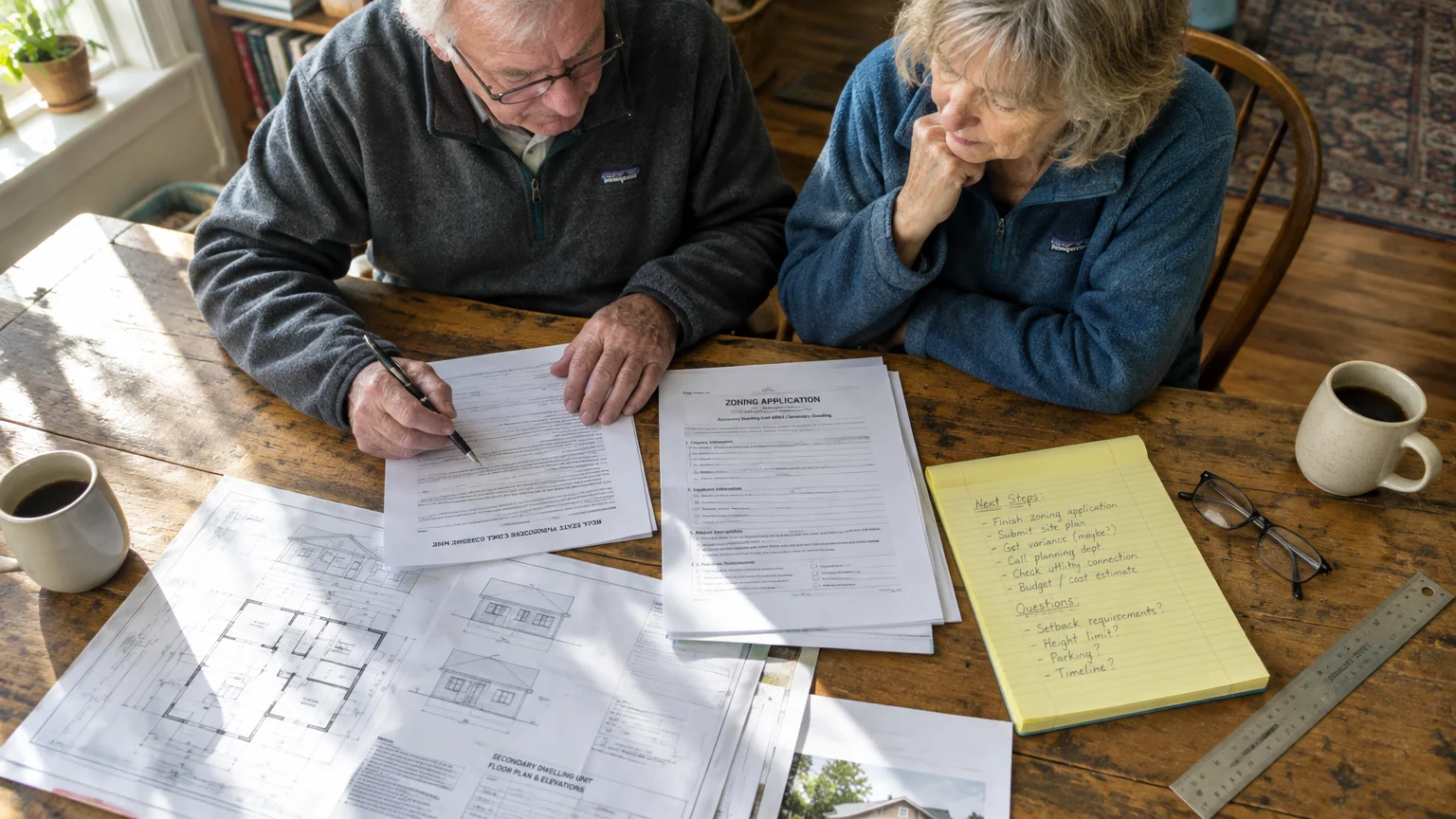
Do not buy a tiny home or construct an ADU without verifying municipal land codes. Many suburban jurisdictions restrict permanent occupancy in tiny houses or limit backyard utility connections.
Consult local planning officials about accessory dwelling ordinances, parking rules, and mandatory square footage minimums. Securing legal permits upfront prevents costly citations or mandatory eviction orders.
Neglecting Future Physical Accessibility
A living arrangement that feels manageable at age 62 may become dangerous at age 78. Tiny home loft stairs, RV steps, and multi-level shared homes create severe physical barriers after unexpected surgery.
Select housing options that incorporate single-level floor plans, zero-step entrances, and curbless showers. Planning for mobility limitations ahead of time ensures you will not be forced to relocate abruptly.
Failing to Draft Written Agreements
Living with friends or adult children without a written contract invites misunderstandings. Casual agreements often falter when family dynamics change or maintenance expenses arise unexpectedly.
Draft a legally binding lease or co-living agreement detailing cost allocations, guest policies, and dispute resolution methods. Clear documentation preserves both your financial investment and personal relationships.
When to Consult a Professional
Moving away from traditional homeownership involves intricate tax rules, estate planning considerations, and healthcare policies. Consulting credentialed professionals before making major lifestyle changes shields your savings from costly errors.
- Elder Law Attorney: Use an attorney to draft co-living agreements, clarify property deeds for ADUs, or protect your assets from future Medicaid spend-down requirements.
- Financial Advisor: A certified planner evaluates how downsizing proceeds impact your tax bracket and calculates sustainable portfolio withdrawal rates. You can review tax guidelines at IRS Retirement Plans.
- SHIP Counselor: State Health Insurance Assistance Program counselors deliver free, unbiased guidance on Medicare options for nomads, snowbirds, and expat retirees.
- Certified Public Accountant (CPA): Work with a CPA to leverage IRS Section 121 capital gains exclusions and manage state domicile tax filings.
Schedule consultations with these specialists at least six months before selling your current property. Professional advice provides peace of mind and ensures a smooth transition into your new lifestyle.
Frequently Asked Questions
Can I use Medicare if I retire outside the United States?
Original Medicare does not cover healthcare services rendered outside the United States. You can maintain Medicare Part B to avoid late-enrollment penalties if you eventually return to the country.
How much capital gains tax do I pay when downsizing my primary home?
Under IRS Section 121, you can exclude up to $250,000 of capital gains as an individual, or $500,000 as a married couple. You must have lived in the residence for two of the prior five years.
Are tiny homes legal as permanent residences in every state?
Zoning laws vary dramatically by state, county, and municipality. Some regions allow tiny homes on permanent foundations as ADUs, while others classify tiny homes on wheels as temporary recreational vehicles.
Is living on a cruise ship realistic for long-term senior housing?
Yes, many seniors chain repositioning cruises together to lower costs while enjoying all-inclusive food and housekeeping. However, you must carry private international medical insurance that includes emergency medical evacuation.
How does home sharing affect my Social Security retirement benefits?
Social Security retirement benefits depend on your lifetime earnings, not your housing arrangement. Rental income from a housemate does not reduce your standard Social Security retirement payments.
Taking Your Next Step
“The goal of retirement is to live off your assets—not live off your regrets.”
Rethinking where you live in retirement frees up wealth and creates room for new adventures. Instead of funding upkeep on an oversized house, you can invest in meaningful life experiences.
Start by identifying which unconventional model aligns best with your health, social goals, and budget. Rent an RV for two weeks, book an extended ADU stay, or visit a cohousing community before deciding.
Information in this article reflects current rules as of the publication date and may change. Always confirm benefit details directly with Social Security Administration, Medicare.gov, or relevant government agencies before making decisions.
Last updated: October 2026. Medicare and Social Security rules change annually—always verify current details at official government sources.