Trading your lawnmower for ocean views sounds like the ultimate retirement dream. Before packing your bags, you must evaluate the hidden financial and lifestyle realities of coastal living.
A successful transition requires looking past sunny vacation memories to examine storm insurance, seasonal crowds, and healthcare infrastructure. Asking the right practical questions now protects your nest egg from devastating surprises later.
Evaluating these critical factors ensures your coastal retirement delivers lasting peace of mind rather than unforeseen financial strain. Let us examine the essential questions every retiree must answer before buying near the shore.
1. Can Your Budget Handle the Real Cost of Coastal Insurance?
Standard homeowners insurance policies exclude flood damage entirely. You cannot rely on a traditional policy when storm surges push seawater toward your doorstep.
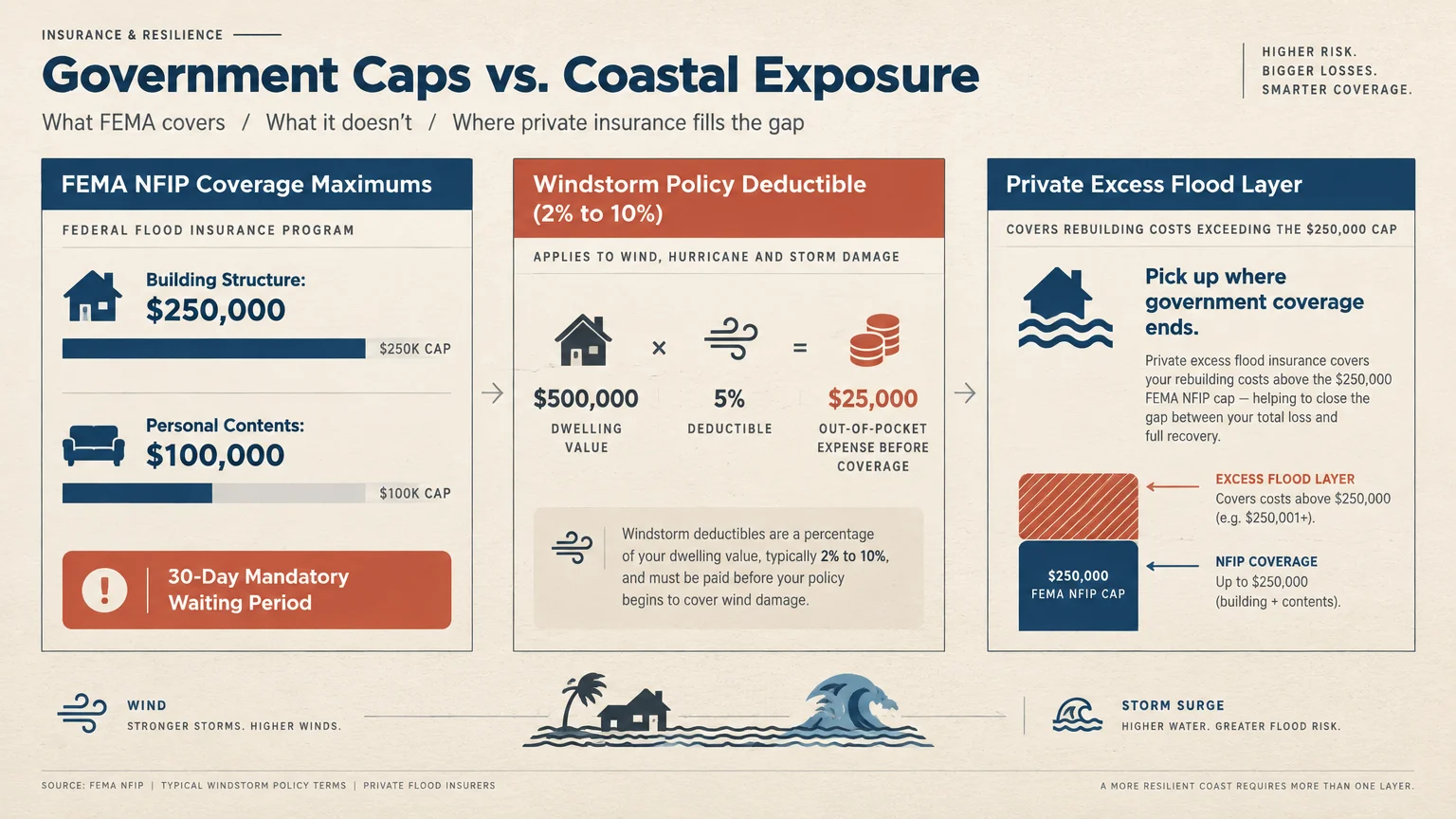
Under FEMA’s National Flood Insurance Program (NFIP), maximum residential coverage reaches only $250,000 for the building structure and $100,000 for personal contents. These two coverage limits must be purchased separately.
Because rebuilding a coastal home frequently costs far more than $250,000, you will likely need private excess flood insurance. That additional layer of protection adds significant annual expense to your housing budget.
Timing matters just as much as coverage limits when securing flood protection. NFIP policies mandate a strict 30-day waiting period before your coverage takes effect.
Federal law enforces a mandatory purchase requirement if your property sits in a Special Flood Hazard Area (SFHA). These zones carry at least a 1% annual chance of flooding, commonly called a 100-year floodplain.
If you take out a federally backed mortgage on an SFHA property, lenders require continuous flood coverage. Even if you pay cash, skipping flood insurance leaves your life savings completely exposed.
Windstorm coverage presents another substantial financial hurdle along the coast. Many coastal insurers exclude wind and hail damage, forcing homeowners into state-run risk pools with steep premiums.
Windstorm policies frequently feature separate percentage deductibles ranging from 2% to 10% of your insured dwelling value. On a $500,000 home, a 5% deductible means paying $25,000 out of pocket before insurance pays a penny.
Review your total housing budget using retirement tools from the Consumer Financial Protection Bureau. Factoring in rising premiums and high deductibles will keep your coastal dream financially sustainable.
2. Are You Factoring in Association Reserves and Coastal Condo Laws?
Buying a condominium often seems like an ideal way to downsize and eliminate outdoor maintenance. However, changing structural safety laws have created substantial financial risks for condo buyers.
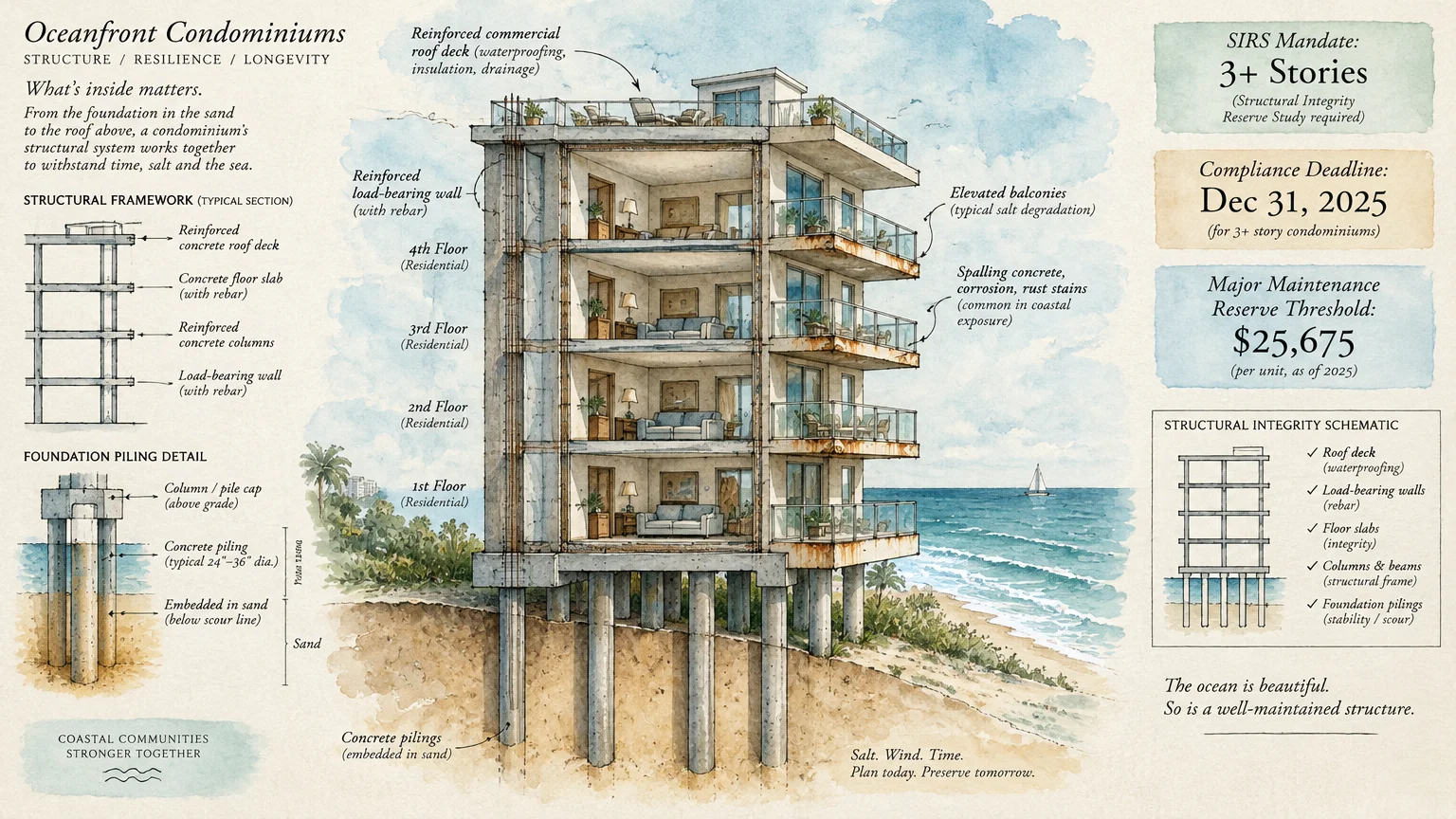
Florida legislation mandates Structural Integrity Reserve Studies (SIRS) for condominium buildings rising three or more habitable stories. This regulation ensures associations have adequate funds to repair critical structural components.
The state set its initial compliance deadline for these studies on December 31, 2025. Florida now enforces an inflation-adjusted major maintenance threshold of $25,675 for components requiring reserve funding.
Condo boards can no longer waive or reduce reserve contributions for essential structural elements. Foundations, load-bearing walls, roofs, fire protection systems, and waterproofing must maintain dedicated reserve accounts.
When associations fail to collect sufficient reserves over decades, current owners face massive special assessments. Retirees on fixed incomes often receive unexpected assessment bills totaling tens of thousands of dollars.
Financing rules for condominiums have also tightened nationwide. Effective January 4, 2027, Fannie Mae is increasing the minimum replacement-reserve allocation for Full Reviews from 10% to 15% of annual budgeted assessment income.
If an association’s budget allocates less than 15% toward replacement reserves, buyers cannot secure conventional mortgages. That restriction drastically reduces the buyer pool and depresses property values when you want to sell.
Never rely solely on an attractive view or updated kitchen when touring coastal condominiums. Ask the association for its latest structural reserve study, balance sheet, and history of special assessments before submitting an offer.

3. How Will Moving Change Your State Income and Social Security Taxes?
Relocating across state lines can reshape your tax burden during retirement. You must weigh personal income tax rules alongside local sales taxes and real estate assessments.
Nine states levy no personal income tax on wages: Alaska, Florida, Nevada, New Hampshire, South Dakota, Tennessee, Texas, Washington, and Wyoming. Among them, Florida, Texas, Washington, Alaska, and New Hampshire offer ocean or gulf coastlines.
The state tax treatment of your retirement benefits also plays a decisive role in your net income. Currently, 42 states and Washington, D.C., do not tax Social Security benefits at the state level.
Only eight states continue to tax Social Security benefits under certain age and income criteria: Colorado, Connecticut, Minnesota, Montana, New Mexico, Rhode Island, Utah, and Vermont. Among these eight jurisdictions, only Connecticut and Rhode Island border the sea.
Before planning your move, calculate your projected monthly benefit using official estimates from the Social Security Administration. Knowing your exact benefit amount helps you model state tax consequences accurately.
Do not assume that living in a state with no income tax automatically makes coastal living cheap. Jurisdictions without income taxes often rely on higher local sales taxes and substantial property tax rates to fund public services.
Coastal counties frequently levy supplemental property taxes to fund beach renourishment, seawall maintenance, and storm drainage infrastructure. These localized assessments can elevate your yearly property tax bill well above inland averages.

4. Does Local Healthcare Meet Your Long-Term Medical Needs?
Many picturesque beach communities sit on barrier islands or rural peninsulas far from major metropolitan medical centers. Scenic seclusion often translates into limited emergency medical access.
Local beach clinics can stitch minor cuts and treat seasonal infections effectively. However, managing complex conditions like cardiovascular disease, cancer, or advanced joint degeneration often requires traveling to regional academic hospitals.
Evaluate driving times to the nearest Level I or Level II trauma center during both winter and summer. A drive that takes twenty minutes in January can stretch to over an hour during peak vacation traffic.
Your health insurance structure also dictates which coastal doctors you can see. Original Medicare (Parts A and B) paired with a Medigap supplement provides nationwide coverage at any provider accepting Medicare.
In contrast, Medicare Advantage (Part C) plans and Part D prescription drug plans operate within strict, county-level networks. Moving outside your current plan’s service area requires enrolling in a new plan.
Relocating to a beach town in a new county triggers a Special Enrollment Period (SEP). This window allows you to switch Medicare Advantage or prescription plans without penalty.
If you notify your current plan before you move, your enrollment period begins the month before your move and continues for two full months afterward. This timeline prevents gaps in your healthcare coverage.
If you notify your plan after moving, your enrollment window covers the month of the move plus two additional months. Check provider networks on Medicare.gov before finalizing your change of address.

5. What Is Daily Life Like During the Peak Tourist Season?
Retiring to a beach town feels wonderful when summer visitors have not yet arrived. Peak tourist season, however, transforms quiet neighborhood streets into bustling commercial hubs.
Traffic congestion can make routine daily errands frustrating. Simple trips to the grocery store, pharmacy, or post office often take twice as long due to seasonal gridlock.
Bridge crossings connecting barrier islands to the mainland frequently experience severe bottlenecks. A bridge opening or minor fender bender can trap residents on the island for extended periods.
Local dining and recreation habits change dramatically between Memorial Day and Labor Day. Getting a table at your favorite neighborhood diner may require long waits or reservations booked weeks in advance.
Parking regulations also become stringent during summer months. Many coastal towns restrict street parking or charge substantial fees, requiring permanent residents to obtain municipal parking decals.
Short-term vacation rentals can also alter the character of residential coastal neighborhoods. Living next to rotating weekly renters often means enduring late-night noise, overflowing trash bins, and street congestion.
Investigate local zoning ordinances to determine whether your target neighborhood permits short-term rentals. Choosing an area with strict rental restrictions helps preserve long-term neighborhood peace.

6. How Does the Off-Season Reality Match Your Social Needs?
When vacationers pack up and head home in the autumn, coastal towns change character overnight. The contrast between peak summer activity and winter stillness can shock unprepared retirees.
Many seasonal businesses close their doors from October through April. Favorite seaside cafes, fresh fish markets, and retail shops may shutter entirely or operate on drastically reduced weekly schedules.
Boardwalks that bustled with life all summer often become silent and deserted during cold winter months. Coastal winds, damp air, and overcast skies can limit outdoor activities for weeks at a time.
This off-season quietness can easily lead to social isolation if you do not establish connections with permanent residents. A fulfilling retirement requires active social networks, purposeful hobbies, and dependable companionship.
Harry Emerson Fosdick offered a profound insight that every prospective retiree should remember when choosing a new home:
“Don’t simply retire from something; have something to retire to.” — Harry Emerson Fosdick
Seek out coastal towns with vibrant year-round populations rather than communities dominated entirely by seasonal vacationers. Year-round communities sustain active public libraries, civic organizations, and community centers throughout the winter.
Join local volunteer organizations, historical societies, or recreational clubs to build lasting friendships. Establishing deep local roots ensures you stay mentally engaged and socially connected through every season.

7. What Are the Real Maintenance Demands of Ocean Air?
Living near the ocean exposes your home to a corrosive marine atmosphere every single day. Salt spray, windblown sand, and relentless humidity attack structural materials relentlessly.
Airborne salt particles coat outdoor air conditioning condenser units, accelerating metal oxidation and coil decay. While an inland heat pump often lasts 12 to 15 years, a coastal unit may fail in just five to seven years.
Corrosion also attacks exterior light fixtures, garage door mechanisms, window hinges, and structural fasteners. Stainless steel and marine-grade brass resist rust far better than standard galvanized hardware.
Wood decking, railings, and siding require frequent sealing and painting to prevent rot and moisture intrusion. Sand blown by coastal breezes acts like an abrasive sandpaper, stripping exterior coatings faster than inland weather.
Vehicles kept outdoors near the surf collect salt residue that damages paint finishes and undercarriage components. You must wash your car regularly with clean water to prevent brake line and chassis corrosion.
Plan your budget with the assumption that coastal maintenance expenses will run at least double standard inland estimates. Maintaining a healthy emergency reserve fund prevents physical upkeep from draining your monthly income.
8. What Is Your Concrete Evacuation and Storm Plan?
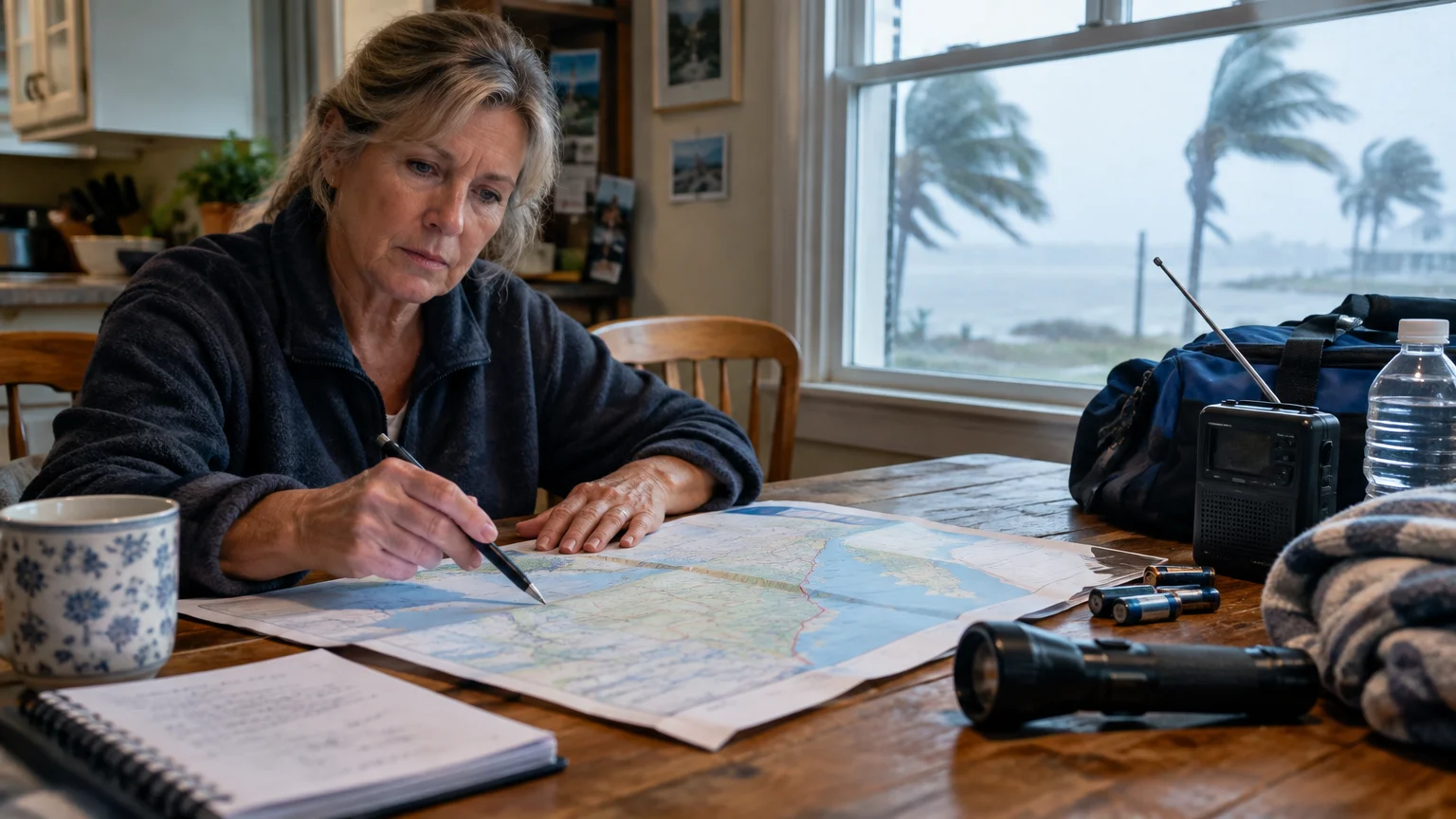
Living by the ocean requires accepting the constant reality of tropical weather and severe coastal storms. Hope is not an evacuation strategy when a major hurricane enters the forecast.
Barrier island residents face elevated risk because narrow access roads and causeways flood early during rising storm tides. Municipal authorities often order mandatory evacuations before mainland bridges become impassable.
Fleeing an approaching hurricane alongside hundreds of thousands of other residents leads to highway gridlock and fuel shortages. You need an established departure threshold so you leave long before roads become parking lots.
Design a comprehensive evacuation kit that travels with you in your vehicle. Your emergency supplies should include several weeks of essential prescription medications, medical records, and digital copies of insurance policies.
Make concrete lodging plans well in advance of hurricane season. Identify pet-friendly inland hotels or arrange to stay with relatives who live outside storm-surge zones.
Consider how power outages lasting one to two weeks would affect your physical well-being. If you rely on medical devices like oxygen concentrators or CPAP machines, secure a battery backup or portable generator.

Comparing Coastal Living Realities: Peak Season vs. Off-Season
Experiencing a beach town as a summer vacationer provides an incomplete picture of daily life. Life on the coast shifts dramatically between warm holiday months and cold winter periods.
Evaluating these seasonal differences objectively helps you determine whether coastal life matches your personal temperament. The comparison below illustrates the dual nature of beach town living.
| Factor | Peak Tourist Season (Summer) | Off-Season Reality (Winter) |
|---|---|---|
| Traffic & Mobility | Congested roads, bridge bottlenecks, and scarce municipal parking. | Empty streets, open parking, and effortless driving across town. |
| Healthcare Access | Long emergency room waits; urgent care centers overwhelmed by visitors. | Prompt medical attention, shorter clinic waits, and accessible providers. |
| Local Businesses | All dining, retail, and entertainment options open with extended hours. | Seasonal shops closed; reduced restaurant hours and limited services. |
| Social Atmosphere | Energetic, crowded, noisy, and dominated by vacation rental guests. | Tranquil, quiet, and sometimes socially isolating without local clubs. |
| Home Upkeep | Frequent landscape care, car washing, and air conditioning demands. | Storm shutter inspections, moisture prevention, and salt removal. |
Examining these seasonal swings ensures you enter coastal retirement with practical expectations. Thriving near the ocean requires enjoying both the vibrant summer energy and the quiet winter downtime.
Costly Mistakes to Avoid
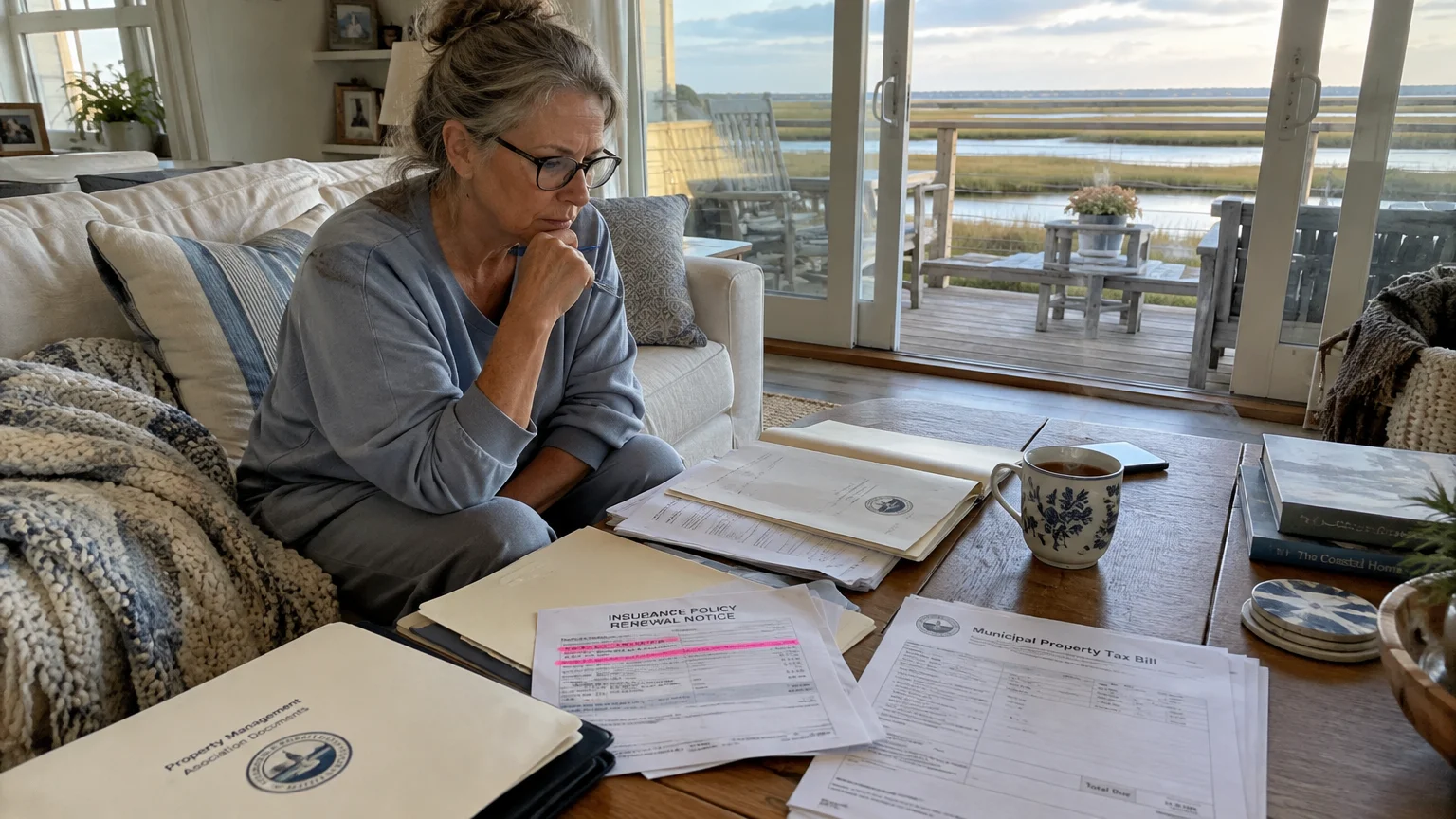
Many retirees allow coastal romance to cloud their financial judgment. Avoiding these common missteps protects your investment and preserves your retirement security.
- Buying a coastal home after a single sunny summer trip without experiencing the cold, damp off-season months.
- Assuming standard homeowners insurance covers coastal flooding and ignoring the 30-day NFIP waiting period.
- Failing to review condo reserve balance sheets and ignoring pending structural inspection deadlines.
- Forgetting to verify Medicare Advantage network coverage and missing your county-level Special Enrollment Period.
- Underestimating separate windstorm percentage deductibles that can require thousands of dollars out of pocket after a storm.
- Neglecting to investigate municipal short-term rental rules on your prospective residential street.
Taking time to research each of these potential pitfalls prevents painful financial surprises down the road. Due diligence today ensures your coastal retreat remains a source of relaxation.
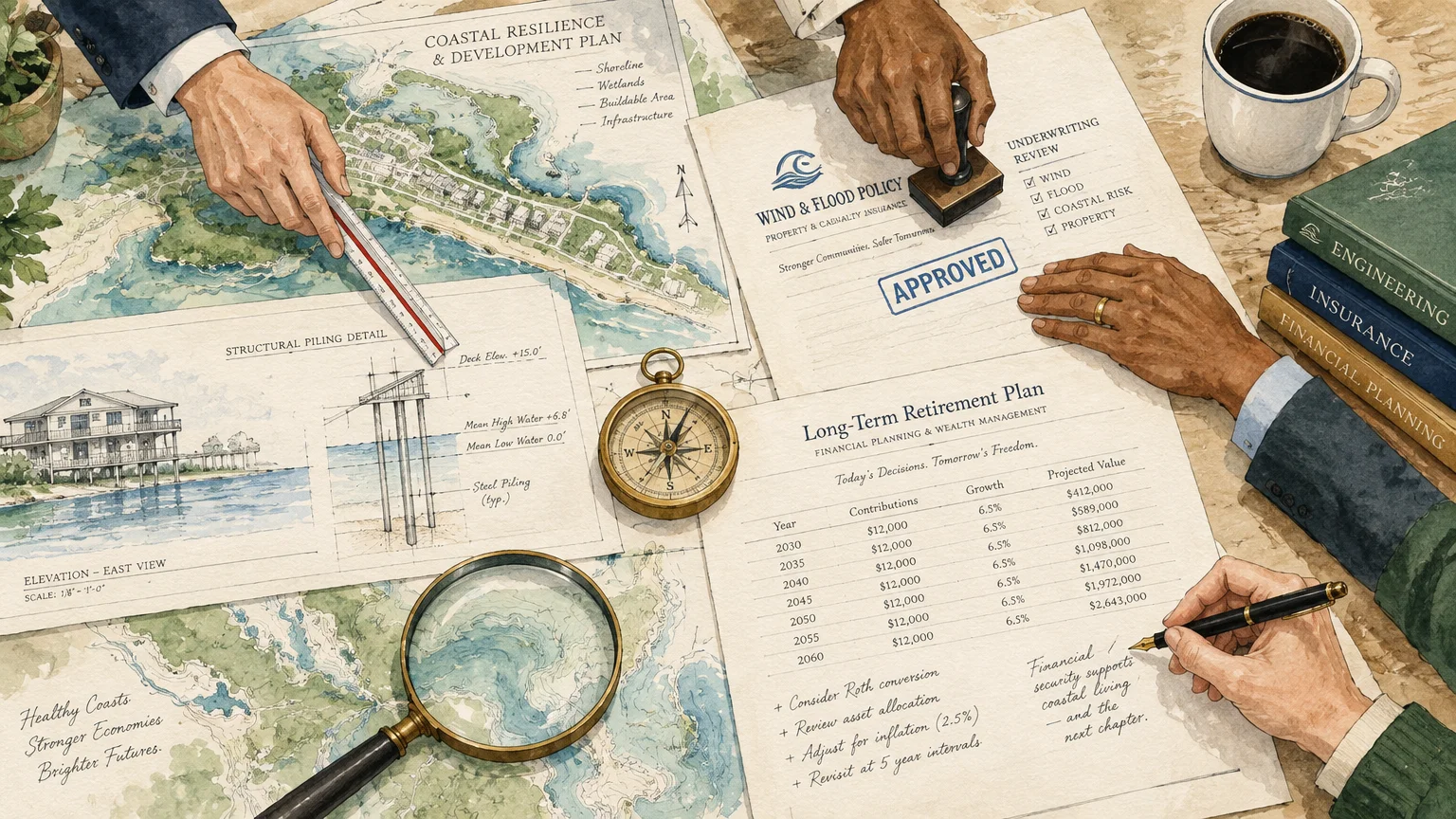
Don’t DIY These Decisions
Relocating to a coastal community involves complex financial, structural, and legal issues. Trying to handle every aspect of this transition on your own increases your exposure to expensive errors.
Work with a licensed, independent insurance broker who specializes strictly in coastal properties. An experienced coastal agent understands elevation certificates, flood zones, and private excess flood underwriting options.
Engage a qualified real estate attorney to review condominium documents before completing your purchase. Your attorney should examine the association’s structural reserve study, pending litigation, and special assessment history.
Consult a fee-only financial planner to model coastal living expenses within your retirement portfolio. A skilled advisor can help you plan for rising property taxes, high insurance deductibles, and accelerated home maintenance costs.
Reach out to a State Health Insurance Assistance Program (SHIP) counselor to navigate Medicare coverage rules. You can locate certified regional counselors and local aging assistance programs through the federal Eldercare Locator.
Professional advisors provide objective guidance when emotional excitement might otherwise cloud your judgment. Leaning on specialized expertise protects the wealth you spent decades accumulating.
Frequently Asked Questions
What is a percentage hurricane deductible and how does it work?
Unlike standard flat-rate deductibles, a hurricane deductible is calculated as a percentage of your home’s total insured dwelling value. If your home is insured for $400,000 with a 5% deductible, you must pay $20,000 out of pocket before insurance coverage begins.
Can I keep my Medicare Advantage plan if I move to a new beach town?
Medicare Advantage plans operate within specific county service areas. If your new coastal home sits outside your current plan’s county network, you must switch plans using your moving Special Enrollment Period to maintain covered healthcare access.
How do I verify if a coastal condominium has adequate reserve funds?
Request copies of the association’s latest reserve study, annual operating budget, and current balance sheet before buying. Look for a funded reserve balance that matches upcoming structural replacement needs and meets state-mandated structural reserve regulations.
Why do flood insurance policies have a 30-day waiting period?
FEMA enforces a mandatory 30-day waiting period for NFIP policies to prevent homeowners from purchasing coverage only when a named storm enters the immediate forecast. The waiting period takes effect unless coverage is required for a new mortgage closing.
Charting Your Course to the Coast
Retiring to a beach town can provide unmatched natural beauty, fresh air, and an active outdoor lifestyle. Achieving long-term happiness along the water requires balancing your coastal dreams with clear financial planning.
Before buying property, spend several weeks renting in your target beach community during the quietest winter month. Experiencing the off-season firsthand ensures you truly love the community when vacation crowds are gone.
This article is for informational purposes only and does not constitute financial, legal, or medical advice. Medicare rules, Social Security benefits, and tax laws change regularly—verify current details at Medicare.gov, SSA.gov, or with a licensed professional.
Last updated: October 2026. Medicare and Social Security rules change annually—always verify current details at official government sources.