Errors That Cost Retirees Thousands When Relocating
The decision to relocate in retirement involves far more than simply finding a house you love in a city that looks great on paper. Unfortunately, many Americans make critical oversight errors during the moving process that jeopardize both their physical health and their financial security.
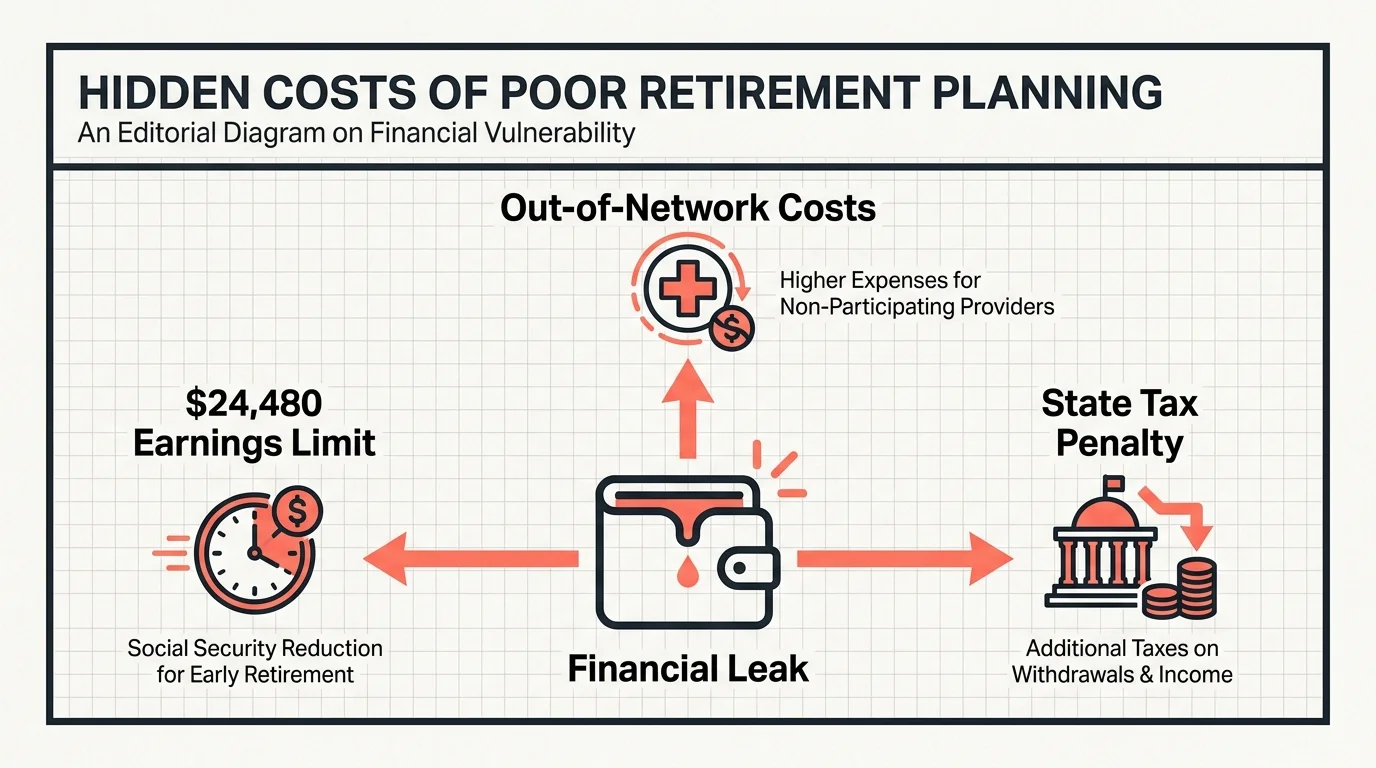
Failing to Verify Medicare Network Changes: This is arguably the most dangerous mistake a relocating retiree can make. If you are enrolled in Original Medicare, you can generally see any doctor who accepts Medicare nationwide. However, if you rely on a Medicare Advantage (Part C) plan, those networks are strictly localized. Moving to a new state—or even a new county—usually triggers a Special Enrollment Period. If you move to a new city without verifying that the local hospital systems accept your specific plan, you could be left paying completely out-of-pocket for essential services. You should always use the official Medicare Plan Finder to research available plans in your target zip code long before signing a lease or a mortgage.
Underestimating Hidden State Taxes: While a state might not tax your Social Security benefits, they may heavily tax your property, your sales purchases, or your estate. Moving from a state with high income tax to a state with no income tax often feels like a win until you realize the local property taxes are three times higher. You must calculate the total tax burden of a specific municipality rather than relying on broad state-level assumptions.
Buying Before Renting: It is incredibly risky to purchase a home in a new city without spending significant time there first. A neighborhood that feels charming during a long weekend vacation might feel entirely different when you are dealing with local traffic patterns, accessing the grocery store, or managing winter weather. Renting an apartment or a smaller home for six to twelve months allows you to test the waters. If the city does not align with your expectations, you can simply pack up and move without the massive financial friction of selling a house.
You might also want to read: Should You Sell Your Home in Retirement? The Honest Truth