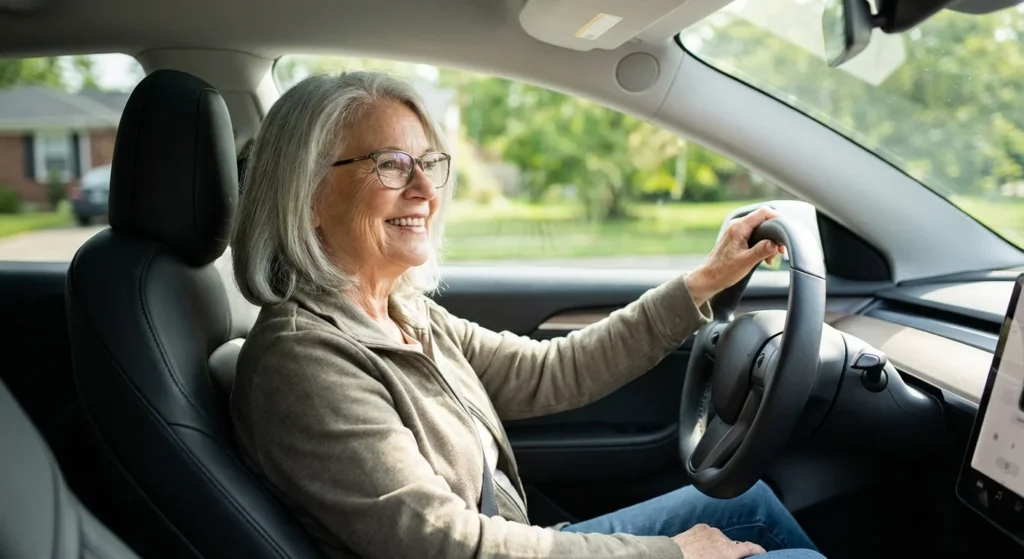
For many Americans, a driver’s license represents more than just permission to drive—it’s a symbol of independence. But as you move into retirement, staying on the road may come with a few additional requirements depending on where you live.
Across the United States, Departments of Motor Vehicles (DMVs) are introducing age-related rules designed to keep roads safe while allowing older drivers to remain mobile. These changes don’t necessarily mean you’ll lose your license—but they do mean you may face extra steps when it’s time to renew.
If you’re planning your retirement or considering relocating, understanding how these rules work can help you avoid surprises and stay in control of your mobility.
Why DMV Rules Change as You Age
Most states don’t take away driving privileges simply because of age. However, they do recognize that certain abilities—such as vision, reaction time, and physical mobility—can change over time.
To account for this, many states have introduced additional renewal requirements for older drivers. These may include:
- More frequent license renewals
- Mandatory vision screenings
- In-person renewal instead of online or mail
- In rare cases, behind-the-wheel driving tests
The goal isn’t to restrict seniors—it’s to ensure that all drivers remain safe on the road.










I know it happens to me, I set the cruise at the speed limit, but get sped by from everyone on the highway, why so these people never get stopped and ticketed?
They are so worried about the elderly! What about the illegals who get a license and they can’t speak English or read the road signs!! I think they’re barking up the wrong tree!!!
Good stuff listed “but” if you’re in the far left lane (aka the “fast lane”) and someone is “riding your bumper,” it is YOUR responsibility to move to the right into another lane. If as you say, you’re passing going 68 and you chose to not speed up to 70, at least pull over rightward as soon as you can safely pull in front of the car you just passed.
Are you one of those drivers who’s mantra is,”The speed limit is 70 mph, I’m going 70 mph in the fast and I’m NOT moving over for anyone who’s speeding at 71 mph or (gasp!)even faster?”
YOU’RE WRONG and I’m shouting. It’s not your job to enforce to 70 mph limit by refusing to move out of the way for a faster vehicle behind you in the left lane. Period. You want to enforce speed laws? Go to the academy and join the CHP.
I am 82 will i have to take the drivers test over ??
I’m 78 and I don’t have any problem taking a written or road test. However, IF you’re truly trying to keep people safe on the road, START ENFORCING TRAFFIC LAWS!! Take some time and sit off to the side at any traffic light, I’m willing to bet someone will run the red light 90% of the time. Drive the interstate and set your cruise control to the speed limit. You’ll get flipped off , sworn at, or cut off by dangerous drivers. When’s the last time you heard of anyone ticketed for following too close(tailgating)? And how about you’re in the left lane doing the speed limit passing a car doing 68mph instead of 70 mph and there’s some bozo 3 feet off your bumper because he thinks speed limits are only suggestions? And who gets ticketed? The poor guy doing the speed limit following the law. And if you take the time to look at these red light running, tailgating, speeding clowns driving these cars, it sure isn’t senior citizens .
They want to make more money , have you take tests more often . I agree as a senior that our eyesight can and will change dramatically as we age I would think most people with problems would take steps to protect themselves and others throu glasses or contacts .
instead of going after seniors for safer roads , maybe making it a requirement to be able to read English?
The current practice has been normal and effective. Why propose a new method or approach? Do you have statistical data to justify this new proposal, or is this simply an attempt to remain relevant while unnecessarily inconveniencing seniors?
The present system is working and should remain in place, unless you have a negative report based on realistic statistics that justifies the proposed change. No senior appreciates unnecessary inconvenience, except where circumstances require it. Please allow seniors to have peace of mind.
Thanks for the heads up about driver license requirements changing as we age. I’m going to try to find out DMV changes before my license comes up for renewal this year on my 78 birthday. Where do I find out DMV rules for license renewal for the state of Missouri?
Thanks for the heads up! I’m going to try to find DMV Rules for the state of Missouri before my license comes up for renewal on my 78 birthday.