Applying for Medicare without the right paperwork ready can delay your coverage for weeks and even trigger permanent financial penalties. Social Security manages Medicare enrollments, and their strict verification rules require original documents rather than standard photocopies or notarized records. Gathering your essential paperwork before your initial enrollment window opens eliminates late-filing stress and protects you from lifetime premium surcharges. Whether you plan to enroll online, by mail, or in person, having your identity, tax, work history, and current insurance documents organized ensures a smooth transition into your new health benefits. Here are the seven mandatory documents you need to collect today to streamline your Medicare application process.

Understanding Medicare Application Windows and Verification Rules
Navigating Medicare enrollment requires a clear understanding of both timing and documentation rules. When you turn 65, your primary sign-up opportunity is the Initial Enrollment Period (IEP). This seven-month window spans three months before your 65th birthday month, your birthday month, and three months after. Securing coverage during this window prevents costly coverage gaps and late enrollment penalties that follow you for life.
In 2026, the standard monthly premium for Medicare Part B is $202.90. Meanwhile, prescription drug coverage through Part D includes a landmark consumer protection: out-of-pocket prescription costs are capped at $2,100 annually. However, securing these benefits seamlessly hinges on meeting specific Social Security Administration documentation criteria.
The most important rule regarding Medicare enrollment documents is authenticity. Social Security processes all Medicare applications, and they maintain strict standards regarding what you need to apply for Medicare. They accept only original vital records or certified copies issued directly by the custodian agency. Plain photocopies, faxed versions, and even notarized duplicates will result in automatic rejections, causing frustrating administrative delays.
“The best time to plan for retirement was 20 years ago. The second best time is today.”
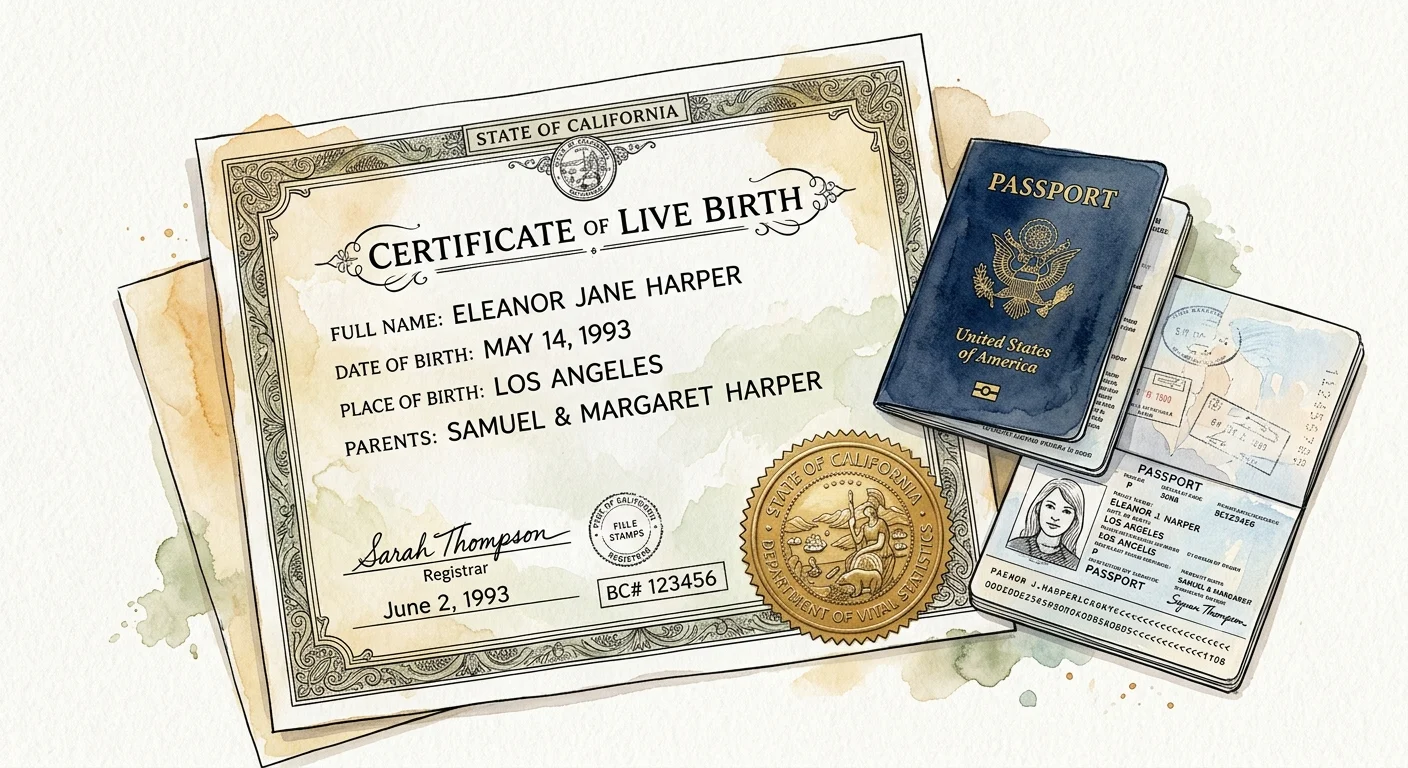
1. Proof of Age and Citizenship (Original Birth Certificate)
Your official birth certificate stands as the primary document required to verify your age and legal citizenship status. When submitting your birth certificate, make sure it is an official record issued by the state, county, or city department of health or vital statistics where you were born. The document must bear an official raised seal, multicolored stamp, or official registrar signature.
If your birth certificate is unavailable or lost, you must order a certified copy from your birth state’s vital records office well in advance of your 65th birthday. If you were born outside the United States, you can establish your legal status and age by submitting one of the following alternatives:
- A valid, unexpired U.S. Passport or Passport Card
- An official Certificate of Naturalization (Form N-550 or N-570)
- A Certificate of Citizenship (Form N-560 or N-561)
- A Consular Report of Birth Abroad (Form FS-240 or DS-1350)

2. Proof of Identity and Legal Residency
In addition to proving age and citizenship, Medicare application requirements mandate official government-issued photo identification to establish your identity and primary state residence. This step protects applicants against identity theft and verifies state-level program eligibility.
Acceptable identity and residency documents include:
- A current, unexpired driver’s license issued by your home state
- A government-issued state identification card
- A valid U.S. Military Identification Card
- A Permanent Resident Card (Form I-551 or Green Card) if you are a non-citizen legal resident who has lived continuously in the United States for at least five consecutive years prior to applying
Ensure that the name on your identity document matches your official Social Security records exactly. If your legal name changed due to marriage, divorce, or court order, you must provide legal proof—such as a marriage certificate or legal name change decree—to reconcile any discrepancies.
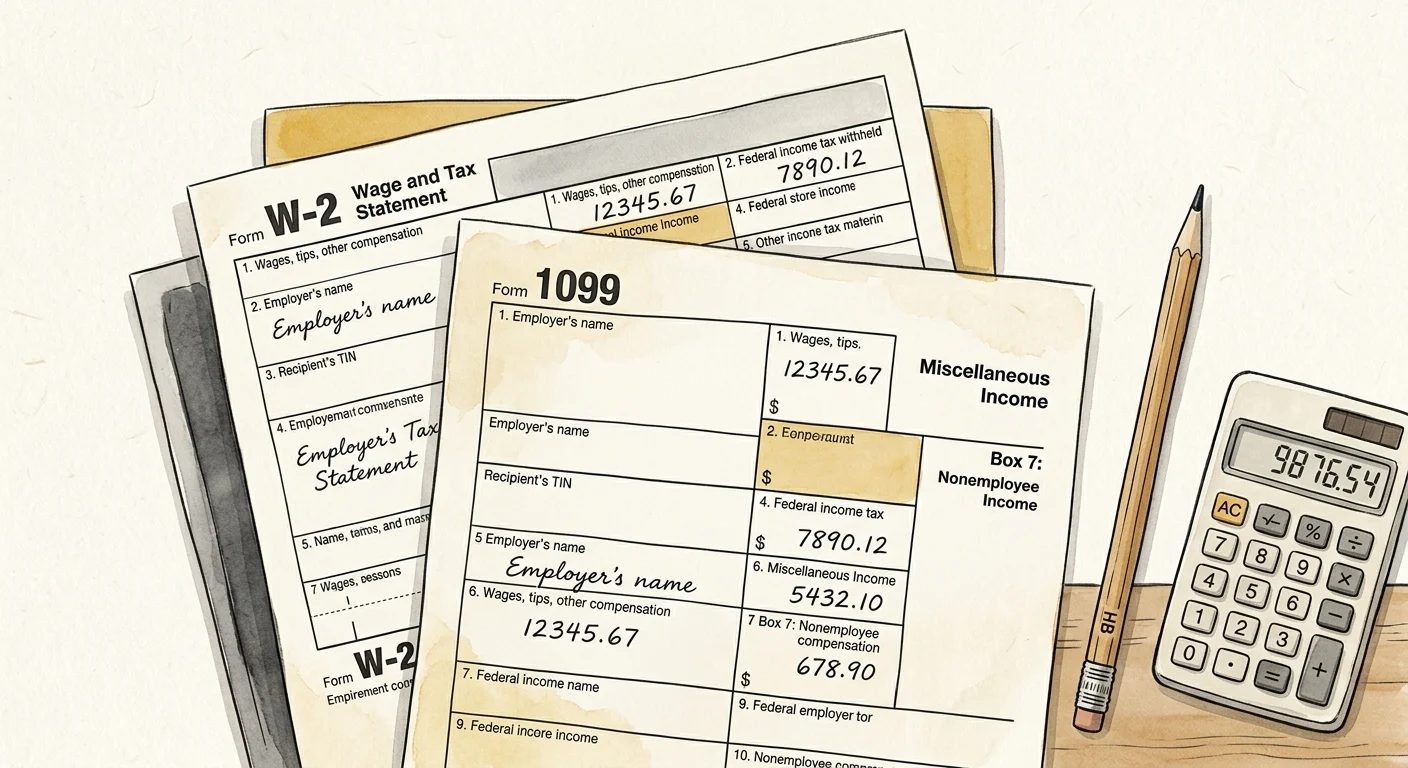
3. Prior-Year Tax Returns and Earnings Records (W-2 or 1099 Forms)
Your income directly dictates your monthly Medicare costs. Social Security evaluates your earnings records for two vital reasons: confirming your 40 work quarters (10 years) for premium-free Part A and calculating whether you owe an Income-Related Monthly Adjustment Amount (IRMAA) for Part B and Part D.
Under federal regulations, Social Security determines your 2026 Medicare Part B and Part D premiums by reviewing your federal income tax return from two years prior. Therefore, for 2026 enrollments, Social Security assesses your 2024 tax return (specifically your Modified Adjusted Gross Income, or MAGI). High earners pay an additional surcharge above the standard $202.90 monthly Part B rate.
To avoid tax discrepancies during application, gather these tax records:
- Your tax return transcript or Form 1040 from two years prior (2024 tax return for 2026 applications)
- Your most recent W-2 form (if you worked as an employee in the prior tax year)
- Your Schedule SE and Form 1099 records (if you were self-employed)
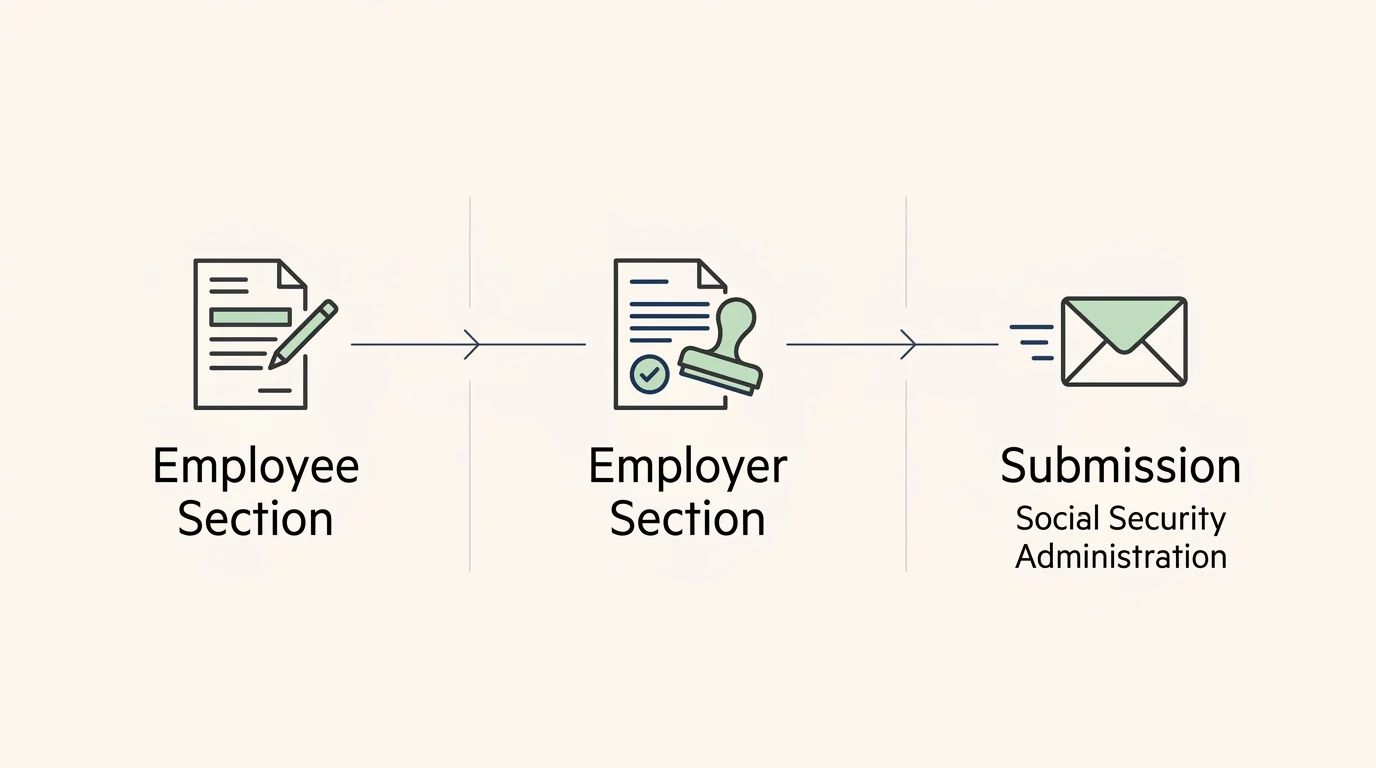
4. Form CMS-L564: Request for Employment Information
If you plan to work past age 65 or remain covered under an active employer group health plan through your working spouse, you do not need to sign up for Medicare Part B at age 65. However, when you eventually retire or lose that employer coverage, you must prove you had continuous coverage to qualify for a Special Enrollment Period (SEP).
Form CMS-L564 acts as your official proof of creditable group health plan coverage. This crucial form features two distinct sections:
- Section A: Completed by you, providing basic personal details and Social Security number.
- Section B: Completed by your employer’s human resources or benefits department, confirming the dates of your employment and continuous health insurance coverage.
Failing to secure Form CMS-L564 creates severe financial consequences. Without it, Social Security will charge a 10% late enrollment penalty for every 12-month period you were eligible for Part B but did not enroll—a surcharge that stays attached to your monthly premium for the rest of your life.
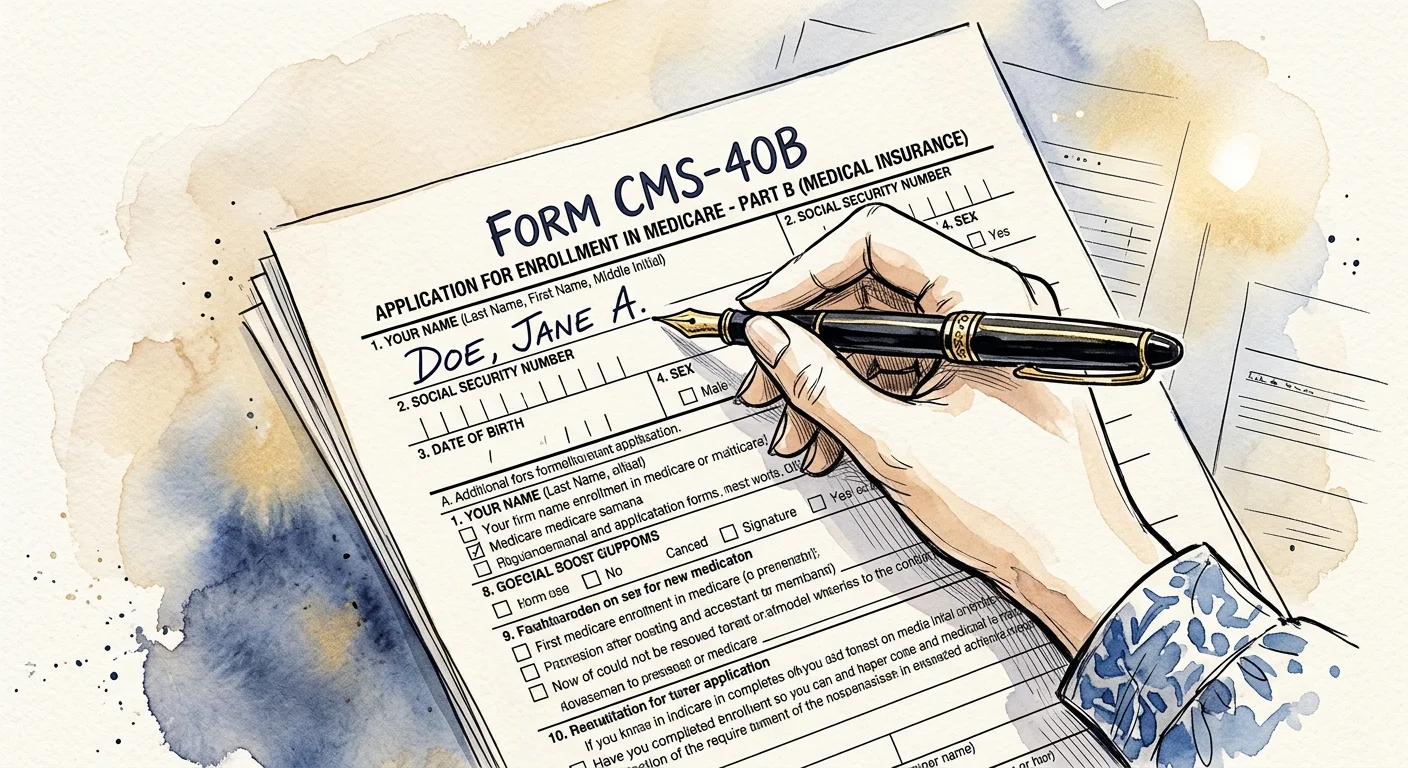
5. Form CMS-40B: Application for Enrollment in Medicare Part B
When you already have Medicare Part A and wish to add Part B—or when you apply for Medicare Part B during a Special Enrollment Period—you must submit Form CMS-40B (Application for Enrollment in Medicare – Part B). This streamlined form notifies Social Security of your formal request to begin doctor and outpatient coverage.
Form CMS-40B requires critical details including your Medicare number (if you already have Part A), your desired coverage start date, and your contact details. If you are applying past age 65 during a Special Enrollment Period, you must submit Form CMS-40B together with Form CMS-L564. Submitting these Medicare enrollment documents as a complete package prevents administrative backlog and delays in your coverage start date.

6. Form SSA-44: IRMAA Life-Changing Event Documentation
Because Social Security looks back two years to calculate your Part B premium, a major financial mismatch often occurs. If you earned a high salary in 2024 but retired in 2025 or 2026, your current income may be substantially lower than what your 2024 tax return reflects. Left unadjusted, Social Security will charge you higher IRMAA premiums based on obsolete earnings.
You can request a premium reduction by filing Form SSA-44 (Medicare Income-Related Monthly Adjustment Amount – Life-Changing Event). To support your request, you must submit proof of a qualifying life-changing event along with estimate evidence of your reduced current-year income. Qualifying life-changing events include:
- Work stoppage (retirement) or work reduction
- Marriage, divorce, or annulment
- Death of a spouse
- Loss of income-producing property due to disaster or crisis
- Loss or reduction of pension income
Attach proof such as a signed retirement letter from your employer, pension statements, or an amended tax return to Form SSA-44 to ensure a prompt recalculation of your premiums down to the standard $202.90 rate.
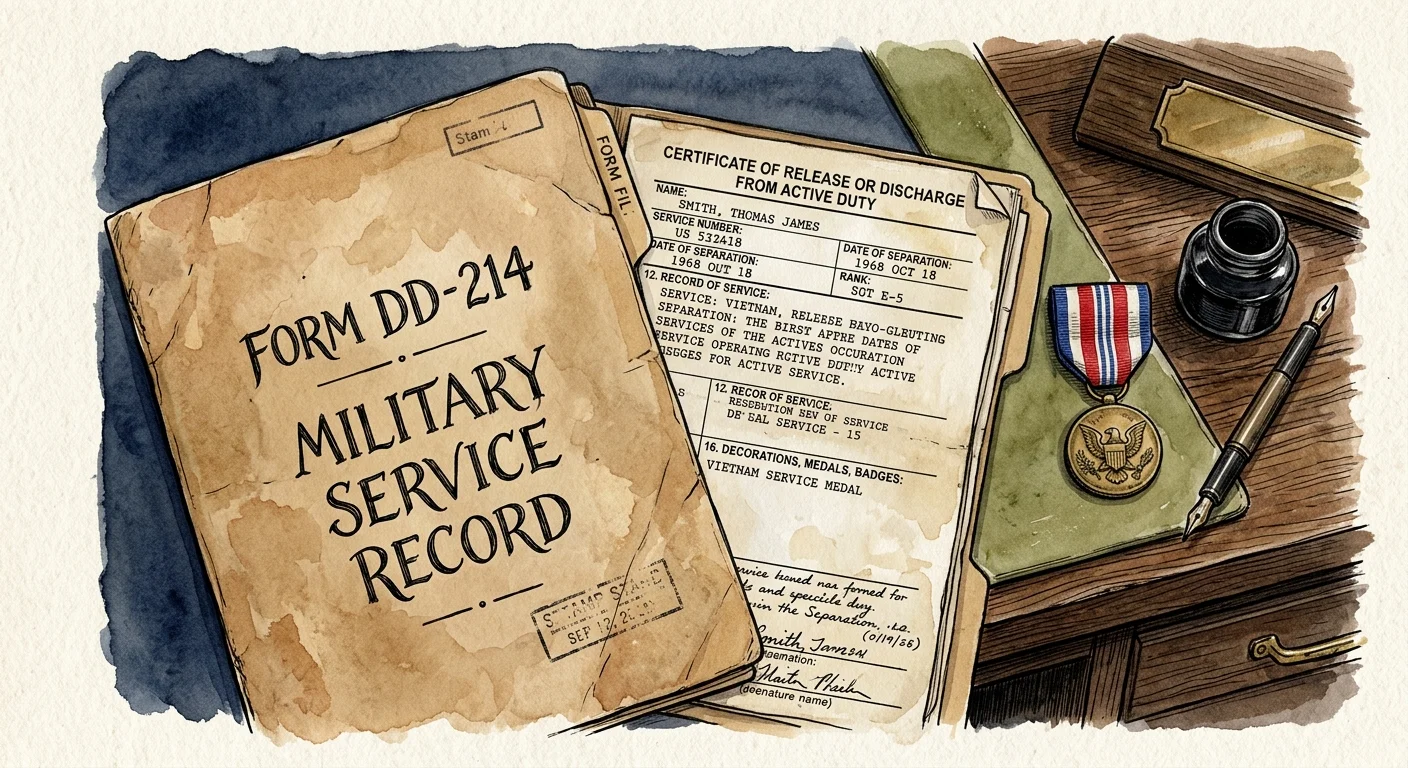
7. Military Service Records (Form DD-214)
Military veterans applying for Medicare need to gather their military discharge paperwork, specifically Form DD-214 (Certificate of Release or Discharge from Active Duty). Verifying past military service is essential for two distinct reasons:
First, if you served in the U.S. Armed Forces prior to 1968, Social Security may grant additional wage credits that boost your primary insurance amount and ensure you meet the 40-quarter threshold for free Medicare Part A. Second, military veterans enrolled in Tricare For Life (TFL) must maintain both Medicare Part A and Part B to retain their military health benefits seamlessly.
Providing your official Form DD-214 ensures Social Security accurately credits all eligible service periods to your master earnings record during the application evaluation.
“The goal of retirement is to live off your assets—not live off your regrets.”

Medicare Application Requirements Checklist
Before submitting your application to Social Security, reference this comprehensive Medicare application checklist to confirm you have gathered every required document for your specific situation.
| Document Name | Who Needs It? | Submission Format | Primary Purpose |
|---|---|---|---|
| Birth Certificate / Passport | All first-time applicants | Original or certified agency copy | Proves legal age and U.S. citizenship |
| State Driver’s License / ID | All applicants | Unexpired original card | Establishes legal identity and state residency |
| W-2 / 1099 & Tax Returns | Applicants evaluating IRMAA or work history | Copy of 2-year prior tax filing (2024 for 2026) | Calculates monthly Part B/D premiums and work quarters |
| Form CMS-L564 | Applicants enrolling past 65 with group health plans | Signed original (HR completes Section B) | Proves creditable employer coverage; waives late fee |
| Form CMS-40B | Applicants adding Part B during SEP or later | Completed original form | Official enrollment request for Part B benefits |
| Form SSA-44 | Retirees experiencing recent income reduction | Form plus supporting proof (retirement letter) | Appeals IRMAA surcharges based on lower current income |
| Form DD-214 | Military veterans (especially pre-1968 service) | Original or official military archive copy | Verifies military service wage credits and Tricare alignment |

Errors That Cost Retirees Thousands
Failing to understand documentation rules leads to costly administrative blunders. Navigating Medicare enrollment requires vigilance, as simple paperwork mistakes can penalize your retirement budget for years to come.
Avoid these major errors when preparing your Medicare enrollment documents:
- Submitting photocopies or notarized copies: Social Security strictly rejects standard photocopies and notarized documents. Always submit certified original records directly from the issuing government agency.
- Confusing COBRA or retiree coverage with active employment health plans: COBRA and retiree health benefits do not count as active employer coverage. If you delay Part B while on COBRA after turning 65, you will incur a permanent 10% Part B late enrollment penalty for each year missed.
- Missing the Special Enrollment Period window: When you leave active employment past age 65, you have an eight-month window to sign up for Part B without penalty using Form CMS-L564. Waiting until month nine triggers late fees and restricts your signup to the General Enrollment Period (January 1 through March 31).
- Overlooking Form SSA-44 after retirement: If you accept higher IRMAA surcharges based on your pre-retirement earnings without appealing, you could needlessly waste thousands of dollars each year in inflated Part B and Part D premiums.

When to Get Expert Help
If you encounter complex household scenarios—such as self-employment income, domestic partner coverage, or delayed military retirement benefits—getting professional assistance protects your finances. You do not have to figure out Medicare application requirements alone.
Consider consulting these free and official advisory resources:
- State Health Insurance Assistance Program (SHIP): SHIP offers free, unbiased, localized Medicare counseling provided by trained state specialists. You can find local counselors through Medicare.gov.
- Social Security Administration Representatives: Visit your local Social Security field office or call 1-800-772-1213 to verify exact document submission rules for your personal record before mailing sensitive items.
- Eldercare Locator: A public service of the U.S. Administration for Community Living that connects older adults and families with localized benefit assistance. Explore options at Eldercare Locator.
Frequently Asked Questions
What documents are needed for Medicare if I am already receiving Social Security benefits?
If you already receive Social Security retirement benefits before turning 65, enrollment in Medicare Part A and Part B happens automatically. Social Security will automatically send your red, white, and blue Medicare card in the mail approximately three months before your 65th birthday month without requiring you to re-submit identity or birth records.
Can I submit notarized photocopies of my birth certificate to Social Security?
No. Social Security does not accept notarized photocopies or standard paper copies of birth certificates or legal documents. You must submit original records or official copies certified by the issuing government agency bearing an official raised seal or stamp.
What Medicare application requirements exist for individuals working past age 65?
If you work past 65 and remain covered under a creditable employer group health plan (from a company with 20 or more employees), you can delay Part B enrollment without penalty. When you decide to retire, you must submit Form CMS-40B along with Form CMS-L564 signed by your employer to confirm continuous prior coverage.
How far back does Social Security look at income for IRMAA in 2026?
Social Security assesses federal income tax returns from two years prior to evaluate IRMAA surcharges. For 2026 enrollments, they evaluate your 2024 Modified Adjusted Gross Income. If your earnings dropped significantly due to retirement, you can request a recalculation using Form SSA-44.
Next Steps for Your Medicare Enrollment
Preparing what you need to apply for Medicare well in advance turns a potentially stressful bureaucratic task into a smooth transition. Review your birth records, tax documents, and employment verification forms today to ensure everything matches your official Social Security file perfectly.
Take charge of your health plan by organizing your physical records into a single secure file folder at least three months prior to your 65th birthday. For individual benefit calculations, updated plan comparisons, and official forms, visit Medicare.gov or contact Social Security directly to schedule your application appointment.
This article is for informational purposes only and does not constitute financial, legal, or medical advice. Medicare rules, Social Security benefits, and tax laws change regularly—verify current details at Medicare.gov, SSA.gov, or with a licensed professional.
Last updated: February 2026. Medicare and Social Security rules change annually—always verify current details at official government sources.