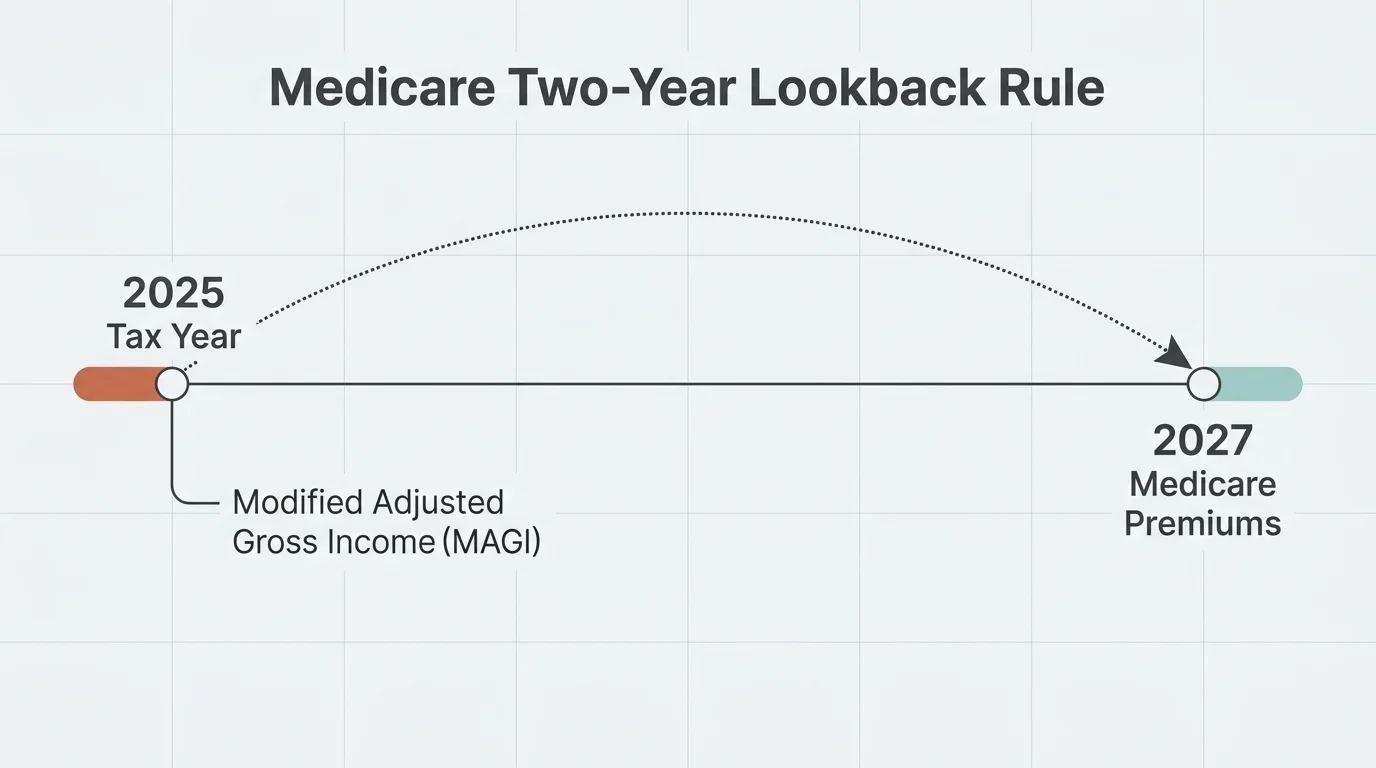
A single financial move in 2025—selling a primary home, converting a traditional IRA to a Roth IRA, or taking a substantial capital gain—can trigger a steep rise in your 2027 Medicare premiums. Medicare calculates your monthly costs using your modified adjusted gross income from two years prior, meaning your 2025 tax return directly dictates your 2027 outlays. With the baseline Medicare Part B premium projected at $209.50 per month and higher-income surcharges scaling up dramatically, understanding your exact tier helps you avoid costly surprises. Exploring medicare pricing 2027 now gives you the power to protect your retirement income before official notices arrive in your mailbox.
Understanding Baseline Medicare Costs 2027
Medicare coverage consists of several parts, each with distinct pricing structures and funding mechanisms. While Medicare Part A remains premium-free for most retirees who completed at least 10 years of Medicare-taxed employment, Parts B and D require monthly premiums that increase based on your earnings history. According to projections from the 2026 Medicare Trustees Report, standard monthly expenses for the base coverage options are adjusting upward to reflect rising healthcare trends and prescription drug utilization.
To plan your total healthcare budget effectively, you must understand the baseline figures that apply to every beneficiary before any income-based surcharges take effect:
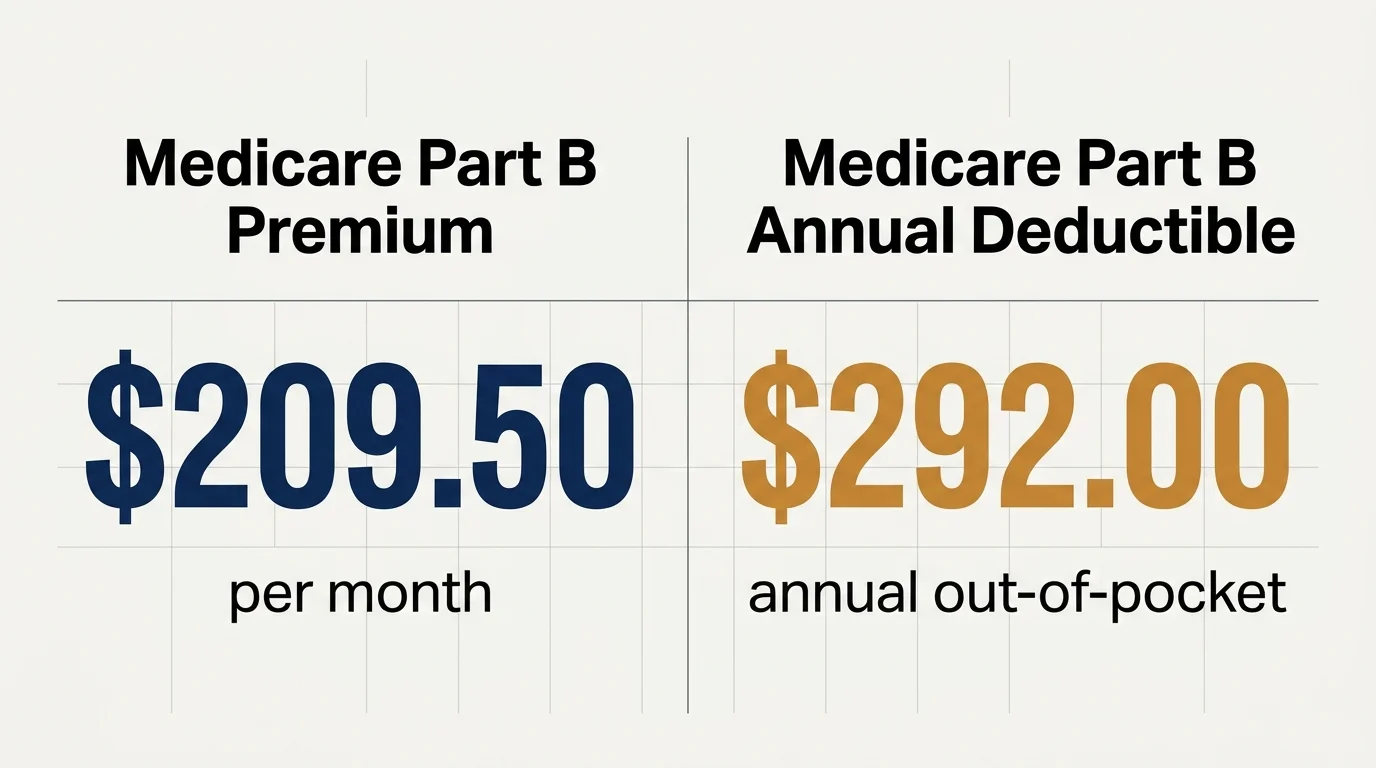
- Medicare Part B Premium: The baseline standard projected premium rises to $209.50 per month in 2027 (an increase of $6.60 from $202.90 in 2026). The Centers for Medicare & Medicaid Services (CMS) will release final official figures in late Fall 2026.
- Medicare Part B Annual Deductible: Projected to reach $292.00 for the year, up $9.00 from $283.00 in 2026. You must pay this out-of-pocket amount before Part B pays its 80 percent share of covered outpatient services.
- Medicare Part A Hospital Deductible: Covers your initial 60 days of inpatient hospital care per benefit period. While premium-free for approximately 99 percent of beneficiaries, the benefit period deductible continues to index upward annually.
- Medicare Part D Base Premium: Varies depending on your specific private insurer and regional plan selection. Enrollees access official plan pricing directly through Medicare.gov during the annual Open Enrollment Period.
Most retirees pay the baseline premium directly through an automatic deduction from their monthly Social Security benefit checks. However, if you earn above specific earnings thresholds, the federal government assesses an additional monthly fee known as the Income-Related Monthly Adjustment Amount (IRMAA).
The Two-Year Lookback Rule: How 2025 Taxes Dictate 2027 Premiums
The Social Security Administration (SSA) determines your 2027 Medicare premiums by evaluating tax returns processed by the IRS from two years prior. Therefore, your 2025 tax return—filed in early 2026—serves as the sole foundation for your 2027 Medicare surcharges. This delay creates a common financial blind spot for recent retirees who experience significant income changes during their initial transition out of the workforce.
The government calculates IRMAA surcharges using your Modified Adjusted Gross Income (MAGI). For Medicare evaluation purposes, MAGI equals your standard Adjusted Gross Income (AGI) from Form 1040 plus any tax-exempt interest income you earned throughout the tax year. Tax-exempt interest includes returns generated from municipal bonds, which many retirees incorrectly assume remain entirely hidden from federal calculations.
Common financial events that accidentally push retirees into higher income tiers include:
- Executing large traditional IRA or 401(k) retirement withdrawals;
- Converting traditional pre-tax retirement accounts into Roth IRAs;
- Realizing significant capital gains from the sale of stock portfolios or real estate assets;
- Receiving large one-time severance packages, accrued vacation payouts, or executive deferred compensation upon retirement;
- Collecting non-taxable municipal bond interest that boosts your overall MAGI calculation.
Because the federal government evaluates tax filings automatically, a single large financial transaction in 2025 will automatically escalate your monthly Medicare Part B and Part D bills for all 12 months of 2027 unless you qualify for an official administrative appeal.
Medicare Cost by Income Bracket: Estimated 2027 IRMAA Surcharges
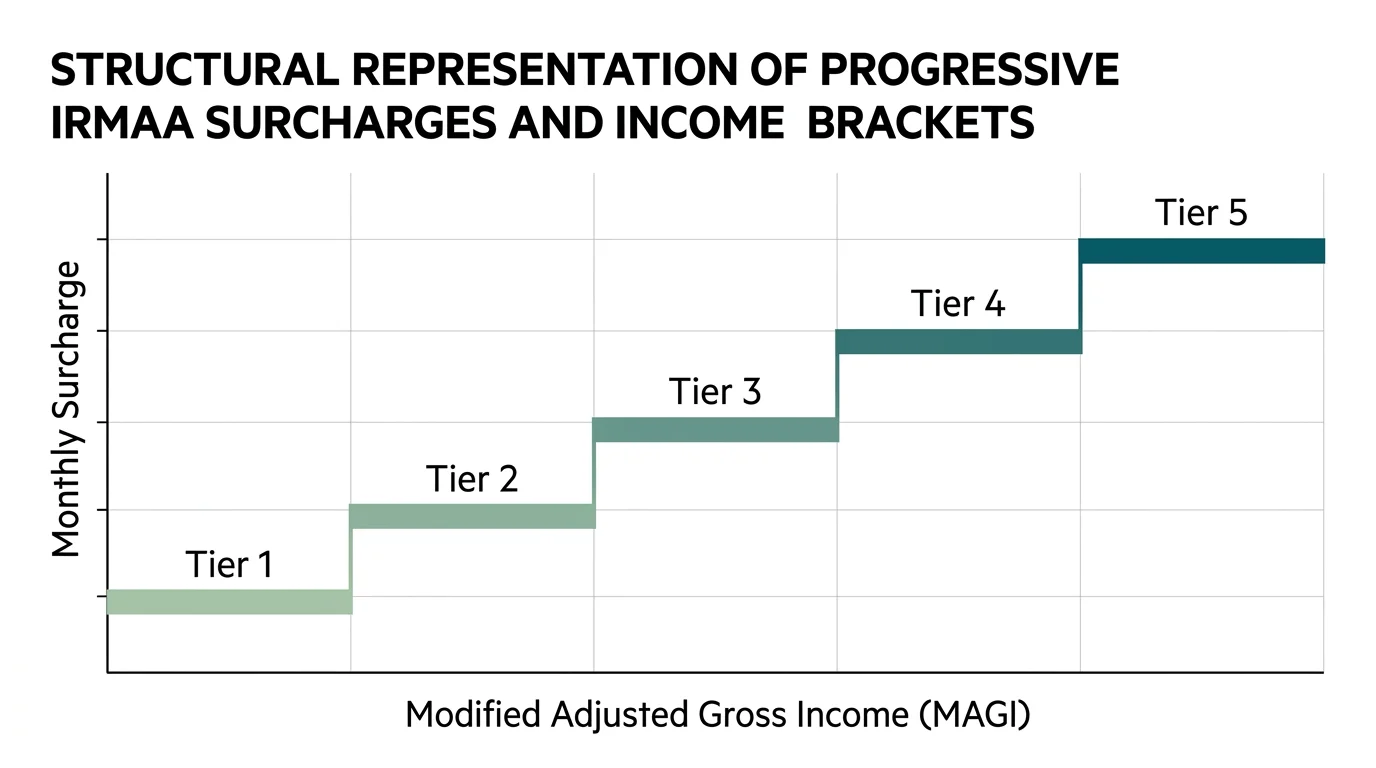
The federal government applies IRMAA surcharges using strict income brackets. Unlike standard federal income tax brackets—where higher rates apply only to dollars above the threshold—IRMAA operates as a total cliff. Crossing a bracket threshold by a single dollar subjects your entire monthly premium to the higher tier cost for the entire calendar year.
The table below outlines projected 2027 baseline costs alongside estimated IRMAA surcharges across all income tiers. Surcharge thresholds for 2027 reflect indexed inflation updates, with initial surcharges taking effect at approximately $112,000 for single tax filers and $224,000 for married couples filing joint tax returns.
| 2025 Individual Taxable MAGI | 2025 Joint Taxable MAGI | Part B Monthly Surcharge | Total Monthly Part B Cost | Part D Monthly Surcharge |
|---|---|---|---|---|
| $112,000 or less | $224,000 or less | $0.00 | $209.50 | $0.00 + Plan Premium |
| $112,001 – $140,000 | $224,001 – $280,000 | ~$83.80 | ~$293.30 | ~$14.50 + Plan Premium |
| $140,001 – $175,000 | $280,001 – $350,000 | ~$209.50 | ~$419.00 | ~$37.50 + Plan Premium |
| $175,001 – $210,000 | $350,001 – $420,000 | ~$335.20 | ~$544.70 | ~$60.40 + Plan Premium |
| $210,001 – $500,000 | $420,001 – $750,000 | ~$460.90 | ~$670.40 | ~$83.30 + Plan Premium |
| More than $500,000 | More than $750,000 | ~$502.80 | ~$712.30 | ~$91.00 + Plan Premium |
Married individuals who live together at any point during the tax year but file separate returns face far stricter brackets. For married filing separately, the basic threshold begins immediately above $112,000, quickly reaching the maximum IRMAA surcharge tier for MAGI exceeding $388,000. Evaluating medicare premiums by income ensures you structure withdrawals carefully to prevent entering a higher tier unexpectedly.

Prescription Drug Changes: The 2027 Inflation Reduction Act Provisions
The landscape for prescription drug expenses undergoes significant structural shifts in 2027 due to ongoing provisions implemented under the Inflation Reduction Act. These reforms aim to shield beneficiaries taking high-cost brand-name medications from catastrophic out-of-pocket spending, though changes in program funding alter plan dynamics across the market.
In 2027, the hard annual limit on out-of-pocket spending for covered Medicare Part D prescription drugs adjusts to $2,400 (up from $2,100 in 2026). Once your total out-of-pocket expenditures for covered prescriptions hit this $2,400 ceiling, your Part D plan pays 100 percent of covered drug costs for the remainder of the calendar year. This cap eliminates the historical coverage gap—formerly known as the donut hole—and protects families facing expensive long-term therapy protocols.
Additionally, January 1, 2027, marks the official effective date for lower, government-negotiated prices on a second wave of 15 high-cost Part D medications. These price caps directly impact widely prescribed brand-name treatments, including key GLP-1 medications such as Ozempic and Wegovy, alongside critical drugs like Trelegy Ellipta, Xtandi, and Janumet. Beneficiaries managing chronic conditions with these specific prescriptions will observe reduced copayments at retail pharmacies.
However, stand-alone Part D plan pricing requires close monitoring. In late July 2026, CMS confirmed the conclusion of its temporary Part D Premium Stabilization Demonstration program ahead of 2027. While out-of-pocket drug expenditures remain tightly capped at $2,400, enrollees in standalone Medicare Part D prescription drug plans—specifically those maintaining Original Medicare paired with Medigap policies—may encounter higher baseline monthly plan premiums. Evaluating plan options annually using the official Medicare Plan Finder remains essential to managing your overall medicare costs 2027.

Errors That Cost Retirees Thousands
Navigating Medicare pricing structures requires precision, yet many retirees fall into preventable financial traps. Recognizing these common missteps allows you to retain more of your retirement savings.
- Crossing an IRMAA Threshold by Minor Amounts: Because IRMAA does not utilize progressive tiering, exceeding a bracket threshold by as little as $5.00 forces you to pay the full surcharge tier for all 12 months. Over a year, an accidental $100 IRA withdrawal over the limit can cost a married couple upwards of $2,000 in additional Medicare Part B and Part D surcharges.
- Failing to Appeal Surcharges After Retirement: Many individuals accept elevated Medicare bills assuming higher taxes are inevitable. If your income dropped significantly between 2025 and 2027 because of work stoppage or reduction, you have the legal right to request a formal re-determination.
- Assuming Medicare Advantage Eliminates IRMAA: Enrolling in a Medicare Advantage (Part C) plan does not exempt you from income surcharges. Even if your Advantage plan carries a $0 baseline monthly premium, the government still collects the standard Part B premium ($209.50) plus any applicable IRMAA fees directly from your Social Security check.
- Neglecting Annual Part D Plan Reviews: Failing to reassess prescription plan formulary coverage during Open Enrollment can result in severe financial penalties. With the expiration of premium stabilization measures, standalone drug plans may change monthly fees, co-pay tiers, and medication coverage lists dramatically year over year.
How to Appeal an IRMAA Surcharge Using Form SSA-44
If your MAGI on your 2025 tax return was high due to employment earnings, but your income has since declined, you do not have to pay elevated 2027 surcharges without recourse. The Social Security Administration allows beneficiaries to request an IRMAA reduction if you experienced a qualifying Life-Changing Event (LCE).
The federal government recognizes eight specific qualifying life-changing events:
- Work stoppage (full retirement);
- Work reduction (transitioning from full-time to part-time employment);
- Death of a spouse;
- Marriage;
- Divorce or legal annulment;
- Loss of income-producing property due to a natural disaster or fraud;
- Loss or reduction of employer pension benefits;
- Receipt of a settlement from an employer due to employer bankruptcy.
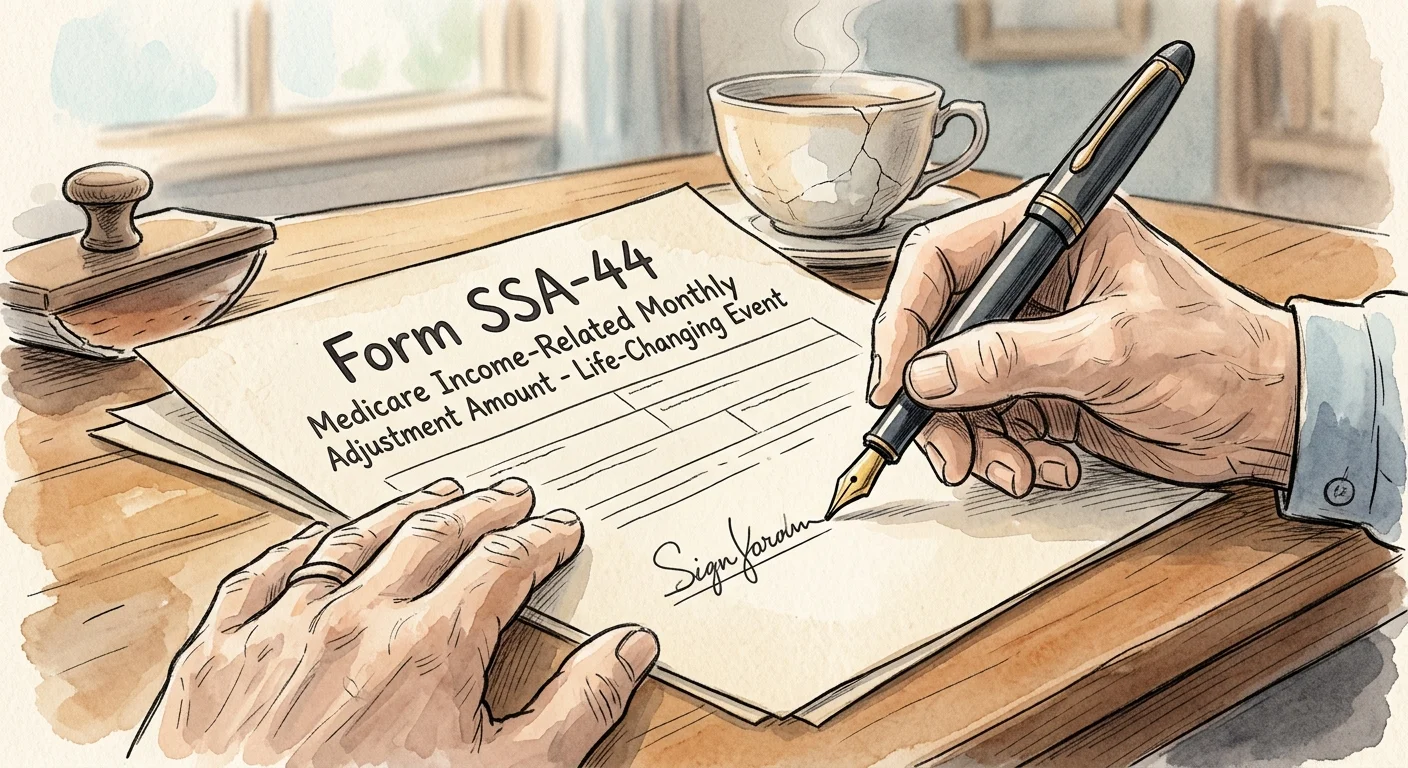
To request an adjustment, submit Form SSA-44 (Medicare Income-Related Monthly Adjustment Amount – Life-Changing Event) directly to the Social Security Administration. You must attach documentation verifying the event, such as a signed retirement letter from your employer, formal pay stubs showing reduced hours, a tax return showing lower current income, or a marriage/death certificate. Submitting this form promptly can adjust your monthly payments back to baseline levels, saving you thousands of dollars annually.

Smart Tax Strategies to Lower Your Medicare Premiums
Strategic financial planning helps maintain your income within optimal ranges while minimizing overall tax liabilities. Mitigating future IRMAA charges requires proactive income management starting years before Medicare enrollment begins.
Implementing targeted distribution strategies preserves tax efficiency across your portfolio:
First, execute strategic Roth IRA conversions early in your retirement window—ideally between your retirement date and age 63. Because Medicare applies a two-year lookback, conversions performed at age 62 will not affect your initial Medicare premiums at age 65. Converting pre-tax traditional IRA assets to Roth assets creates a pool of tax-free money that you can draw upon in later retirement years without inflating your MAGI.
Second, utilize Qualified Charitable Distributions (QCDs) once you reach age 70½. A QCD allows you to transfer up to $105,000 annually directly from a traditional IRA to a qualified 501(c)(3) charity. Money transferred via a QCD counts toward your required minimum distributions (RMDs) but remains completely excluded from your taxable income and MAGI calculations.
“It’s not how much money you make, but how much money you keep, how hard it works for you, and how many generations you keep it for.” — Robert Kiyosaki
Third, carefully time the sale of real estate or highly appreciated taxable investments. Spreading large asset sales across multiple tax years—or utilizing installment sales—prevents concentrated income spikes that push you into upper-tier medicare cost by income bracket levels.

When to Get Expert Help
Determining your optimal Medicare strategy involves managing interlocking tax codes, social security timing, and health plan designs. Working with qualified specialists ensures you protect your long-term wealth while securing appropriate health coverage.
Consider consulting dedicated specialists under these circumstances:
- State Health Insurance Assistance Program (SHIP) Counselors: Free, unbiased local assistance provided by trained volunteer counselors. SHIP advisors help you compare complex drug plan formularies and local coverage options without insurance sales incentives. Find local contact details through the National Council on Aging (NCOA).
- Fiduciary Fee-Only Financial Planners: Advisors operating under a strict fiduciary standard evaluate your complete tax picture, analyzing how IRA distributions, capital gains, and Roth conversions intersect with IRMAA thresholds.
- Elder Law Attorneys: Legal specialists help navigate long-term care planning, estate transfers, and legal guardianship without inadvertently creating unexpected tax liabilities that spike Medicare costs.
Frequently Asked Questions About 2027 Medicare Costs
What is the baseline Medicare Part B premium projected to be in 2027?
The standard projected Medicare Part B premium is $209.50 per month for 2027. This baseline figure applies to individual tax filers earning $112,000 or less and married joint filers earning $224,000 or less based on their 2025 tax returns. CMS will confirm official final figures in late Fall 2026.
How does Medicare know what my income was two years ago?
The Social Security Administration securely receives your tax filing data directly from the IRS. To set your 2027 premiums, the SSA reviews your 2025 federal tax return (specifically your Adjusted Gross Income plus tax-exempt interest income). If your tax return is unavailable or unfiled, the government may assign higher provisional rates until filings update.
Can I lower my IRMAA surcharges if I retired in 2026?
Yes. Retiring or reducing your work hours qualifies as a official Life-Changing Event. You can file Form SSA-44 with the Social Security Administration, requesting that they base your 2027 premiums on your estimated current-year income rather than your higher 2025 pre-retirement tax return.
Does Medicare Advantage protect me from paying IRMAA surcharges?
No. IRMAA surcharges apply to all Medicare beneficiaries whose earnings exceed the federal income thresholds, regardless of whether you choose Original Medicare or a Medicare Advantage plan. The surcharge for Part B is deducted directly from your monthly Social Security benefit, while any Part D surcharge is paid directly to Medicare or your plan provider.
Taking Control of Your 2027 Medicare Expenses
Managing healthcare expenses forms the cornerstone of a successful long-term retirement plan. Review your 2025 tax filings today to calculate your exact MAGI and identify potential IRMAA triggers before official Social Security determination letters arrive. Taking small, calculated tax steps today ensures you keep more of your hard-earned assets working directly for your family throughout your retirement journey.
Retirement rules and benefit amounts vary based on individual work history, income, and circumstances. This article provides general guidance only. Consult a SHIP counselor, financial advisor, or elder law attorney for advice specific to your situation.
Last updated: February 2026. Medicare and Social Security rules change annually—always verify current details at official government sources.