You probably pay thousands of dollars in local taxes each year without realizing how much money your municipality sets aside for you. Once you turn 65, your city offers an array of fully funded services designed to stretch your retirement budget.
Many retirees leave substantial savings on the table simply because local governments rarely market these programs effectively.
From fare-free transit passes to custom home accessibility retrofits, municipal benefits provide critical financial relief. Learning how to navigate city programs for seniors ensures you protect your hard-earned assets while enjoying your community.
The Bottom Line Up Front
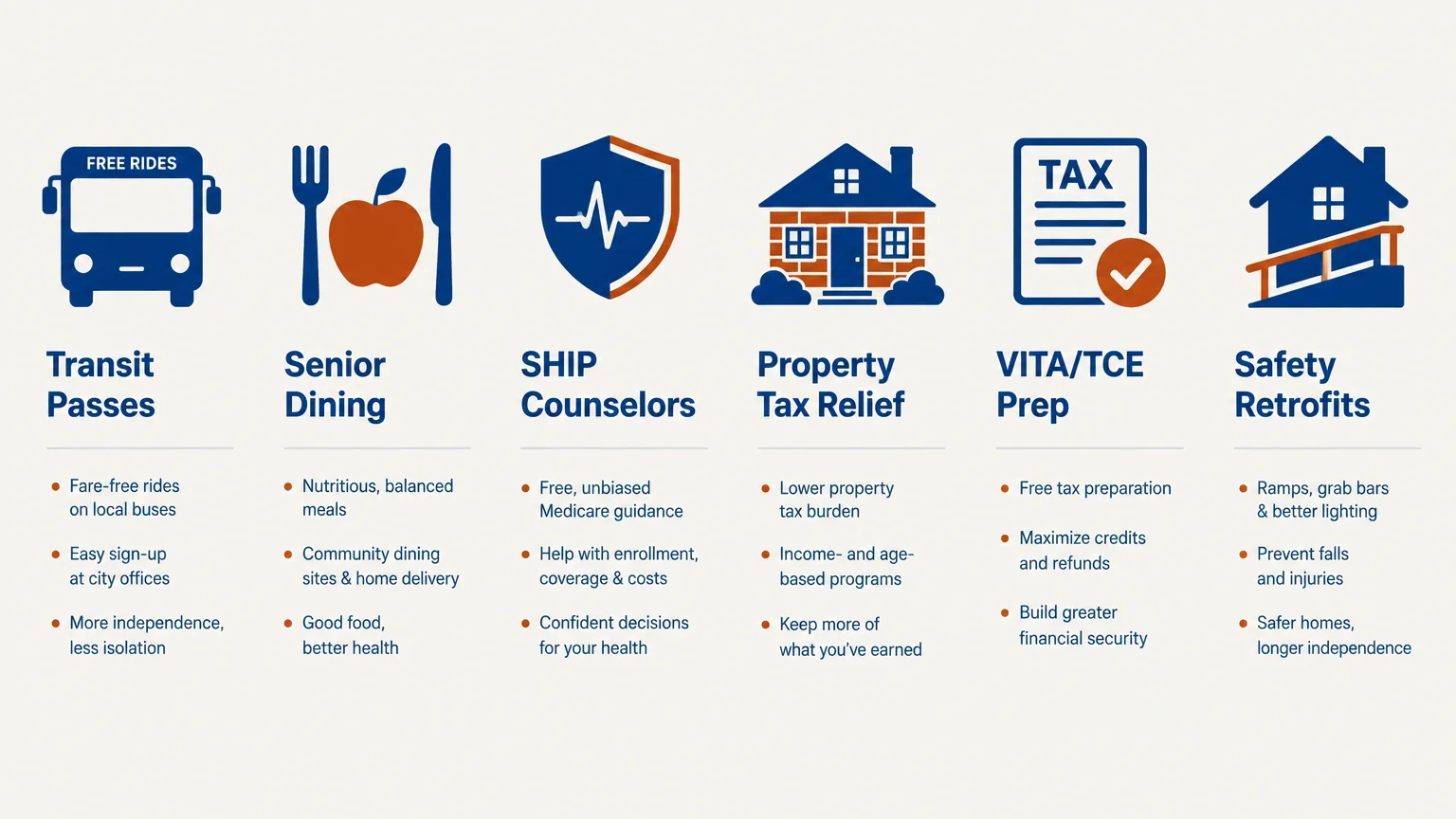
Municipalities across the country fund supportive programs through local revenues and the federal Older Americans Act. These free services for seniors offer tangible financial and practical help right in your neighborhood.
- Fare-Free Transit: Major metropolitan areas waive bus, rail, and paratransit fares for adults 65 and older.
- Nutritious Dining: Community senior centers offer balanced weekday lunches with no income restrictions.
- Unbiased Medicare Guidance: State Health Insurance Assistance Program counselors offer objective health plan comparisons.
- Property Tax Relief: Homestead exemptions and assessment freezes protect older homeowners from rising valuations.
- IRS-Certified Tax Prep: Trained volunteers prepare federal and state tax returns free of charge.
- Home Safety Modifications: City grants fund walk-in showers, ramp installations, and weatherization upgrades.
1. Fare-Free and Subsidized Public Transportation
Transportation costs often represent a retiree’s second-largest annual expense after housing. Maintaining a vehicle involves insurance premiums, fuel, registration, and routine maintenance that quickly erode a fixed income.
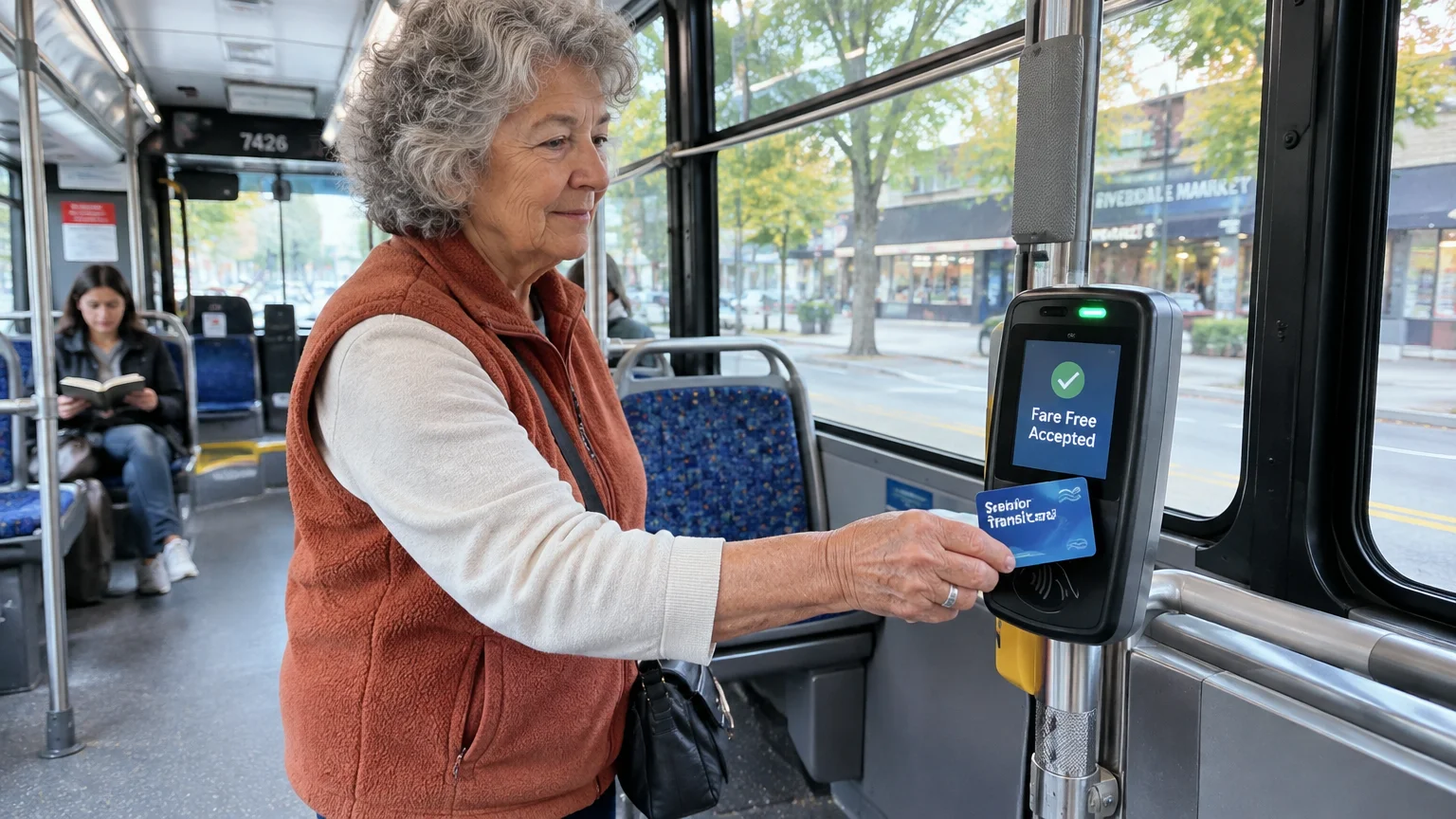
Under Federal Transit Administration rules, federally funded transit agencies must discount off-peak fares by at least 50% for riders 65 and older. However, many forward-thinking municipalities eliminate passenger fares entirely.
In Pennsylvania, the state lottery funds the Senior Transit Card program. This initiative allows residents aged 65 and older to ride local buses, trolleys, and subways in Philadelphia and Pittsburgh for free.
Similarly, Miami-Dade County provides the Golden Passport to permanent residents 65 and older. This pass offers unlimited free travel across the county’s Metrobus and Metrorail networks.
In Illinois, qualifying older adults ride the CTA, Metra, and Pace systems free through the Regional Transportation Authority Ride Free Permit. You can apply through your local township office or municipal senior center.
Cities also operate door-to-door paratransit and dial-a-ride vans for medical appointments. These accessible shuttles pick you up at your front door and deliver you safely to clinics and grocery centers.

2. Free Congregate Dining and Nutrition Programs
Good nutrition directly impacts your energy, cognitive function, and long-term health. Yet preparing balanced meals every day can feel exhausting or financially burdensome on a retirement budget.
Under Title III-C of the Older Americans Act, municipal agencies and senior centers provide hot, dietitian-approved weekday meals. These programs welcome any resident aged 60 and older, along with their spouse.
Unlike many federal assistance efforts, congregate senior dining centers require no income test or asset qualification. Cities suggest small voluntary donations, but staff cannot turn you away if you contribute nothing.
These dining rooms serve as vital social hubs where you can meet neighbors and participate in recreational activities. Sharing meals with peers prevents social isolation, which medical researchers link to heart disease and cognitive decline.
For homebound older adults recovering from surgery or managing chronic illness, cities partner with local Meals on Wheels organizations. Trained volunteers deliver fresh, nutritious meals directly to your doorstep every weekday.
To locate nutrition sites in your neighborhood, contact the Eldercare Locator at 1-800-677-1116. Staff will connect you with your regional Area Agency on Aging immediately.
“The goal of retirement is to live off your assets—not live off your regrets.”

3. Certified, Unbiased Medicare Counseling (SHIP)
Navigating Medicare options during retirement feels like walking through a minefield of aggressive sales pitches. Private insurance brokers often push plans that generate large commissions rather than plans matching your doctors and prescriptions.
Your municipality provides a trusted alternative through the State Health Insurance Assistance Program, commonly known as SHIP. The federal Administration for Community Living funds this national network across every state.
SHIP counselors are certified volunteers and professionals who do not sell insurance products or earn sales bonuses. They provide free, completely impartial one-on-one counseling tailored to your health conditions and budget.
A local counselor reviews your current prescriptions through tools at Medicare.gov to identify plans with the lowest out-of-pocket costs. They also clarify confusing billing notices, file coverage appeals, and explain enrollment penalty rules.
Counselors can also check your eligibility for Medicare Savings Programs and Part D Extra Help. These state-administered programs pay your Part B premiums and significantly reduce your prescription co-pays.
You can schedule a free in-person or phone consultation by calling 1-877-839-2675. Most counselors host regular appointment hours inside municipal libraries, senior centers, and public health offices.

4. Municipal Property Tax Relief and Assessment Freezes
Soaring residential property valuations create severe financial anxiety for older homeowners living on fixed incomes. Fortunately, municipal tax assessors provide specialized protections to help long-term residents remain in their homes.
The most common tool is the Senior Citizen Homestead Exemption. This exemption deducts a predetermined dollar amount or percentage directly from your property’s equalized assessed value.
In Cook County, Illinois, for example, the Senior Homestead Exemption saves eligible homeowners between $300 and $750 annually. Pairing it with the standard homeowner exemption creates even larger annual tax savings.
Many jurisdictions also offer senior property tax assessment freezes. This program locks your home’s taxable valuation in place, shielding you completely from future neighborhood market inflation.
Some school districts and counties also offer tax ceilings that establish a maximum cap on your school tax bill. Once you turn 65, your baseline school taxes cannot increase unless you build substantial home additions.
Because tax rules vary between taxing authorities, visit your county assessor’s office early each spring. Ask about senior citizen city benefits, deferral loans, and low-income senior exemptions.

5. Professional Income Tax Preparation (TCE and AARP Tax-Aide)
Filing annual taxes remains stressful during retirement as you balance Social Security benefits, pension distributions, and investment income. Paying a commercial tax preparer can easily cost between $200 and $500 each filing season.
Through the IRS Tax Counseling for the Elderly program, older adults can receive complete tax preparation for free. The IRS partners with local governments to establish temporary tax centers inside neighborhood libraries and community facilities.
The AARP Foundation Tax-Aide program operates alongside TCE to serve taxpayers aged 50 and older. You do not need an AARP membership to utilize this completely free community service.
Volunteers must pass comprehensive IRS certification exams every single year before advising clients. They specialize in retirement-specific tax issues, including minimum distributions, medical expense deductions, and public pension exclusions.
Every completed return undergoes a mandatory quality review by a second certified volunteer before electronic submission. This rigorous double-check process minimizes errors and speeds up your refund processing.
You can research additional support and verify benefits through the online BenefitsCheckUp screening tool. This secure resource helps identify dozens of underutilized programs in your zip code.
“It’s not how much money you make, but how much money you keep, how hard it works for you, and how many generations you keep it for.” — Robert Kiyosaki

6. Free Home Modifications and Safety Upgrades
Most older adults prefer aging comfortably inside their current homes rather than relocating to assisted living facilities. However, standard home layouts often feature narrow doorways, steep stairs, and slippery bathtub thresholds.
Cities address these hazards by using federal Community Development Block Grants to fund local accessibility programs. Municipal housing departments dispatch licensed contractors to complete critical safety retrofits at zero cost to qualifying homeowners.
Approved projects frequently include exterior wheelchair ramps, sturdy bathroom grab bars, comfort-height toilets, and hand-held shower wands. Contractors can also widen doorways, install brighter lighting, and place anti-slip coatings on steps.
Local governments also administer the federal Weatherization Assistance Program for low-to-moderate-income seniors. Energy auditors inspect your residence and install attic insulation, weather-stripping, and high-efficiency heating systems to reduce utility bills.
These minor repairs can save thousands of dollars in nursing home costs and prevent devastating fall-related hospitalizations. Contact your municipal housing department or community development office to join the program waitlist.
Comparing City Programs for Older Adults
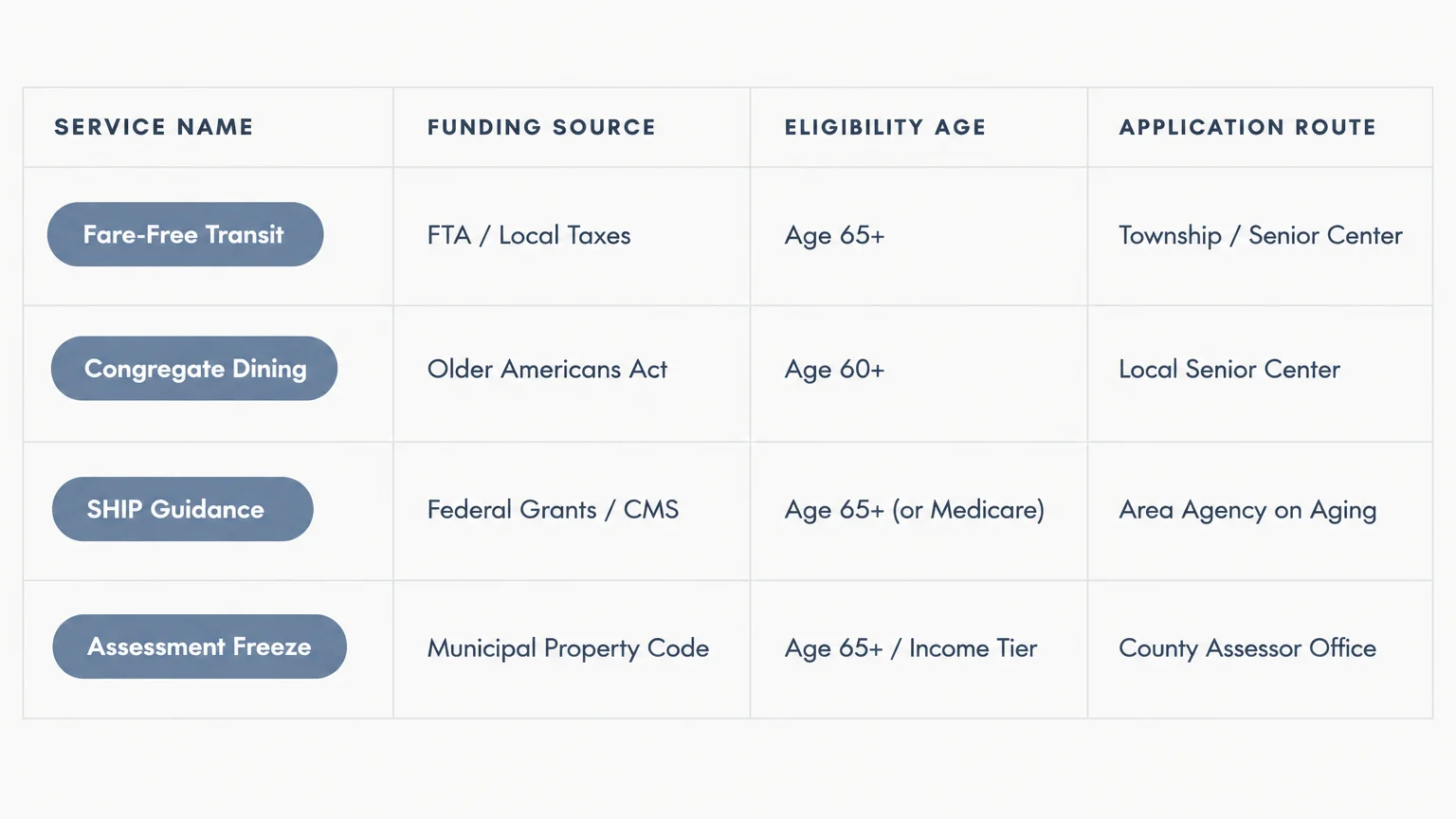
Understanding the application steps and qualifying criteria for each service simplifies the enrollment process. Review this comparison table to identify the municipal programs that match your current needs.
| Service Category | General Age Requirement | Income Qualifications | Primary Sponsoring Agency |
|---|---|---|---|
| Public Transit Passes | Age 65+ (some transit lines 62+) | Usually None (Except special ride-free passes) | Municipal Transit Authority |
| Congregate Dining | Age 60+ (and spouses) | None (Voluntary contributions welcome) | Area Agency on Aging / Local Centers |
| SHIP Medicare Counseling | Age 65+ (or Medicare eligible) | None (Available to all beneficiaries) | Administration for Community Living |
| Property Tax Relief | Age 65+ (varies by county) | Varies (Basic exemption vs. frozen assessment) | County Tax Assessor / Collector |
| TCE Tax Preparation | Age 60+ (prioritizes seniors) | Low-to-moderate annual incomes | IRS / AARP Foundation / Libraries |
| Home Modification Grants | Age 60 to 65+ | Yes (CDBG / HUD income thresholds) | City Housing & Development Office |
Don’t Make These Mistakes
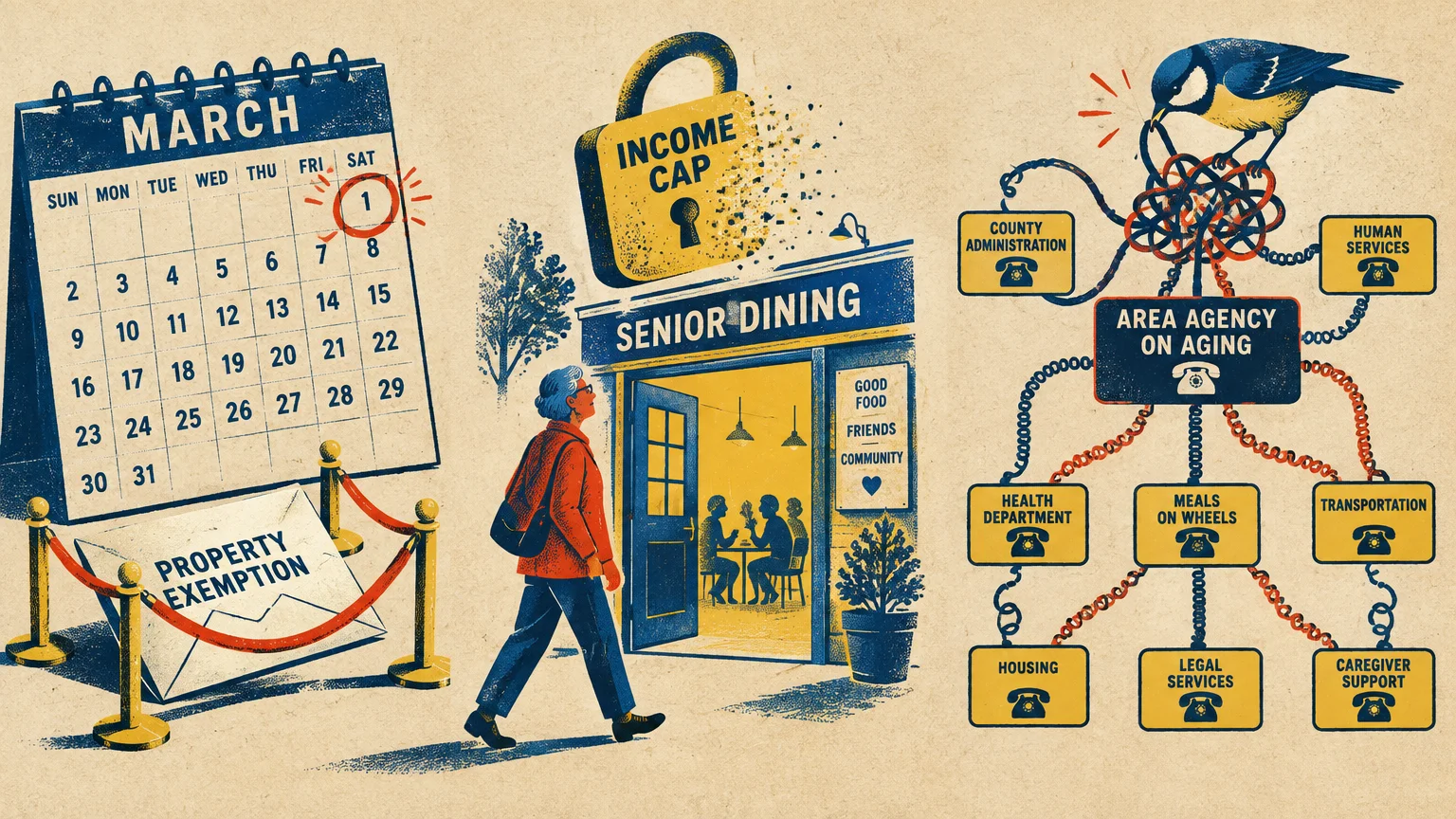
Securing free senior city services requires careful attention to municipal procedures and calendar deadlines. Avoiding common administrative traps will keep your household budget running smoothly.
Do not assume your retirement income automatically disqualifies you from city assistance. While housing rehabilitation grants maintain strict income limits, services like SHIP counseling and nutrition sites have zero financial requirements.
Do not miss your local property tax exemption filing deadlines. Most tax assessors require renewal paperwork between January and April, and missing the cutoff can cost you hundreds of dollars.
Do not consult commercial insurance brokers when you need objective advice about Medicare options. Independent SHIP counselors protect your interests without attempting to sell you high-commission policies.
Do not attempt hazardous home repairs yourself to save money. Tapping into municipal home improvement grants protects your physical health and preserves your retirement funds.
Finally, never assume benefits transfer automatically when you relocate to a new town. Every city manages its own application process, requiring you to file fresh paperwork after your move.

When Professional Advice Is Worth It
Municipal workers and volunteer counselors offer immense value for day-to-day community services. However, certain complex retirement situations demand specialized professional guidance.
Consult a fee-only fiduciary financial advisor when structuring investment withdrawals or managing required minimum distributions. Fiduciary advisors hold a legal obligation to prioritize your financial best interests above all else.
Work with an accredited elder law attorney if you anticipate needing long-term nursing home care. An attorney structures your estate legally to protect family assets while planning for future Medicaid eligibility.
When dealing with complex pension claims or retroactive disability appeals, consult a verified Social Security claiming specialist. Navigating bureaucratic administrative appeals requires specialized legal knowledge to recover overdue payments.
Frequently Asked Questions
Where do I apply for free city transportation cards?
Most cities issue passes through their central transit customer service center or participating municipal senior centers. You must present government identification confirming your date of birth and local residency address.
Are congregate nutrition center meals completely free?
Yes, federally supported senior dining programs cannot deny meals to eligible seniors who cannot pay. Centers suggest modest voluntary contributions, but participants face no mandatory fees or financial screening.
Do I need to belong to AARP to use Tax-Aide?
No, the AARP Foundation Tax-Aide program is open to everyone regardless of membership status. Volunteers assist any eligible taxpayer with basic returns, focusing especially on individuals aged 50 and older.
Can renters qualify for city senior benefits?
Yes, renters can access public transit discounts, congregate dining, SHIP health counseling, and free tax preparation services. Certain jurisdictions also offer senior renters an annual property tax credit or utility assistance grant.
Take Action on Your Benefits Today
Municipal benefits exist because you spent decades contributing to the financial health of your community. Claiming these supportive services lets you lower monthly bills and remain engaged in neighborhood life.
Take one concrete step this week: call your regional Area Agency on Aging or visit your local library. Ask for a complete directory of senior benefits from city departments and claim the perks you have earned.
Information in this article reflects current rules as of the publication date and may change. Always confirm benefit details directly with Social Security Administration, Medicare.gov, or relevant government agencies before making decisions.
Last updated: February 2026. Medicare and Social Security rules change annually—always verify current details at official government sources.