Many older Americans envision spending their golden years on a quiet golf course or secluded beach, but a growing number of savvy retirees are discovering the unmatched benefits of moving to a college town. These hubs offer far more than late-night pizza and Saturday football games; they provide a unique blend of world-class healthcare, lifelong learning opportunities, and robust public transportation that aligns perfectly with senior living needs. Retiring in a senior university town gives you access to cultural events, intergenerational social connections, and excellent walkability—often at a lower cost of living than major metropolitan areas. By choosing a vibrant retirement location anchored by a university, you position yourself for an active, engaged, and fulfilling next chapter.
The 9 Biggest Benefits of a University Town Retirement
When you evaluate potential places to spend your retirement, you likely have a checklist: good doctors, affordable housing, things to do, and a safe environment. University towns naturally cultivate these exact features to attract top-tier faculty and support massive student populations. Here are the nine primary reasons these communities make fantastic retirement destinations.
1. Access to World-Class Healthcare
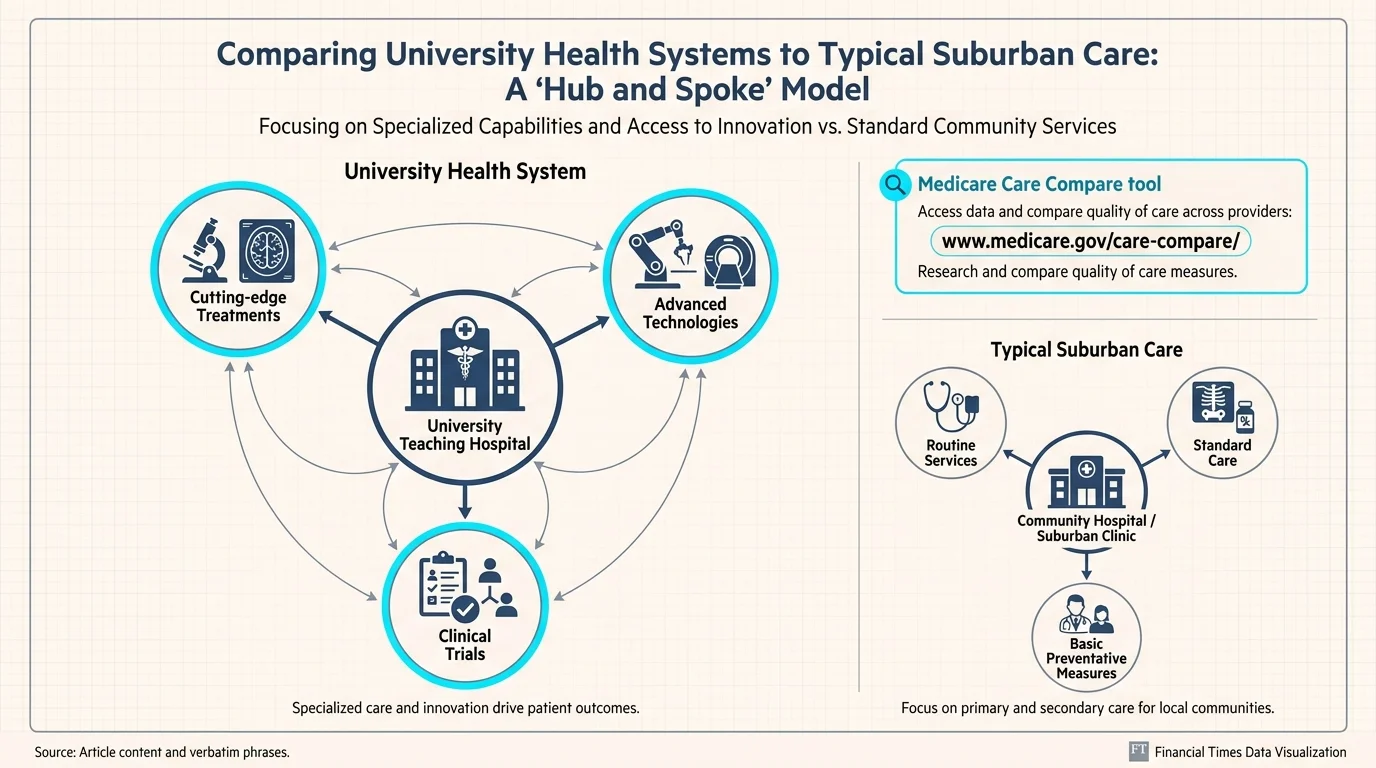
As you age, proximity to high-quality medical care becomes a top priority. Major universities often operate comprehensive teaching hospitals and expansive medical research networks. These facilities attract top specialists and provide access to cutting-edge treatments, advanced technologies, and clinical trials that simply do not exist in rural areas or standard suburban communities. If you manage a chronic condition or require specialized care, having a university health system down the street provides incredible peace of mind. You can seamlessly use your Medicare coverage at these top-rated facilities, and you can always verify hospital quality ratings through the Medicare Care Compare tool before you move.
2. Abundant Lifelong Learning Opportunities
Retirement offers the perfect opportunity to study subjects you never had time for during your working years. Many state universities offer free or heavily discounted tuition for older adults who want to audit classes. Furthermore, institutions often host Osher Lifelong Learning Institutes (OLLI), which provide non-credit courses, lectures, and study groups specifically designed for adults over 50. Keeping your mind engaged through structured learning helps maintain cognitive health, and learning alongside peers fosters a strong sense of community.
3. A Thriving Cultural and Arts Scene
You do not need to live in New York or Chicago to enjoy premium arts and culture. Universities serve as massive cultural magnets. They maintain art museums, host touring Broadway shows, fund symphony orchestras, and invite global thought leaders for public lectures. As a local resident, you can attend top-tier theater productions, choir performances, and jazz concerts—often at a fraction of the cost you would pay in a major metropolis.
4. Reliable and Accessible Public Transportation
Many older adults eventually want to reduce their driving, particularly at night or during harsh weather. College towns possess robust, well-funded public transit networks designed to move tens of thousands of students across campus and the surrounding city. These extensive bus routes, light rail systems, and dedicated bike lanes benefit retirees just as much as freshmen. Enjoying independence without relying on a personal vehicle is a major component of aging in place successfully.
5. An Energetic, Intergenerational Atmosphere
Age-restricted communities offer quiet and predictability, but they can sometimes feel isolating. College towns thrive on the energy of youth. Surrounding yourself with young adults, ambitious faculty, and visiting scholars keeps you mentally sharp and socially engaged. Interacting with younger generations—whether at a local coffee shop or through a university mentoring program—prevents the social isolation that frequently affects older adults.
6. High Walkability Scores
University campuses inherently prioritize pedestrians. This infrastructure typically bleeds into the surrounding neighborhoods, resulting in wide sidewalks, well-maintained crosswalks, and concentrated commercial districts. You can easily walk from your home to the grocery store, the pharmacy, a local park, and your favorite restaurant. High walkability encourages daily physical activity, which experts at the National Council on Aging (NCOA) consistently highlight as a primary driver of healthy aging.
7. Economic Stability and Resilient Real Estate
Colleges are massive economic engines that rarely downsize or relocate. They provide thousands of stable jobs, which insulates the local economy against national recessions. For retirees purchasing a home, this economic bedrock protects property values. Even during housing market downturns, university towns typically experience less volatility because the demand for housing—driven by university staff and faculty—remains remarkably constant.
8. A Magnet for Like-Minded, Active Retirees
You will not be the only retiree taking advantage of the local university. Many alumni return to their college towns to retire, creating built-in networks of active, educated, and engaged seniors. These towns host thriving senior centers, active rotary clubs, and extensive hobby groups. Finding a community of peers who share your interests in arts, sports, and continuous learning takes far less effort here than in a standard suburb.
9. Phenomenal Dining and Entertainment
A diverse population demands diverse dining options. College towns support vibrant culinary scenes featuring everything from budget-friendly international street food to upscale, farm-to-table dining. Independent bookstores, boutique shops, and local cafes line the downtown streets, offering a charming, localized commerce experience rather than an endless sea of generic strip malls.
“Don’t simply retire from something; have something to retire to.” — Harry Emerson Fosdick
Top College Towns to Consider for Your Retirement
While hundreds of college towns exist across the country, a few consistently rank at the top for retirees due to their specific blend of tax friendliness, climate, healthcare, and amenities.
- Ann Arbor, Michigan (University of Michigan): Ann Arbor boasts one of the most comprehensive health systems in the country. The downtown is incredibly walkable, filled with independent bookstores and fantastic restaurants. While winters are cold, the sheer volume of indoor cultural events keeps residents active year-round.
- Athens, Georgia (University of Georgia): For those seeking warmer weather and favorable tax policies, Athens delivers. Georgia offers significant tax breaks for retirees, including exemptions on retirement income. The town features a legendary music scene, beautiful botanical gardens, and deeply discounted university classes for seniors.
- Charlottesville, Virginia (University of Virginia): Nestled in the foothills of the Blue Ridge Mountains, Charlottesville offers breathtaking scenery alongside rich historical sites. It features a robust OLLI program and a pedestrian-only downtown mall packed with dining and entertainment.
- State College, Pennsylvania (Penn State University): Known as “Happy Valley,” this town offers a remarkably low crime rate and a tight-knit community feel. Pennsylvania also exempts Social Security and most pension income from state taxes, making it a highly tax-efficient choice for your fixed income.
- Boulder, Colorado (University of Colorado): If outdoor recreation is your primary retirement goal, Boulder provides unmatched access to hiking, biking, and nature. It features a highly educated population, excellent public transit, and a deep commitment to environmental sustainability.
Traditional Age-Restricted Communities vs. College Towns
Choosing between a 55+ community and a vibrant college town ultimately depends on your lifestyle preferences. Use this comparison to identify which environment aligns with your retirement goals.
| Feature | Traditional 55+ Community | College Town |
|---|---|---|
| Demographics | Exclusive to adults over 55; quiet and homogenous. | Highly intergenerational; mixes students, young families, and seniors. |
| Healthcare | Proximity varies; often relies on regional community hospitals. | Usually anchored by major research and teaching hospitals. |
| Transportation | Highly car-dependent; some offer private community shuttles. | Extensive public bus systems, bike lanes, and high walkability. |
| Entertainment | Private clubhouses, golf courses, and community-organized events. | Public museums, theater, Big Ten/SEC sports, and diverse dining. |
| Pace and Noise | Quiet, predictable, and strictly regulated by HOAs. | Energetic and bustling; requires careful neighborhood selection to avoid noise. |
Don’t Make These Mistakes When Relocating
Moving to a university town requires strategic planning. If you jump in without doing your research, you might find yourself frustrated by the very elements that make the town unique. Avoid these common pitfalls.
Buying Next to Undergraduate Housing
The energy of a college town is wonderful until a fraternity moves in next door. When working with a real estate agent, explicitly state that you want to look at neighborhoods favored by faculty, graduate students, and other retirees. These areas provide easy access to campus amenities without the midnight noise and street parking nightmares associated with undergraduate rentals.
Underestimating Game Day Logistics
In towns where college football or basketball reigns supreme, game days entirely transform the city. Populations can temporarily double, making traffic gridlock and restaurant reservations impossible. Ensure your potential new home is not situated on a major stadium access route, or simply plan to embrace the atmosphere and enjoy the tailgating from your porch.
Ignoring the Summer Slow-Down
When students leave for the summer, the local economy shifts. Some independent restaurants and coffee shops reduce their hours or close entirely from May through August. While many retirees love the quiet, relaxed pace of a college town in the summer, make sure you understand which of your favorite amenities might become temporarily unavailable.
Failing to Check Local Area Agencies on Aging
Before committing to a move, research the specific senior support systems available in the county. You can use the Eldercare Locator provided by the Administration for Community Living to find local aging resources, transportation services, and caregiver support programs to ensure the town can support you as your needs change.
Frequently Asked Questions About Retiring Near a Campus
Are college towns more expensive for retirees?
Housing costs in college towns generally sit higher than in surrounding rural areas due to constant demand from faculty and investors. However, they almost always offer a lower cost of living compared to major coastal cities. You save significantly on entertainment, public transit, and continuous education.
Can I really take college classes for free?
In many states, yes. State-funded universities frequently have mandates to offer free or heavily discounted tuition for residents over age 60 or 65 who wish to audit classes. You typically pay minor administrative fees and buy your own books. Private universities set their own rules but often offer similar community auditing programs.
Will I feel out of place among 20-year-old students?
Not at all. Major universities employ thousands of staff and faculty members spanning all age groups. Furthermore, the robust cultural amenities attract large populations of established professionals and retirees. You will find that college towns possess distinct neighborhoods and venues that cater specifically to an older demographic.
How do I find the quiet neighborhoods?
Work with a local real estate agent who specializes in relocations or senior housing. Look for neighborhoods zoned strictly for single-family homes (which limits large student rental houses) and focus on areas located a few miles away from the central undergraduate campus. Historic districts and areas bordering the town’s limits often provide the perfect balance of access and tranquility.
The best way to determine if a college town suits your retirement vision is to experience it firsthand. Pick two or three towns that interest you, rent a short-term apartment for a week during the active school year, and live like a local. Ride the bus, visit the teaching hospital’s campus, walk the downtown area, and check out the local senior center. By testing the waters, you will confidently find the vibrant, engaging community that perfectly supports your next chapter.
This article is for informational purposes only and does not constitute financial, legal, or medical advice. Medicare rules, Social Security benefits, and tax laws change regularly—verify current details at Medicare.gov, SSA.gov, or with a licensed professional.
Last updated: May 2026. Medicare and Social Security rules change annually—always verify current details at official government sources.