Trading a stationary home for a house on wheels transforms retirement from a predictable routine into an endless adventure. RV travel gives you the freedom to chase mild weather, visit far-flung family, and wake up to spectacular views daily. However, navigating this lifestyle requires more than just buying a motorhome and hitting the gas. The destinations you choose dictate your daily living costs, healthcare access, and overall comfort. Some states welcome retirees with specialized RV resorts, tax advantages, and abundant public lands, while others complicate life with high fees and restrictive medical networks. Knowing where to steer your rig ensures your travel budget stretches further, keeping your cross-country adventures entirely stress-free.
Why the RV Lifestyle Enhances Your Golden Years
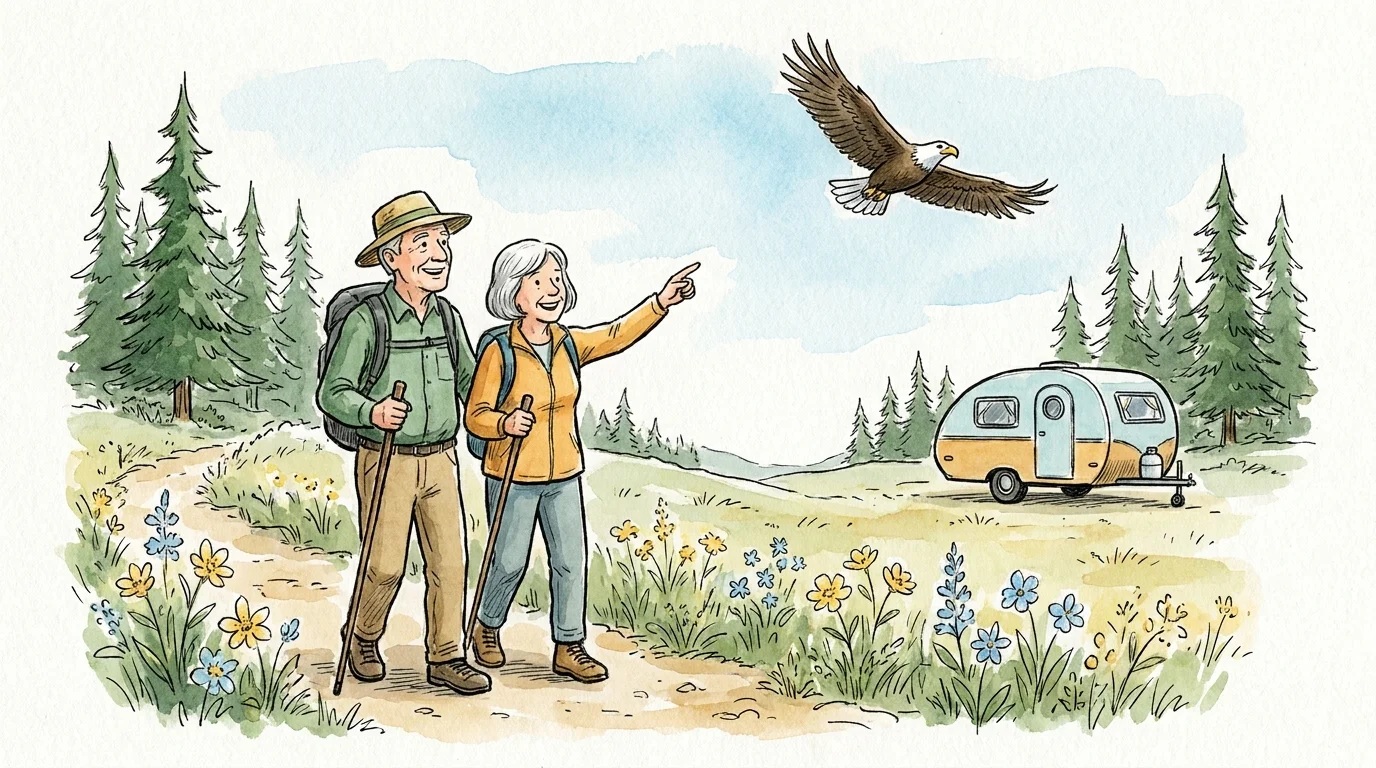
Retiring to an RV—whether for a few months a year or full-time—offers a dynamic approach to aging. Instead of spending your days maintaining a large, empty house, you spend your time exploring national parks, finding new communities, and remaining physically active. Setting up camp, hiking new trails, and adapting to different environments naturally promotes mobility and cognitive health. Organizations like the National Institute on Aging emphasize that staying socially engaged and physically active drastically improves your overall health markers in retirement.
The RV lifestyle forces you to curate your life down to the essentials, removing the clutter that often bogs us down. You gain the ultimate geographical flexibility. If you dislike the weather, you turn the ignition key; if you want to see your grandchildren in another state, you simply bring your home to their driveway.
“Retirement is not the end of the road. It is the beginning of the open highway.” — Unknown
Top Sun-Belt States for Winter Escapes
When the northern winds begin to howl, thousands of retirees become “snowbirds,” migrating south to escape the ice and snow. The best winter RV states offer predictable sunshine, extensive campground infrastructures, and communities tailored specifically to older adults.
Florida: The Traditional Snowbird Capital
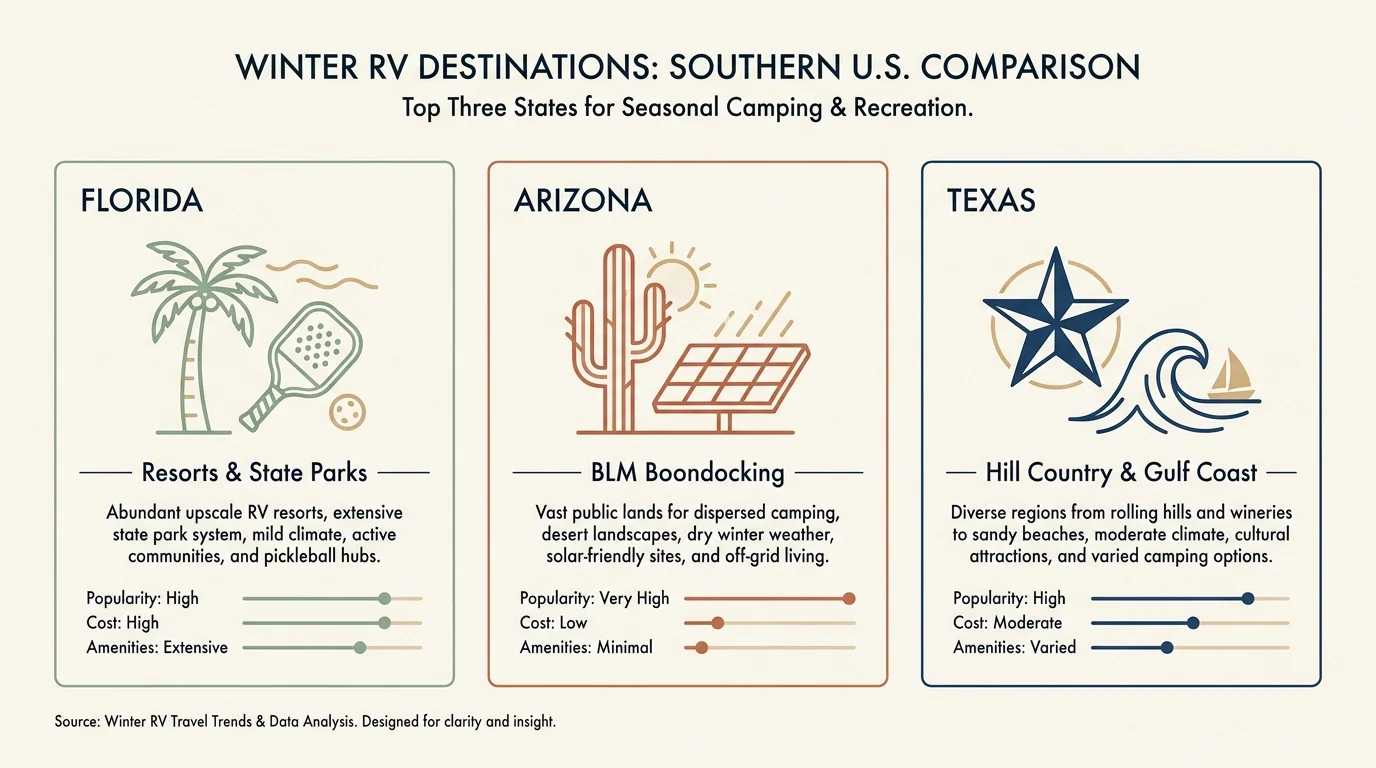
Florida remains the undisputed king of winter RV travel. The state offers hundreds of dedicated RV resorts, many of which resemble luxury country clubs complete with pickleball courts, heated pools, and organized social calendars. State parks like Myakka River and Henderson Beach provide incredible natural beauty at a fraction of the cost of private resorts. However, Florida demands advanced planning. You must book state parks up to 11 months in advance, and private resort rates in peak season (January through March) command premium prices. The absence of a state income tax also makes it a highly desirable destination for long-term stays.
Arizona: The Boondocking Paradise
If you prefer sweeping desert vistas and dry heat over tropical humidity, Arizona is your premier destination. The state is world-famous for “boondocking”—camping off the grid without hookups on public lands. The Bureau of Land Management (BLM) oversees vast tracts of desert where you can camp for free or for nominal fees. The town of Quartzsite becomes a bustling RV metropolis every winter, drawing hundreds of thousands of retirees for gem shows, RV shows, and community gatherings. The low humidity is notoriously kind to aging joints, and the sun provides endless power for those equipped with solar panels.
Texas: Southern Hospitality on a Grand Scale
Texas offers incredible geographic diversity for winter travelers. You can park your rig right on the sand along the Gulf Coast near Corpus Christi, or you can nestle into the rolling landscapes of the Texas Hill Country near Fredericksburg. Texas boasts a massive network of affordable state parks and a friendly, welcoming culture. The cost of living and camping remains significantly lower than in South Florida, making it a haven for budget-conscious retirees.

Best Northern States for Summer Road Trips
Once the southern states become uncomfortably hot, the migration reverses. Summer RV travel is all about finding cool breezes, shaded forests, and alpine lakes.
Michigan: The Great Lakes Oasis
Michigan’s Upper Peninsula offers some of the most pristine summer camping in the country. With miles of freshwater coastline along Lake Superior and Lake Michigan, the state provides a perfect sanctuary from the sweltering heat of the south. State parks here are exceptionally well-maintained, and the towns offer a quaint, slow-paced charm ideal for relaxing afternoons. The cool summer nights mean you can often sleep with the windows open, listening to the waves crash against the shore.
South Dakota: Gateway to the West
Beyond being a massive administrative hub for RVers, South Dakota is a spectacular summer destination. The Black Hills region, home to Mount Rushmore, Custer State Park, and the Badlands, provides weeks of exploration. Wildlife is abundant, and the scenic drives—such as the Needles Highway—are unforgettable. South Dakota also hosts numerous RV rallies and offers extensive campgrounds equipped to handle the largest Class A motorhomes.
Oregon: Diverse Landscapes and Coastal Beauty
Oregon serves as a spectacular summer refuge. The state operates one of the finest state park systems in the country, with generous spacing between sites and immaculate facilities. You can spend your mornings beachcombing along the misty Pacific Coast and your afternoons hiking near the volcanic peaks of the Cascade Range. The state’s lack of sales tax also makes it a great place to restock your rig with high-ticket supplies.
Choosing a Domicile State for Full-Time RV Travel
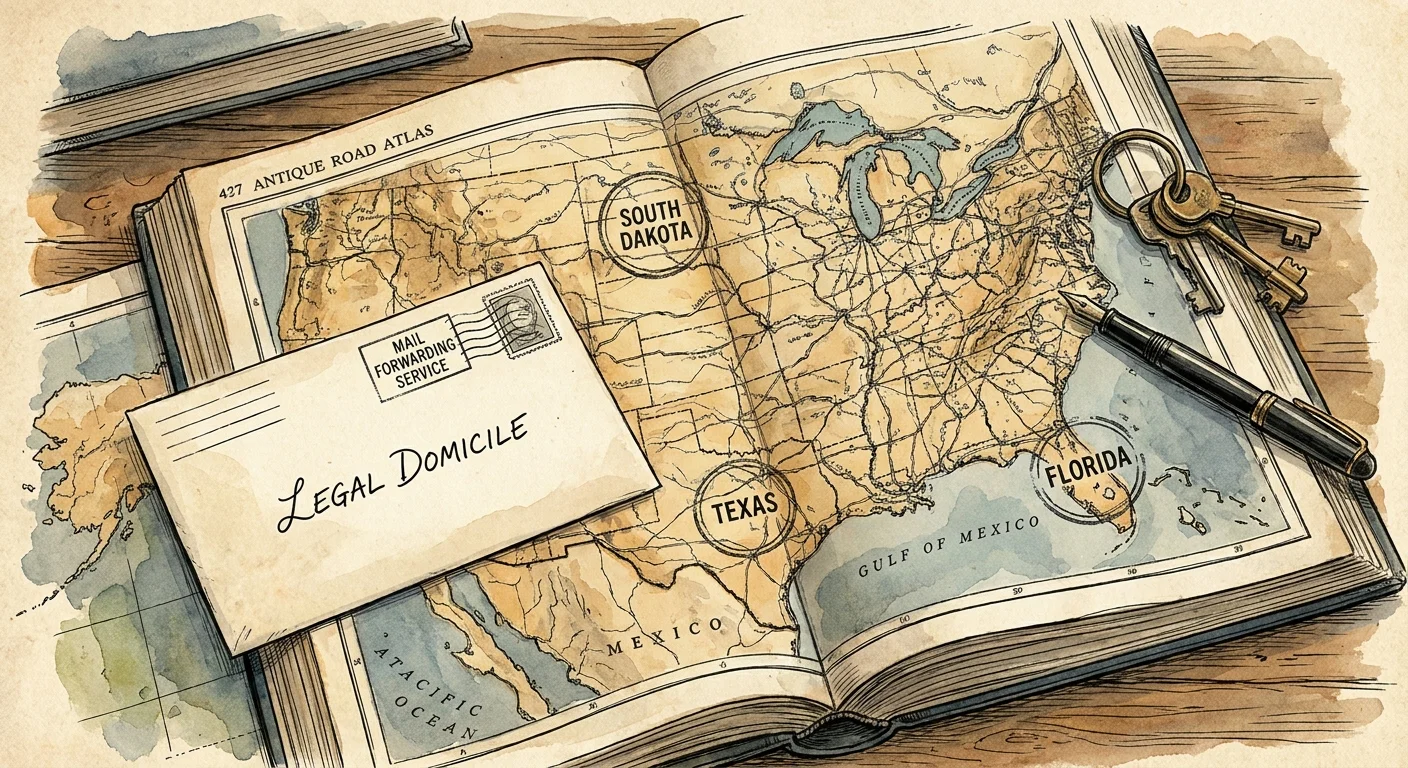
If you decide to sell your stationary house and travel full-time, you face a unique legal hurdle: you still need a legal address. Your “domicile” is the state you consider your permanent legal home. It dictates where you pay income taxes, register your vehicles, serve on a jury, and buy health insurance. Because of favorable laws, almost all full-time RVers choose one of three states for their domicile: Texas, Florida, or South Dakota.
These three states lack a general state income tax and have established mail-forwarding services designed specifically for nomads. These services provide you with a physical street address, receive your mail, scan the envelopes, and forward the physical copies to you wherever you are parked.
| Domicile Feature | South Dakota | Texas | Florida |
|---|---|---|---|
| State Income Tax | None | None | None |
| Vehicle Registration Fees | Very Low | Moderate (requires annual safety inspection if in-state) | High initial impact fees, but moderate renewals |
| Physical Presence Required | Must spend 1 night in the state every 5 years to renew driver’s license | Must return periodically for vehicle inspections and license renewals | Must visit in person to establish initial residency and get license |
| Health Insurance Market (Pre-Medicare) | Very poor nationwide network options on the ACA exchange | Moderate, but nationwide ACA coverage is rare | Excellent ACA options, including some nationwide PPO networks |
Choosing the right domicile requires balancing your specific needs. For example, if you are not yet 65 and need private health insurance, Florida often provides the best Affordable Care Act (ACA) networks. If vehicle registration costs are your primary concern and you want the easiest bureaucratic process, South Dakota is the undisputed champion.
Managing Healthcare and Medicare Across State Lines
Healthcare access is the single biggest anxiety for traveling retirees. Getting sick on the road is stressful enough without discovering your insurance won’t cover the local hospital. Before embarking on extensive travel, you must ensure your financial house is in order; utilizing resources from USA.gov can help you build a solid baseline retirement plan that accounts for travel medical emergencies.
If you are 65 or older, your Medicare choices drastically impact your freedom to travel.
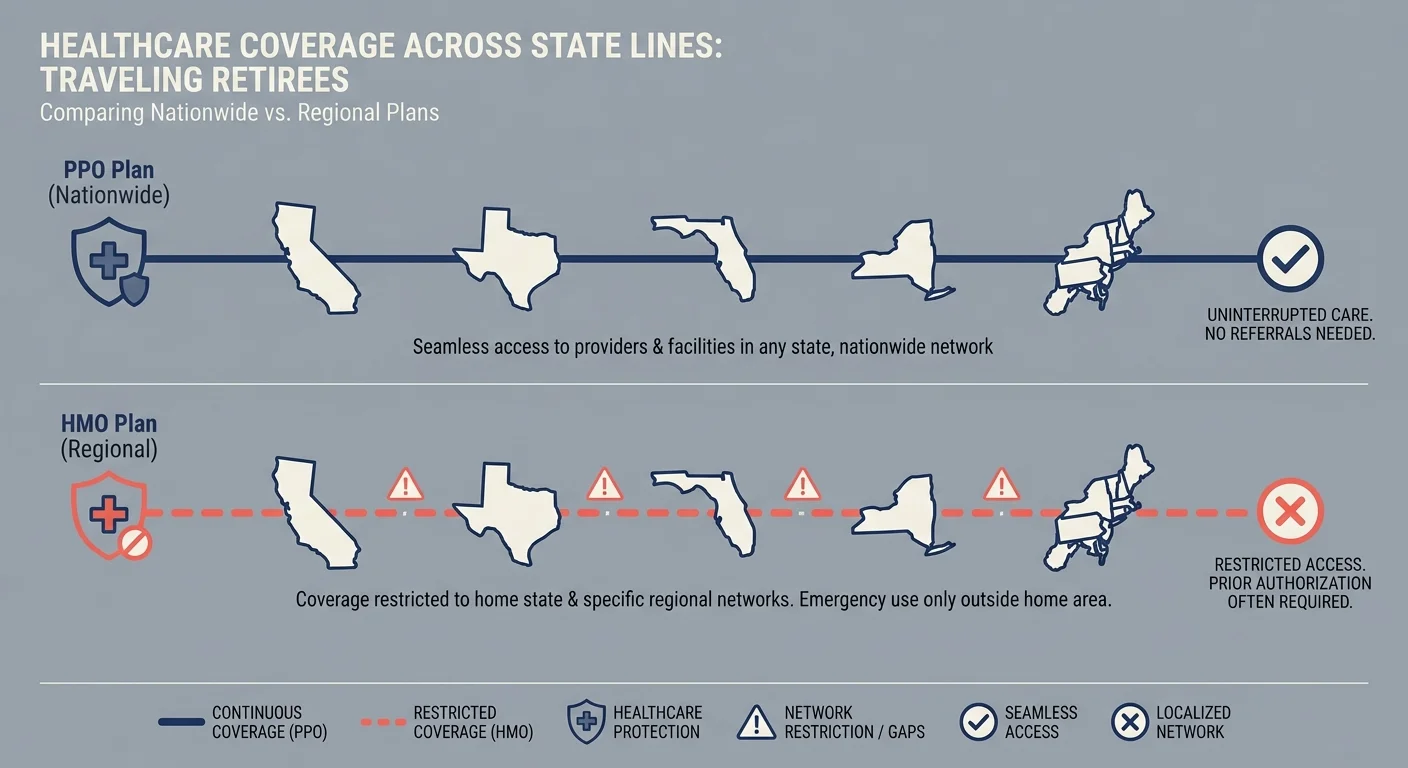
- Original Medicare with a Medigap Policy: This is the gold standard for RV travelers. Original Medicare (Parts A and B) is a federal program. Any doctor or hospital in the United States that accepts Medicare will accept you, regardless of what state you are visiting. A Medigap (Medicare Supplement) policy covers the remaining 20% of costs, and it also travels with you nationwide. You never have to worry about network restrictions.
- Medicare Advantage (Part C): These plans act as an alternative to Original Medicare and are managed by private insurance companies. They operate on HMO or PPO networks tied to your specific home zip code. If you have a Medicare Advantage HMO from Ohio and you need to see a specialist while wintering in Arizona, your plan will likely deny coverage unless it is a life-threatening emergency. While some Advantage plans offer travel networks, they remain highly restrictive compared to Original Medicare.
For veterans, the Department of Veterans Affairs operates facilities nationwide. If you are enrolled in VA healthcare, you can coordinate with a Traveling Veteran Coordinator to ensure you can pick up prescriptions and receive routine care at VA clinics across the country.
Budgeting for the RV Lifestyle
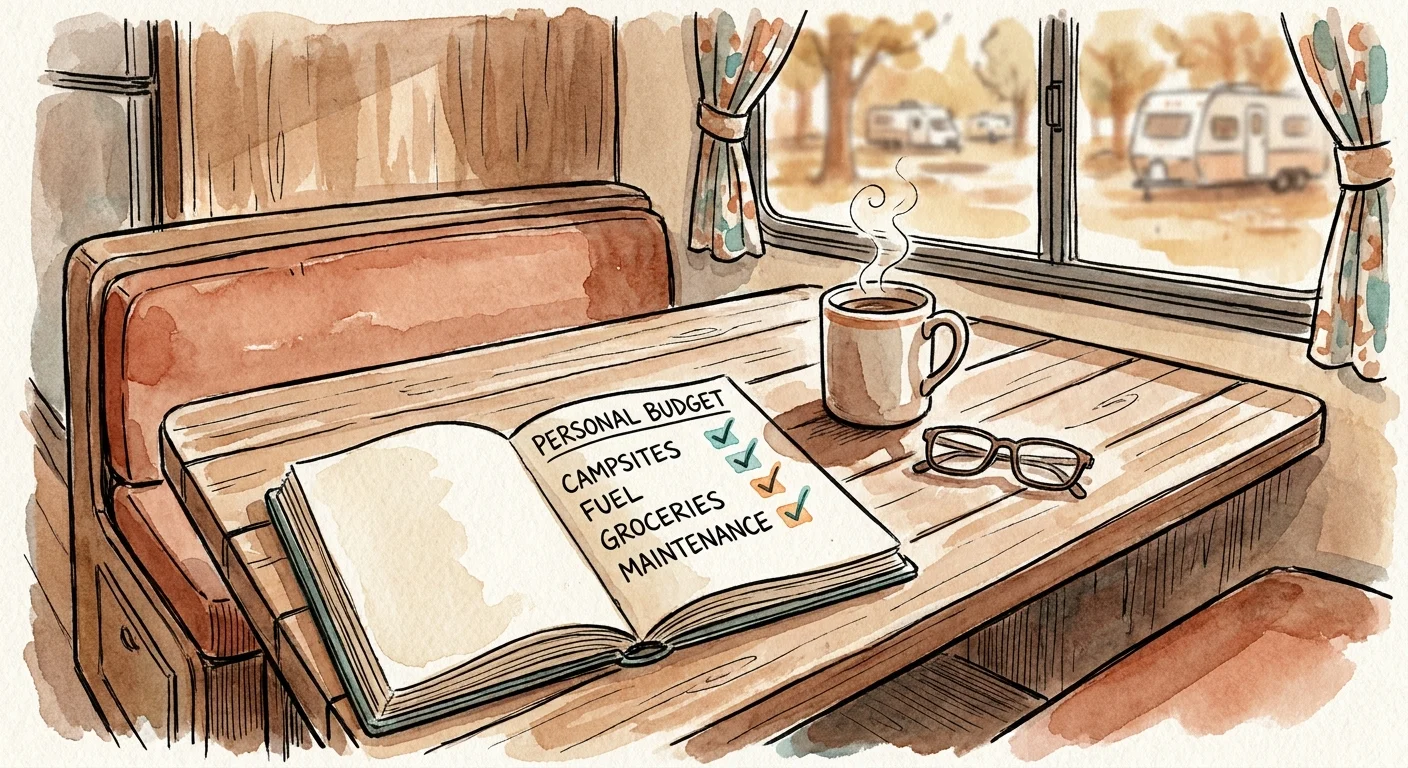
A common misconception is that RV living is inherently cheap. While it can be significantly less expensive than maintaining a traditional home, your expenses depend entirely on your travel style. To manage your cash flow effectively, you must categorize your expenses realistically.
Fuel costs fluctuate wildly and depend heavily on how fast you travel. If you drive 300 miles every three days, your fuel budget will skyrocket. “Slow travel”—staying in one location for two to four weeks—slashes your fuel costs and often qualifies you for deeply discounted monthly campground rates.
Campground fees range from absolutely free (boondocking on BLM land) to upwards of $150 per night at luxury resorts. To mitigate these costs, many retirees purchase memberships to organizations like AARP, which offers discounts on RV rentals and camping. Others invest in discount club memberships like Passport America or Thousand Trails to bring nightly costs down.
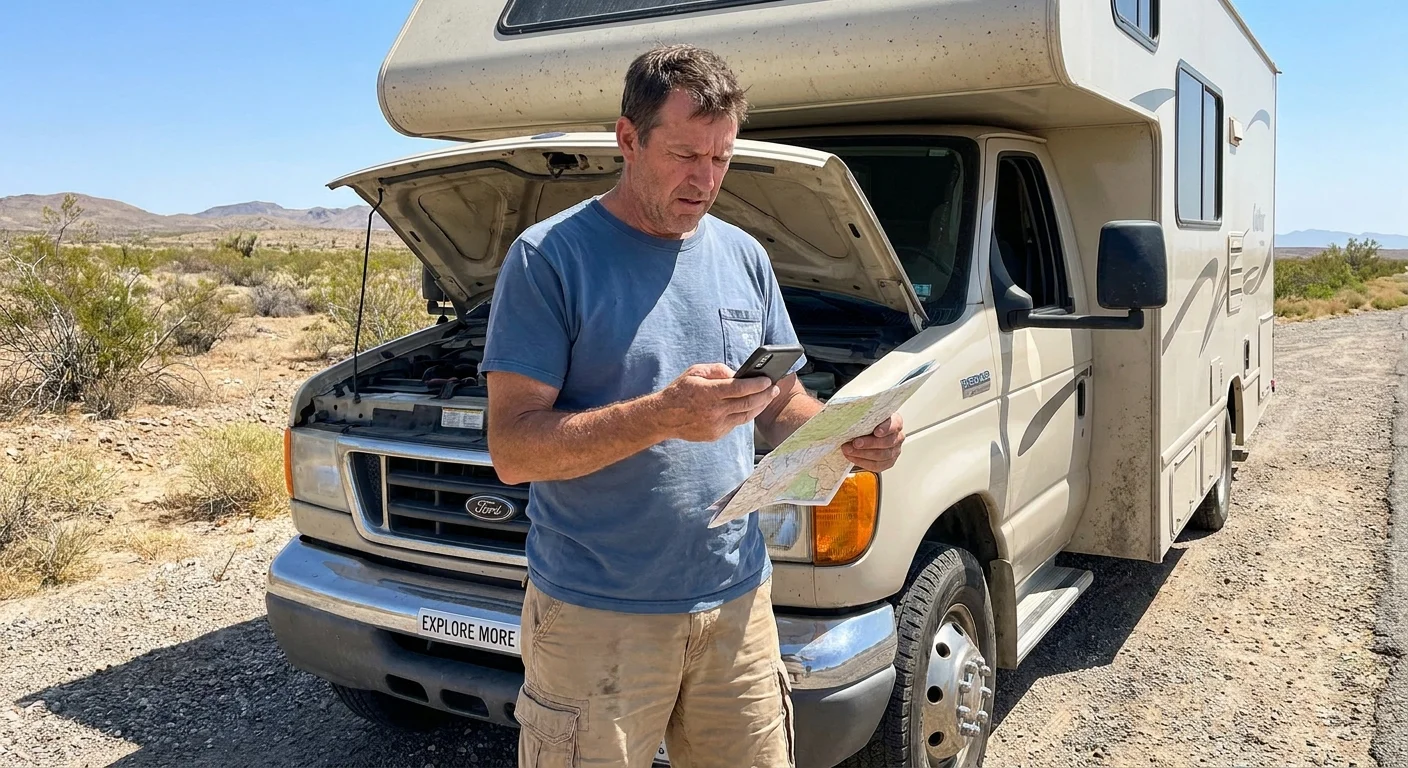
Maintenance is the ultimate budget-killer. An RV is essentially a house experiencing an earthquake every time you drive down the highway. Roof seals break, tires wear out faster due to heavy loads, and appliances fail. A robust emergency fund dedicated strictly to RV repairs is absolutely non-negotiable for a stress-free retirement.
Don’t Make These Mistakes
Even the most meticulously planned retirements can hit speed bumps. Avoid these common pitfalls to ensure your RV dreams do not turn into a stressful ordeal.
- Buying a massive rig right out of the gate. Many retirees purchase a 40-foot Class A motorhome before they have spent a single night in an RV. Large rigs limit where you can camp, as many state and national parks were built decades ago and cannot accommodate modern behemoths. Always rent different classes of RVs to discover what size truly fits your comfort level and driving ability.
- Succumbing to travel fatigue. When you first hit the road, the temptation is to see everything at once. Moving to a new state every three days leads directly to burnout. Setting up and breaking down camp is physical labor. Embrace a slower pace to truly absorb the culture of the states you visit while preserving your energy.
- Ignoring the importance of reliable internet. Managing retirement accounts, paying bills, and staying connected with doctors requires secure, reliable connectivity. Do not rely on campground Wi-Fi, which is notoriously slow and unsecure. Invest in a dedicated cellular hotspot or satellite internet to ensure you are never cut off from vital financial and medical communications.
- Failing to downsize emotionally. Moving into an RV means letting go of lifelong possessions. Storing a house full of furniture in a paid storage unit quickly drains your travel budget. Sell, donate, or give away what you do not truly need; the emotional lightness that follows is one of the greatest hidden benefits of the lifestyle.
Frequently Asked Questions
How do full-time RVers vote in local and national elections?
When you establish a domicile in a state like South Dakota, Texas, or Florida, you register to vote in the county where your mail-forwarding service is located. You simply request an absentee ballot well in advance of the election, and your mail service forwards it to your current campground. You fill it out and mail it back before the deadline.
Are there specific RV park discounts available for older adults?
Yes. The most valuable discount is the America the Beautiful Senior Pass, available to U.S. citizens aged 62 and older. For a small one-time fee, this lifetime pass grants free entrance to all federal recreation sites, including National Parks. More importantly for RVers, it provides a 50% discount on camping fees at most federal campgrounds, including those managed by the National Forest Service and the Army Corps of Engineers.
Can I bring my pets with me on the road?
Absolutely, and the vast majority of RVers travel with dogs or cats. However, you must carry updated vaccination records with you, as many private RV parks require proof of rabies vaccines. Be aware that National Parks are notoriously restrictive regarding dogs, typically only allowing them on paved roads and in parking lots, not on dirt hiking trails.
What happens if my RV breaks down and it is my only home?
This is where specialized RV insurance steps in. A standard auto policy is insufficient. You need a “Full-Timer’s” insurance policy that includes loss-of-use coverage. If your rig requires a week in the mechanic’s bay, this coverage pays for your hotel room and meals while your home is uninhabitable.
Ready to Hit the Road?
The transition to RV travel requires intentional planning, but the rewards are immeasurable. You trade a static view from your living room window for a constantly changing horizon. Take the first step this week by researching potential domicile states or renting a small motorhome for a weekend getaway to test the waters. Preparation is your greatest ally on the road.
Retirement rules and benefit amounts vary based on individual work history, income, and circumstances. This article provides general guidance only. Consult a SHIP counselor, financial advisor, or elder law attorney for advice specific to your situation.
Last updated: June 2026. Medicare and Social Security rules change annually—always verify current details at official government sources.