Summer trips to America’s favorite parks often mean packed shuttle buses, long entrance lines, and dangerous midday heat. Off season travel flips that script for retirees who have flexible calendars.
Choosing the best winter parks gives you mild daytime weather, quiet trails, and clear views without fighting peak crowds. You can even drive your own car on scenic roads that ban private vehicles in July.
These eight national parks in winter reward smart planning with lower stress, senior fee savings, and unforgettable scenery. Use this guide to pick your next destination and prepare safely.
Smart Ways to Save and Prepare Before You Go
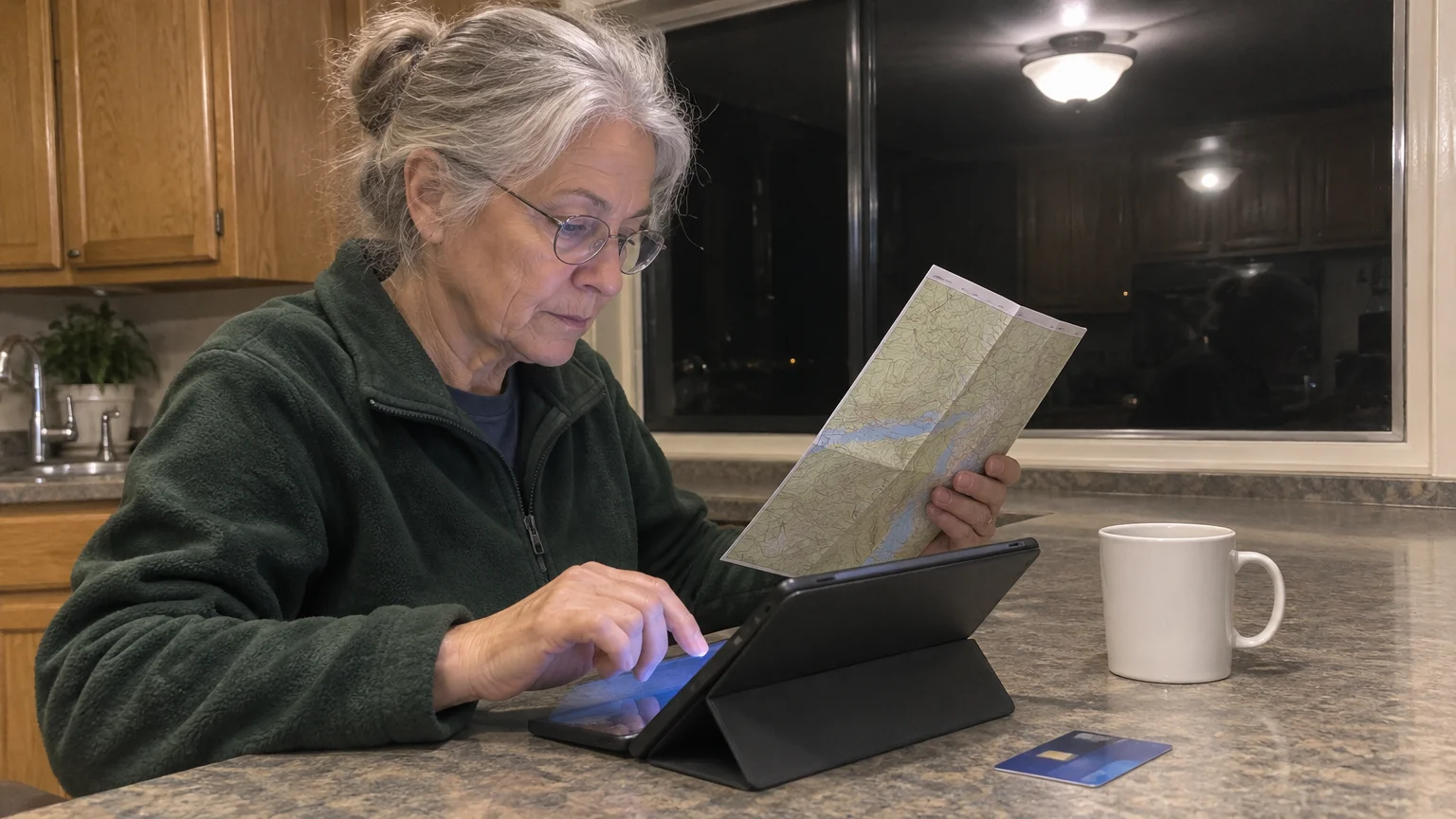
America’s national parks logged 331.9 million visits in 2024, so visiting outside summer helps you avoid heavy traffic. Before packing your bags for winter travel USA trips, grab the right park pass.
U.S. citizens and permanent residents age 62 and older can get the America the Beautiful Senior Pass. You pay $20 for an annual pass or $80 for a Lifetime Pass.
Buy your pass in person at a park gate or digitally through Recreation.gov to skip mail fees. That single pass covers everyone in your private vehicle at more than 2,000 federal recreation sites.
U.S. residents with permanent disabilities can get a free lifetime Access Pass. Note that starting in 2026, non-U.S. visitors age 16 and older face a $100 surcharge at 11 major parks.
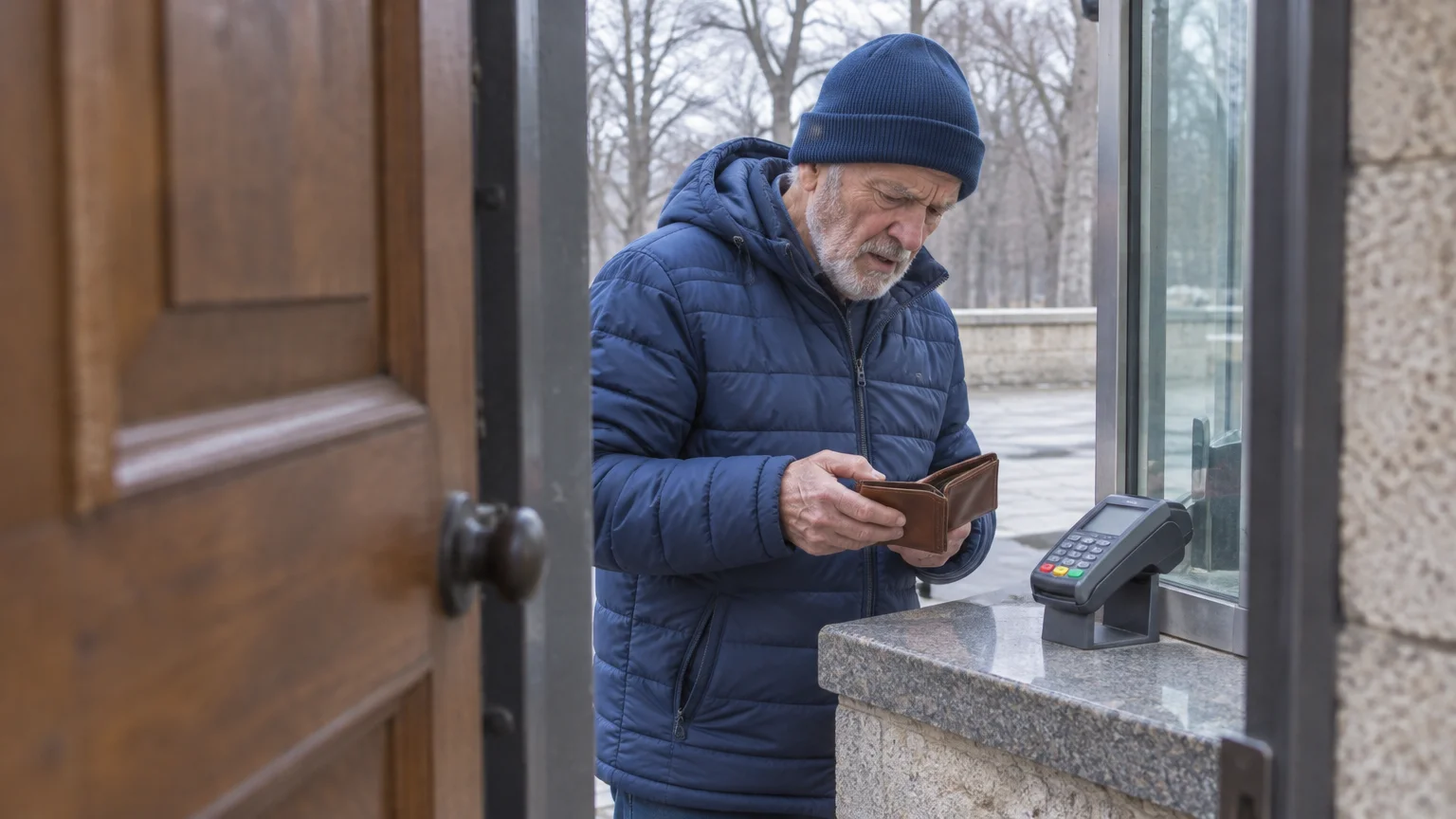
Bring credit or debit cards only for entrance stations at major winter parks like Death Valley and Grand Canyon. Also review your health coverage on Medicare.gov and check senior travel tips on AARP before crossing state lines.
Quick Guide to the Best Winter Parks
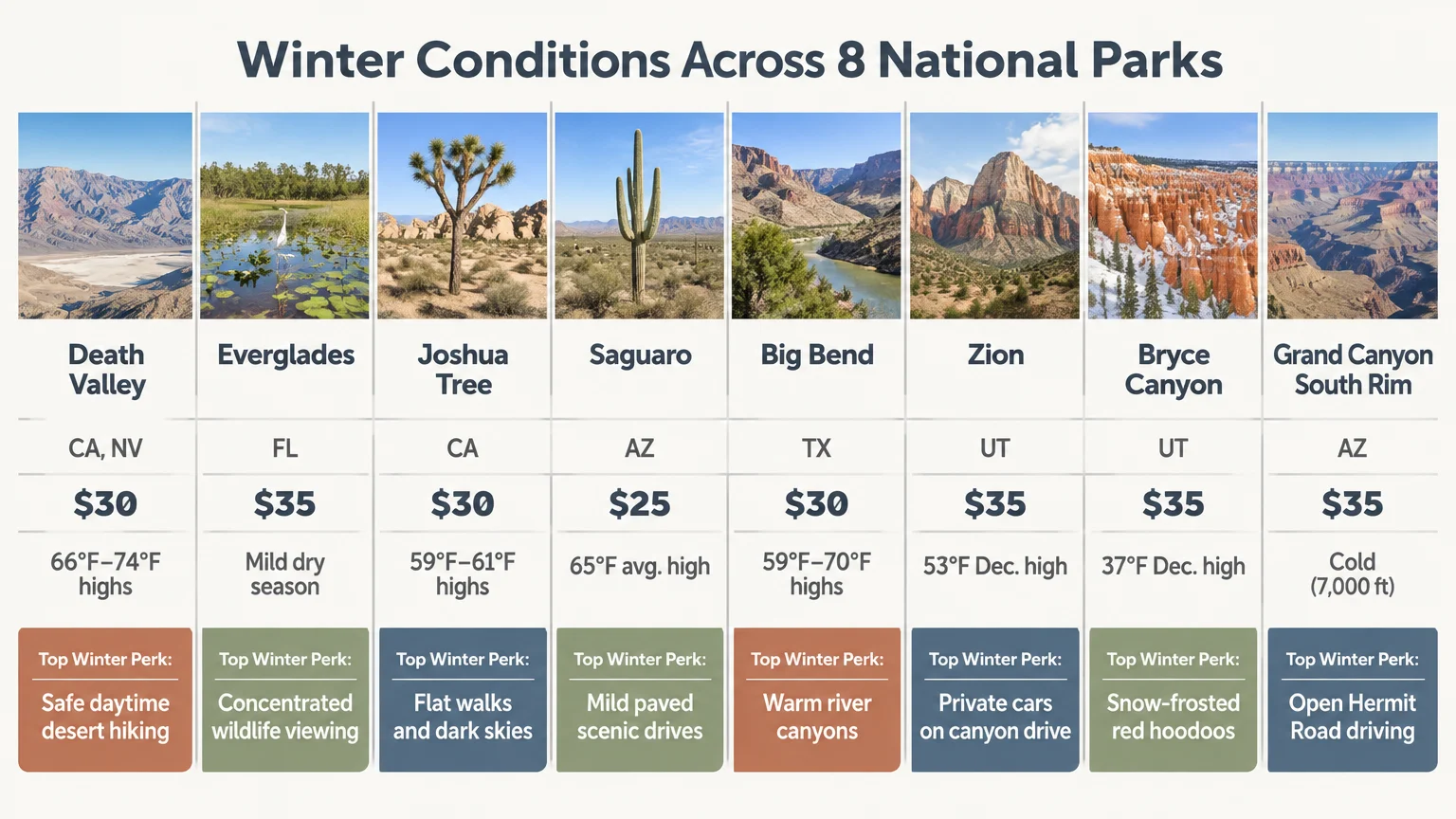
Use this comparison to match your comfort level with winter weather and driving rules. Fees cover one private vehicle for seven days unless you hold a Senior Pass.
| National Park | State | Winter Weather | 7-Day Vehicle Fee | Top Winter Perk |
|---|---|---|---|---|
| Death Valley | CA, NV | 66°F–74°F highs | $30 | Safe daytime desert hiking |
| Everglades | FL | Mild dry season | $35 | Concentrated wildlife viewing |
| Joshua Tree | CA | 59°F–61°F highs | $30 | Flat walks and dark skies |
| Saguaro | AZ | 65°F avg. high | $25 | Mild paved scenic drives |
| Big Bend | TX | 59°F–70°F highs | $30 | Warm river canyons |
| Zion | UT | 53°F Dec. high | $35 | Private cars on canyon drive |
| Bryce Canyon | UT | 37°F Dec. high | $35 | Snow-frosted red hoodoos |
| Grand Canyon South Rim | AZ | Cold (7,000 ft) | $35 | Open Hermit Road driving |
5 Warm-Weather Parks That Beat Summer Heat
1. Death Valley National Park, California and Nevada
Covering 3.4 million acres, Death Valley is the largest national park in the lower 48 states. Summer temperatures regularly top 115°F, making low-elevation walks unsafe from May through October.
Winter highs average a pleasant 66°F to 74°F, while nights dip to 38°F to 49°F. You can comfortably explore Badwater Basin at 282 feet below sea level without overheating.
No timed-entry reservation is needed here. Scotty’s Castle remains closed indefinitely, but 24-hour gas stays open at Furnace Creek and Stovepipe Wells.
2. Everglades National Park, Florida
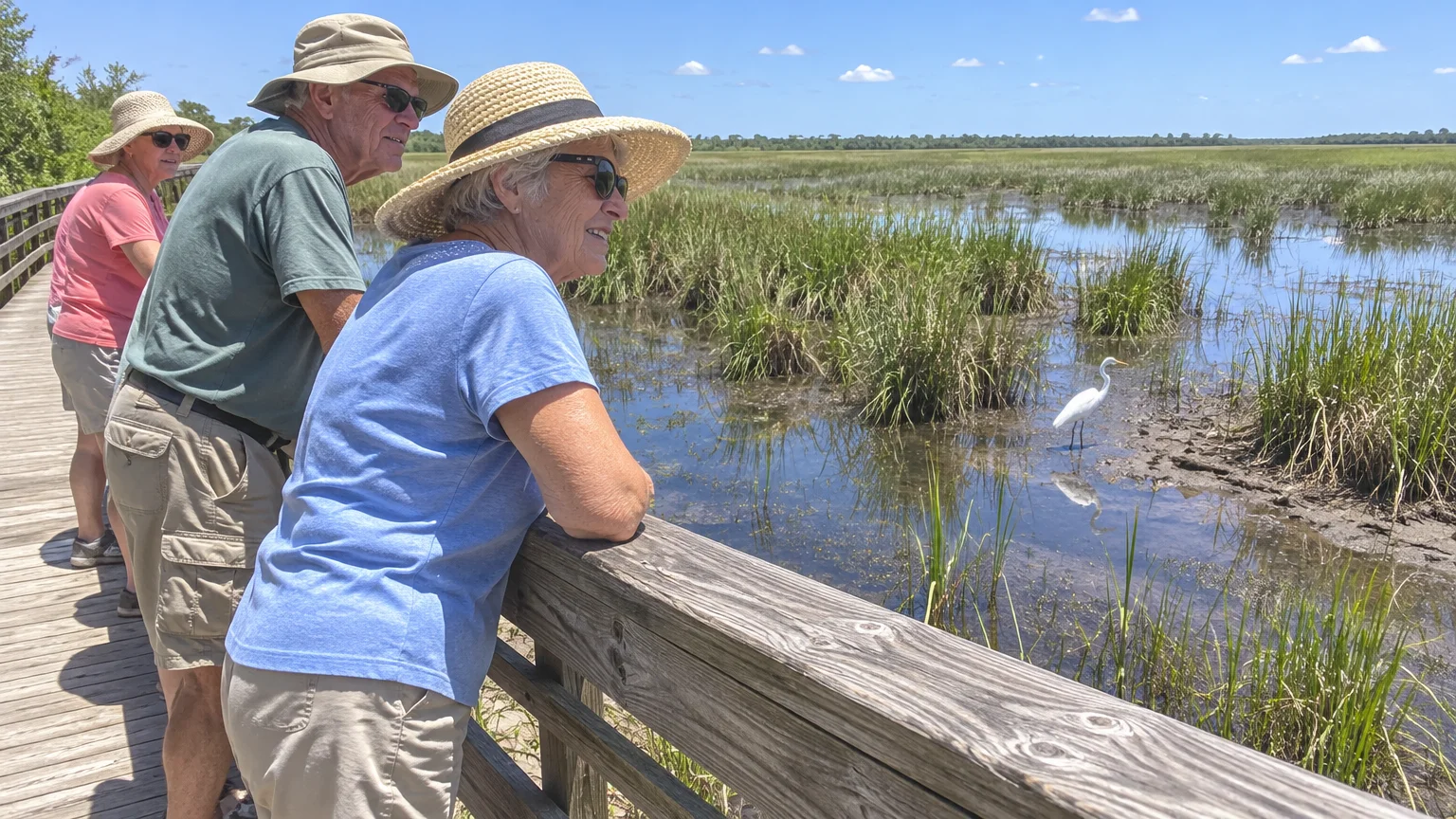
Florida’s dry season runs from December through April and cuts down both humidity and mosquitoes. Lower water levels also push birds, turtles, and alligators toward easy-to-spot water holes.
The full winter ranger program schedule starts December 19, 2026, with guided walks, paddling, and stargazing. A Dark Sky Celebration also runs from February 19 through February 27, 2027.
Check traffic updates before leaving because roadwork along Tamiami Trail (US 41) can cause delays. No park-wide entry reservation is needed.
3. Joshua Tree National Park, California
Summer highs soar past 100°F in Joshua Tree, but winter days stay comfortable around 59°F to 61°F. Flat paths like the 1.1-mile Barker Dam loop and 1-mile Hidden Valley loop suit many fitness levels.
Long winter nights make this International Dark Sky Park ideal for stargazing. Bring extra layers because overnight lows often drop to 35°F to 37°F.
The park sells no food, fuel, or reliable water inside its borders. Arrive before 8 a.m. on weekends or use the North or South entrances to skip West Entrance lines.
4. Saguaro National Park, Arizona
Split into two districts near Tucson, Saguaro averages daytime winter highs around 65°F. That mild weather makes the paved 8-mile Cactus Forest Loop Drive a relaxing afternoon outing.
You can also stretch your legs on the half-mile Signal Hill trail or the 0.8-mile Valley View Overlook. Saguaro charges $25 per vehicle and skips both entry reservations and the $100 nonresident surcharge.
5. Big Bend National Park, Texas
River areas in Big Bend roast at 100°F to 115°F during summer. January brings mild 70°F highs along the Rio Grande and 59°F days up in the Chisos Basin.
Park officials canceled earlier closure plans, so Chisos Basin Road, its Visitor Center, and the campground remain open. Accessible spots include the paved 0.3-mile Window View Trail and the Rio Grande Nature Trail boardwalk.
Weather damage still closes several routes, including the paved road to Santa Elena Canyon and Black Gap Road. If you bring your passport, the Boquillas rowboat crossing to Mexico runs Thursday through Sunday.
3 Canyon Parks With Rare Off-Season Driving Access
6. Zion National Park, Utah
Zion ranked second nationwide with 4.95 million visits in 2024, mostly packed into warmer months. Winter slows the pace and averages 53°F highs on the canyon floor in December.
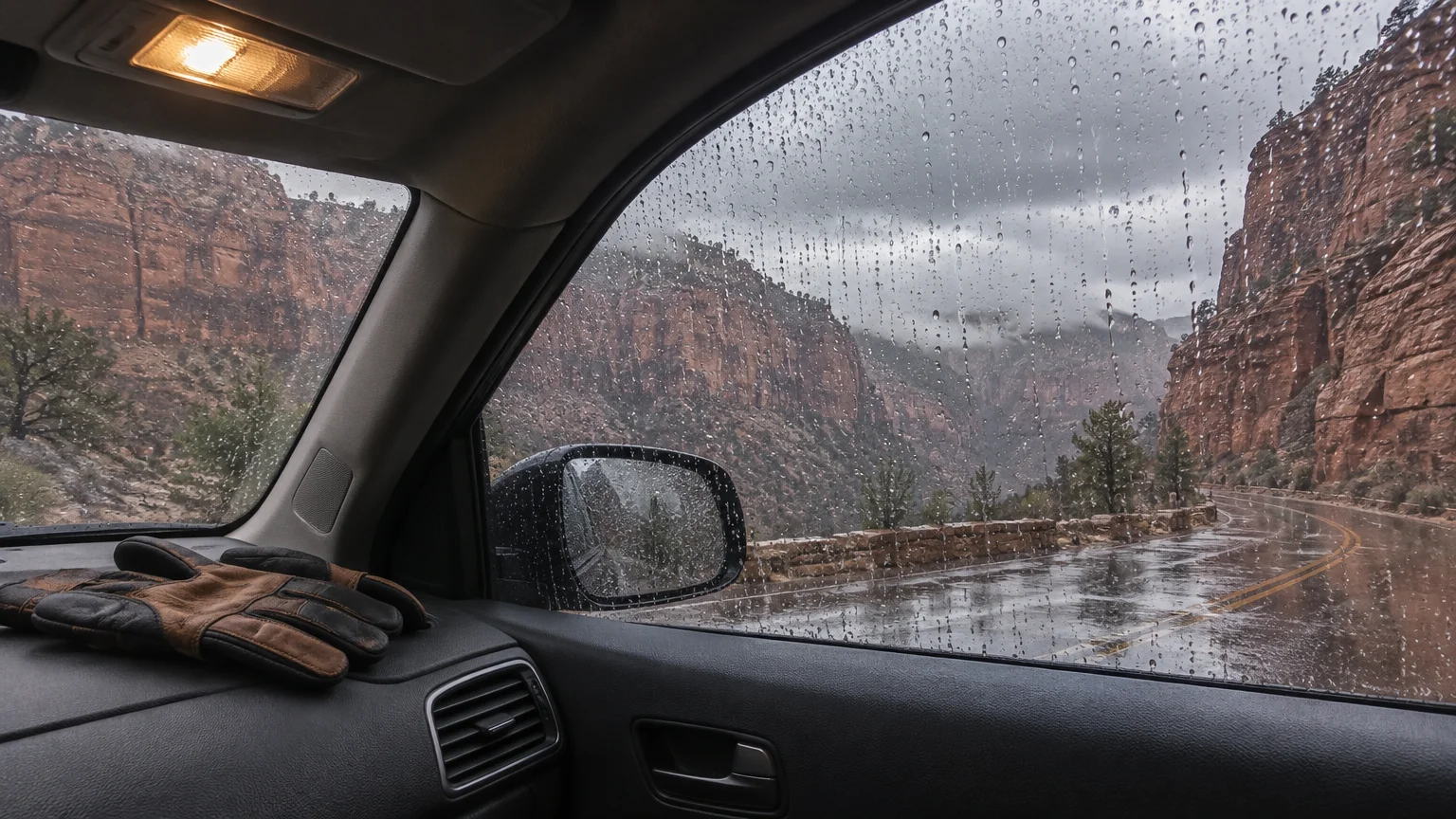
Shuttle buses pause from November 29 to December 25, 2026, and resume January 3, 2027. During those weeks, you can drive your own car up the 6-mile Zion Canyon Scenic Drive.
Note that shuttles briefly return for the busy holiday week from December 26 through January 2. Rangers also close the canyon road temporarily if parking lots fill up.
Angels Landing still uses a day-before lottery permit in winter. Skip the top chains section if ice forms on the rock.
7. Bryce Canyon National Park, Utah
Sitting near 8,000 feet in elevation, Bryce Canyon averages 15.3 inches of December snow. White snow resting on bright orange rock spires creates views you will not see in July.
Park shuttles stop running from November through March, so winter visitors drive straight to major overlooks with easier parking. Keep in mind that the 18-mile scenic drive may close briefly for snowplowing after storms.
December days average 37°F with 17°F nights, so pack a warm coat. The Visitor Center closes on December 25 and shuts early at 2 p.m. on December 24.
8. Grand Canyon South Rim, Arizona
The South Rim stays open 24 hours every day of the year. Meanwhile, the North Rim closes to all vehicles from December 1, 2026 through May 14, 2027.
Winter lets you drive private cars under 22 feet long along Hermit Road. That 7-mile scenic route holds nine overlooks and bans private cars from March through November.
South Rim hotels reopened on November 20, 2026, after waterline repairs. Water conservation rules still apply, so Mather Campground offers dry camping without showers or laundry.
Inner canyon water stays off, and Phantom Ranch remains closed through at least January 31, 2027. Lipan Point and its road also stay closed through December 23, 2026.
Don’t Make These Mistakes on Winter Park Trips
Cold-weather and desert winter vacation ideas still carry real hazards if you treat them like summer drives. Follow these steps to stay safe on the road and on the trail.
Retirement gives you control of your calendar, so trading July crowds for quiet winter trails lets you enjoy the parks at your own pace.
- Pack slip-on shoe traction devices and trekking poles for icy canyon paths. Grand Canyon spreads rock cinders instead of salt, so shaded walkways keep black ice even on sunny afternoons.
- Download offline maps before entering remote parks where cell service drops out completely.
- Plan trail turnarounds well before sunset, which hits Zion around 5:15 p.m. in December.
- Layer up for sharp desert temperature drops after dark, especially in Joshua Tree and Death Valley.
- Check cold-weather safety advice from the National Institute on Aging before tackling high-elevation walks.
Frequently Asked Questions
Do I need a timed-entry reservation at these winter parks?
None of these eight parks require a general timed-entry reservation during winter. Only the Angels Landing hike inside Zion requires a separate lottery permit year-round.
Does my Senior Pass cover everyone in my car?
Yes, your America the Beautiful Senior Pass covers you and all passengers in one private vehicle. It may also cut camping and boat launch fees in half, though private tour fees stay full price.
Are park lodges and restaurants open during winter?
Most major facilities stay open, though some visitor centers and campgrounds cut hours around holidays. Always check the park website for current waterline, roadwork, or storm closures before leaving home.
Pick one park that matches your preferred climate, grab your Senior Pass at the gate, and enjoy quiet trails this season. Booking midweek stays saves money and leaves the best overlooks wide open.
Information in this article reflects current rules as of the publication date and may change. Always confirm benefit details directly with Social Security Administration, Medicare.gov, or relevant government agencies before making decisions.
Last updated: November 2026. Medicare and Social Security rules change annually—always verify current details at official government sources.