What Exactly Does the DMV Vision Test Check?
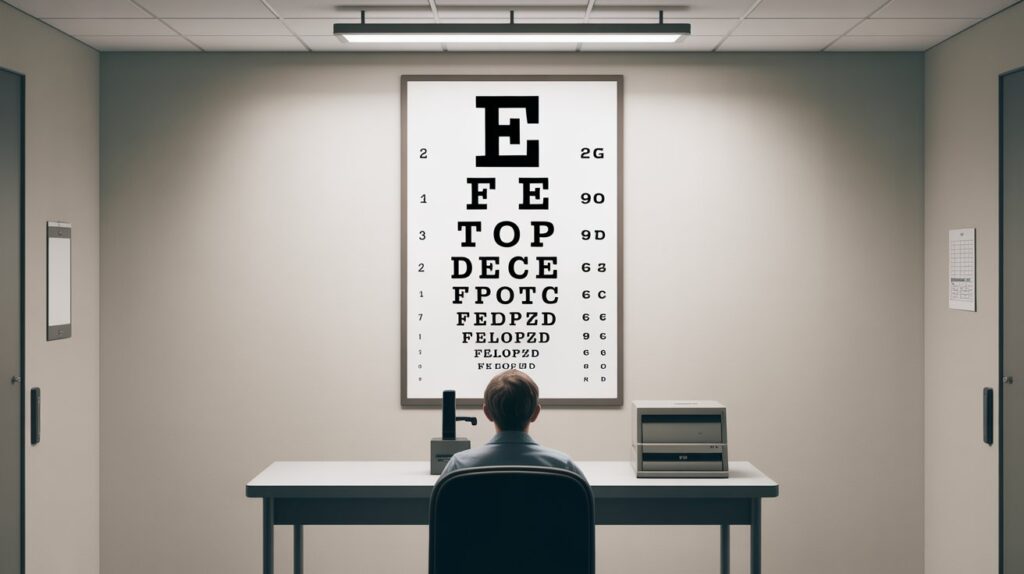
The test itself is quick — most take under a minute. A DMV staff member will ask you to read letters on a Snellen eye chart from a set distance. What they’re looking for is whether you meet the minimum visual acuity requirement, which in most states is 20/40 vision in one or both eyes, with or without corrective lenses.
What does 20/40 mean? It means you can see clearly at 20 feet what a person with normal vision could see at 40 feet. Most people with glasses or contacts meet this standard without any trouble. 20/20 is considered perfect, and anything from 20/20 to 20/40 will typically pass the test.
Many states also check peripheral (side) vision — your ability to see objects at the edges of your visual field without turning your head. Most require a field of at least 110 to 140 degrees. This matters for driving because you rely on peripheral vision to notice cars merging beside you or pedestrians stepping off a curb.
One important note: you are allowed — and encouraged — to wear your glasses or contact lenses during the test. If you pass while wearing corrective lenses, your license will simply include a restriction noting that you must wear them while driving. That’s a very common outcome and nothing to be embarrassed about.