You can stretch a modest retirement check much further without sacrificing comfort, safety, or quality medical care. Relocating to Latin America allows you to exchange escalating property taxes and utility bills for pleasant weather and lower expenses.
The average Social Security benefit pays $2,071 per month. In many overseas communities, that fixed income easily covers a comfortable apartment, fresh local food, weekly dining out, and private healthcare visits.
Choosing the right destination requires matching your monthly income to local visa rules, currency systems, and medical infrastructure. Here are twelve practical communities where you can retire abroad on a budget.
The Modest Retirement Math: Social Security Abroad
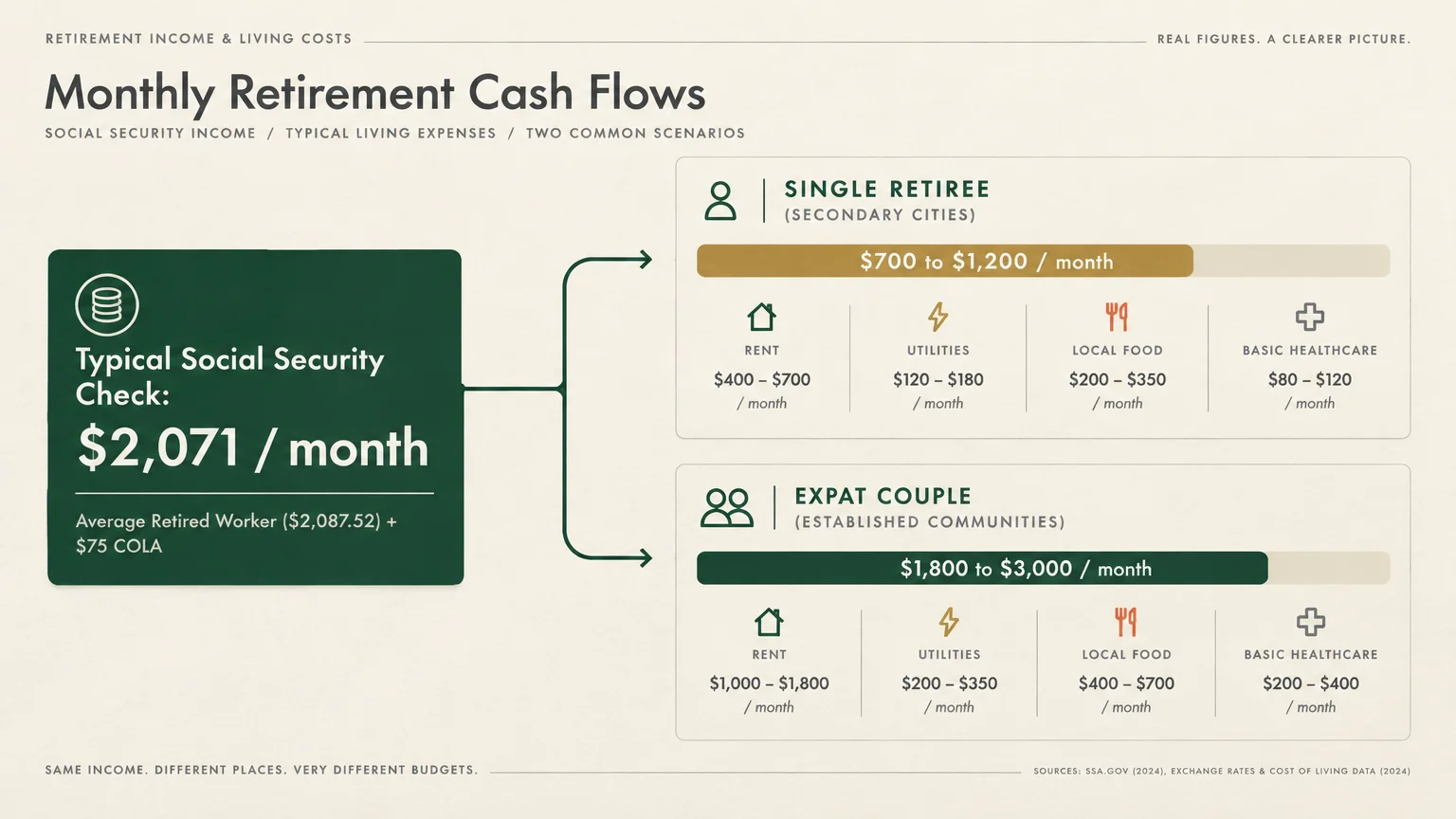
Most Americans rely heavily on Social Security as the foundation of their retirement income. Today, the typical retired worker receives an average monthly check of $2,071, which rises slightly to $2,087.52.
An upcoming 3.6% cost-of-living adjustment adds roughly $75 per month to that baseline. While that increase barely offsets inflation at home, it delivers substantial purchasing power in Latin America.
Single retirees living in secondary Latin American cities routinely maintain modest lifestyles on $700 to $1,200 per month. That figure includes residential rent, utilities, local food, and baseline medical care.
Couples living in well-established expat communities spend between $1,800 and $3,000 per month for modern comforts. You can confirm your exact baseline payment using the Social Security Administration portal.
“The goal of retirement is to live off your assets—not live off your regrets.”

Currency Stability and the Dollar Advantage
Currency fluctuations can quickly disrupt a fixed-income budget. When a foreign currency strengthens rapidly against the dollar, your monthly benefit loses immediate buying power.
You eliminate exchange-rate risk entirely by selecting countries that use the U.S. dollar as legal tender. Panama, Ecuador, and El Salvador operate fully dollarized economies.
In these nations, your Social Security deposit arrives without conversion fees. You withdraw familiar banknotes directly from local ATMs to pay your landlord and buy groceries.
If you settle in countries with independent currencies, monitor conversion trends closely. A disciplined financial plan helps insulate your routine expenses from sudden currency swings.
Top Affordable Hubs in Central America
Central America offers immediate proximity to the United States and straightforward retirement visas. Flight times back home remain short, keeping family visits practical and affordable.
1. Boquete, Panama
Boquete sits in Panama’s western highlands, offering cool mountain air and spring temperatures year-round. You avoid the high air-conditioning bills common in coastal communities.
Panama’s renowned Pensionado visa requires a guaranteed lifetime pension or Social Security income of just $1,000 per month. Adding a dependent spouse requires an additional $250 monthly.
The program grants legal discounts between 20% and 50% on utility bills, restaurant meals, healthcare consultations, and domestic airfare. A couple can live comfortably here on $1,800 to $2,400 monthly.
2. Coronado, Panama
Coronado provides a laid-back beach lifestyle located roughly an hour from Panama City. It gives you immediate access to top-tier private hospitals while enjoying coastal living.
Because Coronado shares the same $1,000 monthly income visa rule, qualifying remains straightforward. The community features established grocery markets, modern pharmacies, and active English-speaking social networks.
Modest condo rentals run between $800 and $1,200 per month. Living costs remain manageable if you prepare fresh local seafood and minimize excessive daytime air conditioning.
3. Atenas, Costa Rica
Atenas perches on the hillsides of Costa Rica’s Central Valley, known for mild, comfortable weather. It sits forty minutes from the capital city of San José and its premier medical centers.
A Costa Rica retirement through the Pensionado visa requires $1,000 per month in permanent pension income. Costa Rica also maintains a territorial tax system, meaning your foreign pension incurs zero local income tax.
Residents enroll in the national public healthcare system, known as the CAJA. Monthly CAJA contributions for modest-income retirees generally range from $90 to $150 per month.
4. San Ramón, Costa Rica
San Ramón lies slightly west of Atenas and delivers a more traditional, authentic Costa Rican experience. Daily living costs and rental rates run noticeably lower than in major tourist towns.
Local farmers markets provide abundant fresh produce, poultry, and dairy for a fraction of U.S. supermarket prices. A single retiree can live simply here on roughly $1,200 to $1,500 monthly.
The local hospital handles routine needs, while major regional facilities in Alajuela and San José remain accessible. It is an ideal spot if you prefer cooler mountain evenings.
5. Granada, Nicaragua
Granada sits along the shores of Lake Nicaragua, famous for its colorful Spanish colonial architecture and walkable streets. It ranks among the cheapest countries to retire anywhere in the Americas.
Nicaragua’s retirement visa features one of the lowest thresholds in the world, requiring just $600 per month in verified pension income. A Rentista visa is also available at $750 monthly.
Foreign pensions are not taxed locally under Nicaragua’s territorial tax structure. Modest single retirees can easily manage housing, dining, and daily living on $800 to $1,100 per month.

Budget-Friendly Havens Across South America
South America delivers dramatic geography, vibrant cities, and rich cultural heritage. Several nations offer exceptionally affordable living for retirees relying on modest fixed benefits.
6. Cuenca, Ecuador
Cuenca remains a premier choice for retirees seeking an active, walkable colonial city. The highland climate stays temperate throughout the year, removing the need for both heating and air conditioning.
Ecuador uses the U.S. dollar, eliminating currency conversion headaches. The Jubilado retirement visa requires three times the Unified Basic Salary, setting the income threshold at $1,446 per month.
Retirees holding a recognized college degree can alternately apply for Ecuador’s Professional Visa, which requires proving only $482 per month. Single retirees frequently live well in Cuenca for $1,000 to $1,300 monthly.
7. Medellín, Colombia
Medellín offers urban sophistication, world-class private hospitals, and a spotless, modern public transit system. Its valley location provides a comfortable climate known as eternal spring.
Colombia’s M-11 retirement visa requires a monthly pension equal to three times the minimum wage, or COP $5,252,715. Due to exchange rate shifts, that translates to approximately $1,600 to $1,680 per month.
Legal residents can access Colombia’s public health insurance system, called EPS. Depending on your recorded income, monthly EPS premiums typically range from just $23 to $65 per month.
8. Manizales, Colombia
Manizales sits in Colombia’s scenic Coffee Triangle, surrounded by steep green hills and volcanic peaks. It is a peaceful university city with lower living costs than Medellín or Bogotá.
Long-term apartment rentals often rent for 30% to 40% less than equivalent spaces in larger cities. You can easily navigate the city using efficient bus systems and affordable local taxis.
A single retiree living outside the luxury developments can comfortably cover all monthly expenses on $800 to $1,100. Modern clinics provide dependable medical services right inside the city.
9. Arequipa, Peru
Arequipa features historic architecture constructed from white volcanic stone, framed by dramatic Andean peaks. It enjoys more than three hundred days of sunshine each year and low humidity.
Peru’s Rentista visa requires proof of $1,000 per month in permanent retirement or passive income, plus $500 for a spouse. The visa grants permanent status without demanding renewal fees.
Arequipa is renowned across South America for its culinary tradition and inexpensive fresh ingredients. A modest couple can live comfortably here on $1,200 to $1,600 per month.
10. Salta, Argentina
Salta lies in northwestern Argentina, known for preserved architecture, surrounding vineyards, and dramatic canyon landscapes. It offers a relaxed lifestyle far removed from the bustle of Buenos Aires.
Favorable exchange rates make routine dining, entertainment, and housing extraordinarily affordable for expats spending U.S. dollars. High-quality regional wines and restaurant meals cost a fraction of domestic prices.
Private healthcare clinics provide thorough care with low out-of-pocket consultation costs. Single retirees can maintain a comfortable lifestyle in Salta on $700 to $1,000 monthly.
Navigating Mexico on a Modest Fixed Income
A Mexico retirement remains deeply popular due to driving convenience and familiar cultural amenities. However, you must navigate recent immigration rules carefully if you rely on a modest budget.
Mexico calculates visa income requirements using the Unidad de Medida y Actualización (UMA), set at MXN $117.31. Because of these multipliers, Temporary Residency now demands roughly $4,400 to $4,630 per month in income.
Permanent Residency requires around $7,430 monthly, or savings approaching $298,800. These thresholds exceed the average Social Security check, pushing modest-income retirees toward specific financial strategies.
Many budget-conscious seniors rely on renewable 180-day tourist permits or qualify using substantial past savings. If you qualify, Mexico offers exceptional lifestyle value.
11. Lake Chapala (Ajijic), Mexico
Lake Chapala hosts the largest concentration of North American retirees in the world. The community offers widespread English communication, vibrant social clubs, and immediate peer support.
You can walk to farmers markets, lakeside boardwalks, and bilingual medical clinics. First-rate hospitals in Guadalajara sit less than an hour away by car or direct shuttle.
Modest homes and village apartments rent between $700 and $1,100 per month. Living simply while cooking local ingredients keeps your total monthly budget near $1,500 to $1,900 for a couple.
12. Oaxaca City, Mexico
Oaxaca City attracts retirees who value world-class indigenous culinary traditions, art, and historic colonial streets. It remains one of the most culturally engaging cities in North America.
Neighborhoods outside the central historic district offer modest apartments for $450 to $750 monthly. Daily shopping at traditional markets keeps food costs remarkably low.
Private medical clinics in Oaxaca provide competent routine care at modest out-of-pocket cash prices. A single retiree managing their budget carefully can live comfortably on $1,100 to $1,400 per month.

Side-by-Side Comparison: Budgets and Visas
Evaluating visa requirements alongside currency stability helps you choose the right haven. Use this comparison to match your monthly benefit to prospective destinations.
| Destination | Country | Currency Used | Retirement Visa Threshold | Typical Single Monthly Budget |
|---|---|---|---|---|
| Boquete | Panama | U.S. Dollar | $1,000 / month | $1,100 – $1,500 |
| Coronado | Panama | U.S. Dollar | $1,000 / month | $1,200 – $1,650 |
| Atenas | Costa Rica | Costa Rican Colón | $1,000 / month | $1,300 – $1,700 |
| San Ramón | Costa Rica | Costa Rican Colón | $1,000 / month | $1,000 – $1,400 |
| Cuenca | Ecuador | U.S. Dollar | $1,446 / month ($482 with degree) | $1,000 – $1,300 |
| Medellín | Colombia | Colombian Peso | ~$1,600 – $1,680 / month | $1,100 – $1,500 |
| Manizales | Colombia | Colombian Peso | ~$1,600 – $1,680 / month | $800 – $1,100 |
| Arequipa | Peru | Peruvian Sol | $1,000 / month | $900 – $1,250 |
| Granada | Nicaragua | Nicaraguan Córdoba | $600 / month | $800 – $1,100 |
| Salta | Argentina | Argentine Peso | Variable stable income | $700 – $1,000 |
| Lake Chapala | Mexico | Mexican Peso | ~$4,400 / mo (or 180-day permit) | $1,300 – $1,700 |
| Oaxaca City | Mexico | Mexican Peso | ~$4,400 / mo (or 180-day permit) | $1,100 – $1,400 |
Healthcare and the Reality of Medicare Overseas
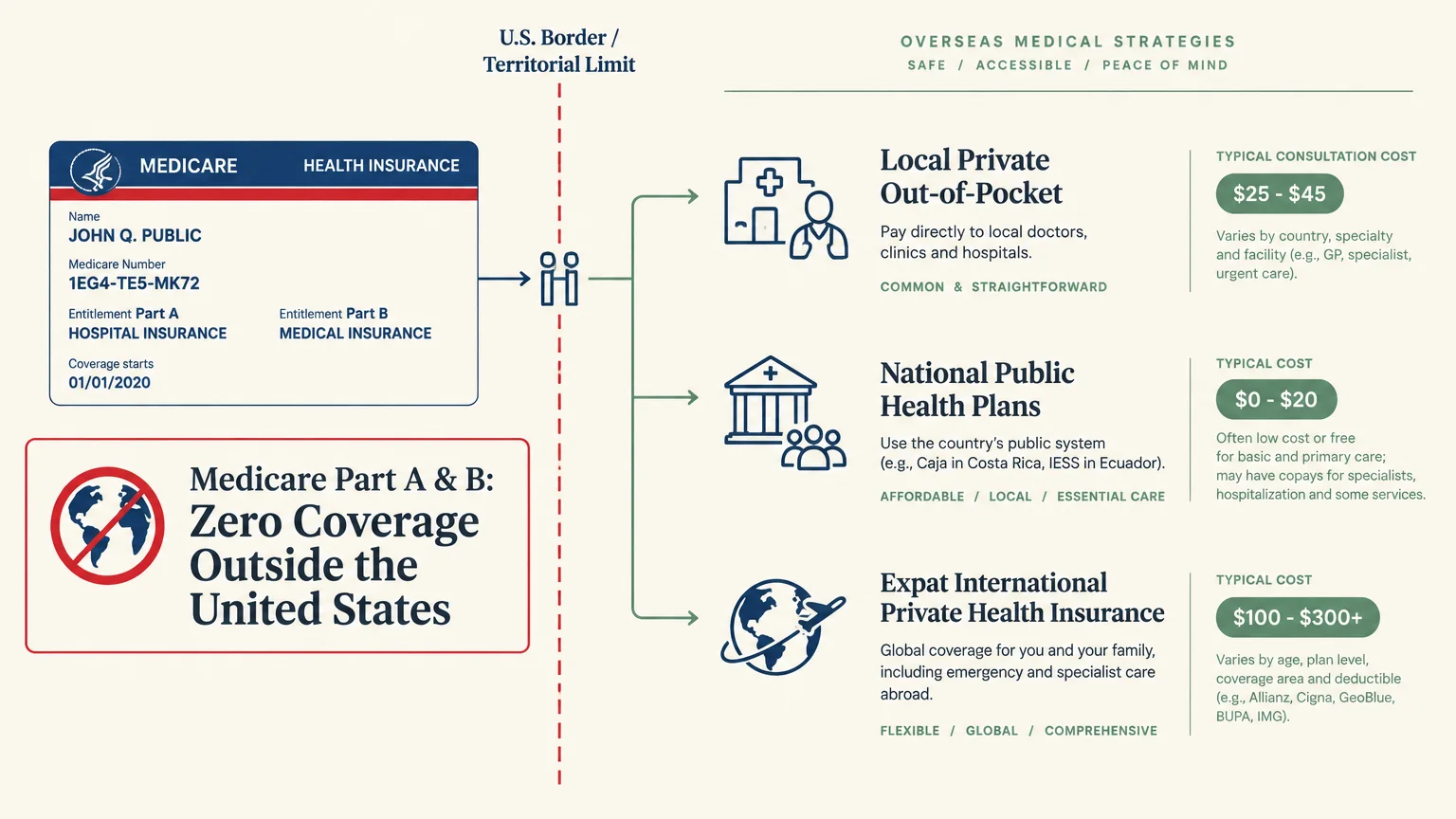
Healthcare planning is the most critical element of your overseas retirement strategy. Many retirees incorrectly assume their domestic coverage protects them wherever they travel.
Original Medicare Part A and Part B do not cover medical treatments, hospital stays, or medications outside the United States. You can review exact coverage boundaries on Medicare.gov before traveling.
Standard Medicare Part B carries a monthly premium of $202.90 and an annual deductible of $283. You must decide whether to retain Part B while living abroad.
Dropping Part B saves cash overseas but creates a 10% late-enrollment penalty for every 12-month period you were eligible upon returning home. Most retirees retain Part B as insurance for stateside visits.
Fortunately, routine private healthcare throughout Latin America is remarkably inexpensive. A specialist visit costs between $25 and $60, making direct cash payments standard practice.
“Retirement is not the end of the road. It is the beginning of the open highway.”

Costly Mistakes to Avoid
Moving abroad without adequate preparation can turn an affordable dream into a costly burden. Guard your savings by avoiding several common errors.
- Buying property immediately: Never purchase real estate during your first year. Renting gives you freedom to test neighborhoods, noise levels, and seasonal weather without financial commitments.
- Ignoring foreign tax residency: Spending more than 183 days per year in Mexico or Colombia establishes local tax residency. Understand how territorial tax havens like Panama and Costa Rica differ from worldwide systems.
- Underestimating banking friction: Transferring money across borders requires stable financial connections. Review retirement finance tools on the Consumer Financial Protection Bureau website to keep accounts secure.
- Overlooking currency volatility: Currencies like the Colombian peso fluctuate against the dollar. Keep a dollar-denominated cash reserve to absorb periodic exchange-rate shocks.
Taking your time protects your nest egg from unexpected administrative penalties or bad real estate contracts. Rent first and observe how the local community functions across different seasons.
Don’t DIY These Decisions
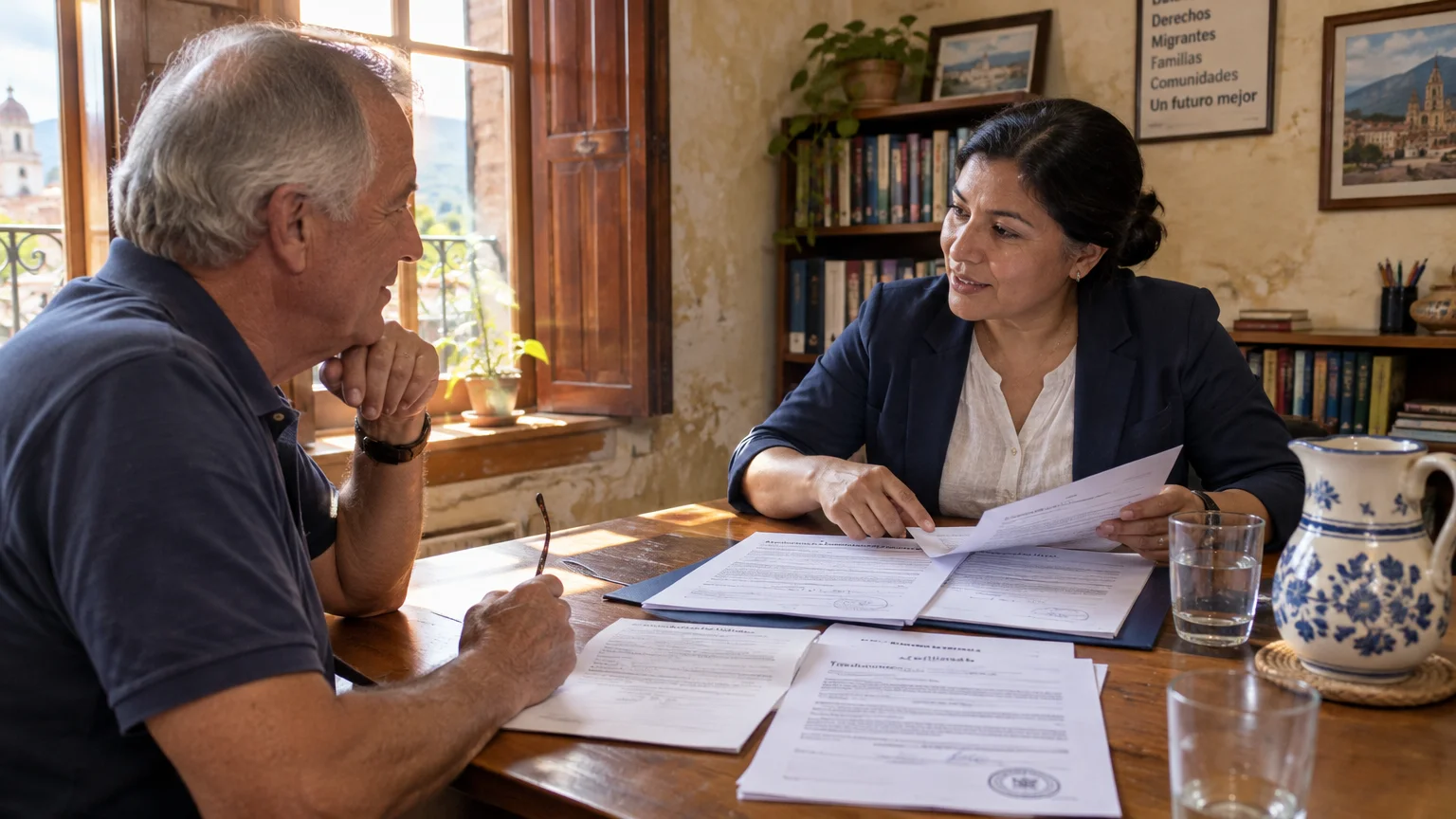
While researching destinations online is empowering, certain legal and financial matters demand accredited professional guidance. DIY shortcuts often lead to rejected residency filings and tax liabilities.
Work with an experienced immigration attorney licensed in your target country. Visa rules, notarization protocols, and police background checks change regularly, making professional submission invaluable.
Consult a qualified cross-border certified public accountant before relocating. You remain obligated to file annual U.S. tax returns regardless of where you reside globally.
Speak with a state health insurance counselor before modifying your Medicare coverage. Understanding the consequences of dropping Part B protects you from permanent premium penalties.
Frequently Asked Questions
Can I collect my Social Security benefits while living in Latin America?
Yes, the Social Security Administration directly deposits monthly retirement benefits into U.S. bank accounts or participating foreign institutions. Most retirees maintain their domestic checking account and withdraw cash through local ATMs.
Which Latin American countries do not tax U.S. pensions?
Costa Rica, Panama, Nicaragua, Paraguay, Bolivia, and Belize use territorial tax systems. They levy zero local income taxes on foreign pensions, Social Security checks, or stateside investment distributions.
What happens if I need emergency surgery while living abroad?
You can pay out-of-pocket at modern private hospitals, which cost significantly less than U.S. facilities. Alternatively, retirees purchase international private health insurance or maintain public plans like Costa Rica’s CAJA or Colombia’s EPS.
Do I need to speak fluent Spanish to retire in Latin America?
You do not need immediate fluency, especially in expat centers like Boquete or Lake Chapala. However, learning conversational Spanish improves your safety, lowers daily shopping costs, and enriches friendships with local neighbors.
Next Steps for Your Retirement Transition
Start by auditing your guaranteed monthly income against the residency thresholds of your preferred havens. Schedule an extended trial visit of at least two to four weeks in your top choice.
During your scouting trip, rent an apartment in an ordinary residential neighborhood rather than booking a resort hotel. Buy groceries at local markets and visit neighborhood medical clinics to experience daily life firsthand.
Information in this article reflects current rules as of the publication date and may change. Always confirm benefit details directly with Social Security Administration, Medicare.gov, or relevant government agencies before making decisions.
Last updated: October 2026. Medicare and Social Security rules change annually—always verify current details at official government sources.