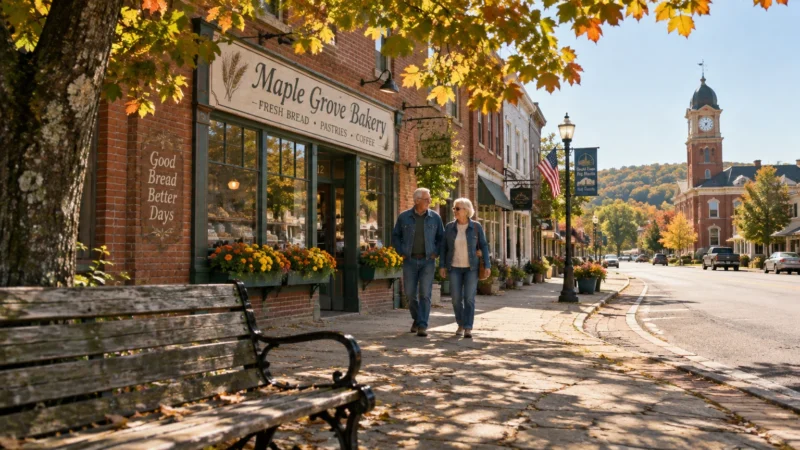
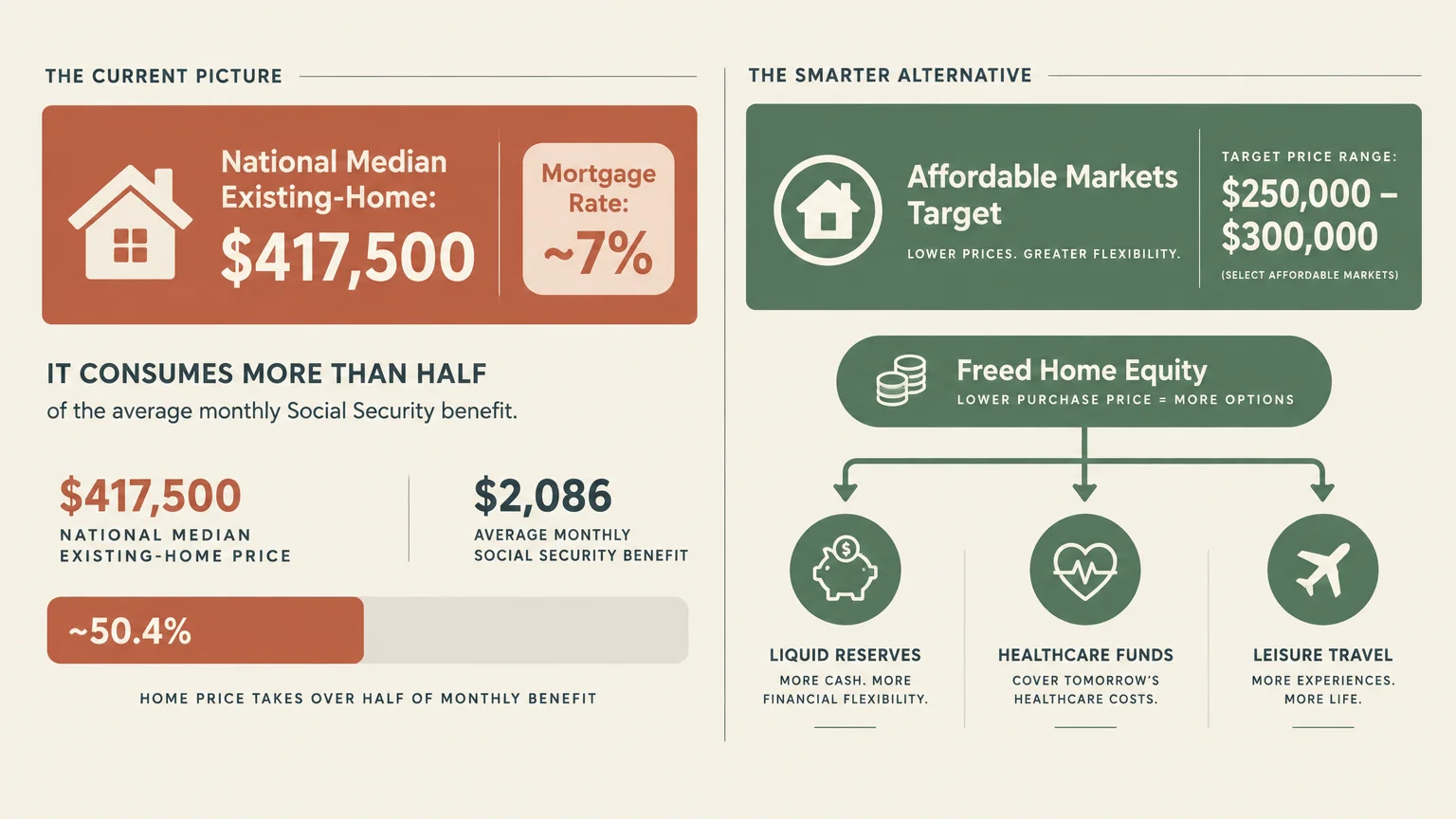
The national median existing-home sales price reached $417,500 in late 2026. High home prices create unnecessary financial pressure when you transition to a fixed income.
Housing remains the largest single expense in any retirement portfolio. Moving to a community with low housing costs can preserve your nest egg and improve your daily lifestyle.
These ten retirement-friendly destinations offer quality medical facilities, social amenities, and home values well below national averages.
The Power of Low Housing Costs in Retirement
Mortgage rates climbed toward 7% in late 2026, making housing affordability a chief priority for retirees. Every dollar saved on housing is a dollar you can deploy toward healthcare, travel, and leisure.
The average monthly Social Security benefit sits near $2,086. When your housing payments consume half of that check, everyday budgeting becomes stressful.
Downsizing or relocating to an area with affordable housing retirement options frees up home equity. You can invest that capital into income-producing assets or liquid reserves.
“It’s not how much money you make, but how much money you keep, how hard it works for you, and how many generations you keep it for.” — Robert Kiyosaki
Affordable real estate also usually brings lower property tax assessments. In addition, lower replacement valuations keep your annual property insurance premiums manageable.
You can research safe home financing programs through the Consumer Financial Protection Bureau retirement tools before executing a cross-country move.
1. Midland, Michigan
Midland sits in central Michigan and took the top spot in recent nationwide retirement rankings. The median home value is $206,176, which is less than half the national benchmark.
Renters also find great relief here, with median monthly rents averaging just $790. The overall cost of living index sits at 85.7, giving your retirement savings extra mileage.
More than 21% of Midland’s population is aged 65 or older. This demographic weight means the city caters heavily to mature adults through local programming and community resources.
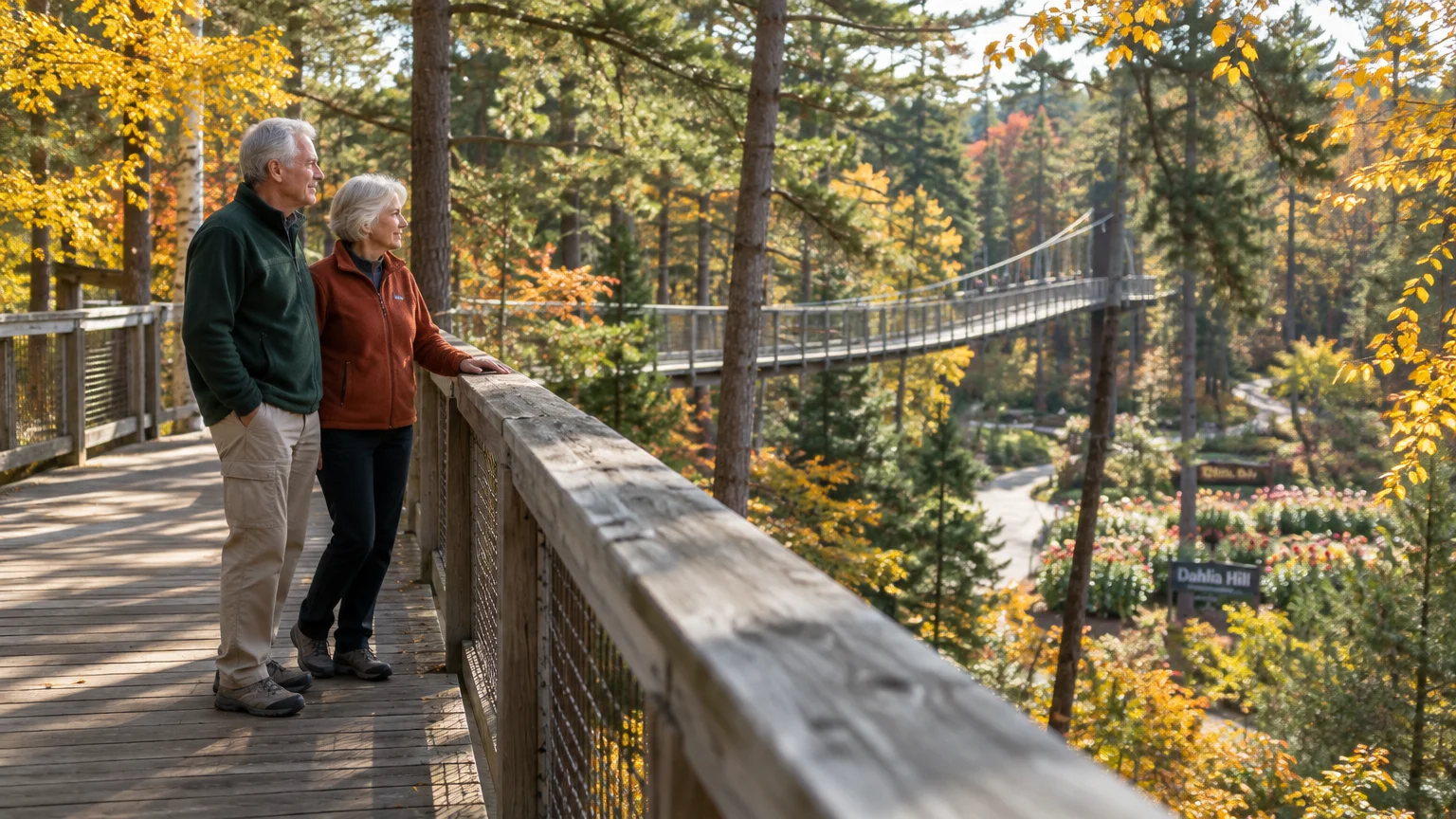
Retirees enjoy outdoor leisure at Dow Gardens, a 110-acre botanical garden featuring canopy walks and paved trails. The Dahlia Hill gallery provides accessible walking routes during the blooming season.
Healthcare access is anchored by MyMichigan Medical Center, which maintains an affiliation with the University of Michigan Health System. You gain access to world-class specialty care without big-city price tags.
2. Weirton, West Virginia
Weirton borders both Ohio and Pennsylvania along the Ohio River. It offers one of the lowest entry barriers for homeownership in the entire United States.
The median home value in Weirton is an astonishing $124,681. Median monthly rents are equally accessible, averaging approximately $548 per month.
West Virginia completed the full phaseout of its state income tax on Social Security benefits on January 1, 2026. Now, all your benefits remain completely tax-free at the state level.
Weirton Medical Center delivers primary and acute care directly inside the municipality. Furthermore, you sit only 35 miles from downtown Pittsburgh, offering fast access to nationally recognized research hospitals.
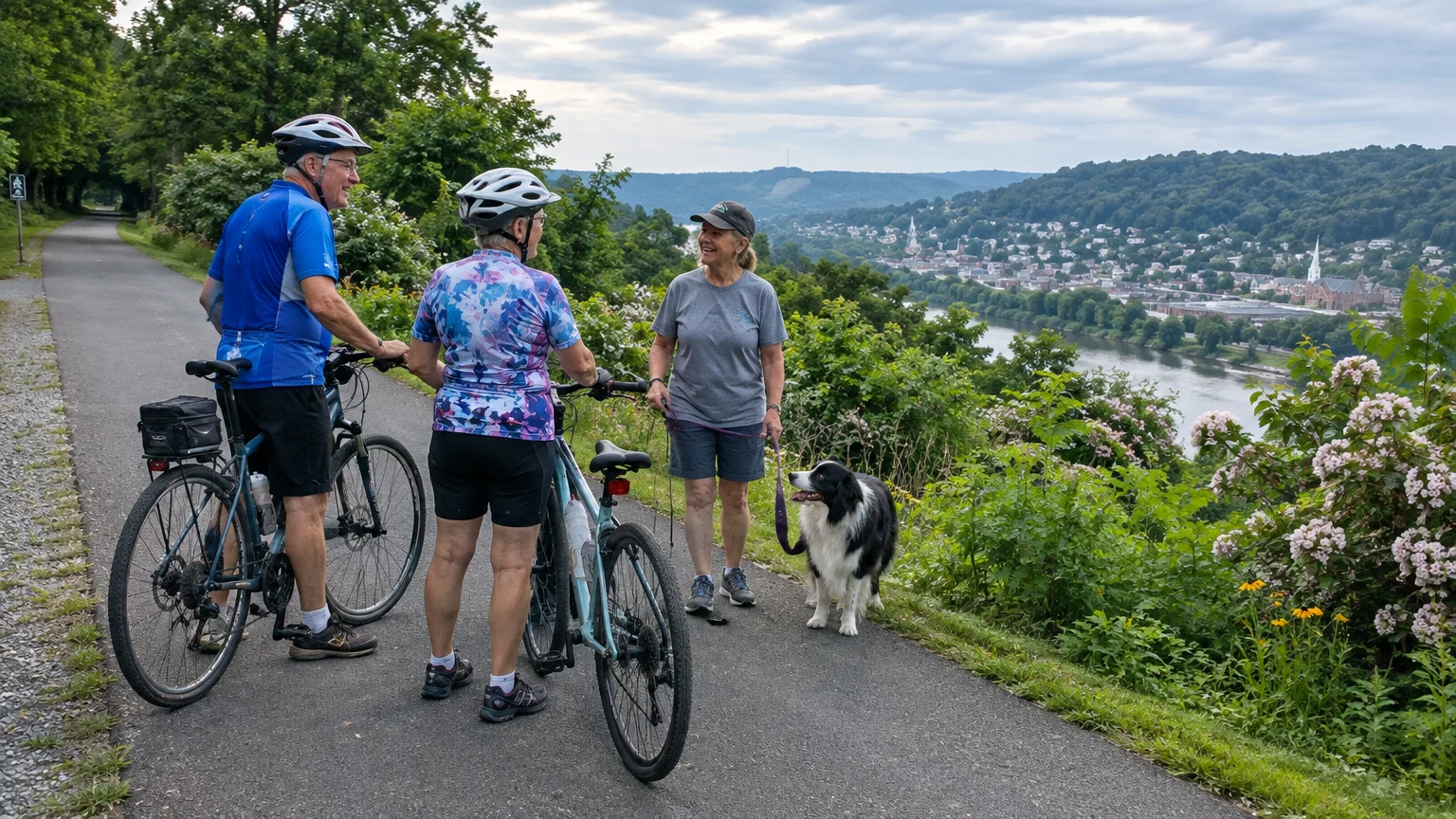
Outdoor recreation centers around the Panhandle Recreational Trail, a paved rail-trail ideal for low-impact cycling and daily walking routines.

3. Homosassa Springs, Florida
Many retirees dream of Florida sunshine but find coastal markets out of reach. Homosassa Springs, located along the Nature Coast in Citrus County, remains remarkably affordable.
The median home value sits at $219,352, while median monthly rent hovers around $864. These figures run well below the costs found in south or central Florida.
Florida levies zero personal income tax, estate tax, or inheritance tax. You keep more of your pension, IRA distributions, and investment dividends every single year.
The town centers around Ellie Schiller Homosassa Springs Wildlife State Park. You can view West Indian manatees year-round from an underwater observatory or kayak the clear spring-fed rivers.
Healthcare facilities include nearby HCA Florida Citrus Hospital in Inverness and multiple regional clinics. The pace of life is relaxed, focused primarily on boating, freshwater fishing, and golf.
4. Spring, Texas
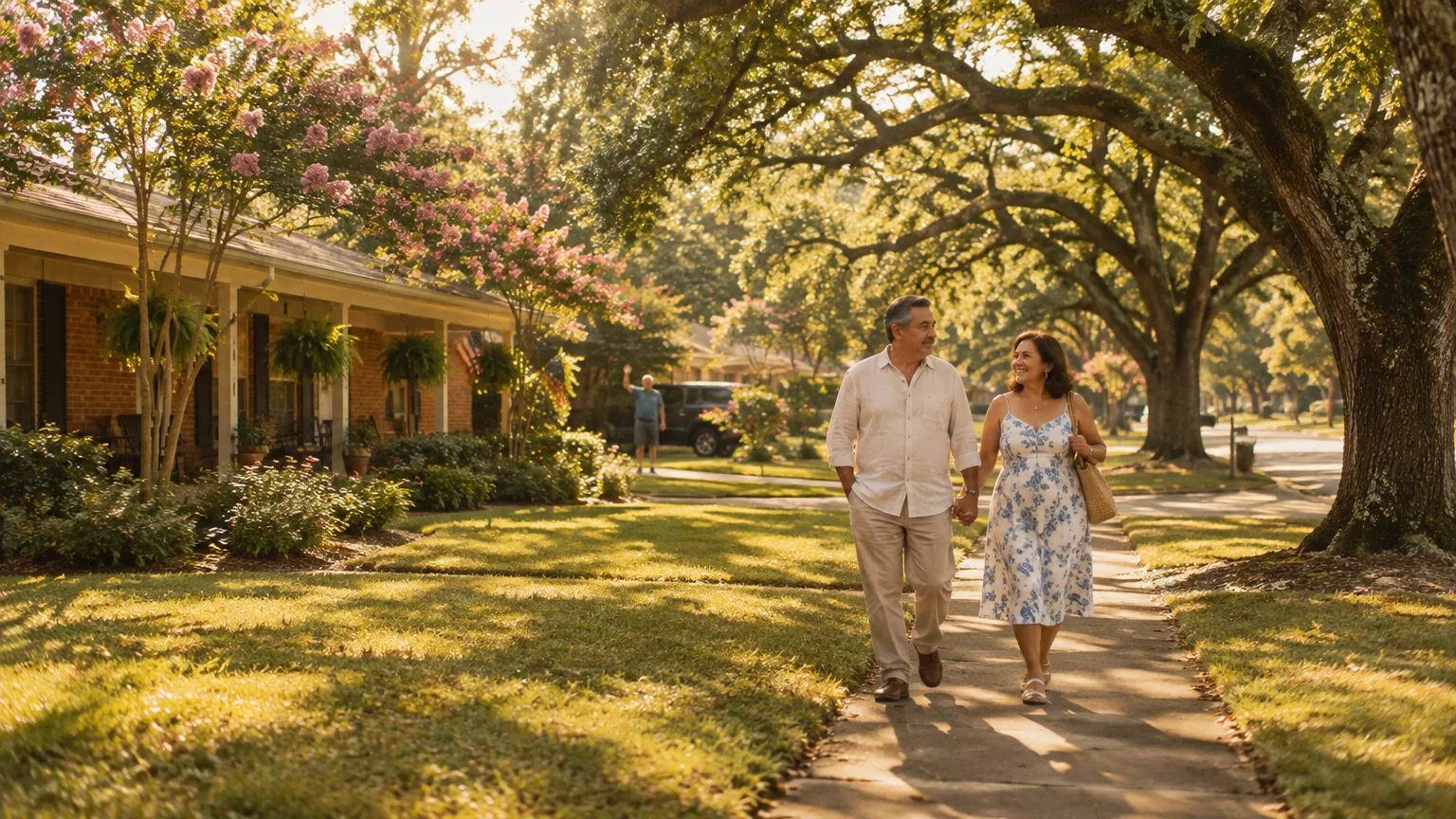
Located just north of the Houston metropolitan boundary, Spring delivers suburban comfort at an appealing price point. The median home value is approximately $249,404.
Median rent sits near $1,326 per month, which offers notable value given the community’s extensive infrastructure and services. Texas residents pay no state individual income tax.
Spring provides convenient proximity to the Texas Medical Center in Houston. This sprawling complex is the largest medical district in the world, ensuring access to top cardiovascular and oncology specialists.
You can walk the historic streets of Old Town Spring, which features over 150 local shops, art galleries, and casual diners. Paved nature trails run through Mercer Botanic Gardens along Cypress Creek.
Spring delivers suburban convenience near major transportation hubs. You can enjoy quiet neighborhood living while remaining 25 minutes from George Bush Intercontinental Airport for retirement travel.

5. Rio Rancho, New Mexico
Rio Rancho sits perched on the bluffs just northwest of Albuquerque. It provides sweeping views of the Sandia Mountains alongside an agreeable high-desert climate.
The median home price is $311,135, and median monthly rent averages $1,193. Both numbers remain very competitive for the Mountain West region.
Retirees enjoy more than 300 sunny days each year. Mild winters make it an exceptional home base for those who dislike shoveling snow but prefer distinct seasonal changes.
Presbyterian Rust Medical Center provides advanced hospital care and emergency medicine directly within the city limits. The University of New Mexico Hospital is also within an easy driving distance.
Rio Rancho features numerous public golf facilities, walking paths, and proximity to Native American cultural monuments. Active adults can hike the foothills or take the scenic Sandia Peak Tramway nearby.
6. Spring Hill, Florida
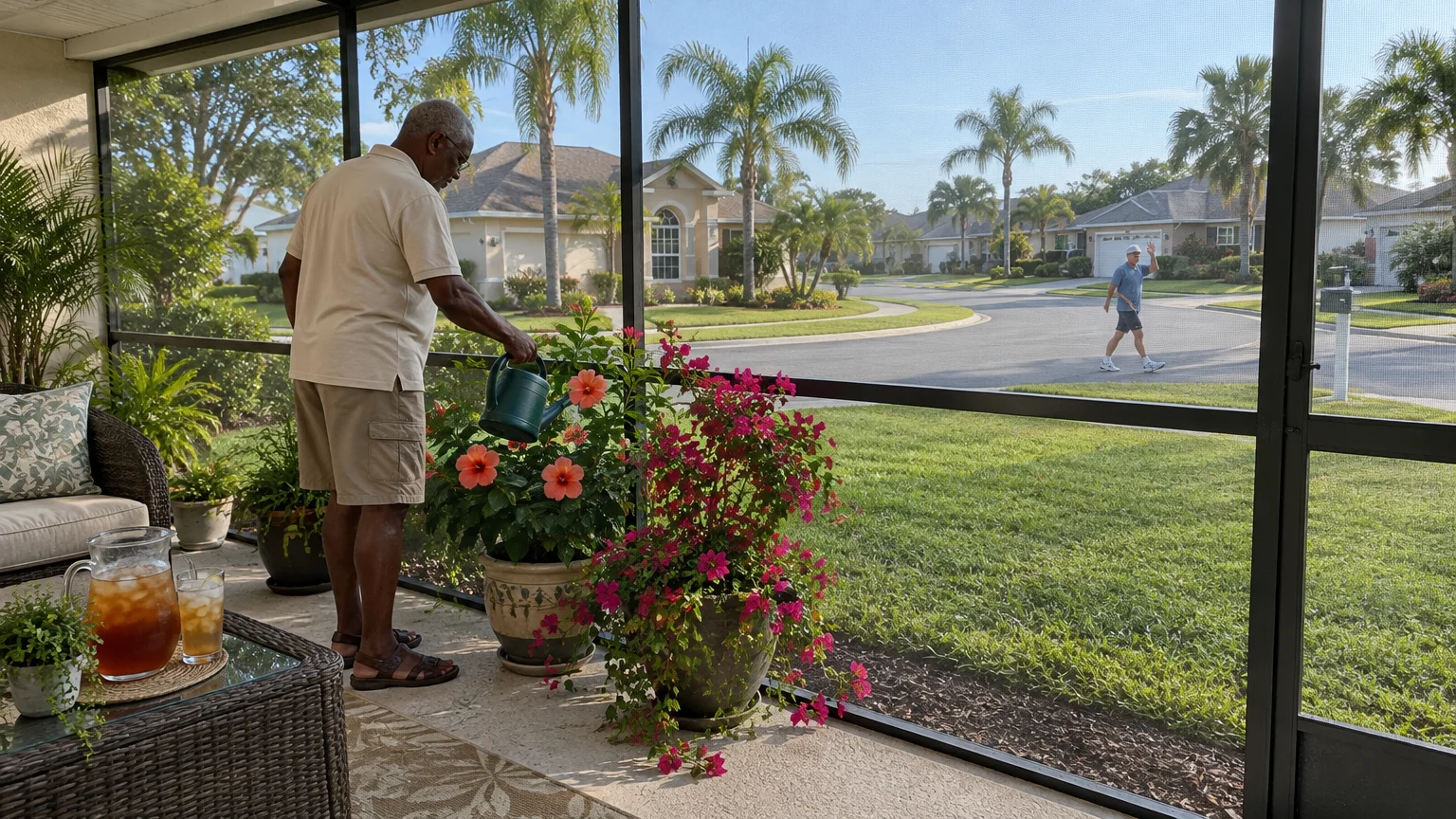
Spring Hill rests in Hernando County along Florida’s central Gulf Coast. It gives retirees access to sandy coastal attractions without the extreme premiums of Clearwater or Naples.
The median home value stands at $302,212, and the median monthly rent is $1,129. These price points make it one of Florida’s premier cheap places to retire.
Residents take full advantage of Weeki Wachee Springs State Park. The crystal-clear waters offer accessible paddleboarding, kayaking, and seasonal wildlife viewing right in your backyard.
Bravera Health Spring Hill and Oak Hill Hospital provide comprehensive cardiac, orthopedic, and emergency care. Tampa’s major international airport and cultural venues sit less than an hour south.
The local climate allows for year-round tennis, pickleball, and gardening. Planned neighborhoods often feature single-story floor plans designed specifically for aging in place.
7. Altoona, Pennsylvania
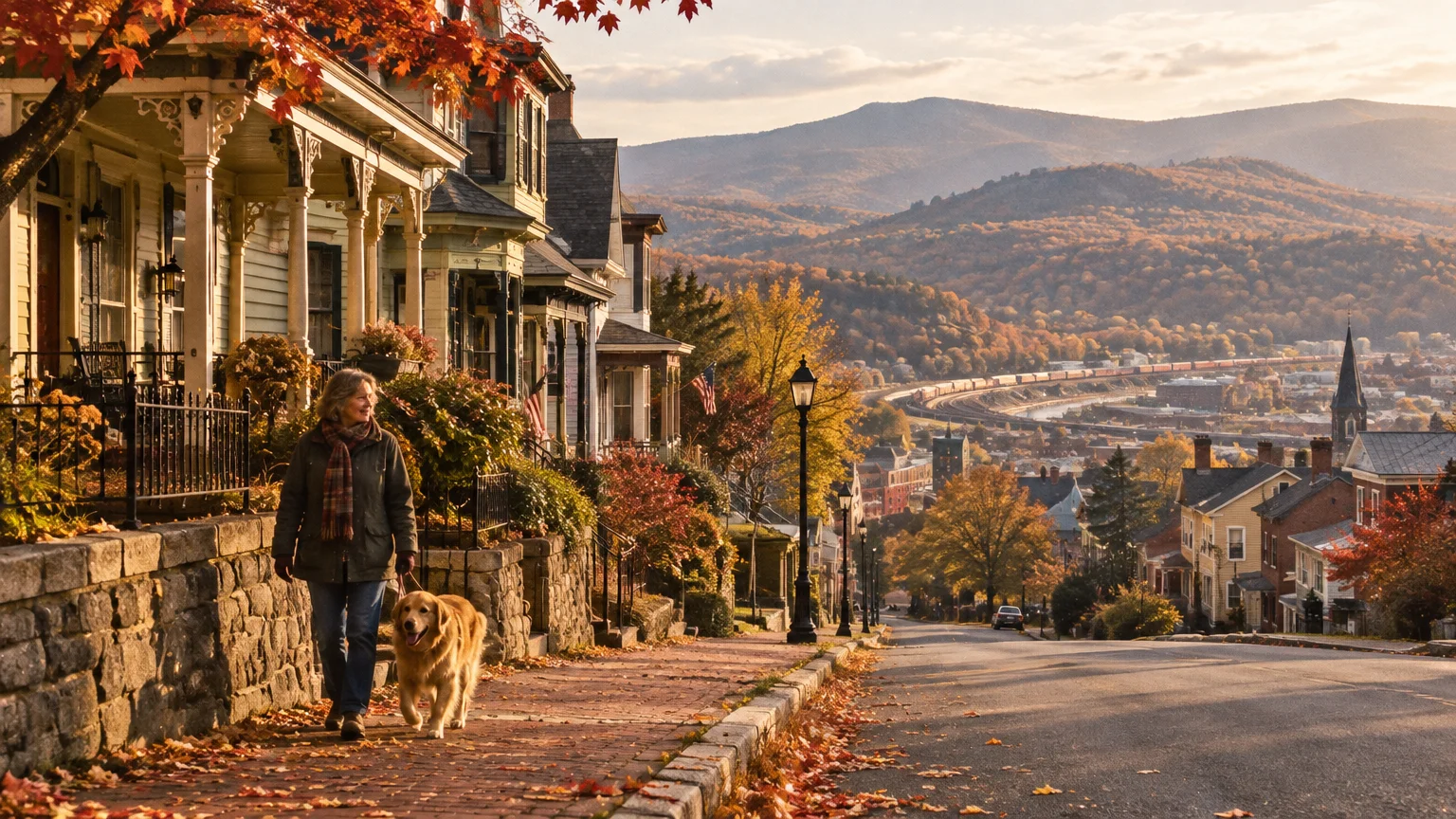
Altoona is nestled within the scenic Allegheny Mountains of central Pennsylvania. The city combines historic railway heritage with an exceptionally low cost of living places index.
The median home value is just $115,035, while median monthly rent averages an ultra-low $665. It represents one of the most budget-friendly housing markets in the entire nation.
Pennsylvania offers an extraordinary tax environment for seniors. The state does not tax Social Security benefits, public or private pensions, or distributions from 401(k) and IRA plans.
Healthcare is an economic anchor here, driven by UPMC Altoona, a regional Level II trauma center. You receive comprehensive specialty care without leaving town.
Nature enthusiasts can visit Canoe Creek State Park for quiet shoreline fishing, birding, and level walking trails. Historic theaters and community playhouses provide cultural engagement throughout the year.

8. Lynchburg, Virginia
Lynchburg lies along the James River in the eastern foothills of the Blue Ridge Mountains. It blends historic brick architecture with rolling green landscapes.
The median home value is $222,789, and median monthly rent is $908. Real estate prices sit well below the averages found in northern Virginia or coastal markets.
Centra Lynchburg General Hospital and Centra Virginia Baptist Hospital provide robust medical services. The regional healthcare network includes extensive cancer centers and heart rehabilitation facilities.
The city maintains over 40 miles of urban trails, including the scenic Blackwater Creek Trail. Paved greenways allow retirees to walk and cycle safely along rivers and through historic rail tunnels.
Lynchburg hosts several colleges, which bring lectures, concerts, and theatrical productions to the public. You can audit classes or attend collegiate sports events throughout the academic year.

9. Green Valley, Arizona
Green Valley is an unincorporated retirement community situated 20 miles south of Tucson. It was developed intentionally for older adults seeking an active desert lifestyle.
The median single-family home price is $282,000, which is significantly lower than Scottsdale or Phoenix. The area contains nearly 130 separate residential developments, mostly designated for adults 55 and older.
A major draw is Green Valley Recreation (GVR), a nonprofit organization operating 14 community recreation centers. Membership grants access to heated swimming pools, fitness centers, woodshops, and tennis complexes.
The Santa Cruz Valley Regional Hospital provides medical attention locally, while Tucson’s teaching hospitals sit a short drive north. The elevation of 2,900 feet keeps summer temperatures slightly cooler than low-desert cities.
Birdwatching enthusiasts can explore nearby Madera Canyon in the Santa Rita Mountains. The dramatic mountain backdrop provides stunning sunsets and hundreds of miles of nearby hiking routes.

10. Pittsburgh, Pennsylvania
If you prefer metropolitan living over small towns, Pittsburgh is the most affordable big city for retirement. The median home price sits at $250,000, more than $160,000 below the national benchmark.
Pittsburgh provides access to two world-class medical networks: the University of Pittsburgh Medical Center (UPMC) and Allegheny Health Network. Medical access here ranks among the finest in the world.
Pennsylvania does not tax retirement distributions, pensions, or Social Security checks. That tax exemption protects your spending power throughout your retirement years.
The city boasts premier cultural institutions, including the Pittsburgh Symphony Orchestra, the Carnegie Museums, and the Phipps Conservatory. Public transportation is extensive, and seniors ride buses and light rail for free.
Neighborhoods like Squirrel Hill, Brookline, and Lawrenceville feature tree-lined sidewalks, local markets, and distinct community centers. You enjoy world-class amenities at small-town prices.
Comparing Housing Costs and Living Factors
Evaluating potential relocation spots requires looking beyond listing prices alone. You must balance real estate costs against state tax structures and medical infrastructure.
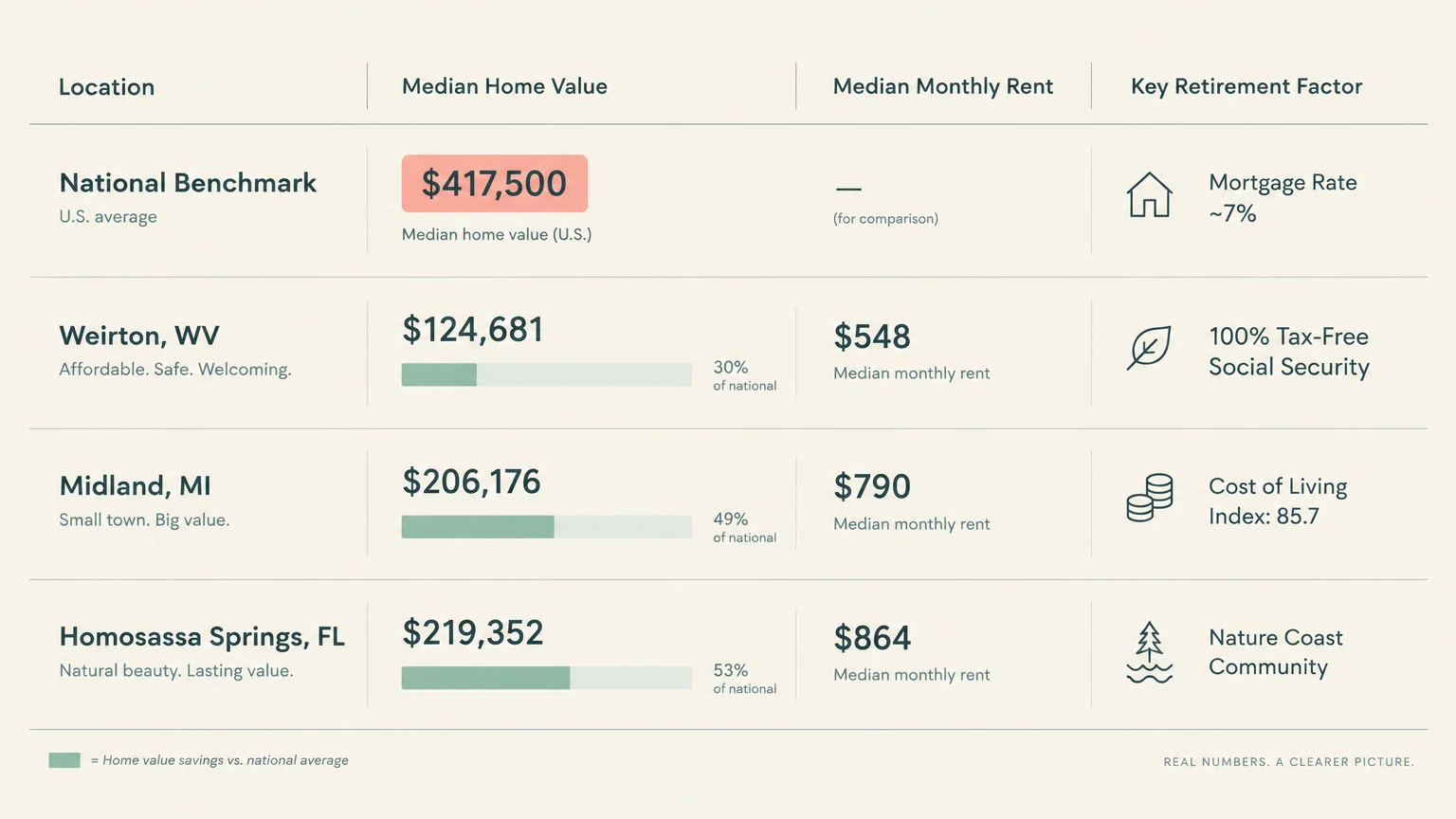
The following table details the key financial metrics for these ten low housing costs retirement markets:
| City & State | Median Home Value | Median Monthly Rent | Key Financial or Tax Advantage |
|---|---|---|---|
| Midland, MI | $206,176 | $790 | Cost of living index is 14.3% below national baseline |
| Weirton, WV | $124,681 | $548 | 100% state income tax exemption on Social Security |
| Homosassa Springs, FL | $219,352 | $864 | No state income, inheritance, or estate taxes |
| Spring, TX | $249,404 | $1,326 | Zero state personal income tax |
| Rio Rancho, NM | $311,135 | $1,193 | Low property taxes and over 300 days of sunshine |
| Spring Hill, FL | $302,212 | $1,129 | Zero state income tax and affordable coastal access |
| Altoona, PA | $115,035 | $665 | Retirement distributions and pensions are state tax-exempt |
| Lynchburg, VA | $222,789 | $908 | Low real estate tax rates and modest municipal fees |
| Green Valley, AZ | $282,000 | Varies by HOA | Age-restricted community amenities with low baseline costs |
| Pittsburgh, PA | $250,000 | $1,195 | State-exempt retirement income with premier healthcare systems |
Examine the overall financial footprint before choosing a destination. Modest differences in municipal taxes or HOA dues can shift your long-term calculations over a 20-year retirement.

Key Factors Beyond the Listing Price
Cheap housing solves only one part of the retirement equation. Moving to an inexpensive home that lacks basic medical care or transportation can hurt your health.
Healthcare access stands as the most critical non-housing factor. You must verify whether local primary care physicians accept new patients enrolled in Original Medicare or your Medicare Advantage plan.
You can verify doctor networks and regional plan options through Medicare.gov before signing real estate paperwork.
Property tax rates can also offset low purchase prices. For instance, Texas offers no state income tax, but municipal property tax rates run significantly higher than in states like Virginia.
Consider the total cost of homeownership before making an offer:
- Homeowners insurance premiums and flood or windstorm coverage requirements
- Utility expenses, including summer air conditioning or winter heating costs
- Mandatory homeowner association fees and ongoing special assessments
- Proximity to major airports if you plan to visit grandchildren regularly
- Local sales tax rates on food, prescription drugs, and utilities
Federal housing resources can also help you identify subsidized developments or rental assistance options. Review the official guides at HUD Housing for Seniors to explore income-qualified options.
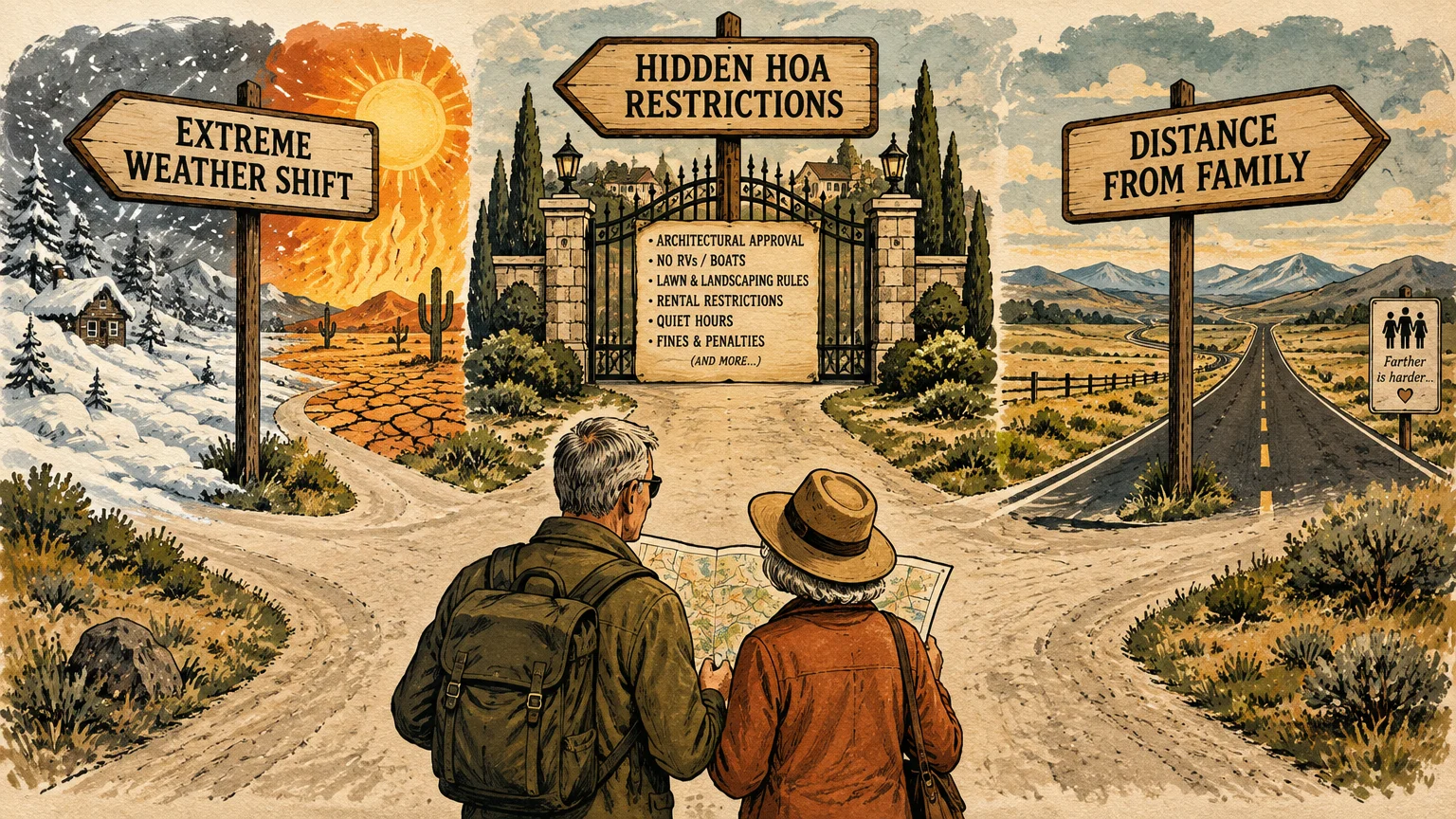
Don’t Make These Relocation Mistakes
Relocating during retirement involves real emotional and financial vulnerability. Careful planning helps you avoid expensive miscalculations that drain your wealth.
The most common mistake is buying a home immediately in an unfamiliar market. Always rent for 6 to 12 months first to test the local climate across all four seasons.
Never move purely for low taxes without evaluating social connections. A community with cheap bungalows offers little joy if you feel isolated from friends and hobbies.
“The goal of retirement is to live off your assets—not live off your regrets.”
Do not underestimate moving expenses. Packing, transporting household goods, and outfitting a new property can cost between $5,000 and $15,000.
Finally, avoid ignoring the local transportation infrastructure. As driving abilities decline, living in a community with public transit or volunteer rides becomes critical.

When Professional Advice Is Worth It
Relocating across county or state lines alters your legal, tax, and medical circumstances. Professional guidance prevents unexpected tax bills and coverage lapses.
Consult a State Health Insurance Assistance Program (SHIP) counselor before moving. They deliver free, unbiased guidance on how a relocation affects your Medicare Part D or Advantage plan.
Work with an elder law attorney in your destination state. Estate planning documents like powers of attorney and healthcare directives must comply with local state statutes.
A fee-only fiduciary financial advisor can model the tax impacts of your home sale. They ensure your withdrawal strategy accounts for varying state tax treatments.
You can also consult the Social Security Administration to update your direct deposit and address records promptly when you relocate.
Frequently Asked Questions
How does relocating reduce retirement living expenses?
Relocating to an area with low housing costs cuts your monthly housing outlay. It also lowers property taxes, hazard insurance, and the cost of local services.
Which states do not tax Social Security benefits?
The vast majority of states exempt Social Security from income taxes. West Virginia eliminated all state taxes on Social Security benefits in 2026, joining states like Pennsylvania and Florida.
What hidden expenses should I watch for when buying an affordable home?
Check property tax reassessment rates, utility costs, flood insurance mandates, and community HOA fees. Older affordable homes may also require deferred maintenance like roof replacements.
Should retirees buy or rent when relocating to a new city?
Renting for your first year is generally the safer strategy. It allows you to test the neighborhood, assess the healthcare system, and make local connections before purchasing.
Take the Next Step Toward Affordable Living
Reducing your housing costs can instantly increase your disposable retirement income. Begin by picking two or three locations from this list that match your lifestyle preferences.
Schedule an extended vacation in each destination during its least appealing season. That firsthand experience will give you the confidence to make an informed, budget-friendly move.
Information in this article reflects current rules as of the publication date and may change. Always confirm benefit details directly with Social Security Administration, Medicare.gov, or relevant government agencies before making decisions.
Last updated: October 2026. Medicare and Social Security rules change annually—always verify current details at official government sources.