A $70,000 annual budget provides a comfortable, active retirement if you choose the right location. By moving away from overpriced metropolitan centers, your fixed income stretches dramatically further.
The national median home price sits at approximately $409,000, pricing out many seniors on fixed incomes. Fortunately, charming small towns across America still offer beautiful homes at a fraction of that cost.
Pairing affordable housing with state tax exemptions lets you protect your nest egg for decades. Here are twelve welcoming small towns where a $70,000 income delivers genuine financial freedom.
The Purchasing Power of a $70,000 Retirement Budget
A $70,000 income sits comfortably near the national average wage index of $69,846. It also nears the overall U.S. median household income of $87,460.
For retirees, however, $70,000 provides far greater purchasing power than it does for younger workers. You no longer pay payroll taxes, fund workplace retirement accounts, or handle heavy commuting expenses.
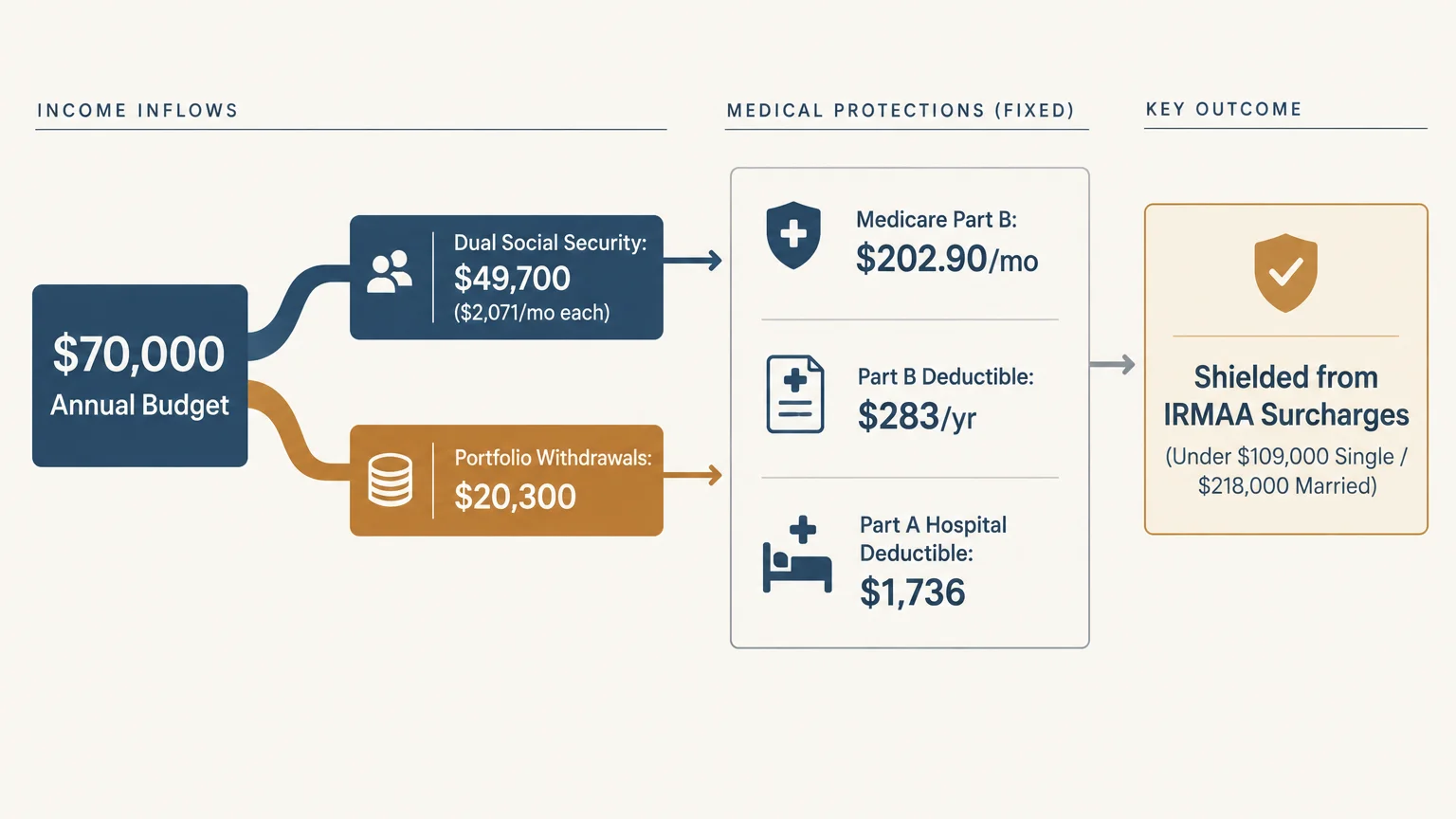
Following a 2.8% cost-of-living adjustment, the average monthly Social Security benefit is $2,071, or $24,852 annually. A dual-beneficiary couple collects roughly $49,700 per year from Social Security alone.
That means a married couple needs only $20,300 in annual withdrawals from pensions or retirement accounts. Your personal savings face minimal strain each year.
Furthermore, the announced 3.6% Social Security cost-of-living adjustment will raise average checks by $75 monthly. This automatic bump provides helpful inflation protection without adding investment risk.
Living on $70,000 also shields you from federal healthcare surcharges. Income-Related Monthly Adjustment Amount surcharges only apply when modified adjusted gross income exceeds $109,000 for singles or $218,000 for couples.
You will pay standard Medicare rates, including the baseline Part B monthly premium of $202.90. Your routine annual Part B deductible remains just $283.
For inpatient hospital stays, you only need to prepare for the standard Part A deductible of $1,736. Modest medical baselines keep your fixed costs predictable.
Federal tax policy also helps retirees retain their income. Qualifying adults aged 65 and older can claim an additional bonus deduction of up to $6,000 per person.
Key Factors in Selecting Affordable Small Towns
Stretching your retirement dollars requires balancing multiple geographic factors. Cheap housing alone does not guarantee a high quality of life.
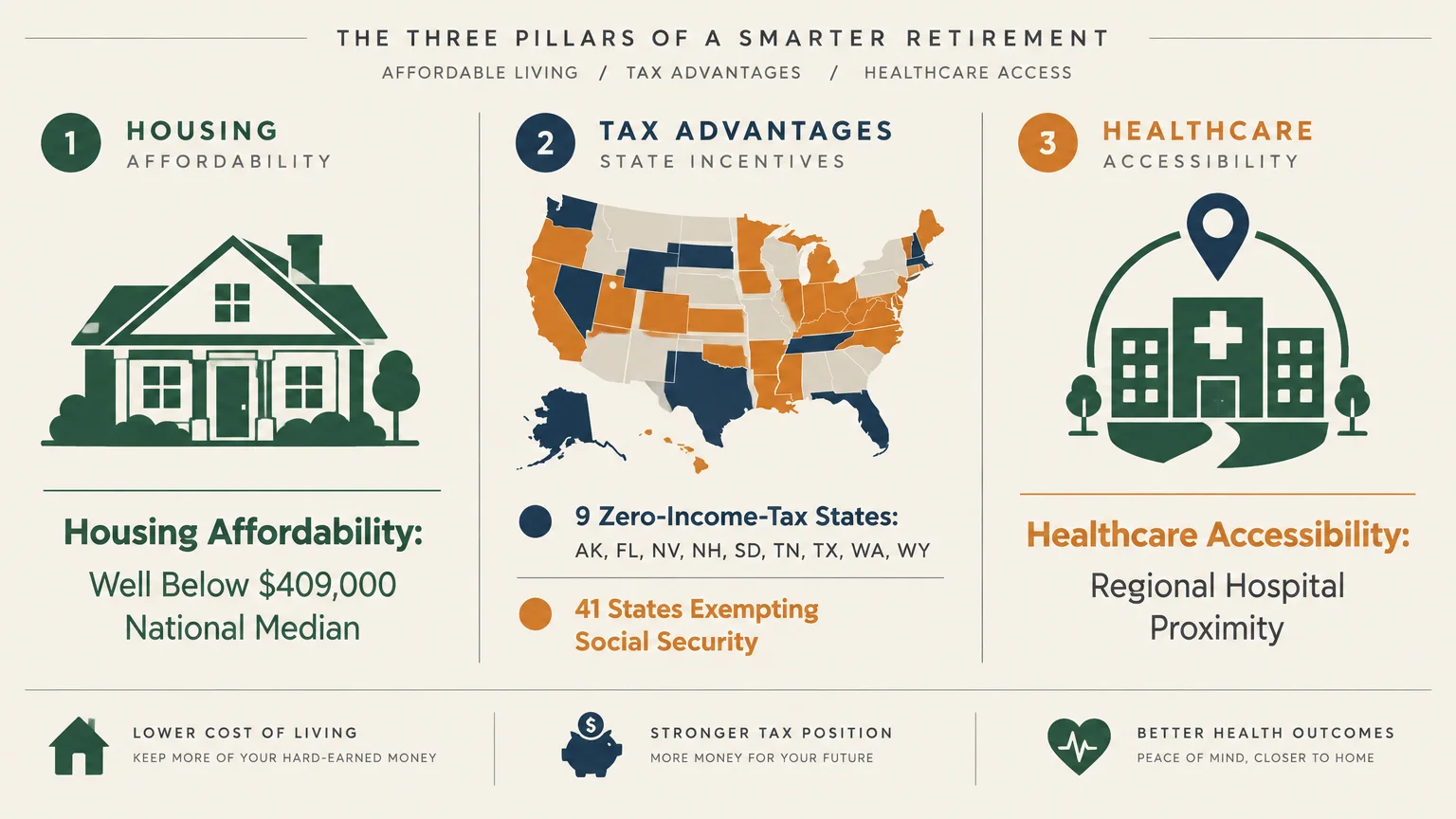
We prioritized towns with median home values well below the national benchmark of $409,000. Low home prices reduce property tax bills and preserve your liquid capital.
State tax friendliness also determines how much cash remains in your pocket. Nine states impose no broad personal income tax: Alaska, Florida, Nevada, New Hampshire, South Dakota, Tennessee, Texas, Washington, and Wyoming.
Other states offer generous exemptions for retirees. Illinois, Iowa, Mississippi, and Pennsylvania broadly exempt qualifying pension, 401(k), and IRA distributions from state taxation.
Additionally, 41 states and Washington, D.C., do not tax Social Security benefits. Choosing an exempt state ensures your baseline income remains untouched.
“It’s not how much money you make, but how much money you keep, how hard it works for you, and how many generations you keep it for.” — Robert Kiyosaki
Finally, easy access to quality regional healthcare facilities ensures long-term safety. Each community selected below offers trusted hospitals, specialty clinics, and accessible community infrastructure.

12 Small Towns Where You Can Thrive on $70,000
1. Dothan, Alabama
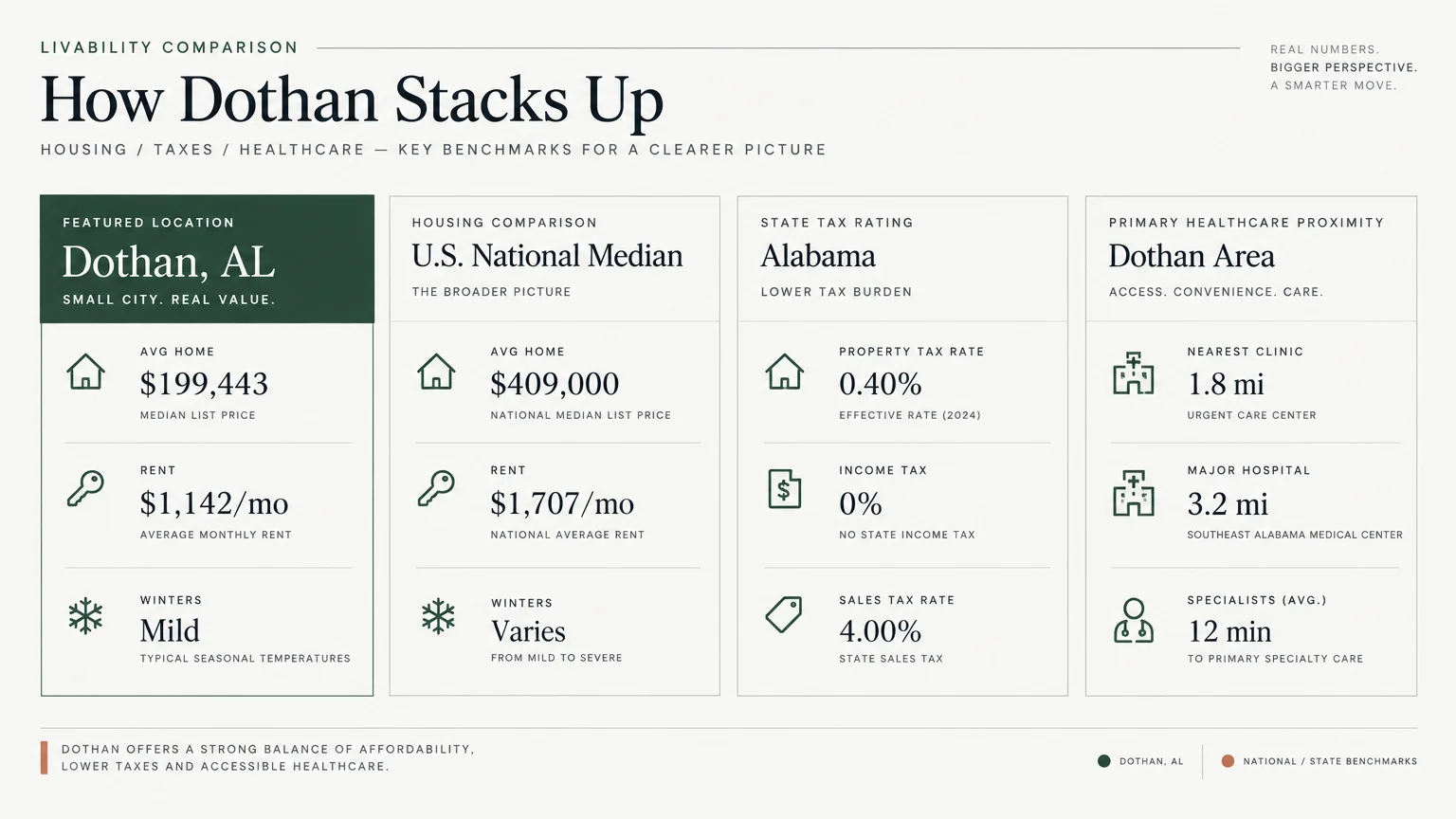
Dothan sits in southeastern Alabama, offering mild winters and Southern charm. The average home price is $199,443, and average rent is $1,142 per month.
Alabama exempts Social Security benefits and traditional defined-benefit pensions from state income tax. That exemption leaves your $70,000 budget largely intact.
The city serves as a regional healthcare hub anchored by Southeast Health Medical Center. Retirees enjoy access to excellent doctors without enduring major city traffic.
2. Fort Smith, Arkansas
Nestled along the Arkansas River, Fort Smith blends frontier history with scenic mountain views. The average home price is just $187,848, with rent averaging $1,049 monthly.
Arkansas provides exceptionally low property tax rates for primary homeowners. That tax relief keeps your recurring monthly expenses very manageable.
Outdoor lovers enjoy quick access to recreation in the nearby Ozark National Forest. Mercy Hospital Fort Smith provides comprehensive specialty healthcare right in town.
3. Cedar Rapids, Iowa
Cedar Rapids offers big-city amenities wrapped in a friendly Midwestern atmosphere. The average local home price is $202,097, while typical rent sits at $1,094 per month.
Iowa completely exempts retirement account withdrawals and pensions from state income tax for residents aged 55 and older. Your 401(k) distributions stay entirely tax-free.
The city features paved walking trails along the Cedar River and vibrant community arts. St. Luke’s Hospital delivers top-tier cardiovascular and orthotic care.
4. Muncie, Indiana
Located in east-central Indiana, Muncie combines historic neighborhoods with a lively college-town vibe. The average home price is an incredible $147,303, and rent averages $1,085 monthly.
A buyer needs an annual household income of only $43,339 to purchase a comfortable home here. Your $70,000 budget provides immense purchasing power.
Ball State University offers senior learning programs, concerts, and athletic events throughout the year. The Minnetrista Museum and Gardens provides scenic walking paths and seasonal community gatherings.
5. Appleton, Wisconsin
Appleton lines the scenic Fox River in east-central Wisconsin. The average home price sits at $285,460, while average rent is $1,245 per month.
The city features a bustling, highly walkable downtown filled with locally owned restaurants and coffee shops. The Fox Cities Performing Arts Center hosts touring Broadway productions year-round.
Wisconsin does not tax Social Security benefits, preserving your primary monthly checks. ThedaCare Regional Medical Center provides award-winning emergency and inpatient care.
6. Yakima, Washington
Yakima rests on the sunny eastern side of the Cascade Mountains, enjoying 300 sunny days annually. The average home price is $350,820, and rent averages $1,269 monthly.
Washington has no state personal income tax, protecting every dollar of your retirement withdrawals. You keep all of your pension distributions and IRA income.
Surrounding vineyards, orchards, and farmers markets create an exceptional culinary lifestyle. Yakima Valley Memorial Hospital provides trusted, full-service medical support.
7. Conway, South Carolina
Conway offers charming moss-draped live oaks and historic architecture along the Waccamaw River. The average home price is $242,011, with rent averaging $1,298 per month.
Located just 15 miles inland from Myrtle Beach, Conway avoids expensive coastal homeowner insurance premiums. You can enjoy the ocean whenever you wish without oceanfront prices.
South Carolina does not tax Social Security and offers a $10,000 retirement income deduction for seniors 65 and older. Conway Medical Center provides modern surgical and cardiac services.
8. Macon, Georgia
Macon sits in the heart of Georgia, famed for its thousands of blooming cherry trees. The average home price is $171,117, while average monthly rent is $1,093.
Georgia does not tax Social Security benefits. The state also offers a retirement income exclusion of up to $65,000 per person aged 65 and older.
A couple earning $70,000 pays virtually zero Georgia state income tax. Atrium Health Navicent delivers comprehensive, top-rated regional medical care.
9. Amarillo, Texas
Amarillo anchors the Texas Panhandle, offering wide-open skies and low living costs. The average home price is $199,945, and average monthly rent is $1,212.
Texas levies zero personal state income tax, making it a favorite destination for budget-minded retirees. Your pension, Social Security, and investment earnings remain fully untaxed.
Residents enjoy hiking and birdwatching in nearby Palo Duro Canyon, the nation’s second-largest canyon system. Northwest Texas Healthcare System anchors an expansive medical district.
10. Grand Junction, Colorado
Grand Junction sits on Colorado’s western slope, surrounded by dramatic red-rock canyons. The average home price is $411,403, and average rent is $1,741 per month.
While housing prices sit near the national average, the town costs drastically less than mountain resort communities like Aspen or Boulder. You gain premier mountain scenery at manageable prices.
Mild winters allow year-round golf, hiking, and exploring the Grand Valley wine country. Community Hospital and St. Mary’s Medical Center offer advanced regional healthcare.
11. Green Valley, Arizona
Green Valley is an active adult community located 20 miles south of Tucson. The median home price is $282,000, with refurbished one-bedroom condos selling for roughly $140,000.
The town features roughly 130 mostly age-restricted developments designed specifically for seniors. One affordable recreation membership grants access to dozens of clubhouses, pools, and fitness centers.
Arizona does not tax Social Security benefits, protecting your regular monthly benefit. Nearby Tucson provides specialized university hospital networks and cultural amenities.
12. Midland, Michigan
Midland sits in central Michigan and features outstanding parks, libraries, and cultural centers. The median home value is $265,000, with median rent sitting at just $790 per month.
Purchasing a home in Midland requires an annual income of just $62,612. That benchmark falls well beneath your $70,000 retirement budget.
Michigan’s retirement tax phase-out provides a deduction of up to $65,987 for singles and $131,794 for joint filers. The town also boasts the 110-acre Dow Gardens and over 80 city parks.
Affordability and Lifestyle Comparison at a Glance
Comparing these towns side-by-side helps you match your personal budget with your preferred climate. Review how each destination treats your income.
| Town and State | Average or Median Home Price | Average Monthly Rent | State Retirement Tax Policy | Primary Lifestyle Highlight |
|---|---|---|---|---|
| Dothan, AL | $199,443 | $1,142 | No tax on Social Security or defined pensions | Regional healthcare hub with mild winters |
| Fort Smith, AR | $187,848 | $1,049 | Low property taxes; partial retirement exemptions | Gateway to Ozark National Forest |
| Cedar Rapids, IA | $202,097 | $1,094 | Full exemption on pensions and retirement accounts (55+) | Extensive river trails and rich cultural scene |
| Muncie, IN | $147,303 | $1,085 | Flat state income tax; low cost of living | Ball State University cultural programming |
| Appleton, WI | $285,460 | $1,245 | Social Security exempt from state income tax | Walkable downtown and performing arts center |
| Yakima, WA | $350,820 | $1,269 | No state personal income tax | 300 days of sunshine and wine country living |
| Conway, SC | $242,011 | $1,298 | No Social Security tax; $10,000 senior deduction | Historic riverwalk 15 miles from the beach |
| Macon, GA | $171,117 | $1,093 | $65,000 retirement exclusion per person (65+) | Rich Southern history and historic architecture |
| Amarillo, TX | $199,945 | $1,212 | No state personal income tax | Palo Duro Canyon recreation and clear skies |
| Grand Junction, CO | $411,403 | $1,741 | Generous pension and Social Security deductions | Red-rock canyons and mountain recreation |
| Green Valley, AZ | $282,000 | $1,250 | No tax on Social Security benefits | Dedicated 55+ active-adult infrastructure |
| Midland, MI | $265,000 | $790 | Substantial retirement deduction phase-out | Botanical gardens and over 80 public parks |

Strategic Ways to Maximize Your $70,000 Retirement Budget
Relocating to an affordable community provides immediate savings, but smart management keeps your wealth intact. Implement clear financial habits to maintain stability.
Begin by mapping out your primary income sources. Verify your monthly payments using tools provided by the Social Security Administration (SSA).
Next, plan for routine and emergency healthcare costs. Compare supplemental insurance and prescription drug coverage using the resources at Medicare.gov.
“Don’t simply retire from something; have something to retire to.” — Harry Emerson Fosdick
Consider these proven strategies to stretch your annual retirement funds:
- Downsize from your current home to unlock trapped equity and eliminate high maintenance bills.
- Check eligibility for regional senior property tax freezes or homestead exemptions in your chosen town.
- Use online screening tools at BenefitsCheckUp to discover state and local utility discount programs.
- Review consumer guidance from the Consumer Financial Protection Bureau (CFPB) before signing mortgage or reverse mortgage agreements.
- Rent in your chosen town for six to twelve months before purchasing real estate permanently.
Renting first protects you from making an irreversible commitment. You learn the local climate and traffic patterns before locking in housing equity.

Errors That Cost Retirees Thousands
Moving during retirement involves serious financial pitfalls. Avoiding common missteps protects your life savings.
The first major mistake is ignoring local property tax reassessments. Many buyers look only at the seller’s past tax bill when budgeting.
When a home sells, local assessors frequently reassess the property at its current market value. Your actual tax bill could double in the first year.
Another costly error is failing to verify local medical provider networks. A town may offer a modern hospital, but that facility might not accept your Medicare Advantage plan.
Always verify that local primary care physicians and specialists accept your specific insurance. Finding out after you move creates stressful coverage gaps.
Retirees also underestimate the total cost of moving household goods across state lines. Long-distance moving bills easily exceed $10,000 if you do not downsize aggressively first.
Finally, do not overlook local sales and municipal taxes. A state with zero income tax may charge high sales or grocery taxes to balance its budget.
When to Get Expert Help
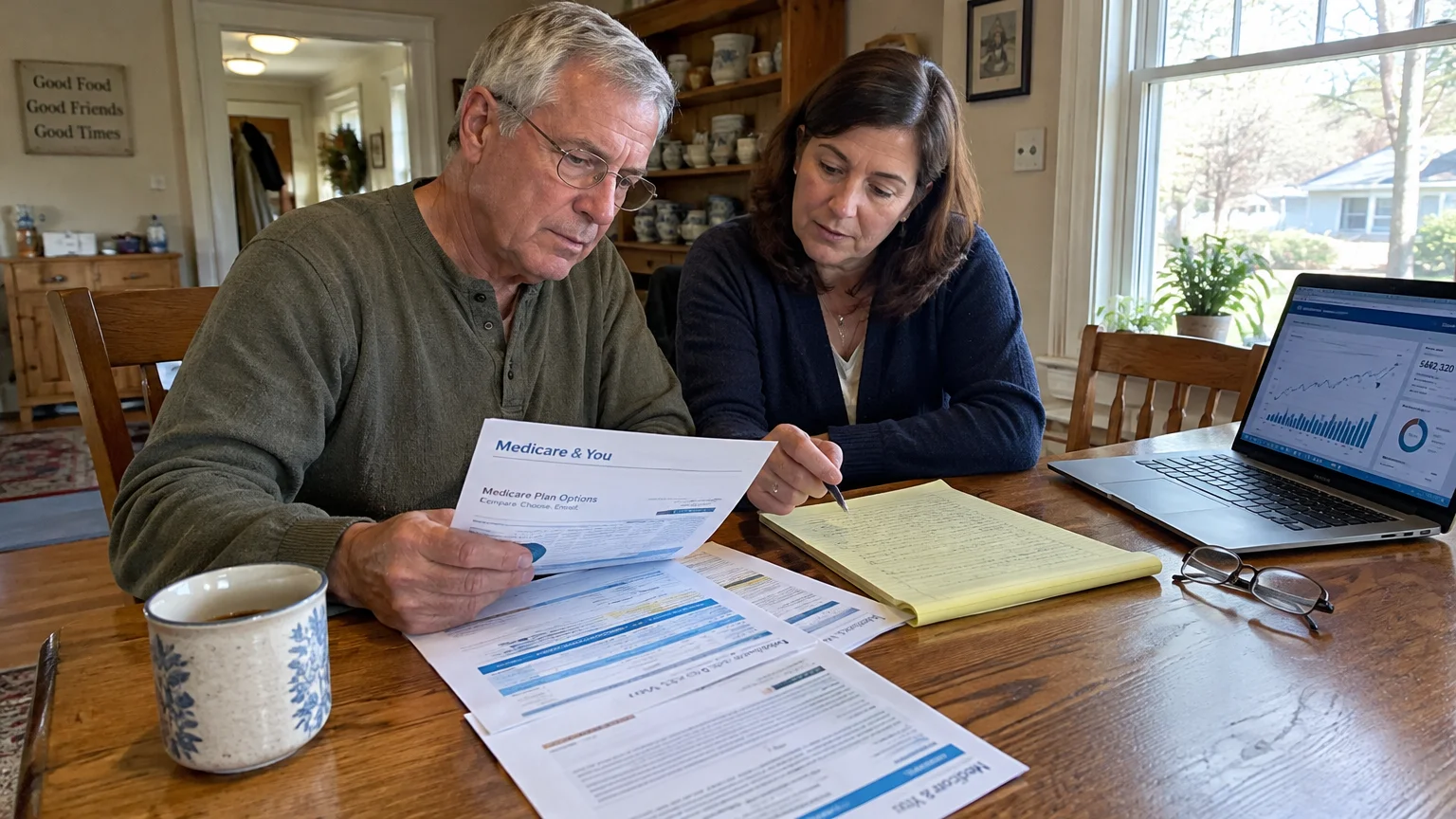
Navigating relocation and retirement transitions often requires professional guidance. Knowing when to call an expert prevents costly errors.
Reach out to a State Health Insurance Assistance Program (SHIP) counselor before finalizing any move. These trained volunteers provide unbiased, free help comparing Medicare plans across state lines.
Work with a fee-only Certified Financial Planner to structure portfolio withdrawals. A skilled planner helps you minimize federal income taxes and avoid premature retirement account depletion.
Consult an elder law attorney in your destination state. Estate laws vary significantly by jurisdiction, meaning your will, healthcare proxy, and powers of attorney may require updates.
If you have not yet claimed benefits, consult a Social Security claiming specialist. Selecting the right claiming strategy can add tens of thousands of dollars to your lifetime income.
Frequently Asked Questions About Retiring on $70,000
Can a married couple live comfortably on $70,000 a year?
Yes, a couple can live very comfortably on $70,000 in affordable small towns. With paid-off housing or low rent, this income covers healthcare, groceries, and travel with money to spare.
Do I have to pay Medicare IRMAA surcharges on a $70,000 income?
No, you will not pay IRMAA surcharges. Federal surcharges only apply when modified adjusted gross income exceeds $109,000 for individual filers or $218,000 for couples.
How do state taxes impact a $70,000 retirement budget?
State taxes make a substantial difference in your spendable cash. Choosing a state that exempts retirement income can save you between $2,000 and $4,500 every year.
Is it better to rent or buy when relocating in retirement?
Renting for the first 6 to 12 months is usually the smartest choice. It allows you to explore neighborhoods and confirm that the lifestyle suits you before buying.
Taking Action on Your Retirement Move
A $70,000 annual retirement income provides remarkable security when paired with the right hometown. Start by building a short list of towns that match your climate preferences and lifestyle goals.
Schedule a visit during the town’s least pleasant season to experience everyday reality. Taking methodical steps today guarantees a peaceful, budget-friendly retirement tomorrow.
Information in this article reflects current rules as of the publication date and may change. Always confirm benefit details directly with Social Security Administration, Medicare.gov, or relevant government agencies before making decisions.
Last updated: October 2026. Medicare and Social Security rules change annually—always verify current details at official government sources.