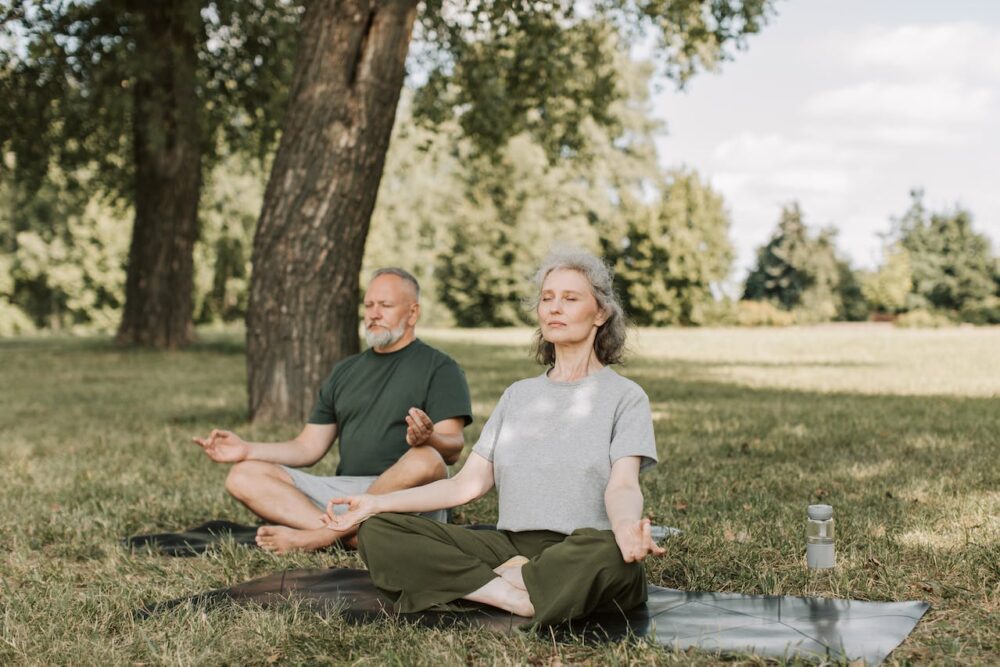
Did you know that adults can lose up to three to five percent of their muscle mass per decade after age 30? This natural physiological process, known as sarcopenia, accelerates as we enter our 60s and 70s. For many older adults, this gradual loss of strength presents itself as a sudden inability to carry heavy groceries, trouble getting up from a low chair, or a surprising loss of balance on uneven sidewalks. However, physical decline is not an inevitable part of aging. Research continually demonstrates that older adults who adopt a consistent exercise routine can rebuild muscle, improve bone density, and drastically reduce their risk of chronic diseases.
Leaving the workforce gives you the ultimate opportunity to reclaim your schedule and prioritize your physical well-being. Finding the right fitness after retirement is about shifting your focus from aesthetic goals to functional independence. You want a body that allows you to travel, play with your grandchildren, and maintain your home without pain or exhaustion.
“Don’t simply retire from something; have something to retire to.” — Harry Emerson Fosdick
When you retire to a lifestyle of vitality and movement, you protect your independence for the decades ahead. This guide will walk you through exactly how to build a safe, effective, and enjoyable senior exercise plan tailored to the unique needs of a changing body.

The Bottom Line Up Front
- Focus on four pillars: A complete fitness regimen must include cardiovascular endurance, strength training, balance exercises, and flexibility work.
- Protect your joints: Emphasize low-impact exercise to elevate your heart rate without putting unnecessary stress on your knees, hips, and lower back.
- Leverage your benefits: Many Medicare Advantage plans offer free gym memberships through programs like SilverSneakers or Renew Active.
- Start gradually: The most common reason seniors abandon a new workout is starting too aggressively and causing minor injuries.

The Four Pillars of Workouts for Over 60
If you search for workouts for over 60, you will quickly find thousands of conflicting opinions. Some trainers push heavy weightlifting, while others suggest you only need gentle stretching. The truth lies in a balanced approach. The National Institute on Aging recommends incorporating four specific types of exercise into your weekly routine. Neglecting any one of these pillars can leave you vulnerable to falls, fatigue, or injury.
1. Cardiovascular Endurance
Cardiovascular exercise, often called aerobic exercise, gets your heart pumping and your lungs working harder. Over time, regular cardio lowers your blood pressure, improves your cholesterol profile, and increases your daily stamina. Aim for at least 150 minutes of moderate-intensity aerobic activity each week. You can break this down into manageable 30-minute sessions five days a week.
2. Strength and Resistance Training
Strength training is arguably the most critical component of healthy aging tips. Lifting weights or using resistance bands places a healthy stress on your muscles and bones. This stress signals your body to increase bone density, which directly combats osteoporosis. You should aim to strength train your major muscle groups at least two days per week, ensuring you leave a day of rest between sessions for muscle recovery.
3. Balance Exercises
Falls are the leading cause of fatal and non-fatal injuries for older Americans. As we age, our center of gravity shifts, and the fast-twitch muscle fibers responsible for catching us when we stumble begin to deteriorate. Dedicated balance exercises train your brain and body to coordinate rapidly, keeping you upright when you encounter a slippery floor or an unexpected curb.
4. Flexibility and Mobility
Muscles tend to shorten and lose their elasticity as we grow older, leading to a restricted range of motion. If you cannot turn your head comfortably to check your blind spot while driving, or if you struggle to reach a high shelf, flexibility training is your solution. Stretching improves the mobility of your joints, improves your posture, and reduces chronic muscle tension.
Low-Impact Exercise Options for Cardiovascular Health
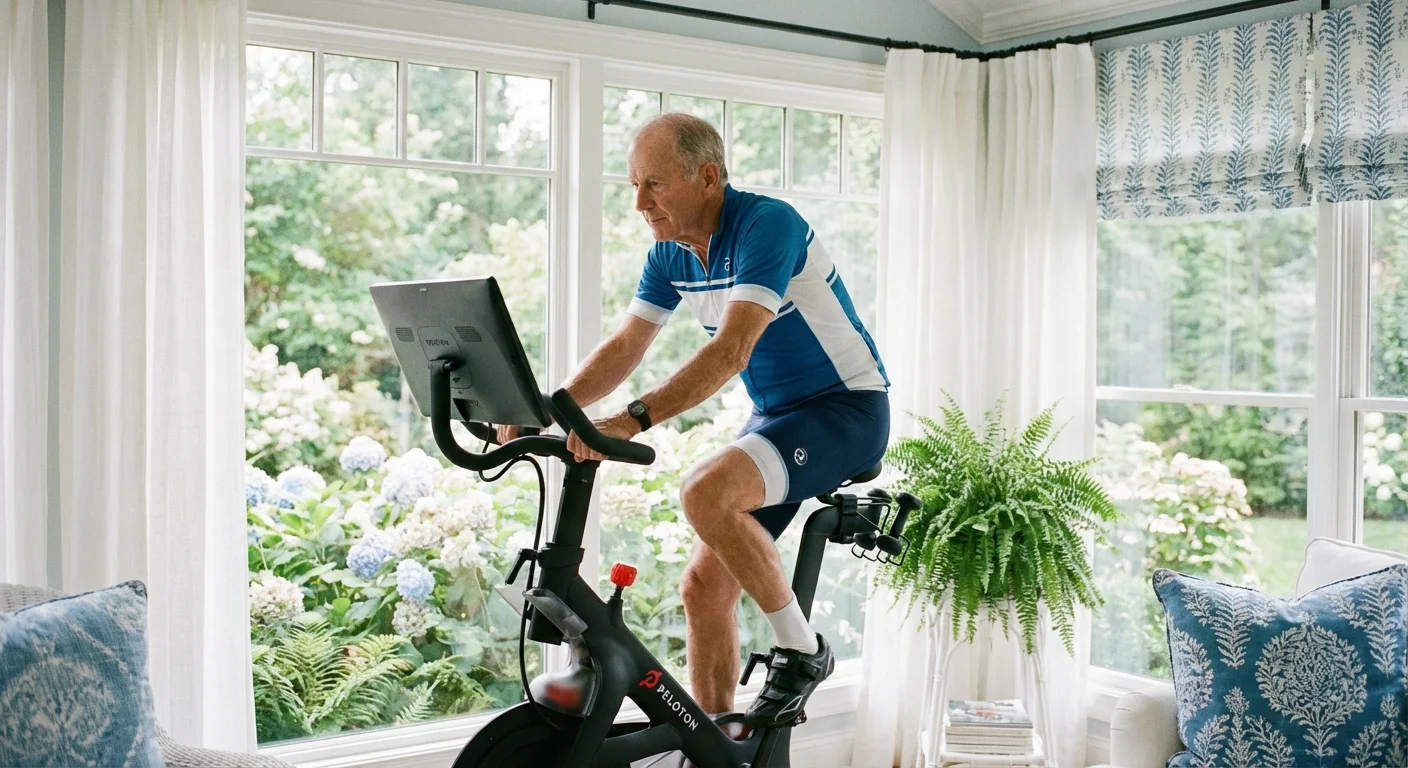
You do not need to jog on pavement or endure high-intensity interval training to reap the rewards of cardiovascular exercise. Low-impact exercise elevates your heart rate while keeping at least one foot on the ground (or supporting your body weight in water), which protects your joints from the repetitive shock of high-impact activities.
Brisk Walking: Walking remains one of the most accessible and effective exercises for older adults. Invest in a pair of supportive walking shoes and find a safe, well-lit route. If you experience joint pain on concrete sidewalks, try walking on a level dirt path, a high school track, or the cushioned surface of a treadmill.
Water Aerobics and Swimming: Water provides natural resistance while supporting your body weight, making it an ideal environment for anyone with arthritis or joint pain. Swimming laps builds impressive cardiovascular endurance, while shallow-water aerobics classes offer a fun, social way to improve your heart health.
Stationary Cycling: Riding a recumbent stationary bike provides an excellent lower-body cardiovascular workout without placing any strain on your back or knees. Because you are seated comfortably, you can easily read a book, watch television, or listen to a podcast while you pedal.
Building Your Senior Exercise Plan: Strength Training at Home
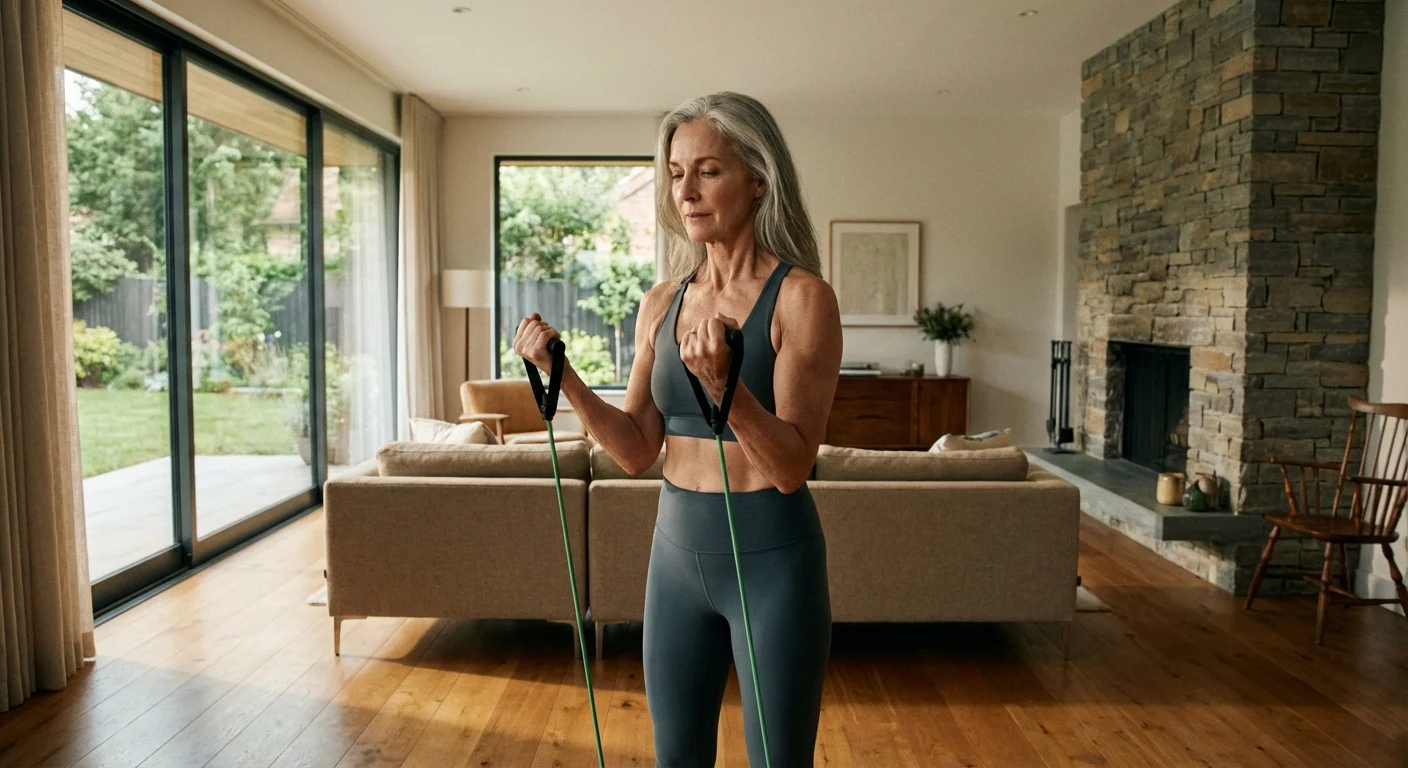
You do not need an expensive gym membership or heavy machinery to build functional strength. You can perform highly effective strength workouts using your body weight, a sturdy chair, and inexpensive resistance bands.
When executing these exercises, focus entirely on your form rather than the number of repetitions. Perform each movement slowly, exhaling during the exertion phase and inhaling as you return to the starting position.
- Chair Squats: Stand in front of a sturdy, armless chair with your feet shoulder-width apart. Keep your chest up and slowly lower your hips until you are lightly seated on the chair. Pause for one second, push through your heels, and return to a standing position. This exercise strengthens your quadriceps, hamstrings, and glutes—the exact muscles you need to stand up from a toilet, couch, or car seat.
- Wall Push-Ups: Traditional floor push-ups can be harsh on older wrists and shoulders. Instead, stand about two feet away from a blank wall. Place your hands flat on the wall at shoulder height and shoulder-width apart. Slowly bend your elbows to bring your chest close to the wall, then push back out. This builds strength in your chest, shoulders, and triceps.
- Seated Resistance Band Rows: Sit tall on the floor or on a bench with your legs extended in front of you. Loop a resistance band securely around the arches of your feet. Hold the ends of the band in each hand, keep your elbows close to your sides, and pull the band backward, squeezing your shoulder blades together. This exercise targets your upper back, which is vital for preventing the hunched posture that often accompanies aging.

Balance and Flexibility: The Keys to Fall Prevention
Integrating balance and flexibility work into your daily routine requires very little time but yields massive dividends for your safety and comfort.
For balance, try the Single-Leg Stand. Stand behind a sturdy kitchen chair, holding the back for support. Lift your right foot slightly off the ground and try to balance on your left leg for 10 to 15 seconds. As you improve, rely less on the chair—using just one hand, then just two fingers, and eventually hovering your hands above the chair. Repeat on the other side.
Another excellent option is Tai Chi. Often described as “meditation in motion,” Tai Chi involves a series of slow, flowing movements and deep breathing. Programs evaluated by the National Council on Aging demonstrate that regular Tai Chi practice significantly reduces the risk of falls among older adults by improving spatial awareness and leg strength.
For flexibility, focus on stretching your calves, hamstrings, and chest. Always perform static stretches after your muscles are already warm from a walk or workout. Hold each stretch for 20 to 30 seconds without bouncing. You should feel a mild tension, but never sharp pain.
Leveraging Medicare to Fund Your Fitness Goals
Many retirees hesitate to join a fitness center due to the monthly cost. Fortunately, depending on your healthcare coverage, you may have access to comprehensive fitness benefits at no additional charge. Understanding how your Medicare plan treats fitness can save you hundreds of dollars annually.
Standard Original Medicare (Part A and Part B) does not cover gym memberships or general fitness programs. However, if your doctor prescribes physical therapy to recover from an injury or illness, Part B will cover that medically necessary rehabilitation.
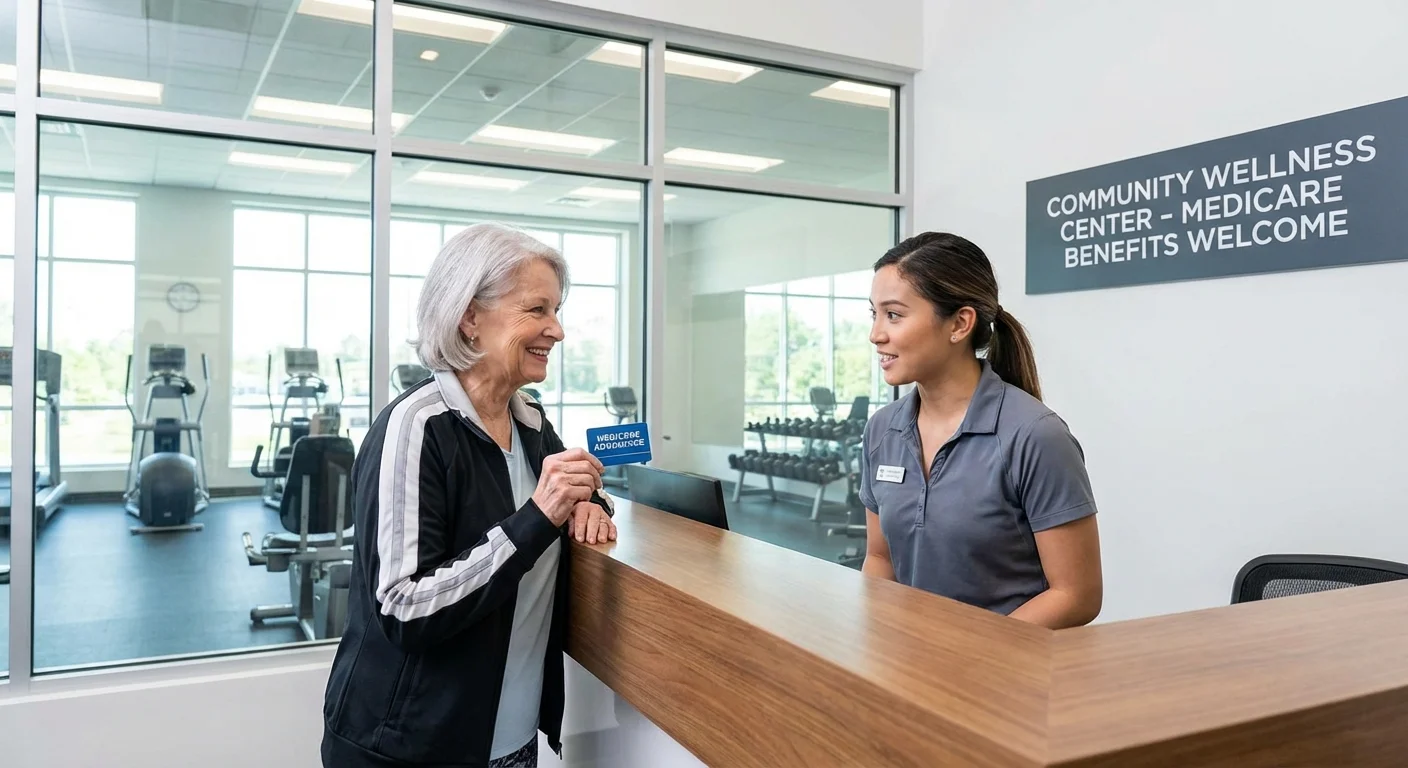
The landscape changes significantly if you hold a Medicare Advantage (Part C) plan. Private insurance companies offer these plans, and they frequently include robust “extra benefits” designed to keep you healthy and out of the hospital. You can review and compare the specific fitness benefits of various plans using the official Medicare Plan Finder.
| Medicare Plan Type | Gym Membership Coverage | Common Fitness Programs Included |
|---|---|---|
| Original Medicare (Parts A & B) | Not covered. You pay 100% out-of-pocket for standard gym access. | Medically necessary physical therapy only. |
| Medicare Advantage (Part C) | Highly likely to be covered. Check your specific plan’s Evidence of Coverage. | SilverSneakers, Renew Active, Silver&Fit. Often includes free access to thousands of local gyms and YMCAs. |
| Medicare Supplement (Medigap) | Generally not covered, though a few private insurers offer fitness perks as a value-added bonus. | Varies widely; sometimes includes discounted memberships rather than fully free access. |
If your plan includes a program like SilverSneakers, you gain access to participating gyms nationwide. This is particularly beneficial for retirees who split their time between two states or travel frequently in an RV, as you can simply present your membership card at any participating facility across the country.
Common Exercise Traps for Older Adults
Transitioning into a more active lifestyle requires a bit of strategy to avoid setbacks. Watch out for these common missteps that can derail your progress.
Doing Too Much, Too Soon
Enthusiasm is wonderful, but attempting a rigorous hour-long workout after years of a sedentary lifestyle is a recipe for extreme soreness and injury. Your tendons and ligaments require time to adapt to new stresses. Start with just 10 to 15 minutes of continuous activity and gradually increase your duration by a few minutes each week.
Ignoring the Warning Signs of Pain
There is a distinct difference between the dull, satisfying ache of muscle fatigue and the sharp, localized pain of a joint or tendon injury. Never push through joint pain in your knees, shoulders, or lower back. If an exercise causes sharp discomfort, stop immediately and modify the movement or try a different activity altogether.
Holding Your Breath
When lifting weights or concentrating on a difficult balance pose, many people subconsciously hold their breath. This causes a rapid spike in blood pressure, which is especially dangerous for older adults. Focus on breathing rhythmically. A good rule of thumb is to exhale during the hardest part of the exercise and inhale during the easiest part.
Skipping Recovery Days
Your muscles do not grow stronger while you are lifting weights; they grow stronger while you rest and recover. Exercising the exact same muscle groups every single day leads to overtraining and fatigue. Alternate your activities—perhaps walk on Mondays, Wednesdays, and Fridays, and do your strength training on Tuesdays and Thursdays.
Frequently Asked Questions About Senior Fitness
How often should a 65-year-old exercise?
The general guideline for adults over 65 is to aim for at least 150 minutes of moderate-intensity aerobic activity per week, spread out over several days. In addition, you should engage in muscle-strengthening activities at least two days a week, and incorporate balance exercises into your routine at least three days a week.
Is walking enough exercise for an older adult?
Walking is an incredible foundation for cardiovascular health, but it is not a complete fitness program on its own. Walking does very little to strengthen your upper body or challenge your lateral (side-to-side) balance. For optimal aging, you must combine walking with resistance training and specific balance work.
How do I start exercising if I am completely out of shape?
Start from exactly where you are today. If standing for long periods is difficult, begin with a program of seated chair exercises. You can march in place while seated, do seated leg extensions, and use light soup cans for arm curls. The key is consistency. Five minutes of deliberate movement every day is vastly superior to doing nothing at all.
Taking Your First Steps Toward a Stronger Retirement
Building a reliable exercise routine is one of the most powerful investments you can make in your retirement. It costs very little, requires no special equipment, and pays dividends in the form of energy, independence, and longevity. You do not need to become a marathon runner or a bodybuilder to age well. You simply need to move your body consistently and purposefully.
Take action today by identifying one small change you can make right now. Lace up your shoes for a ten-minute walk around the block, search online for a beginner’s chair yoga video, or call your Medicare Advantage provider to ask if you have access to a fitness benefit. Your future self will deeply appreciate the effort you put in today.
This article is for informational purposes only and does not constitute financial, legal, or medical advice. Medicare rules, Social Security benefits, and tax laws change regularly—verify current details at Medicare.gov, SSA.gov, or with a licensed professional.