A Letter From Mabel
Dear reader,
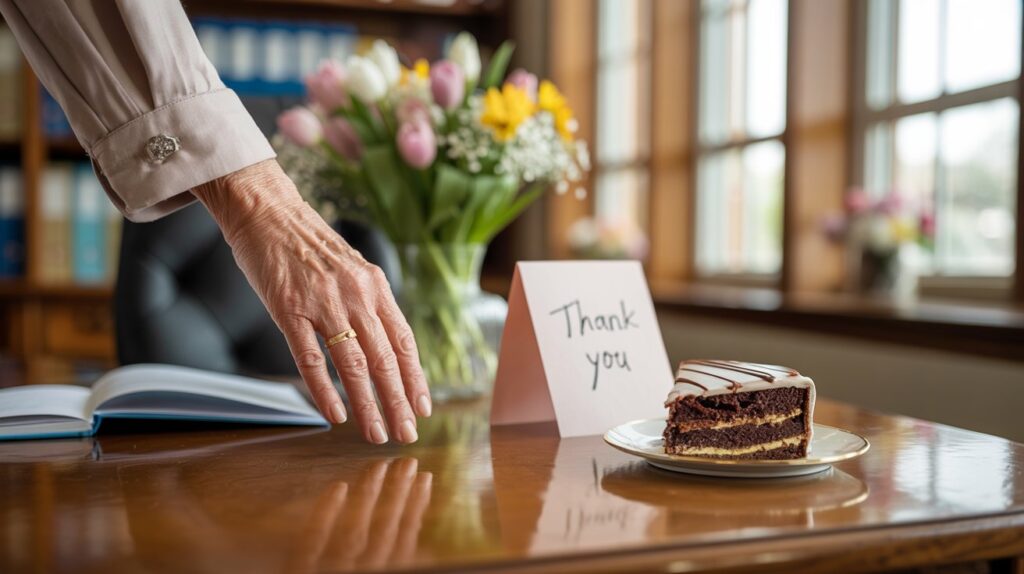
I’m Mabel, and I retired on a Friday in September after 34 years as a school administrator. My colleagues threw me a lovely party. There were flowers on my desk, a card signed by what felt like half the district, and a speech from my principal that made me cry twice. I drove home that afternoon feeling lighter than I had in years.
By the following Wednesday, I didn’t know what to do with myself.
That’s not the retirement story anyone tells. We talk about the party. The travel plans. The garden we’re finally going to get around to. We don’t talk about that Wednesday—or the Thursday after it, or the month of Tuesdays that started to feel identical in a way that made me vaguely anxious without quite knowing why.
I want to talk about it. Because if I had known what was actually coming, I think I could have prepared for it. And because I’ve since spoken with enough other retirees to know that what I experienced wasn’t unusual—it was just unspoken.
Everyone warned me about money. Nobody warned me about Monday morning.
The Part Nobody Prepares You For
I had done everything right, financially speaking. My retirement savings were in order. I had my Medicare card. I had even made a list of things I wanted to do once I had the time: travel to Portugal, take a watercolor class, spend more time with my grandchildren, finally read all those books stacked on my nightstand.
What I had not done was think seriously about what my days would actually feel like—not the highlights, but the ordinary hours. The Tuesday afternoons. The random Thursday mornings when there was no plan and no obligation, and the whole day stretched out in front of me like something I was supposed to know how to fill.
At first, it felt like vacation. A very long, pleasant vacation. But after about three weeks, something shifted. The relaxation started curdling into something else—a restlessness I couldn’t quite name. A mild guilt about not doing anything productive, even though productivity was no longer required of me. A creeping sense that the days were slipping past without adding up to anything.
I mentioned this to my daughter, who told me I was being ridiculous and that anyone would love to have my problems. I mentioned it to my husband, who was still working, and gently suggested I find a hobby. Neither response was wrong, exactly. But neither was quite right either, because they were both missing what was actually happening.
What I didn’t know then: Researchers who study retirement transitions have found that the first year is often the hardest—not financially, but psychologically. The adjustment from structured to unstructured time is one of the most significant identity transitions most adults ever experience. It’s also one of the least discussed.
What I Realized I Had Actually Lost
It took me a few months of honest self-reflection to understand what was really going on. What I eventually figured out was this: I hadn’t just given up a job. I had given up an entire ecosystem of things that work had been quietly providing—things I had never thought to credit it for because they arrived automatically.
Here is the table (because some things never change, *pun intended*) I wish someone had handed me on my last day of work:
| What I thought I was giving up | What I was actually giving up |
| A demanding schedule | The structure that made every other hour feel restful |
| Work stress | The feeling of being competent at something difficult |
| Office small talk | Daily human contact with people who knew my name |
| The morning commute | A physical transition that told my brain the day had started |
| Performance reviews | External feedback that I was doing something that mattered |
| Difficult colleagues | A ready-made reason to feel patient and resilient |
Looking at that list now, it seems obvious. Of course, those things mattered. Of course, losing all of them simultaneously—overnight, at a fixed date—was going to require some adjustment. But nobody frames it that way. We talk about retirement as subtraction: you subtract the commute, the stress, the demands on your time.
We don’t talk about what else gets subtracted along with them.
I hadn’t just retired from a job. I had retired from a version of myself I’d been for 34 years.
The Specific Things That Tripped Me Up
In case any of this sounds familiar, these are the specific things that caught me off guard:
The loss of automatic social contact
I had underestimated how much of my social life was built into my work schedule. Colleagues I saw every day. People who stopped by my office just to chat. Conversations that had nothing to do with anything important but that made me feel connected to the world outside my house. I’m an introvert—I would have told you I didn’t need much social contact. I was wrong. I needed more than I knew.
The loss of external validation
When you’re working, someone is regularly telling you whether you’re doing a good job. In retirement, there’s no performance review. No feedback. No metric. I hadn’t realized how much I had relied on that external signal—not for ego, but for basic orientation. Without it, I felt uncertain in a way I couldn’t quite articulate.
The loss of my professional identity
For 34 years, when someone asked who I was, I had a ready answer: I was a school administrator. That identity carried weight. It told people something about my values, my competence, my place in the world. In retirement, I found myself genuinely unsure how to answer that question. ‘Retired’ felt like a description of what I wasn’t doing anymore, not who I was.
The guilt of unproductivity
This surprised me most of all. I had earned this rest. I had worked hard for decades and I deserved to do nothing for a while. And yet—I couldn’t fully enjoy it. Every idle afternoon came with a whisper of ‘you should be doing something.’ I had internalized the work ethic so thoroughly that leisure, when it finally arrived, felt vaguely transgressive. It took real effort to give myself permission to simply be.
What Finally Helped
I want to be careful not to make this sound more sorted than it was. It took me the better part of a year to find my footing, and I’m still adjusting in small ways. But these are the things that genuinely moved the needle:
Anchoring my week, not my day
I stopped trying to fill every hour and started building a few fixed commitments each week that gave the days a shape. A Tuesday morning at the food bank. A Thursday walking group with two neighbors. A standing Sunday call with my sister. These anchors didn’t take over my schedule—they just gave it a skeleton. Everything else felt more restful because of them, not less.
Finding one project with a real finish line
I started writing down memories of my parents’ childhood for my grandchildren. Nothing formal—just stories I was afraid would be lost. Having a real project, one with progress I could see and an outcome that mattered to me, changed how I felt about my days. I wasn’t just passing time. I was building something.
Rejoining a community with a regular schedule
I had dropped out of my church choir years ago because of work demands. I rejoined. The music mattered, but honestly, more than the music was the fact that every Thursday evening I was somewhere specific, with the same people, doing something we all cared about. The regularity was the point. It gave me a tribe that met on a schedule.
Becoming a beginner at something
I took that watercolor class I had been putting off for years. I was terrible at it. That turned out to be exactly what I needed—to be in a room where I knew nothing, where progress was visible and satisfying, and where my 34 years of professional experience were completely irrelevant. Beginner’s mind, I’ve since learned, is one of the most underrated gifts of retirement. Not everything has to be done well. Some things just have to be done.
Giving myself permission to take a full year
The most useful thing anyone told me—a retired colleague who had navigated the same transition two years earlier—was this: don’t make any permanent decisions about how you’ll spend your time until you’ve had a full year to figure out who you are when you’re not working. She was right. The retirement I’m living now looks almost nothing like what I planned in September. It’s better. But I couldn’t have designed it in advance.
What I’d Tell My Retiring Self
If I could go back to that Friday in September—flowers on my desk, card in my hand, principal mid-speech—I’d want to pull myself aside afterward and say a few things.
I’d say: the adjustment is real, and it’s allowed. The disorientation you’re going to feel is not ingratitude and it’s not weakness. It’s what happens when a person who has been useful and structured and busy for three and a half decades suddenly isn’t required to be any of those things anymore. It’s a bigger transition than anyone told you.
I’d say: give it time, but don’t just wait it out. The life you want in retirement doesn’t arrive on its own. You have to build it—a project at a time, a commitment at a time, a community at a time. It’s work. The good kind.
I’d say: the free time will start to feel like a gift once you’ve earned it again. Not by being busy, but by building a life full enough that the quiet moments feel restful rather than empty.
And I’d say: you’re going to be okay. Better than okay, eventually. But probably not on Wednesday. Give yourself at least until Thursday.
With love,
Mabel
Retiree since 2023—and proud member of the Retirees in USA Editorial Team










Leave a Reply