
For decades, you structured your life around two weeks of paid vacation a year, cramming as much sightseeing into 14 days as humanly possible. Now, the calendar is yours. You have the freedom to travel on a Tuesday, stay for a month, and completely avoid the frenzied summer crowds.
“Retirement is not the end of the road. It is the beginning of the open highway.”
Yet, as your travel style shifts from fast-paced sightseeing to deep exploration, your destination criteria change. You want places that offer rich cultural experiences, exceptional natural beauty, and excellent culinary scenes—without requiring you to hike up a mountain just to see the view. You also need destinations that cater to a comfortable pace, provide accessible infrastructure, and respect a fixed budget.
This US travel guide focuses on locations that perfectly balance excitement with accessibility. Whether you want a quick weekend getaway or a month-long seasonal escape, these ten senior travel destinations deliver exactly what you need for an unforgettable retirement lifestyle.

What You Need to Know Up Front
- Pacing matters most: The most enjoyable retiree vacations focus on “slow travel”—staying in one place longer rather than hopping between hotels.
- Accessibility is built-in: The destinations on this list offer trolley tours, scenic drives, and flat walking paths, making them ideal for varying mobility levels.
- Shoulder seasons are your best friend: Take advantage of your flexible schedule by traveling in spring and fall. You avoid extreme weather, dodge family vacation crowds, and secure the most affordable travel for seniors.

1. Sedona, Arizona: Accessible Natural Wonder
Sedona is world-renowned for its stunning red rock formations, but you do not need to be an avid hiker to enjoy them. The town is specifically designed to highlight its scenery from the comfort of a vehicle or a scenic patio.
You can drive the Red Rock Scenic Byway, which offers numerous pull-offs with flat, paved viewing areas perfect for photographs. For a truly relaxed experience, book a ticket on the Verde Canyon Railroad. This four-hour train journey winds through breathtaking canyons and remote wilderness areas that are otherwise inaccessible, complete with comfortable seating and climate-controlled cars.
Sedona also features a thriving wellness community, offering therapeutic spas, art galleries, and upscale dining. Visit in late October or April to enjoy mild daytime temperatures perfectly suited for outdoor exploration.
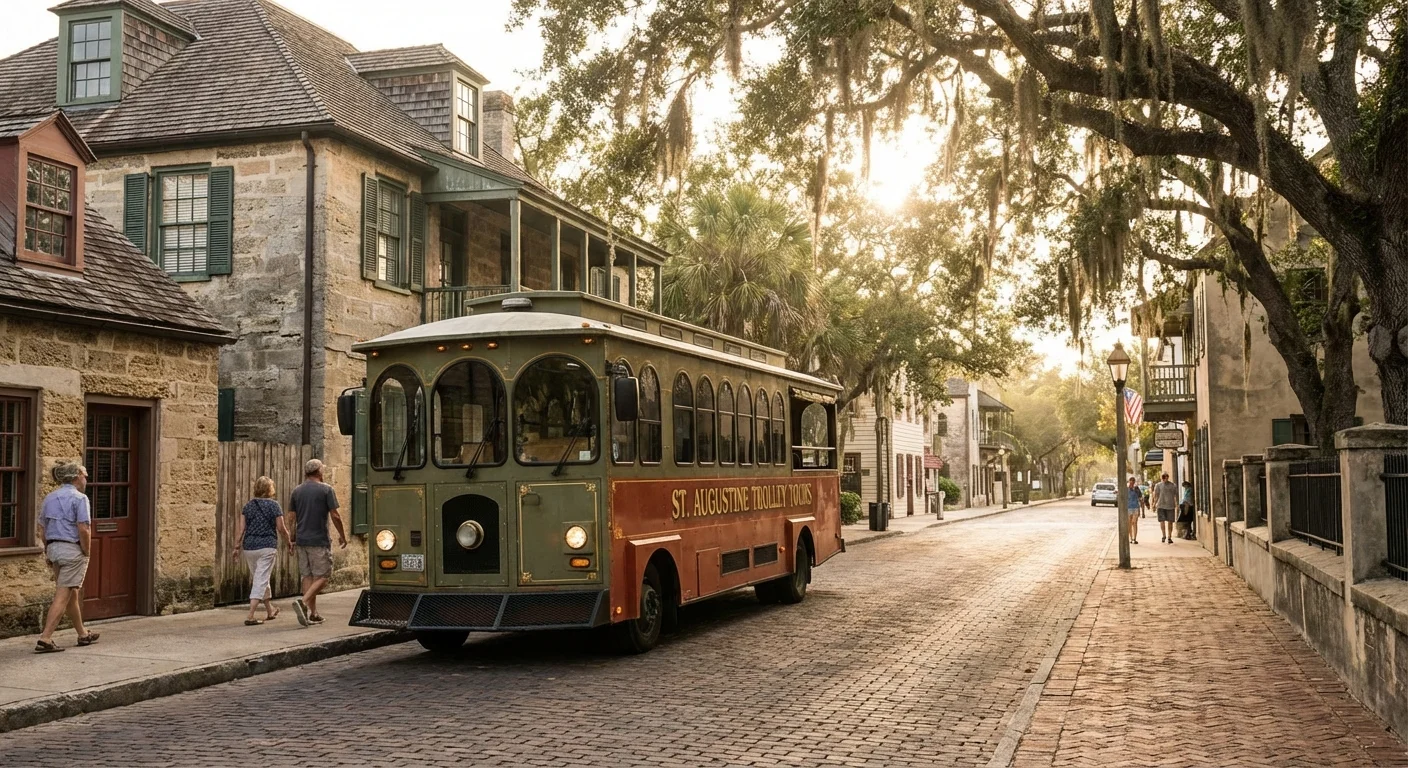
2. St. Augustine, Florida: Historic Charm Meets Coastal Relaxation
As the oldest continuously occupied European-established settlement within the borders of the continental United States, St. Augustine offers a deep historical dive mixed with Florida’s famous sunshine.
The city’s historic district is compact and highly walkable. Better yet, you can utilize the Old Town Trolley Tours. Your ticket allows you to hop on and off at major attractions—like the Castillo de San Marcos and the Lightner Museum—saving your energy for exploring the actual sites rather than walking between them.
When you want a break from history, Anastasia State Park provides easily accessible beaches. St. Augustine remains an incredibly popular destination for snowbirds, making it a hub for connecting with fellow retirees.

3. Williamsburg, Virginia: Immersive American History
If you want to step back in time without sacrificing modern comforts, Williamsburg is a premier choice. Colonial Williamsburg operates as a massive living history museum. While the historic area is expansive, the organization provides complimentary shuttle buses for ticket holders, making it easy to navigate the grounds regardless of your mobility level.
The paved pathways and flat terrain make strolling from the Governor’s Palace to the historic taverns easy on the joints. Beyond the colonial area, you can easily access Jamestown and Yorktown via the beautiful, tree-lined Colonial Parkway—a scenic drive specifically designed with a low speed limit and zero commercial traffic.

4. The Oregon Coast: The Ultimate Scenic Drive
For retirees who love the ocean but prefer a dramatic, rugged coastline over sunbathing, the Oregon Coast is unmatched. Highway 101 stretches down the entire coast, offering one of the most magnificent road trips in the country.
Towns like Cannon Beach and Newport provide cozy, accessible home bases. In Cannon Beach, you can view the famous Haystack Rock right from the paved pathways near the sand. In Newport, the Oregon Coast Aquarium features flat, wheelchair-accessible ramps throughout its world-class exhibits.
The beauty of this destination is that the journey itself is the attraction. You can spend days simply driving the coast, pulling over at designated scenic viewpoints to watch for migrating gray whales—no strenuous hiking required.

5. Santa Fe, New Mexico: Art, Culture, and Culinary Delights
Santa Fe consistently ranks high on lists of desirable retirement destinations, and it is equally fantastic for a vacation. The city operates at a remarkably relaxed pace, heavily focused on arts, culture, and southwestern cuisine.
You can spend hours wandering the historic Santa Fe Plaza, browsing Native American jewelry, or visiting the completely accessible Georgia O’Keeffe Museum. The city’s famed Canyon Road features more than a hundred art galleries packed into a half-mile stretch of relatively flat terrain.
A practical note: Santa Fe sits at an elevation of 7,200 feet. Give yourself a day or two to acclimate to the thinner air, stay hydrated, and plan for a slower pace during the first 48 hours of your trip.

6. Charleston, South Carolina: Southern Elegance
Charleston provides a masterclass in Southern hospitality, historic architecture, and incredible seafood. The city is flat, making it generally easy to navigate, though you should stick to the main paved sidewalks if the historic cobblestone side streets pose a tripping hazard.
To preserve your energy, take a guided carriage ride through the historic district. These tours provide brilliant historical context while you sit comfortably in the shade. You can also book accessible boat tours of Charleston Harbor, which offer great views of Fort Sumter and frequent dolphin sightings.
Charleston’s culinary scene is a major draw. Many award-winning restaurants are housed in beautifully restored, single-story historic buildings with easy access.

7. Branson, Missouri: The Entertainment Capital for Seniors
Branson has actively cultivated a reputation as one of the most welcoming and affordable travel destinations for seniors in the United States. Located in the picturesque Ozark Mountains, the city is famous for its live entertainment theaters, which feature everything from country music and comedy to magic and tribute bands.
The infrastructure here explicitly caters to older adults. Theaters feature excellent accessibility, plentiful handicap parking, and shows scheduled at convenient afternoon times so you never have to drive late at night.
Beyond the shows, you can enjoy relaxed dinner cruises on Table Rock Lake or ride the accessible tram tours through the beautiful Dogwood Canyon Nature Park.
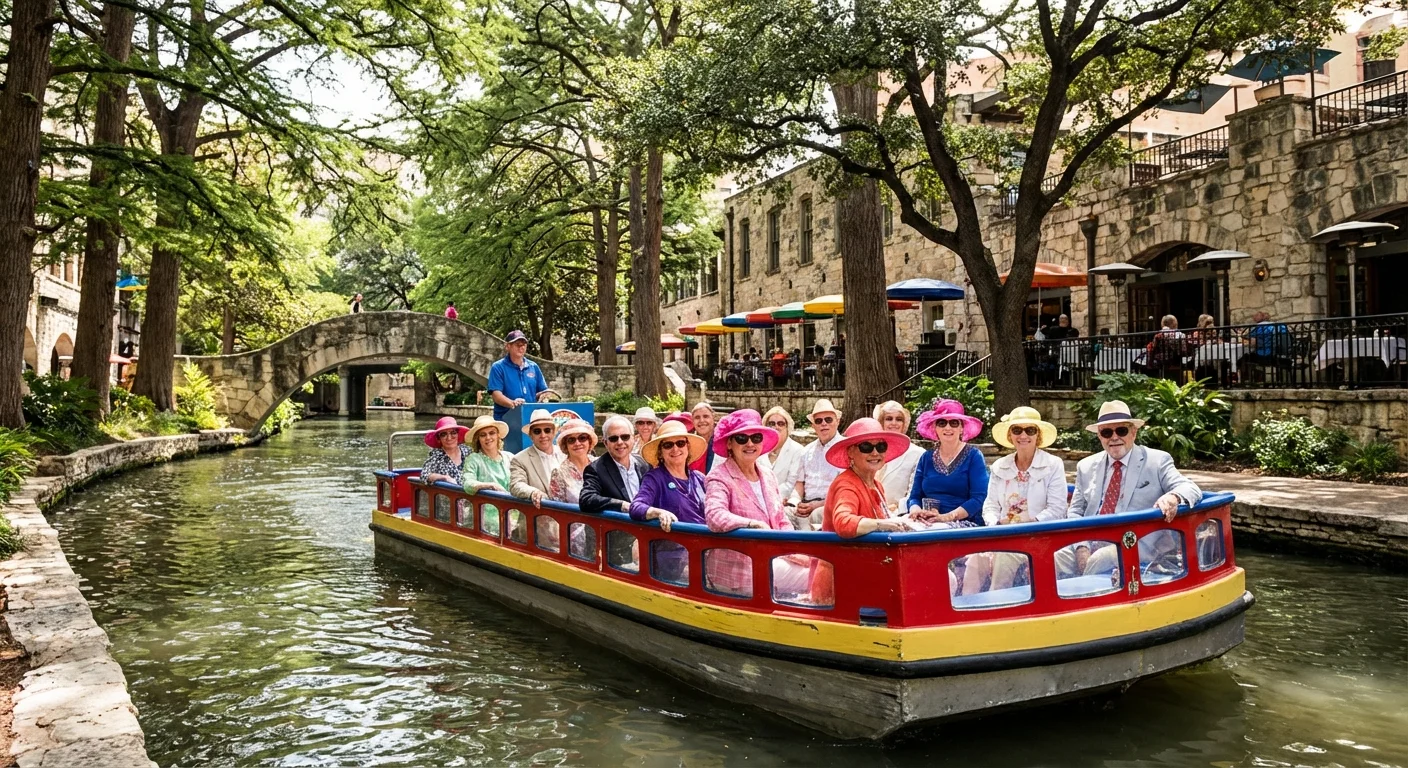
8. San Antonio, Texas: Culture Along the River
San Antonio offers a vibrant blend of Mexican and American history. The crown jewel of the city is the River Walk, a network of walkways along the banks of the San Antonio River. While the River Walk sits below street level, the city has installed numerous public elevators, making the miles of shaded, waterside paths highly accessible.
The Alamo is located right in the center of town and offers flat, paved grounds. If you want to explore further, the San Antonio Missions National Historical Park is entirely accessible by car, with short, easy walks from the parking areas to the historic structures.
San Antonio is particularly ideal for winter travel, offering sunny skies and pleasant temperatures while the northern states battle snow and ice.

9. Asheville, North Carolina: Mountain Majesty Made Easy
Nestled in the Blue Ridge Mountains, Asheville allows you to experience high-altitude beauty without the strenuous physical demands usually associated with mountain towns. The Blue Ridge Parkway runs directly through the area, offering spectacular driving views, especially during the fall foliage season.
The primary attraction is the Biltmore Estate, America’s largest home. Despite being built in the late 1800s, the estate offers an elevator for guests with mobility needs, allowing full access to the spectacular interior architecture. The surrounding gardens feature wide, paved paths suitable for all walking abilities.
Downtown Asheville is heavily focused on the arts, featuring numerous easily accessible craft centers and galleries, backed by an impressive farm-to-table restaurant scene.

10. Coastal Maine and Bar Harbor: The Perfect Summer Refuge
When the southern half of the country swelters in July and August, Coastal Maine offers cool ocean breezes and perfect temperatures. Bar Harbor serves as the gateway to Acadia National Park, one of the most accessible parks in the national system.
Acadia features the Park Loop Road, a 27-mile scenic drive that takes you past the park’s best features—including Sand Beach and Thunder Hole—with easy pull-offs. You can even drive entirely to the summit of Cadillac Mountain for panoramic views of the Atlantic Ocean.
Furthermore, the entire Mount Desert Island area operates the “Island Explorer” bus system. These propane-powered buses are free, fully accessible, and transport you between hotels, downtown shops, and national park landmarks, eliminating the need to search for parking.

At-a-Glance Destination Comparison
Use this table to quickly align your travel preferences with the right destination.
| Destination | Primary Vibe | Best Time to Visit | Mobility & Accessibility |
|---|---|---|---|
| Sedona, AZ | Nature & Wellness | Spring / Fall | High (Scenic drives, train tours) |
| St. Augustine, FL | History & Beaches | Winter / Spring | High (Trolley tours, flat terrain) |
| Williamsburg, VA | Living History | Spring / Fall | High (Paved paths, shuttles) |
| Oregon Coast | Rugged Scenery | Summer / Early Fall | High (Car-based sightseeing) |
| Santa Fe, NM | Art & Culture | Fall | Medium (High elevation factor) |
| Charleston, SC | Culinary & Architecture | Spring / Fall | Medium (Some cobblestones) |
| Branson, MO | Live Entertainment | Summer / Fall | Very High (Senior-focused infrastructure) |
| San Antonio, TX | Culture & History | Winter / Spring | High (Elevators to River Walk) |
| Asheville, NC | Mountains & Estates | Fall (Foliage) | High (Accessible estate, parkway drives) |
| Bar Harbor, ME | Coastal Escapes | Summer | High (Free park bus system) |

Don’t Make These Travel Mistakes
Traveling in retirement requires a slight adjustment in how you handle logistics, health care, and budgeting. Avoid these common pitfalls to ensure your trip remains stress-free.
Assuming Your Medicare Coverage Travels Perfectly
Many retirees pack their bags, grab their Medicare cards, and assume they are fully covered everywhere in the United States. This is a massive misconception.
If you have Original Medicare (Parts A and B) with a Medigap supplement, you can see any doctor or visit any hospital in the US that accepts Medicare. However, if you have a Medicare Advantage (Part C) plan, you are usually restricted to a local network of doctors and hospitals. While emergency care is always covered out-of-network, routine care or urgent (but non-emergency) clinic visits while on vacation might leave you paying out of pocket. Always review your plan’s travel rules on Medicare.gov or call your provider before crossing state lines.
Missing Out on the National Parks Senior Pass
If your travel plans include any federal recreation sites, failing to buy the Senior Pass is leaving money on the table. Available to US citizens and permanent residents aged 62 or older, this pass provides entrance to more than 2,000 national parks, wildlife refuges, and forests. You can purchase an annual pass for $20 or a lifetime pass for $80. It frequently covers the entrance fee for everyone riding in your vehicle. You can order it online through official federal portals linked via USA.gov.
Overpacking the Daily Itinerary
When you were working 50 hours a week, you had to cram five museums and three cities into a single week. You no longer have to travel this way. Booking back-to-back guided tours or planning to drive 400 miles a day leads straight to exhaustion. Plan one primary activity per day. Leave your afternoons open for resting, enjoying a long lunch, or serendipitously discovering a local gallery.
Ignoring Institutional Senior Discounts
Beyond the obvious hotel and rental car discounts, check for specialized savings. Organizations like AARP offer robust travel portals that can save you significant money on flights, rail travel, and cruise packages. Furthermore, almost every museum, botanical garden, and historical site offers a senior rate—but they often will not apply it unless you explicitly ask at the ticket counter.
Frequently Asked Questions
Is it cheaper to travel in retirement?
Yes, provided you leverage your flexibility. The ability to travel during “shoulder seasons” (April-May and September-October) allows you to avoid peak pricing for hotels and flights. You can also fly on Tuesdays and Wednesdays, which are statistically the cheapest days to travel.
Should I buy travel insurance for domestic trips?
If you are booking expensive, non-refundable flights, specialized tours, or vacation rentals, a domestic travel insurance policy is highly recommended. Look for policies that offer “Cancel for Any Reason” (CFAR) coverage, which protects your investment if a sudden health flare-up forces you to delay the trip.
What is the best way to plan a trip if I have mobility issues?
Before booking, call the local visitor center of your target destination rather than relying solely on internet research. Ask specific questions about wheelchair accessibility, the availability of benches along walking paths, and shuttle services. Additionally, always request ground-floor hotel rooms or confirm elevator access at the time of booking, as historic bed-and-breakfasts often lack elevators.
Plan Your Next Adventure
“Don’t simply retire from something; have something to retire to.” — Harry Emerson Fosdick
Your retirement years present a brilliant opportunity to see the corners of the country you never had time to explore. The secret to a successful trip is simply matching your current physical preferences with the right location. Whether you decide to cruise the Oregon Coast looking for whales or soak up the sun and history in St. Augustine, the perfect destination is waiting for you.
Pick one location from this list that sparks your interest, block out a week on your calendar, and start looking at shoulder-season accommodations today.
Information in this article reflects current rules as of the publication date and may change. Always confirm benefit details and out-of-network coverage directly with the Social Security Administration, Medicare.gov, or relevant government agencies before making decisions.